
Are you debating between Prototype Injection Molding vs. CNC Machining for your next build?
Making the wrong call here doesn’t just delay your timeline—it can drain your budget before you even hit production.
As a manufacturing partner handling complex aerospace and medical projects, we see engineering teams struggle with this decision daily. The truth is, there is no single “best” process—only the right process for your specific volume, tolerances, and stage of development.
In this guide, you’re going to get an objective, head-to-head breakdown of these two rapid prototyping methods. We’ll cover cost comparisons, design for manufacturability (DFM), and exactly how to determine the break-even point for your project.
Let’s dive right in.
Understanding the Processes: Subtractive vs. Formative
At MS Machining, we approach product development by first distinguishing between two fundamental manufacturing philosophies: subtractive and formative. Choosing the right path early prevents costly delays and ensures your rapid prototyping methods align with your final production goals.
CNC Machining (Subtractive)
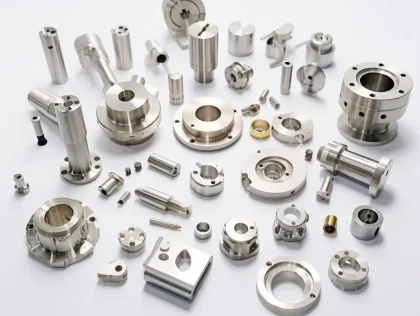
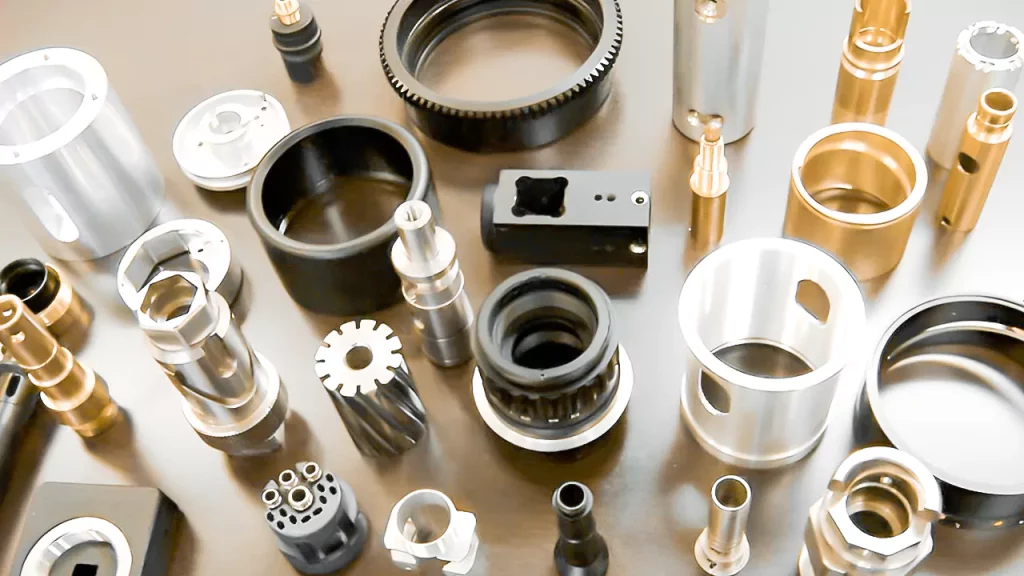 CNC Machining parts
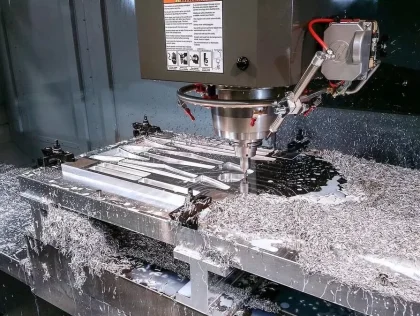
We view CNC machining prototype production as a process of revelation. Starting with a solid block of material—typically steel, aluminum alloy, or stainless steel—we use high-precision tools to carve away the excess. Utilizing our 4-axis and 5-axis machining centers, we can achieve complex geometries by removing material layer by layer. This method is purely subtractive, meaning the final part is cut directly from the raw stock without the need for molds.
Prototype Injection Molding (Formative)
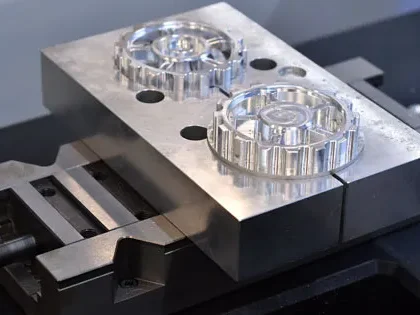
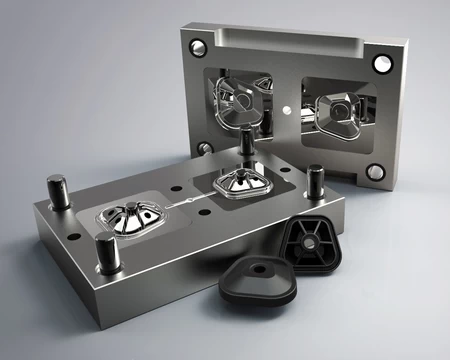 Prototype Injection Molding
In contrast, prototype injection molding (including Metal Injection Molding and Die Casting) is a formative process. This involves creating a cavity—often using rapid tooling made from aluminum or soft steel—and injecting molten material to form the part. This method builds the component into its final shape rather than cutting it out.
Key Strengths Comparison
When we advise clients on manufacturing process selection, we focus on these core distinctions:
- CNC Machining: Requires no upfront tooling investment, allowing us to start cutting parts immediately. It offers incredible flexibility for design changes.
- Injection Molding: Delivers parts with production-like properties and consistent grain structures. While it requires initial tooling creation, it provides a realistic representation of final mass-produced components.
Head-to-Head Comparison: The Trade-offs
Choosing between CNC machining prototype workflows and injection molding isn’t just about preference; it’s about balancing speed, budget, and physical requirements. At MS Machining, we see how these two distinct rapid prototyping methods impact product development cycles every day. Here is how they stack up against each other.
Lead Time Analysis
Time is often the biggest constraint in development. CNC machining is the clear winner for speed. Since it is a subtractive process, we can take a CAD file and start cutting material almost immediately. For urgent projects, we can deliver functional metal parts in a matter of days.
In contrast, prototype injection molding requires the creation of a mold tool before a single part is produced. Even with rapid tooling using aluminum or soft steel, the setup typically takes 1–6 weeks depending on complexity. If you need parts next week to meet a deadline, machining is the only viable option.
Cost Breakdown: Upfront vs. Per-Part
The financial decision usually comes down to volume.
- CNC Machining: Has very low upfront costs because there is no mold to build. However, the machine time and labor required for each unit keep the per-part cost higher and relatively static, regardless of quantity.
- Injection Molding: Requires a significant initial investment for tooling. However, once the tool is made, the price per unit drops drastically. This makes it ideal for low volume manufacturing once you cross a certain quantity threshold.
Achievable Tolerances and Precision
When tight tolerances machining is non-negotiable, CNC is superior. Our precision centers can routinely hold tolerances of ±0.001″ (0.025mm) or better, ensuring exact fits for complex assemblies. Molding typically holds looser tolerances (±0.003″–0.005″) due to material shrinkage during cooling. For high-precision components, we often recommend sticking to machining or using post-machining operations on molded parts.
Material Fidelity and Finish
CNC machining retains the structural integrity of the original stock material. Whether we are working with steel or providing alloy CNC machining services, the grain structure remains consistent, offering predictable strength. Injection molding involves melting and re-solidifying material, which can introduce flow lines, sink marks, or internal stresses if the design isn’t optimized.
Quick Comparison Matrix
| Feature | CNC Machining (Subtractive) | Prototype Injection Molding (Formative) |
|---|---|---|
| Lead Time | Fast (Days) | Slower (1–6 Weeks) |
| Upfront Cost | Low (Programming & Setup only) | High (Tooling investment required) |
| Per-Part Cost | High (Time-intensive) | Low (Fast cycle times) |
| Tolerances | Tight (±0.001″) | Standard (±0.003″–0.005″) |
| Ideal Volume | 1–100 Parts | 100–5,000+ Parts |
| Surface Finish | Machined marks (smoothable) | Smooth (dependent on mold polish) |
Key Takeaway: If you are in the early design phase with low quantities, the CNC vs injection molding cost comparison heavily favors machining. Once the design is frozen and volumes increase, the investment in molding tooling begins to pay off.
When to Choose CNC Machining

At MS Machining, we recommend CNC machining as the primary choice during the early stages of product development. When your design is still evolving, the subtractive process offers unmatched flexibility. Unlike molding, which requires the fabrication of expensive tooling, a CNC machining prototype starts with a solid block of material and cuts away the excess. This allows us to modify the CAD file and produce a revised part immediately, making it one of the most agile rapid prototyping methods available.
Ideal Scenarios for Subtractive Manufacturing
We find that CNC machining delivers the best ROI when production volumes are low—typically between 1 and 100 units. At this volume, the cost of cutting a mold for injection molding or die casting cannot be amortized effectively. CNC eliminates upfront tooling costs, allowing you to allocate your budget toward refining the design rather than paying for molds that might become obsolete after a single revision.
For projects requiring complex geometries or multi-sided features, our 4-axis CNC machining services provide the capability to produce intricate parts without the design constraints often imposed by the molding process, such as draft angles or uniform wall thickness.
Decision Checklist: CNC vs. Molding
Use the table below to determine if your project aligns with the strengths of CNC machining:
| Factor | Why Choose CNC Machining? |
|---|---|
| Volume | Best for low volume manufacturing (1–100 parts). |
| Tolerances | Achieves extremely tight tolerances (±0.001″) superior to most standard molding. |
| Material | Uses production-grade stock (Aluminum, Steel, Stainless) for fully functional metal parts. |
| Lead Time | Fastest turnaround (days) since there is no tooling setup delay. |
| Risk | Low financial risk; no capital tied up in hard tooling during uncertain market demand. |
Risk Mitigation in Product Development
Choosing CNC machining acts as a safety net when market demand is uncertain. By producing a small batch of high-fidelity parts, you can perform functional testing and market validation before committing to the significant investment of Metal Injection Molding (MIM) or die casting tooling. This approach ensures that when you do transition to mass production, your design is frozen, tested, and optimized for manufacturing.
When to Choose Prototype Injection Molding
 Prototype Injection Molding-01
At MS Machining, we recommend shifting to prototype injection molding—specifically processes like Metal Injection Molding (MIM) or Die Casting—when your project moves beyond the initial concept phase and requires production-like testing. This process is the ideal solution for low volume manufacturing where you need to validate the manufacturing process itself, not just the part geometry. Unlike CNC machining, which cuts away material, molding ensures your prototypes exhibit the exact flow lines, grain structure, and physical properties of the final mass-produced component.
We typically advise clients to transition to molding when quantities hit the 100 to 5,000+ parts range. At this volume, the economics flip; the initial cost of creating a mold is amortized across the batch, drastically lowering the price per unit compared to machining each part individually. This method also serves as an excellent bridge to full production, allowing you to use aluminum or soft steel tooling to get parts faster and cheaper while hard production molds are being cut.
Decision Criteria for Switching to Molding
| Factor | Why Choose Molding? |
|---|---|
| Volume | Ideal for medium quantities (100–5,000+) where per-part savings justify tooling costs. |
| Complexity | Best for parts with intricate details, thin walls, or internal geometries that are difficult for CNC machining services to reach. |
| Consistency | Guarantees identical material behavior and dimensions across thousands of units. |
| Surface Finish | Achieves specific textures and finishes directly from the mold with minimal post-processing. |
For parts requiring high-precision metal components, our Metal Injection Molding (MIM) capabilities allow for complex geometries that would be cost-prohibitive to machine. However, keep in mind that molded parts often require secondary operations to meet tight tolerances. We frequently utilize post-processing for cast and molded parts to ensure the final critical dimensions meet the strict standards required by industries like aerospace and medical.
The Volume Break-Even Point: Making the Transition
Deciding when to switch from machining to molding is one of the most critical financial decisions in product development. We typically see the break-even point volume land somewhere between 500 and 5,000 units, depending heavily on the geometry and material of the part. For low volume manufacturing, CNC remains the king of cost-efficiency because you avoid the high upfront investment in tooling. However, as your order quantity climbs, the lower per-unit cost of molding starts to outweigh that initial tooling expense.
Factors Influencing the Switch
The exact moment to transition isn’t just about quantity; it comes down to specific project variables. At MS Machining, we analyze several key factors to help you make the right manufacturing process selection:
- Part Complexity: Intricate parts requiring extensive 5-axis work are expensive to machine individually. Molding handles complexity without adding significant cycle time.
- Material Hardness: Harder materials like stainless steel take longer to cut, making the switch to Metal Injection Molding (MIM) or Die Casting viable at lower volumes.
- Part Size: Larger parts require massive molds, pushing the break-even point higher. Smaller parts often justify tooling sooner.
- Design Stability: If the design is still in flux, stick to machining. Modifying a steel mold is far more costly than updating a CAD file.
Hybrid Strategies and Cost Analysis
A smart approach to risk mitigation is a hybrid strategy. We often suggest starting with CNC production machining for the initial pilot run of 100–500 units. This allows you to get functional metal parts into the market or assembly line immediately while validating the design. Once the design is locked and demand is proven, we transition to hard tooling for mass production.
When calculating the total cost of ownership, look beyond the unit price. You must factor in the risk of rework. If you cut a mold too early and the design fails testing, the cost of re-tooling can destroy your budget. Using CNC as a bridge ensures that when you finally pull the trigger on molding, your investment is secure.
Design Considerations for Smooth Transition (DFM)
Moving from a machined prototype to a mass-produced molded part isn’t always a simple copy-paste operation. At MS Machining, we often see designs that work perfectly on our 5-axis CNC centers but hit major roadblocks when transitioning to Metal Injection Molding (MIM) or die casting. Applying Design for Manufacturability (DFM) principles early in the product development manufacturing cycle saves significant time and re-engineering costs.
Optimizing Designs for Scalability
While CNC machining prototypes allow for incredible geometric freedom, molding processes require strict adherence to physics for material flow and ejection. To ensure a seamless scale-up, our engineering team recommends addressing these factors during the initial design phase:
- Draft Angles: CNC tools cut vertically, meaning walls can be perfectly straight. However, molded parts require a slight taper (draft) to release from the tool. Adding draft angles early prevents redesigns later.
- Uniform Wall Thickness: CNC machining can carve out thick and thin sections indiscriminately. In molding, uneven walls lead to cooling inconsistencies and defects. Aim for uniform thickness to avoid sink marks and warping.
- Undercuts: Our 5-axis machines handle undercuts easily, but in molding, these features require complex sliders and lifters, driving up tooling costs. Simplify geometry where possible to reduce mold complexity.
- Corner Radii: Sharp internal corners are easy for some machining operations but cause stress concentrations and flow issues in molding. Adding generous radii improves material flow and part strength.
Ensuring your design maintains stainless steel casting and CNC quality standards during this transition is critical for functional performance. By anticipating these constraints, we help you bridge the gap between a functional prototype and a production-ready component without sacrificing quality.
Real-World Applications and Industry Examples
When you are deep in product development manufacturing, seeing how these processes play out in the field makes the choice clearer. We see distinct patterns in how engineers deploy CNC machining prototype strategies versus molding solutions across high-stakes industries.
Medical Devices: Precision vs. Volume
In the medical sector, the process is dictated by the application’s criticality and volume.
- CNC Machining: Ideally suited for custom implants and surgical instruments where tight tolerances (±0.001″) are non-negotiable. We frequently utilize CNC precision machining services for high-precision components like Gas Blood Analyzers, where the reliability of solid metal stock is paramount.
- Injection Molding: The go-to for high-volume disposables or standardized casing components once the design is frozen.
Aerospace and Automotive: Structural Integrity
The demands for rapid prototyping methods in aerospace differ vastly from consumer goods.
- Structural Prototypes: Engineers rely on CNC machining to cut parts from solid blocks of aluminum or titanium to test structural integrity under real loads.
- Lightweight Components: For complex assemblies requiring consistent material properties, we leverage our experience as an aerospace machining components manufacturer to deliver 5-axis machined parts that meet rigorous defense and space standards.
Ensuring Quality in Complex Assemblies
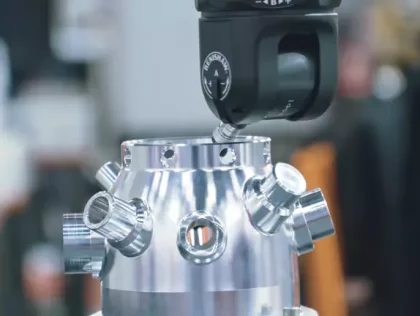
Whether it is a one-off prototype or a run of 5,000 units, quality control is the backbone of our operation. Our facility employs a triple-layer QC line, ensuring that every machined or molded part meets the exact specifications required for low volume manufacturing. This level of scrutiny is essential when transitioning from a functional prototype to a final market-ready product.
FAQs: CNC vs. Injection Molding for Prototypes
Is CNC machining always cheaper than injection molding for prototypes?
For small quantities, the answer is almost always yes. Since CNC machining prototype production is a subtractive process, we do not need to invest time and money into building a mold upfront. You pay for the material and the machine time. If you only need 1 to 50 parts for fit and function testing, CNC is the most cost-effective choice. Prototype injection molding only becomes cheaper when the volume increases enough to amortize the high cost of the metal tooling across thousands of units.
Can I use the same 3D CAD file for both CNC and injection molding?
You can use the same base file, but you will likely need to make adjustments for manufacturing process selection. Our CNC milling services for complex components can handle undercuts and sharp corners that are impossible or very expensive to mold. Conversely, if you switch to molding, you must update the design to include draft angles (so the part ejects from the mold) and ensure uniform wall thickness to prevent sink marks. It is smart to design with the final production method in mind, but the prototype file often remains slightly different.
How many parts do I need to make injection molding worth the cost?
The “break-even” point usually sits between 100 and 500 units, depending on the complexity of the part and the material. For low volume manufacturing below this threshold, CNC machining offers better value and flexibility. Once you cross into the hundreds or thousands, the per-unit cost of injection molding drops drastically, making it the superior option for scaling up.
Which process is faster for a rush prototype order?
CNC machining is the speed leader for getting the first parts in your hand. Because there is no need to fabricate a mold, we can load your CAD data into our 4-axis CNC mill and start cutting material almost immediately. Injection molding requires a lead time of several weeks just to manufacture the tooling before a single part can be produced. If speed is your priority for a concept model, CNC is the way to go.