
What Plastic CNC Machining Actually Is and Why It Matters
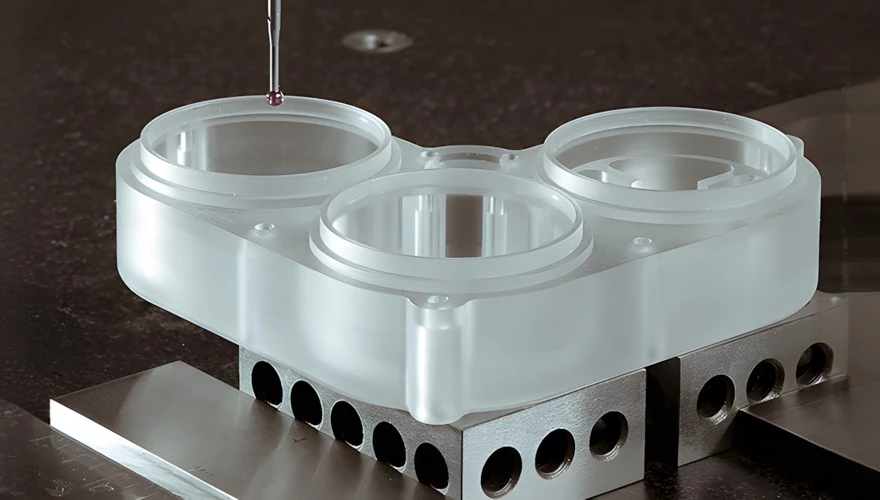
Plastic CNC machining is a subtractive manufacturing process: we start from solid plastic stock (rod, plate, or block) and use computer-controlled cutting tools to remove material until we reach the final geometry. For engineers, buyers, and product teams in the US, it’s often the most practical way to get strong, accurate plastic parts without committing to expensive tooling.
How CNC Machines Work With Plastic Stock
In our shop, we use 3-axis, 4-axis, and 5-axis CNC mills, plus CNC lathes, to machine plastic components:
- 3-axis milling
- Best for flat parts, basic pockets, holes, and profiles
- Ideal for brackets, plates, covers, and simple enclosures
- 4-axis milling
- Adds rotary movement for features around a part
- Great for machined plastic fittings, manifolds, and parts with features on multiple sides
- 5-axis milling
- Full multi-angle machining in one setup
- Used for complex plastic geometries, organic shapes, and tighter positional tolerances
- CNC turning (lathes)
- Spins round plastic bar while tools cut
- Ideal for shafts, bushings, spacers, threaded plastic parts, and precision rings
By picking the right machine and fixturing strategy, we can hold delicate plastics securely and avoid distortion.
When Plastic CNC Machining Beats Injection Molding
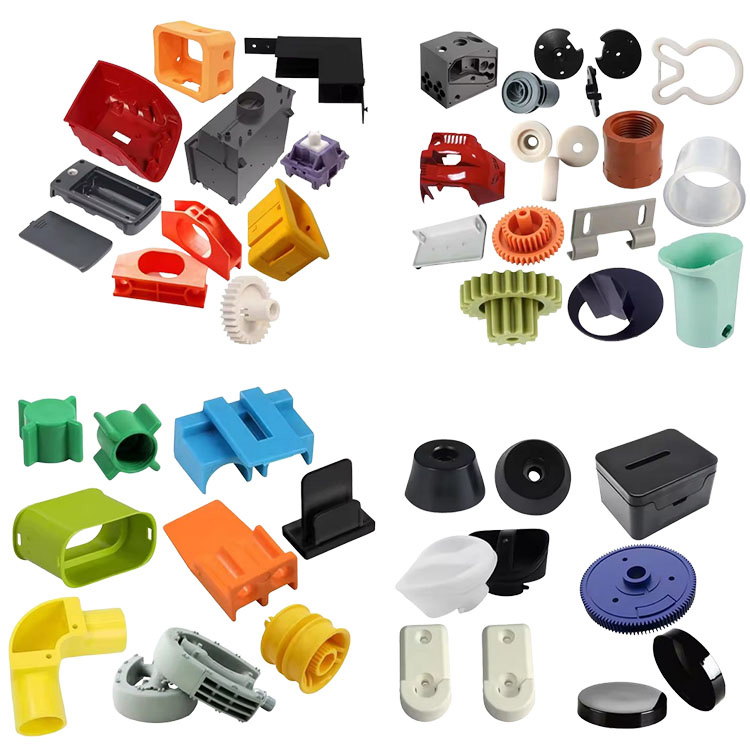
For prototypes and low-volume production, plastic CNC machining often wins over injection molding:
- No mold cost: You avoid the $5k–$50k+ tooling investment required for injection molds
- Fast changes: We update the CAM program and re-run; no tooling rework
- Real materials: You get parts in true engineering-grade plastics, not “printable” substitutes
- Small batch sweet spot:
- 1–500 pcs: CNC machined plastic parts are usually more economical
- Bridge runs: CNC fills the gap while molds are being designed or built
If you need functional prototypes, pilot builds, or custom small series plastic CNC machining, machining is almost always the smarter first step.
Tolerances, Accuracy, and Repeatability in Plastic CNC Parts
Plastics move more than metals, but with the right process control, we routinely hold:
- General plastics (ABS, HDPE, acrylic):
- ±0.005″ to ±0.010″ (±0.13–0.25 mm) typical
- Engineering plastics (Delrin/Acetal, Nylon, PC):
- ±0.002″ to ±0.005″ (±0.05–0.13 mm) with proper setup
- High-performance plastics (PEEK, PEI, PPSU):
- ±0.001–0.002″ (±0.025–0.05 mm) on critical features, with controlled fixturing and environment
We design our process around thermal expansion, moisture absorption, and stress relief to keep parts consistent from run to run.
Surface Finish and Post-Processing for Plastic Parts
Proper tooling, feeds, and speeds let us achieve clean, glossy, or matte finishes directly from the machine. From there, we can apply:
- Polishing: For acrylic/PMMA, polycarbonate, and optical plastic components
- Bead blasting: To remove shine and create a uniform matte texture
- Vapor polishing (for select plastics): To improve clarity and reduce visible tool marks
- Deburring: Manual or mechanical edge finishing for safe handling and better assembly
- Tapping and inserts: Threads, heat-set inserts, and metal inserts for stronger joints
The result: CNC machined plastic parts that are ready for customer-facing assemblies or functional testing.
When to Choose Plastic CNC Machining Over 3D Printing or Molding
We recommend plastic CNC machining services when you need:
- Stronger parts than 3D printing can provide, with isotropic material properties
- Tighter tolerances and better surfaces than most polymer 3D printing processes
- True production-grade plastics like Delrin, PEEK, PTFE, PEI, or PPSU
- Low volume plastic manufacturing where molds don’t make financial sense
- Precision plastic prototypes that behave like final parts in testing
In short: if you care about fit, function, and real material properties, and your quantities are low to medium, plastic CNC machining is usually the most reliable and cost-effective route. When you’re ready, we can review your CAD, suggest machinable plastics, and quote your custom plastic CNC parts quickly and honestly.
Key Advantages of Plastic CNC Machining Over Other Processes
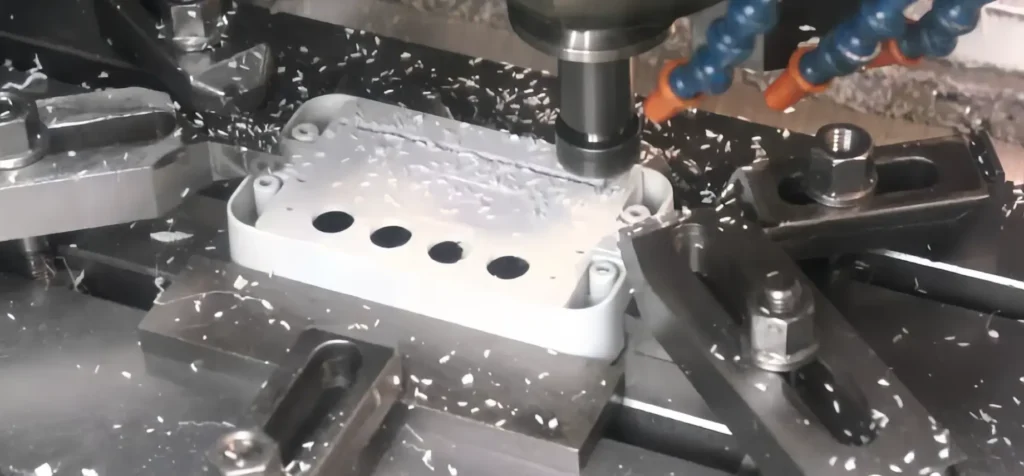
Plastic CNC machining gives you a level of speed, precision, and flexibility that’s hard to match with molding or 3D printing, especially for US teams working on real-world, functional parts.
Lower Cost for Prototypes & Low Volume
For prototypes and small batch plastic production, plastic CNC machining is usually the most cost‑effective option because:
- No expensive mold tooling—you pay for machining time, not a $10k+ mold.
- Perfect for 1–500+ parts where injection molding can’t justify tooling.
- You get production-grade CNC machined plastic parts right away, ideal for functional tests and pilot runs.
If you’re comparing prototype costs against molding, it’s worth reading how we stack up plastic injection molding vs CNC machining in real projects.
No Tooling & Fast Iteration
With our plastic CNC machining services, design changes are simple:
- Update the CAD file, adjust the CAM, and we’re cutting new parts—no tooling rework.
- You can iterate multiple versions in a week, making plastic prototype machining fast and affordable.
- Great fit for startups and R&D teams that are still locking in form, fit, and function.
Lead Times: CNC vs Molding vs Printing
For most US customers, time to part matters more than anything:
- CNC plastic machining: typically days to a week for custom plastic CNC parts.
- Injection molding: often 4–8+ weeks just for tooling, plus tuning.
- 3D printing: fastest single-part turnaround, but weaker material performance and rougher finish.
That’s why CNC machining thermoplastics often wins as a bridge production method between 3D printed prototypes and full molding.
Design Freedom & Complexity
CNC plastic milling services let you run:
- Deep pockets, precise bores, and tight-tolerance features.
- True flat faces, sharp outside edges, and accurate sealing surfaces.
- Hybrid parts that combine machining plastic components with inserts, threads, and secondary ops.
You don’t deal with draft angles, gate marks, or parting lines like with molding, and you avoid many of the geometry limits of FDM/SLA printing.
Strong, Functional Plastic Parts
Compared with many 3D printed parts, CNC machined plastics deliver:
- Isotropic or near-isotropic strength from solid stock, not layered.
- Full performance of engineering plastics machining like Delrin, nylon, PEEK, or polycarbonate.
- Better plastic machining tolerances, surface finish, and long‑term stability under load.
That’s why engineers use Delrin CNC machining, PEEK plastic machining, and ABS CNC machined parts for real, on‑the-bike, under‑hood, or in‑fixture testing.
Scales From One-Offs to Small Series
Our setup is built for:
- One-off precision plastic prototypes with fast turnaround.
- Small series plastic CNC machining (dozens to low thousands of parts).
- Repeatable, documented processes so you can reorder the same CNC machining plastic parts as you move through development stages.
Paired with our experience in special CNC machining processes, we can ramp from prototype to low volume plastic manufacturing without forcing you into tooling before you’re ready.
Best Machinable Plastics for CNC: Fast Material Selection Guide
Picking the right plastic is where CNC success (or headaches) starts. When I help customers choose materials for CNC machined plastic parts, we always balance 4 things:
- Mechanical strength & stiffness
- Heat and chemical resistance
- Machinability (cost, speed, surface finish)
- Regulatory needs (FDA, UL, medical, aerospace, etc.)
Below is a quick, practical machinable plastics guide for plastic CNC machining in the U.S. market.
How to Choose the Right Plastic for CNC Machining
Use this quick filter:
- Need low cost prototypes → ABS, HDPE, Acrylic
- Need tight tolerances & low friction → Acetal/Delrin, POM
- Need wear resistance → Nylon, UHMW-PE
- Need clear, optical quality → Acrylic, Polycarbonate
- Need high heat + strength → PEEK, PEI (Ultem), PPSU
- Need chemical resistance & low friction → PTFE, PEEK, POM
ABS CNC Machined Parts
ABS is a go-to for plastic prototype machining.
- Pros: Easy to machine, good toughness, low cost, paintable
- Cons: Moderate heat resistance, average UV resistance
- Typical uses: Housings, brackets, consumer product prototypes, enclosures
Best when you want fast, affordable CNC plastic machining prototypes that mimic molded ABS.
Acetal / Delrin (POM) CNC Machining
Acetal (POM) and Delrin are top choices for precision plastic prototypes.
- Pros: Excellent machinability, low friction, good dimensional stability
- Cons: Limited high-temp performance, not great for strong acids
- Typical uses: Gears, pulleys, bushings, wear strips, jigs and fixtures
If you need smooth-running machined plastic components with tight tolerances, this is usually my first pick.
Nylon (PA) CNC Machining
Nylon (PA6, PA66, etc.) is strong, tough, and wears well.
- Pros: High wear resistance, good strength, good for sliding parts
- Cons: Absorbs moisture (size change), can warp if not handled right
- Typical uses: Bearings, spacers, wear parts, automotive test parts
Great for small-series plastic CNC machining where sliding or impact is involved.
Polycarbonate Machining Tips
Polycarbonate (PC) gives you a tough, impact‑resistant part.
- Pros: Very tough, transparent, good heat resistance
- Cons: Scratches easier than acrylic, can stress-crack with harsh chemicals
- Machining tips: Sharp tools, controlled feeds, avoid overheating
Use PC when you need clear but tough parts: guards, machine covers, light housings.
PEEK Plastic Machining
PEEK is a high‑performance engineering plastic for demanding parts.
- Pros: High strength, up to ~480°F (250°C) service, excellent chemical resistance
- Cons: Expensive, needs proper tooling and parameters
- Typical industries: Aerospace, medical implants/instrument handles, oil & gas, semiconductor
For tight‑tolerance, high-temp plastic components, I usually combine PEEK with robust inspection and material control similar to what we use on our CNC machining materials list.
PTFE (Teflon) Machining
PTFE (Teflon) is slippery and chemically resistant but tricky.
- Pros: Ultra-low friction, excellent chemical and temperature resistance
- Cons: Very soft, creeps under load, hard to hold tight tolerances
- Best practices: Sharp tools, light cuts, careful fixturing, measure after rest
Good for seals, gaskets, chemical handling components, and electrical insulators.
HDPE and UHMW-PE Machining
HDPE and UHMW-PE are tough, low‑friction, and budget‑friendly.
- HDPE pros: Easy to machine, good impact resistance, low cost
- UHMW pros: Exceptional wear and abrasion resistance, very low friction
- Cons: Both are “gummy,” can string/chip-weld if feeds/speeds are off
Ideal for cutting boards, liners, wear strips, dock components, and industrial guides.
Acrylic (PMMA) CNC Machining
Acrylic (PMMA) is your best friend for clear CNC plastic parts.
- Pros: Very clear, polishes to optical finish, rigid and stiff
- Cons: More brittle than PC, can chip if tools are dull
- Finishing: Flame polishing or buffing for lens-like clarity
Use for displays, light guides, covers, and optical-style prototypes.
PEI (Ultem) CNC Machining
PEI (Ultem) is a high-performance thermoplastic for high heat + strength.
- Pros: High heat resistance, good strength, good flame and electrical properties
- Cons: More expensive than commodity plastics, needs sharp tooling
- Typical uses: Aerospace interiors, medical devices, electrical connectors
Great when you need high-temp plastic CNC machining but PEEK is overkill or too costly.
PPSU CNC Machined Plastic Parts
PPSU (Polyphenylsulfone) is tough, sterilizable, and dimensionally stable.
- Pros: Excellent hydrolysis resistance, withstands repeated steam sterilization
- Cons: Higher cost, needs proper machining parameters
- Typical uses: Medical/dental devices, sterilizable handles, manifolds
I recommend PPSU whenever customers need reusable, sterilizable CNC machined plastic parts.
Comparison Table: Common Machinable Plastics
| Material | Machinability | Max Service Temp (Approx) | Chemical Resistance | Cost Level |
|---|---|---|---|---|
| ABS | Easy | ~185°F / 85°C | Fair | Low |
| Acetal/Delrin | Very easy | ~212°F / 100°C | Good (not acids) | Medium |
| Nylon | Medium | ~230°F / 110°C | Good | Medium |
| Polycarbonate | Medium | ~250°F / 120°C | Fair–Good | Medium |
| HDPE | Easy | ~180°F / 80°C | Good | Low |
| UHMW-PE | Medium | ~180°F / 80°C | Good | Medium |
| Acrylic | Medium | ~175°F / 80°C | Fair | Low–Med |
| PTFE | Medium–Hard | ~500°F / 260°C | Excellent | High |
| PEI (Ultem) | Medium | ~340°F / 170°C | Good–Very good | High |
| PPSU | Medium | ~375°F / 190°C | Very good | High |
| PEEK | Medium–Hard | ~480°F / 250°C | Excellent | Very high |
(Values are typical ranges, not design limits.)
Matching Plastic Choice to Requirements
When we quote custom plastic CNC parts for U.S. customers, we match material to:
- Mechanical: load, impact, wear, stiffness
- Thermal: peak temperature, continuous use, thermal cycling
- Chemical: oils, fuels, solvents, cleaners, sterilization
- Regulatory: FDA, USP Class VI, UL94, aerospace/medical specs
- Cost & volume: prototype vs small batch plastic production
If you share your 3D model, environment, temperature, and required certifications in your RFQ, I can quickly shortlist 2–3 best plastics for CNC machining and quote small series plastic CNC machining with realistic tolerances and lead times.
Plastic CNC Machining Process Step by Step
1. DFM Review of Your CAD File
Every plastic CNC machining project starts with a CAD file review and DFM check.
I’ll look for things that can cause cost or quality issues, like:
- Walls that are too thin and likely to warp
- Undercuts or features that require extra setups
- Tight tolerances that don’t match the plastic’s stability
- Threads, deep pockets, and small radii that are hard to machine in plastics
You’ll get feedback and suggestions so we can lock in a design that machines cleanly, holds tolerance, and stays within budget.
2. Plastic Material Selection & Stock Sourcing
Next, we help you pick the best plastic for CNC machining based on:
- Strength, stiffness, and wear resistance
- Heat and chemical resistance
- Regulatory needs (FDA, USP Class VI, UL, etc.)
- Cost and lead time
We then source the right plastic stock (plate, rod, tube, or blocks) from trusted U.S. suppliers so your CNC machined plastic parts are consistent from batch to batch.
3. Cutting and Preparing Plastic Stock
Before a part hits the CNC, we:
- Saw or cut raw stock to efficient blank sizes
- Face and square edges where needed
- Plan material allowance for clamping and final finishing
Good prep reduces vibration, improves surface finish, and shortens cycle time.
4. CAM Programming for Plastic CNC Machining
In CAM, we tailor toolpaths specifically for machining plastic components:
- High spindle speeds with controlled chip load
- Shallow stepdowns and optimized stepovers to avoid heat build-up
- Entry/exit strategies that prevent chipping and burrs
- Toolpaths tuned separately for soft plastics (HDPE, UHMW) vs engineering plastics (Delrin, PEEK, ABS)
This is where we balance speed, surface finish, and dimensional accuracy.
5. Workholding and Fixturing for Plastics
Plastics move differently than metal, so workholding matters a lot:
- Custom soft jaws and vacuum fixtures for thin or large parts
- Low-clamping-force setups to avoid deformation
- Smart support under thin walls and flat panels to prevent bowing
Dialed-in fixturing is key for precision plastic prototypes and small series plastic CNC machining.
6. CNC Plastic Milling Workflows
For most CNC plastic milling services, the workflow looks like this:
- Roughing to remove bulk material while controlling heat
- Semi-finishing to stabilize dimensions
- Finishing passes with sharp tools and light cuts for clean surfaces
- Optional 4-axis or 5-axis setups for complex faces and undercuts
This delivers accurate, repeatable CNC machining plastic parts without warping.
7. CNC Turning for Plastic Shafts & Bushings
For round parts, we use CNC turning:
- Sharp, polished inserts for clean cuts on Delrin, Nylon, PEEK, PTFE, etc.
- Controlled feed rates to avoid “fuzzy” surfaces
- Support with live center or tailstock to keep long shafts stable
Ideal for bushings, rollers, spacers, and precision plastic shafts.
8. Deburring and Edge Finishing
After machining, we clean up edges so parts are safe and ready to use:
- Hand deburring for precise control on critical edges
- Light tumbling or media deburring on suitable plastics
- Chamfering and rounding where needed for assembly and handling
This keeps custom plastic CNC parts looking professional and consistent.
9. Surface Finishing Options for Plastic Parts
Depending on your part’s use, we can finish surfaces in different ways:
- Polishing for acrylic and polycarbonate lenses or display parts
- Bead blasting for a uniform matte look on housings
- Vapor polishing (for certain clear plastics) to restore optical clarity
- Light sanding or buffing for cosmetic outer surfaces
You can match the finish to prototypes, end-use parts, or show-quality samples.
10. Inspection and Quality Control
For plastic machining tolerances, we verify parts using:
- Calipers and micrometers for general features
- Height gauges, bore gauges, and pin gauges for critical dimensions
- CMM or optical measurement for tight-tolerance, complex profiles
We focus on both size and stability—making sure parts meet spec after they cool and settle.
11. Handling Thin Walls & Complex Plastic Geometries
Thin, detailed plastic parts are where an expert shop really matters. We manage them by:
- Using multiple light roughing and finishing passes
- Balancing cuts side-to-side to reduce stress
- Adjusting feeds/speeds to avoid heat and chatter
- Designing fixturing that supports the part without distortion
The same experience we apply to demanding metal work—like our precision steel CNC machining jobs—goes directly into producing reliable, repeatable CNC machined plastic parts for your prototypes and small-batch runs.
Design for Manufacturability in Plastic CNC Machining
Good design makes or breaks plastic CNC machining. If you follow a few clear rules up front, you’ll get stable, accurate, and affordable CNC machined plastic parts without endless redesigns.
Wall Thickness Guidelines for Plastic Parts
Plastics aren’t as stiff as metal, so thin walls flex, chatter, and warp.
As a starting point for CNC machining plastic parts:
- Standard walls:
- Most engineering plastics: 0.06″–0.12″ (1.5–3.0 mm)
- Minimum walls (short features, stiff materials like POM/ABS):
- Down to 0.04″ (1.0 mm) with care
- Avoid:
- Very tall, thin walls (height > 6× wall thickness)
- Long, unsupported panels
If you need thin walls for weight or function, we’ll often add ribs, local thickening, or fixture support to keep the part stable during machining.
Minimum Feature Sizes and Practical Plastic Tolerances
Plastics move more from heat and stress, so ultra-tight tolerances get expensive fast.
Typical guidelines for CNC plastic machining:
- Minimum milled slot width: ~0.03″–0.04″ (0.8–1.0 mm)
- Minimum hole size (drilled): ~0.03″–0.04″ (0.8–1.0 mm)
- Standard tolerances:
- ±0.005″ (±0.13 mm) is realistic for most plastic CNC machined parts
- Tight areas can go down to ±0.001″–0.002″ (±0.025–0.05 mm) on stable materials, short features, and good fixturing
When you call out only the truly critical dimensions, we can hold cost and lead time down while still delivering precision plastic prototypes.
Corner Radii and Internal Fillets
Sharp internal corners are a common design mistake in machining plastic components.
- Add internal fillets wherever a pocket or slot ends
- Try to match fillet radius to tool radius (ex: 0.0625″ tool → 0.0625″–0.08″ fillet)
- For deep pockets, use larger radii to reduce tool deflection and heat
Generous fillets improve machinability, strength, and part life, especially in engineering plastics.
Thread Design and Threaded Inserts in Plastics
Threads cut directly into plastic behave very differently than in metal.
Direct plastic threads:
- Use coarse threads (UNC-style) with full-depth engagement
- Avoid very small sizes for high-load joints
- Good for covers, non-structural fasteners, and low-cycle assembly
Threaded inserts:
- Use heat-set, press-in, or ultrasonic inserts for:
- Repeated assembly/disassembly
- High clamp loads
- Structural joints
- Design boss diameter and height to suit the insert spec and material
We’ll help you pick the right insert style based on the plastic, load, and assembly process.
Bosses, Ribs, and Structural Features
For small series plastic CNC machining, you can still “think like an engineer,” not just a shape designer.
- Use ribs to add stiffness instead of simply thickening walls
- Bosses should be:
- Large enough to support threads/inserts
- Blended with fillets at the base to prevent cracking
- Keep transitions smooth, not abrupt, to reduce stress and warping
Good structural features let you keep weight low and stiffness high without driving machining costs through the roof.
Avoid Sharp Internal Corners and Stress Concentrators
Plastics are more sensitive to stress risers than metals.
Design rules:
- Replace sharp internal corners with fillets
- Avoid knife edges or razor-thin features
- Smooth out sudden cross-section changes with tapers or radii
This is critical in load-bearing POM, nylon, PEEK, and similar engineering plastics machining.
Design for Thermal Expansion and Creep
Plastics expand with temperature and can creep under long-term load.
When designing CNC machined plastic parts:
- Avoid ultra-tight fits between plastic and metal components
- Add clearance for sliding fits, especially in long shafts, guides, and covers
- Don’t let plastic carry constant high stress over years (use inserts, ribs, or supports)
- In high-temp applications (PEEK, PEI, PPSU), confirm operating temperature range and expansion
If your part sees big temperature swings, tell us; we’ll steer you toward materials and tolerances that stay stable in the real world.
Reducing Warping and Distortion During Machining
Plastic moves from internal stress, heat, and clamping forces. Smart design makes life easier.
Helpful design tweaks:
- Avoid large, wide, flat plates without ribs or edge support
- Keep uniform wall thickness where possible
- Use simple, symmetric geometry to reduce imbalance and twist
- For critical parts, we may:
- Rough machine → stress relieve → finish machine
- Use specialized fixturing to support thin or flexible areas
Let us know if flatness is critical; we can design the process around that need.
File Format, Drawings, and GD&T Tips
Good data up front means fewer surprises and faster quoting on custom plastic CNC parts.
- Preferred 3D models: STEP (.step, .stp) is best; we also accept IGES, Parasolid
- 2D drawings: PDF + model, with:
- Only critical dimensions and tolerances called out
- Material, color, and finish specified
- Clear notes on threads, inserts, and any special requirements
- Use GD&T where it actually matters (flatness, position, parallelism), not everywhere
When we see clean models and realistic tolerances, we can turn around accurate quotes quickly and keep production smooth. For complex multi-axis plastic parts, our experience with advanced setups like 4-axis CNC machining services helps us hold tight GD&T features efficiently.
Quick DFM Checklist for Plastic CNC Machined Parts
Before you send your RFQ, run through this:
- [ ] Wall thicknesses are realistic for the chosen plastic
- [ ] No unnecessary sharp internal corners; fillets added where possible
- [ ] Threads and threaded inserts are designed for plastic, not copied from metal
- [ ] Ribs and bosses are used instead of oversized solid sections
- [ ] Critical tolerances are limited to what really matters
- [ ] Geometry avoids large unsupported thin areas that can warp
- [ ] File formats: STEP + drawing with material, finish, and GD&T clearly defined
When you design with manufacturability in mind, plastic CNC machining stays fast, predictable, and cost-effective—from a single CNC plastic machining prototype to repeat small-batch production.
Common Challenges in Plastic CNC Machining and How to Fix Them
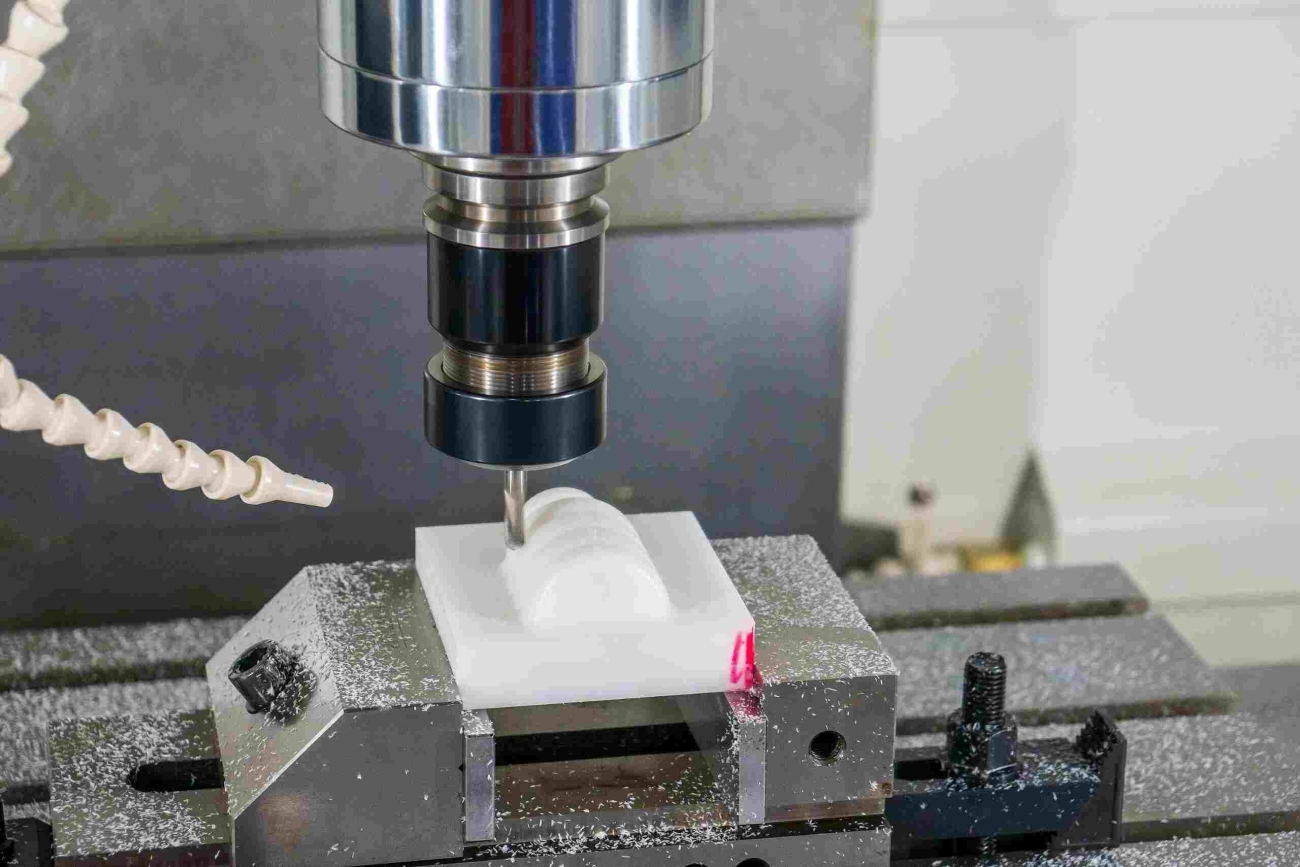
Plastic CNC machining looks simple on paper, but plastics behave nothing like metal. If you don’t set up the process right, you’ll fight heat, warping, and bad surface finish all day. Here’s how we handle the most common issues in our plastic CNC machining services so your CNC machined plastic parts come out clean and consistent.
Heat Buildup, Melting, and Cutting Temperature Control
Plastics hate heat. Too much and you’ll see smeared edges, out-of-tolerance parts, and gummy surfaces.
How we keep temperatures under control:
- Use sharp, high-positive-rake tools designed for machining plastic
- Run higher spindle speeds but lighter chip loads (small stepdowns, smaller width of cut)
- Avoid dwelling in cuts; keep the tool moving to prevent rubbing
- Use air blast or minimum-quantity lubrication (MQL) instead of flood coolant on heat‑sensitive plastics
- For materials like acrylic and polycarbonate, we use climb milling and light passes to reduce friction
Chip Evacuation and Chip Welding on Tools
Stringy chips and chip welding can wreck surface quality and even break tools.
Fixes that work:
- Use tools with polished flutes and larger chip gullets
- Add air blast to push chips out of deep pockets and slots
- Program pecking cycles and step-up/step-down strategies to clear chips
- For very gummy plastics, we use specialty plastic cutters and adjust feed so chips break instead of forming long strings
Dimensional Stability and Tolerance Control
Plastics move with temperature, moisture, and internal stress. Holding tight plastic machining tolerances takes discipline.
Our approach:
- Start with stress-relieved, quality plastic stock
- Let material condition at room temperature before machining
- Rough machine, then let parts rest, then finish-machine critical dimensions
- Control shop temperature and measure parts at stable conditions
- Apply realistic tolerances that match the material’s behavior instead of “metal-like” tolerances everywhere
Warping, Bowing, and Part Distortion
Thin walls and large flat areas warp easily during machining and after release from the fixture.
How we keep plastic CNC machining parts flat and true:
- Use balanced roughing on both sides of the part
- Support parts with custom soft jaws, vacuum fixtures, or sacrificial fixtures
- Avoid over-clamping; use even, distributed clamping pressure
- Reduce depth of cut on thin areas and leave small finishing stock for the last passes
- For tricky materials, we may anneal between roughing and finishing to release stress
Tool Selection and Geometry for Clean Plastic Cuts
Wrong tool geometry causes burrs, fuzz, and tearing instead of crisp edges.
What works best:
- Single-flute or two-flute, high-helix end mills for most machinable plastics
- Polished carbide tools to reduce friction and chip adhesion
- O-flute cutters for acrylic, HDPE, and other soft plastics
- Use sharp, uncoated tools; some coatings increase heat and friction on plastic
Feeds and Speeds for Different Plastics
Every plastic behaves differently. ABS, Delrin (POM), Nylon, PEEK – they all want their own recipe.
General tuning rules:
- Run high spindle speed, moderate feed for clean finishes in ABS and acrylic
- For Delrin and acetal, we push higher feed rates to get good chip formation
- For PEEK and other engineering plastics, we use more conservative speeds with controlled chip load to avoid heat buildup
- Always test on a sample piece before committing to a production setup
Coolant, Air, and Lubrication Strategies
Coolant strategy matters just as much as feeds and speeds in CNC machining thermoplastics.
- Air blast for most plastics to keep chips moving and reduce heat
- MQL or light mist where lubrication is needed (like PEEK and filled materials)
- Flood coolant only where the plastic and application allow it and cleanliness isn’t an issue
- Keep coolant systems clean so you don’t contaminate medical or food-grade plastic components
Annealing and Stress-Relieving Plastics
Some machinable plastics build up internal stress during extrusion and machining. That shows up as warping hours or days later.
When we anneal:
- On materials like acrylic, PEEK, and some Nylons, we’ll anneal before and/or after machining
- Follow the material supplier’s temperature and soak time closely
- Cool down slowly and evenly to avoid introducing new stress
How Expert Process Control Delivers Consistent Plastic Parts
The reason our custom plastic CNC parts stay consistent from prototype to small series plastic CNC machining runs is process control.
We lock down:
- Material lot tracking and storage conditions
- Standardized tool libraries and proven CAM templates for plastics
- Documented feeds, speeds, and coolant strategies per material
- In‑process and final inspection routines for critical features
If you need a shop that’s already dialed in on plastic CNC machining and can also support metal work under the same roof, our broader CNC machining services are set up to handle both plastic prototype machining and low volume plastic manufacturing with tight turnaround in the U.S.
Industries Using Plastic CNC Machining
Plastic CNC machining is everywhere in real-world products and fixtures. Here’s where it delivers the most value in the U.S. market.
Aerospace Plastic CNC Components
For aerospace, weight and reliability matter. We use plastic CNC machining to produce:
- Brackets, covers, and interior panels
- Lightweight fixtures and tooling
Common materials: PEEK, Ultem (PEI), PPSU, PTFE for heat resistance, low weight, and chemical stability.
Tight tolerances down to ±0.001–0.002 in are typical for critical aerospace plastic parts. If you’re also sourcing metal or mixed-material assemblies, we pair plastic CNC work with our aerospace machining components manufacturing capability to keep everything under one roof.
Medical and Dental Plastic Parts
In medical and dental, plastic CNC machining is ideal for:
- Sterilizable handles, housings, and surgical guides
- Dental fixtures, instrument components, and prototype devices
Material choices: PEEK, PPSU, Ultem, Acetal (Delrin) for biocompatibility and repeated sterilization (steam, autoclave).
We routinely hold tight fits for mating components and smooth surfaces that are easy to clean and disinfect.
Automotive Plastic Prototypes and Low-Volume Builds
For U.S. automotive OEMs and aftermarket builders, plastic CNC machining is the go-to for:
- Functional prototypes, custom brackets, covers, and under-hood components
- Low-volume and small series plastic CNC machining for pilot runs
Materials: ABS, Nylon, Acetal, Polycarbonate, and HDPE for impact, wear resistance, and good machinability.
Robot-ready fixtures and test rigs also benefit from fast cnc plastic machining prototype turnaround when designs change often.
Electronics and Electrical Insulation Parts
We machine plastic components used in:
- Insulating spacers, terminal blocks, and connector housings
- PCB support fixtures and electronic enclosures
Materials: FR-grade plastics, PTFE, Nylon, Ultem for high dielectric strength and thermal stability.
CNC machined plastic parts offer clean edges, precise holes, and controlled creepage distances, which are critical for electrical safety.
Robotics and Automation Components
Robotics and factory automation teams rely on machining plastic components for:
- Wear pads, guides, bushings, and low-friction sliders
- Sensor mounts, gripper fingers, and end-of-arm tooling
Preferred machinable plastics: UHMW-PE, Acetal (Delrin), Nylon, PEEK for strength, low friction, and good wear performance.
CNC machining thermoplastics here keeps weight down while maintaining stiffness and dimensional stability.
Consumer Product Housings and Functional Prototypes
For consumer brands and startups, custom plastic CNC parts are perfect for:
- Pre-production housings and enclosures
- Fully functional prototypes for testing and investor demos
Materials: ABS, Polycarbonate, Acrylic, HDPE, depending on impact, clarity, and feel.
You get production-grade surfaces and mechanical performance before committing to injection mold tooling.
Lab Equipment, Jigs, and Fixtures
Test labs, R&D centers, and production lines use:
- Acrylic and polycarbonate windows and guards
- HDPE and Acetal jigs, nests, and test fixtures
Transparent plastics like Acrylic (PMMA) and Polycarbonate give clear visibility, while Acetal and UHMW-PE offer low friction and chemical resistance.
We also support lab setups that mix precision plastics with stainless or other metals, similar to the complex builds we handle for fluid and vacuum components.
Short Case Study Snapshots
- Aerospace Bracket – PEEK
- Size: 3.5″ x 2.0″ x 0.4″
- Tolerance: ±0.0015 in on critical holes
- Outcome: Replaced aluminum with machined PEEK, cut weight by ~40%, maintained stiffness and heat resistance.
- Medical Handle – PPSU
- Quantity: 50 pcs low volume plastic manufacturing run
- Requirement: Autoclavable, smooth, easy to grip
- Outcome: CNC machined plastic parts delivered in 7 days with ready-to-assemble finish, no molding tools needed.
- Automation Guide Rail – UHMW-PE
- Application: High-speed packaging line
- Benefit: Reduced wear and noise, quick replacement with repeatable CNC plastic milling services.
Across these industries, plastic CNC machining services let you move fast from idea to production-quality parts, without the cost and delay of mold tooling.
Plastic CNC Machining vs Injection Molding vs 3D Printing
When you’re deciding between plastic CNC machining, injection molding, and 3D printing, it really comes down to volume, geometry, and how soon you need real, test-ready parts.
Cost: Prototypes & Small-Series Plastic Parts
For U.S. customers working on real-world product launches:
- Plastic CNC machining
- Best for: 1–500 pcs (sometimes up to 1,000+ depending on part size).
- No mold cost, you just pay for programming, setup, and machine time.
- Great for plastic prototype machining and small batch plastic production.
- Injection molding
- Mold/tooling often runs from $5,000 to $50,000+.
- Part cost is low at high volume, but too expensive for short runs.
- 3D printing
- Very low startup cost, good for 1–20 pcs.
- Cost per part climbs quickly as quantities grow.
For most early-stage projects, CNC machined plastic parts hit the right balance of cost vs. quality.
Lead Time: How Fast Can You Get Parts?
- CNC plastic machining
- Typical: 3–10 business days for prototypes and small-series runs.
- Faster if the design is CNC-friendly and material is standard stock.
- Injection molding
- Tooling: 3–8+ weeks, then another 1–2 weeks for molding runs.
- Great for long-term production, slow for first articles.
- 3D printing
- Often 1–3 days for simple prints.
- Good for fast visual models, not always for production-grade parts.
If you need functional plastic prototypes this month, CNC machining plastic parts usually wins.
Tooling & Upfront Investment
- Plastic CNC machining
- No hard tooling, just fixturing and programming.
- Design changes are easy and cheap—just update the CAM and re-run.
- Injection molding
- High upfront tooling cost, and any design change can mean reworking or remaking the mold.
- 3D printing
- No tooling, but limited by material options and print technology.
This is why we use CNC machining heavily for design iteration and product validation.
Part Strength, Accuracy & Surface Finish
- Plastic CNC machining
- Uses solid machinable plastics (ABS, Delrin, PEEK, etc.).
- Strong, isotropic material properties.
- Tight plastic machining tolerances (±0.001–0.003″ typical with proper design).
- Clean surfaces; can be polished, machined, or even optical-grade (see our specialized CNC optical machining capabilities).
- Injection molding
- Excellent repeatability, consistent mechanical properties.
- Best for cosmetic housings and high-volume parts.
- 3D printing
- Layer lines, anisotropic strength, and more variance in dimensions.
- Fine for concept models or complex internal channels, weaker for hard use.
For precision plastic prototypes and functional testing, machined parts behave closest to final production materials.
Where Plastic CNC Machining Wins
Plastic CNC plastic milling services are the best choice when:
- You need bridge production before molds are ready.
- You’re doing engineering tests (fit, load, fatigue, temp).
- You want small-series plastic CNC machining without tooling.
- You need tight tolerances and consistent performance from engineering plastics.
We use CNC as the main path for low volume plastic manufacturing before customers commit to tooling.
When Injection Molding Is Better
Pick injection molding when:
- Annual volume is thousands to hundreds of thousands of parts.
- Design is already validated and not changing often.
- You need the lowest cost per part at scale and fully aesthetic surfaces.
In that phase, our CNC machined plastic parts are often used just for tool validation and fixture building.
When 3D Printing Makes Sense
Choose 3D printing when:
- You need very complex or internal geometries (conformal channels, lattice infill) that machining can’t reach.
- You’re still in the early concept stage and don’t need production-grade material behavior.
- You want a quick visual model to align stakeholders.
We often combine 3D printing for visual models and CNC plastic machining prototype runs for functional builds.
Simple Decision Matrix
Use this quick guide to pick the right process for your custom plastic CNC parts:
- 1–20 pcs, fast, visual only → 3D printing
- 1–500 pcs, strong, accurate, test-ready → Plastic CNC machining
- 500+ pcs, stable design, cost per part critical → Injection molding
If you’re unsure, send us your CAD and requirements. With our CNC engineering services support team, we’ll call it straight and recommend whether machining plastic components, molding, or printing is your most cost-effective path.
Choosing the Right Plastic CNC Machining Partner
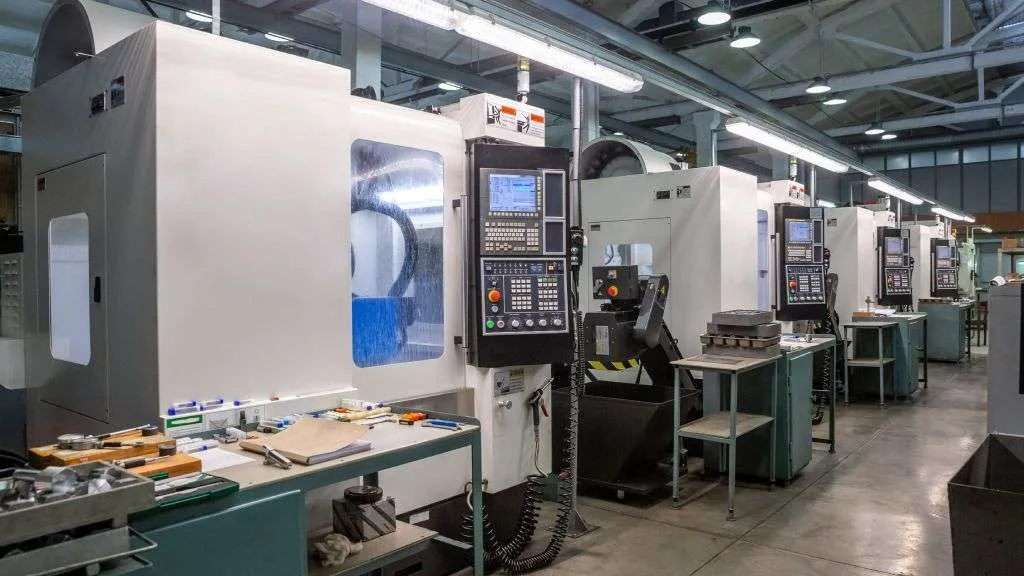
Picking the right partner for plastic CNC machining matters more than most people think. The wrong shop will fight the material. The right shop will make plastic work for your design.
Key capabilities to look for in a plastic CNC shop
When you evaluate a plastic CNC machining partner, confirm they can actually run plastics well, not just metals:
- Dedicated experience in CNC machining thermoplastics and engineering plastics
- Modern 3-axis, 4-axis, and 5-axis CNC mills, plus precision CNC turning for bushings, shafts, and tight bores (you can see the type of work we do on our CNC milling services and CNC turning services)
- Proven workholding solutions for thin, flexible, or warp-prone plastic parts
- Ability to hold realistic plastic machining tolerances for your industry
If a shop can’t show real examples of CNC machined plastic parts, move on.
Experience with different machinable plastics
Plastics don’t all cut the same. Your partner should know how to handle:
- Commodity plastics: ABS, HDPE, acrylic (PMMA)
- Engineering plastics: Delrin (POM), nylon, polycarbonate
- High-performance plastics: PEEK, PEI (Ultem), PPSU, PTFE
Ask directly:
“Have you machined this exact material for production, not just a one-off prototype?”
Quality systems, ISO, and material traceability
For serious work, especially in aerospace, medical, and electronics, you’ll want:
- ISO-based quality systems (e.g., ISO 9001 or equivalent standards)
- Material certs and full traceability back to the plastic stock supplier
- Documented inspection plans and PPAP/FAI capability if needed
If they can’t trace the plastic batch, you can’t trust the performance.
In-house inspection and metrology
Tight-tolerance plastic parts move with temperature and moisture. Your shop should have:
- Calibrated CMM, height gages, micrometers, pin gages
- Controlled inspection environment
- Clear understanding of how to measure plastics without deforming them
Ask for sample inspection reports from previous CNC plastic machining jobs.
Programming, fixturing, and 5-axis capability
Complex plastic geometries need smart programming and fixturing:
- CAM strategies tuned to avoid heat, chatter, and warp
- Custom soft jaws, vacuum fixtures, and support features for thin walls
- 5-axis CNC plastic machining for undercuts, organic shapes, and fewer setups
If you’re pushing design freedom and organic shapes, 5-axis and strong fixturing know‑how are non‑negotiable.
Quotation speed, communication, and engineering support
In the U.S. market, speed and clarity win:
- Fast quoting (typically 24–48 hours for plastic prototype machining)
- Willing to do DFM feedback and suggest material alternatives
- Clear communication on lead times, risks, and achievable tolerances
If you feel like you’re chasing them for answers during the RFQ, it won’t get better in production.
What to include in your RFQ for accurate plastic CNC quotes
To get a realistic price and lead time on CNC machined plastic parts, share:
- 3D CAD file (STEP/IGES) + 2D drawing with tolerances and GD&T
- Material: exact grade and spec (e.g., PEEK 450G, Delrin AF, PC UL94 V-0)
- Planned volume (prototype, small batch, or ongoing low-volume plastic manufacturing)
- Surface finish requirements (polished, bead blasted, clear, matte, etc.)
- Any regulatory or industry requirements (FDA, USP Class VI, UL, RoHS, REACH)
- Special needs: color, marking, inspection reports, packaging
The clearer your RFQ, the tighter and more reliable your plastic CNC machining quote will be.
How a specialized shop supports prototypes and small-batch runs
A specialized plastic CNC partner should be set up for:
- Rapid plastic CNC machining prototypes with quick material sourcing
- Small series plastic CNC machining and bridge production before molding
- Fast design changes without tooling cost
- Consistent quality from one-off parts to repeat low-volume runs
In short, choose a CNC plastic machining shop that understands plastics, lives in tight tolerances, and treats your low-volume plastic parts and precision prototypes with the same discipline as full production.