
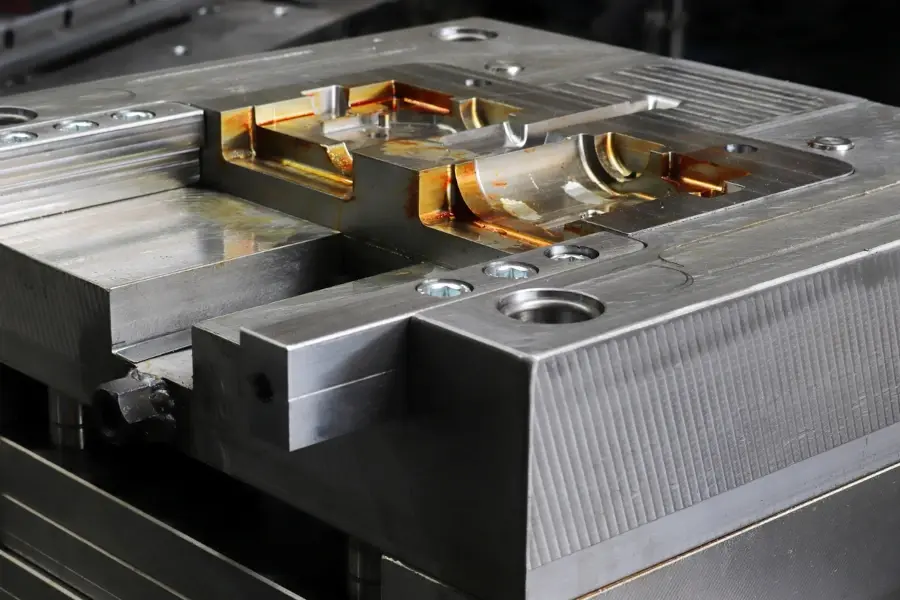
You probably know that choosing between mold-injected metal, machined, or cast parts isn’t just about geometry…
It’s about the bottom line.
Make the right choice, and you scale production effortlessly with perfect tolerances.
Make the wrong one? You’re stuck with expensive tooling for a part that fails quality control.
I’ve seen engineers agonize over the break-even points between MIM and CNC for years.
In this guide, we’re cutting through the noise.
We’ll compare the structural integrity, lead times, and exactly when it makes financial sense to switch processes.
Let’s get to work.
Metal Injection Molding (MIM) Explained
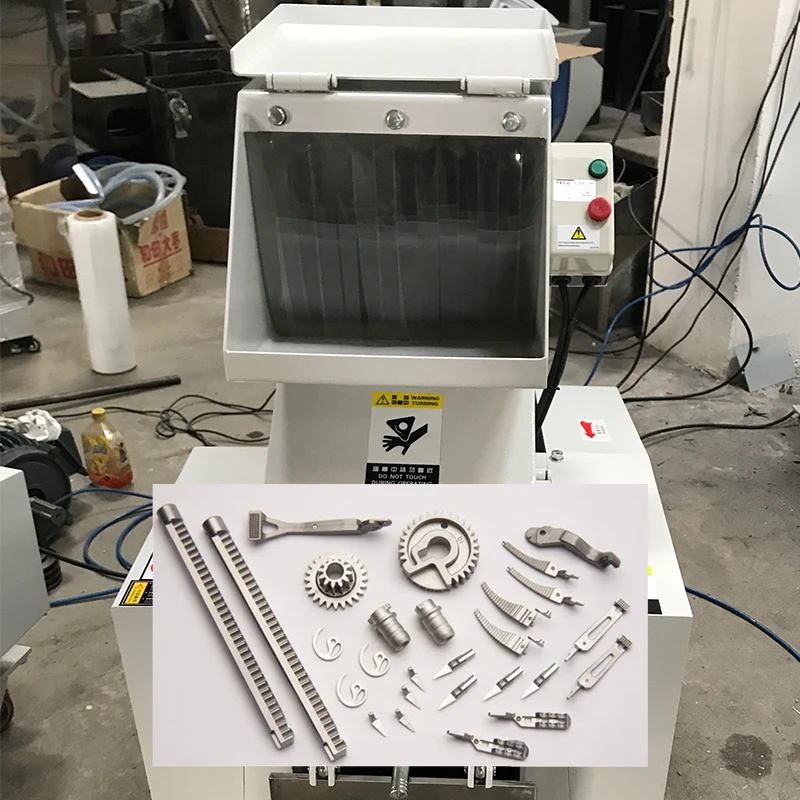
When engineers face the mold-injected-metal-versu-machined or cast dilemma, Metal Injection Molding (MIM) often emerges as the superior choice for complex, high-volume components. At MS Machining, we utilize this process to bridge the gap between the design freedom of plastic injection molding and the material strength of metal.
Understanding the Science: Feedstock Composition
The process begins with a unique mixture known as feedstock. We combine fine metal powders—such as stainless steel or titanium—with a thermoplastic binder. This mixture allows us to inject metal into a mold with the same ease and complexity as plastic, creating a “green part” that holds the intended geometry but lacks final strength.
The Sintering Phase: Achieving High Density
Once molded, the part undergoes debinding and sintering. During this critical phase, the binder is removed, and the part is heated to near its melting point. The metal particles fuse together, resulting in a final component with 96%–99% density. This ensures mechanical properties that rival wrought materials, far exceeding the structural integrity of traditional die-cast parts.
Ideal Use Cases for MIM
MIM is not a universal solution; it occupies a specific niche in manufacturing. We recommend this process specifically when your project meets the following criteria:
- Part Size: Small, intricate components, typically weighing less than 100g.
- Volume: High-volume production runs, generally starting at 5,000+ units annually.
- Complexity: Geometries with thin walls, internal threads, or undercuts that would be impossible or too costly to machine.
The Trade-Offs: Tooling and Size
While MIM offers incredible precision, transparency is key regarding its limitations. The primary downside is the high upfront tooling cost, which requires a significant initial investment similar to plastic injection molds. Additionally, the process has size limitations; larger parts are prone to distortion during the sintering phase, making investment casting or CNC machining better alternatives for bulky components.
CNC Machining: Precision and Speed
When weighing the options of mold-injected-metal-versus-machined or cast parts, CNC machining remains the undisputed king of precision. Unlike molding, which relies on filling a cavity, this is subtractive manufacturing. We start with a solid block of billet material and carve out the final geometry. This process guarantees excellent material properties because we are cutting from dense, wrought metals rather than relying on powder sintering or cooling flows.
Hitting Tight Specs with 5-Axis Milling
Speed doesn’t mean sacrificing accuracy. By utilizing advanced 3, 4, and 5-axis milling tolerances, we can achieve precision as tight as +/- 0.005mm. This level of control allows for complex geometries and superior surface roughness (Ra) values right off the machine. For projects requiring exacting standards, our CNC metal machining capabilities ensure that every dimension matches your CAD data perfectly.
Best For: Low Volumes and Prototypes
CNC is the logical choice when you need parts fast. Since there is no need to design and manufacture expensive molds, we can go from digital file to finished part in days, not weeks.
- Rapid Prototyping: Test designs immediately without tooling commitment.
- Low Volume Production: Cost-effective for runs under 1,000 units.
- Material Versatility: Works with everything from aluminum and stainless steel to titanium.
The Trade-off: Material Waste
The biggest downside to machining is the buy-to-fly ratio. Because we are cutting away material, scrap rates are higher compared to near-net shape processes like MIM. You are paying for the initial block size, not just the final part weight. However, for high-value components where structural integrity is non-negotiable, our precision CNC engineering services often outweigh the raw material cost difference.
Metal Casting: Investment vs. Die Options
When evaluating mold-injected-metal-versu-machined or cast solutions, traditional casting methods remain a powerhouse for specific industrial applications. The choice often comes down to the material properties required and the production volume.
Investment Casting vs. Die Casting
We typically categorize casting projects into two main streams based on the alloy and quantity:
- Investment Casting (Lost-Wax): This is our preferred method for high-temperature alloys like stainless steel. It allows for intricate designs and complex internal geometries that die casting simply cannot achieve, though it generally has a higher cycle time.
- Die Casting: For mass-scale production of non-ferrous metals—specifically Aluminum, Zinc, and Magnesium—die casting is king. We inject molten metal under high pressure into reusable steel molds. This process delivers excellent dimensional stability and is far more cost-effective for large runs compared to investment casting.
The Hybrid Approach: Casting + CNC
Rarely does a cast part come out of the mold ready for final assembly. To achieve tight tolerances on critical mating surfaces, we employ a hybrid strategy. We take the “near-net shape” cast component and use AI CNC machining to finish specific features. This approach leverages the low unit cost of casting while maintaining the high precision of machining.
Comparison: Casting Methods
| Feature | Investment Casting | Die Casting |
|---|---|---|
| Primary Materials | Steel, Superalloys | Aluminum, Zinc, Magnesium |
| Production Volume | Low to Medium | High to Mass Production |
| Surface Finish | Good | Excellent |
| Tooling Cost | Moderate | High |
Technical Decision Matrix: MIM vs. CNC vs. Casting
Choosing between mold-injected-metal-versu-machined or cast processes often comes down to balancing volume, precision, and cost. At MS Machining, we guide clients through this matrix daily. It’s not just about which method is “better,” but which one aligns with your specific production goals and budget constraints.
Comparing Ideal Production Volumes and Scalability
Scalability is the first filter we apply. If you need a few hundred parts, the high initial investment for molds usually rules out injection technologies. Conversely, machining thousands of identical parts individually is rarely cost-effective due to cycle times.
- CNC Machining: Best for 1 to 1,000 parts. It offers zero tooling costs and immediate scalability for prototypes or low-volume runs.
- Metal Injection Molding (MIM): Ideal for 10,000+ parts. Once the mold is made, the unit cost drops significantly, making it perfect for mass production of small, complex components.
- Die Casting: Best for 5,000+ parts. Similar to MIM but generally used for larger non-ferrous parts where extremely high strength isn’t the primary concern.
Tolerance Capabilities Across Different Methods
Precision varies greatly between these methods. While we can achieve tight specs with all three, the “as-manufactured” tolerances differ, often requiring secondary operations.
| Feature | CNC Machining | Metal Injection Molding (MIM) | Die Casting |
|---|---|---|---|
| Standard Tolerance | +/- 0.005mm | +/- 0.3% to 0.5% of dimension | +/- 0.05mm to 0.1mm |
| Surface Finish (Ra) | Excellent (0.8 – 1.6 µm) | Good (0.8 – 1.2 µm) | Fair (1.6 – 3.2 µm) |
| Complexity | High (limited by tool access) | Very High (complex geometries) | Medium (draft angles required) |
For projects requiring extreme precision without secondary processing, our custom machining services are often the superior choice because they hold tighter dimensional stability straight off the machine.
Material Range and Structural Integrity
Structural integrity is where the “mold-injected-metal-versu-machined or cast” debate gets technical.
- Machined Parts: Retain the full properties of the solid billet or bar stock. There is no porosity, offering the highest structural integrity.
- MIM Parts: Through the sintering process, we achieve 96-99% density. This is comparable to wrought metal and superior to traditional casting.
- Cast Parts: Susceptible to internal porosity. While strong, they may not be suitable for high-pressure or critical structural applications without strict quality controls.
Tooling Cost Amortization Analysis
The financial decision often hinges on tooling amortization.
- CNC: No tooling cost. You pay for machine time and material. The unit price remains relatively flat regardless of volume.
- MIM & Casting: High upfront tooling cost. You might spend $5,000 to $50,000 on a mold before making a single part. However, this cost is amortized over the production run. If you are producing 50,000 units, that tooling cost adds pennies to the part price, whereas the cycle time savings are massive.
For complex, small parts where you need near-net shape manufacturing to reduce waste, Metal Injection Molding becomes the clear winner once volumes justify the initial mold expense.
Cost Analysis: The Break-Even Point
When evaluating mold-injected-metal-versus-machined or cast processes, the financial decision almost always hinges on volume. In our experience, there is a distinct crossover point where the efficiency of molding overtakes the flexibility of machining. For low quantities, CNC machining is the clear winner because you avoid the significant capital expenditure of a mold. However, once production scales up—typically past the 1,000 to 5,000 unit mark—the high upfront investment in tooling for MIM or die casting is rapidly offset by a dramatically lower unit price.
Visualizing the Tooling vs. Unit Cost Curve
The math here is straightforward but critical for your bottom line. CNC machining has a low entry cost but a high variable cost; you are paying for machine time and material waste on every single part. Conversely, MIM and casting require expensive steel tooling, but the material waste is minimal, and cycle times are fast.
- Low Volume (<500 parts): Stick to machining. The cost of a mold cannot be justified here.
- Mid Volume (500–5,000 parts): This is the “gray zone.” The choice depends on geometry. If the part is incredibly complex, tooling amortization might make sense earlier.
- High Volume (5,000+ parts): Molding or casting is almost always more economical.
For projects where the volume doesn’t yet justify a mold, our precision turned parts services offer a cost-effective bridge, delivering high-tolerance components without the lead time of tooling.
Hidden Costs: Debinding, Finishing, and Scrap
A raw unit price doesn’t tell the whole story. When comparing these methods, you must account for the “hidden” steps that drive up the total landed cost:
- Debinding & Sintering (MIM): Unlike standard casting, MIM parts must go through thermal debinding and sintering furnaces. This consumes energy and adds processing time.
- Secondary Machining: Cast parts are rarely “done” the moment they leave the mold. They often require CNC post-processing to mate surfaces or tap holes.
- Scrap Rates: Machining generates chips (waste) that you paid for as raw stock. MIM and casting are “near-net shape” processes, meaning you only pay for the material that ends up in the part.
Lead Time Realities
Time is money, and this is where the processes diverge sharply. CNC machining is agile; we can take a CAD file and start cutting metal within days. MIM and casting are front-loaded processes. You must account for weeks of mold design, fabrication, and T1 sampling before production begins. If speed to market is your primary driver, machining wins. If long-term unit cost reduction is the goal, choosing a casting and machining partner that handles the entire lifecycle is the smarter play.
Real-World Manufacturing Applications
When deciding between mold-injected-metal-versus-machined or cast parts, looking at real-world applications clarifies where each process shines. We see distinct industries gravitating toward specific methods based on their unique demands for precision, volume, and material strength.
Medical Industry: Surgical Precision via MIM
In the medical field, Metal Injection Molding (MIM) is often the go-to for small, intricate components. Think of surgical graspers, orthodontic brackets, or implantable drug delivery devices. These parts require complex geometries and high density that are difficult to achieve with standard casting but are too costly to machine in high volumes. MIM allows us to produce thousands of these tiny, detailed stainless steel parts with excellent surface finishes and repeatability.
Aerospace Sector: Structural Integrity via CNC
For aerospace, where failure is not an option, we rely heavily on subtractive manufacturing. Structural brackets, landing gear components, and engine mounts demand the absolute highest structural integrity and tightest tolerances. We use 4-axis CNC machining services to carve these parts from solid blocks of titanium or aluminum. This ensures there are no internal voids or porosity issues common in casting, delivering the strength-to-weight ratio critical for flight.
Automotive: Mass Production via Die Casting
The automotive industry is all about scale and speed. For engine blocks, transmission housings, and heat sinks, high-pressure die casting is the standard. It allows us to churn out massive volumes of aluminum or zinc parts rapidly. While these parts might need some post-process machining for mating surfaces, the initial near-net shape achieved through die casting drives down the unit cost significantly compared to machining from scratch. For specialized, heavy-duty vehicle parts, we might also employ heavy CNC machining to refine cast components to final specs.
Frequently Asked Questions (FAQs) regarding Mold-Injected Metal vs Machined or Cast
At what volume is MIM cheaper than CNC machining?
The “break-even” point where mold-injected-metal-versu-machined or cast economics flip usually lands between 5,000 and 10,000 units. For lower quantities, the high upfront cost of creating a mold makes MIM or die casting prohibitively expensive. In those cases, sticking with standard machining is smarter because you avoid tooling fees entirely. However, once production scales up, the rapid cycle time of molding drastically reduces the per-unit price. You can check our CNC machining tips to see how design choices impact costs before you commit to a high-volume mold.
Can casting achieve the same tolerances as machining?
In short: No. Casting and MIM are considered near-net shape manufacturing processes. While they are precise, they generally cannot hold the ultra-tight tolerances (like +/- 0.005mm) that a 5-axis CNC machine can.
- Casting/MIM: Great for general shape and standard fits (typically +/- 0.5% of the dimension).
- Machining: Essential for critical mating surfaces and precision bores.
Often, the best strategy is a hybrid approach: we cast the part to get the general geometry and then use CNC milling services to finish the critical features to exact specifications.
Which process is best for complex internal geometries?
MIM and Investment Casting are the clear winners for internal complexity. Because these processes involve liquid or powder flowing into a cavity, they can form complex undercuts, internal threads, and hollow sections that a CNC cutting tool simply cannot reach. If your design looks like a puzzle box inside, machining is likely impossible without splitting the part into multiple pieces.
Are material properties different between cast and machined parts?
Yes, the structural integrity varies significantly.
- Machined Parts: Cut from solid billet (wrought material), these offer the highest strength, fatigue resistance, and zero porosity.
- Cast Parts: Can be susceptible to internal porosity (air pockets) which may weaken the part under heavy load.
- MIM Parts: Through the sintering process, these achieve 96%–99% density. They are incredibly strong and comparable to wrought metal, but they are not 100% solid like a machined block.