

1. What Is Micro CNC Machining?
1.1 Definition of Micro CNC Machining
Micro machining CNC is a specialized subtractive manufacturing process designed to fabricate extremely small components with micron-level accuracy. Unlike conventional machining, which focuses on bulk material removal, this process utilizes ultra-miniature cutting tools—often smaller than the diameter of a human hair—to sculpt intricate geometries. This technology is essential for producing high-value cnc precision parts where standard tooling cannot physically access the detailed features required. It bridges the gap between macro manufacturing and MEMS (Micro-Electro-Mechanical Systems) lithography.
1.2 Micro CNC Machining vs Standard CNC Machining
While both processes rely on computer-controlled code to guide cutting tools, the physics and operational parameters differ significantly. You cannot simply scale down a standard milling process and expect it to work for micro applications.
- Spindle Speed: Micro machining requires ultra-high speeds, often exceeding 40,000 to 100,000 RPM, to achieve the necessary cutting velocity for tiny tools. Standard machines typically top out around 12,000 RPM.
- Tooling Size: Standard CNC uses tools measured in millimeters or inches. Micro machining utilizes end mills and drills with diameters as small as 0.01mm.
- Vibration Sensitivity: In standard machining, minor vibrations are negligible. In micro machining, even the slightest resonance can instantly shatter a tool or ruin the surface finish of precision cnc parts.
1.3 What Counts as “Micro” in CNC Manufacturing
The industry definition of “micro” generally revolves around feature size and tolerance capabilities rather than just the overall size of the part. A component is typically considered a candidate for micro machining if it meets specific dimensional criteria:
- Feature Size: Geometries or holes smaller than 100 microns.
- Part Volume: Components that generally fit within a 20mm cube.
- Tolerances: Requirements demanding accuracy in the range of 0.1 to 5 microns.
If the production of a part requires a microscope for quality control and setup, it falls squarely into the realm of micro manufacturing.
2. How Small Can Micro CNC Machining Really Get?
When we talk about micro machining CNC, we are leaving the world of standard manufacturing and entering a realm where magnification is mandatory. We aren’t just making “small” brackets; we are creating complex geometries that fit on the tip of a finger. The scale here pushes the absolute limits of mechanical physics, requiring specialized equipment that can move in increments smaller than a single biological cell.
2.1 Micron-Level Features Explained
In this industry, we don’t measure in inches or even millimeters—we measure in microns (micrometers). One micron ($\mu$m) is one-thousandth of a millimeter.
Standard CNC machines typically hold tolerances around +/- 0.005 inches (127 microns). In contrast, true micro machining CNC centers operate with feature resolutions as small as 1 to 5 microns. This level of precision allows us to mill channels, drill holes, and create surface textures that are functionally invisible to the naked eye. We are effectively sculpting material at a scale where environmental factors like temperature changes of just one degree can throw a part out of spec.
2.2 Tolerances Compared to Human Hair and Dust Particles
To truly grasp the scale of precision cnc parts at the micro level, comparisons are helpful. It is easy to say “1 micron,” but visualizing it is harder.
Here is how micro machining tolerances stack up against common microscopic objects:
| Object / Feature | Approximate Size |
|---|---|
| Grain of Table Salt | 300 microns |
| Human Hair (Thickness) | 50 – 70 microns |
| White Blood Cell | 12 – 15 microns |
| Micro Machining Tolerance | +/- 1 to 2 microns |
We are routinely cutting features that are 10 to 50 times smaller than the width of a human hair. If a standard machine tool is a sledgehammer, a micro CNC machine is a scalpel.
2.3 Real-World Size Examples of Micro Machined Parts
The applications for components this small are vast and critical. We aren’t just making tiny shapes for fun; these parts drive innovation in medical, aerospace, and electronics sectors. When performing CNC machining for metal at this scale, we often work with distinct components such as:
- Micro-nozzles: Fuel injector tips with holes smaller than 50 microns for precise fluid control.
- Medical Implants: Tiny titanium screws and bone anchors used in reconstructive surgery.
- Fiber Optic Ferrules: Alignment components that must hold tolerances within a single micron to ensure data transmission.
- Watch Gears: Intricate gear teeth cut into brass or steel that are barely visible without a loupe.
These cnc precision parts prove that while the footprint is microscopic, the impact on performance is massive.
3. The Micro CNC Machining Process Explained
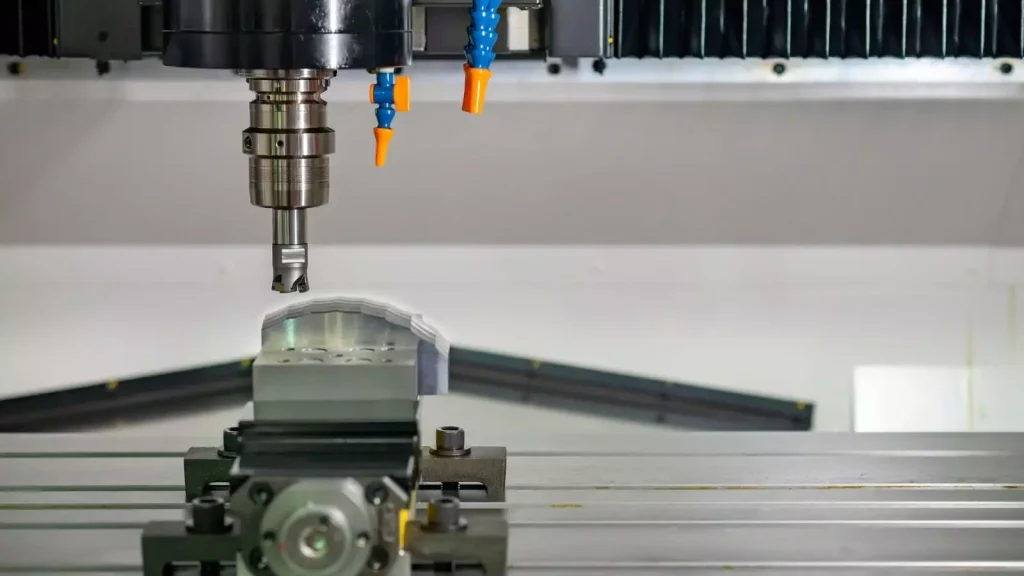
When we step into the world of micro machining cnc, the rules of the game change. It isn’t just about making things smaller; it’s about managing physics at a scale where a single speck of dust can ruin a workpiece. The process demands a complete shift in how we approach manufacturing, from the digital design to the physical cut.
3.1 CAD/CAM Design for Micro-Scale Components
Designing for micro machining requires a different mindset than standard manufacturing. In CAD (Computer-Aided Design), we have to account for the physical limitations of tools that are often thinner than a human hair. We can’t simply take a standard part and scale it down by 90%.
The resolution of the CAD/CAM software becomes critical here. Standard settings might round off decimal places that are actually vital dimensions in the micro world. We ensure our software is set to the highest possible precision to capture every micron of detail. Additionally, we have to design with “tool deflection” in mind—since micro tools are incredibly flimsy, the design must allow for toolpaths that don’t exert too much side pressure.
3.2 Toolpath Strategies for Micro Precision Machining
Once the design is locked, the CAM (Computer-Aided Manufacturing) strategy takes over. In standard machining, we might focus on removing material as fast as possible. In micro machining cnc, the priority is tool survival and surface finish.
We utilize specific strategies to protect fragile tools:
- Constant Chip Load: We maintain a steady engagement to prevent shock to the tool.
- Trochoidal Milling: This technique reduces tool load by using circular movements rather than straight-line plowing.
- Zero-Stock Entry: Tools must enter the material gently, often ramping in rather than plunging.
Modern manufacturing often utilizes AI in CNC machining to optimize these complex toolpaths, ensuring that the feed rates adjust dynamically to prevent tool breakage while maintaining efficiency.
3.3 High-Speed Spindle Requirements
You cannot run a micro end mill at standard speeds. Because the tool diameter is so small, the surface footage (cutting speed) drops drastically at normal RPMs. To cut effectively, we need speed—lots of it.
For cnc precision parts at the micro scale, we rely on high-frequency spindles. Here is a breakdown of why speed matters:
| Feature | Standard Machining | Micro Machining | Reason for Difference |
|---|---|---|---|
| RPM Range | 2,000 – 12,000 RPM | 30,000 – 60,000+ RPM | Small tools need high RPM to cut material rather than rub against it. |
| Runout Tolerance | < 0.01 mm | < 0.001 mm | Any wobble (runout) will instantly snap a micro tool. |
| Balance | Standard G2.5 | Ultra-Precision | Vibration at high speeds destroys surface finish. |
3.4 Chip Control and Thermal Management
Heat is the enemy of precision. In micro machining, the chips produced are often dust-like. If these chips aren’t evacuated immediately, they get re-cut, which clogs the tiny flutes of the tool and causes breakage.
We use high-pressure air or oil mist rather than heavy flood coolant in many cases, as the weight of liquid coolant can sometimes deflect a micro tool. Furthermore, thermal stability is non-negotiable. Since we are dealing with tolerances in the microns, even a 1-degree shift in room temperature can cause the machine or the material to expand enough to put the part out of spec. Understanding these fundamentals is an evolution of CNC machining basics, pushing the limits of what temperature control and chip evacuation can achieve. We keep our environment strictly climate-controlled to ensure every precision cnc part comes out exactly as designed.
4. Cutting Tools Used in Micro CNC Machining
4.1 Micro End Mills and Their Limitations
In micro machining cnc operations, the cutting tools we use are often smaller than a grain of rice. Micro end mills are essential for creating intricate features, but they come with significant fragility. Unlike standard tooling, a micro end mill has very little core strength, meaning even the slightest vibration or incorrect feed rate can cause immediate breakage. To mitigate this, we run high-speed spindles to maintain the necessary surface footage without overloading the tool. When we utilize a 4-axis CNC mill for complex micro geometries, calculating the exact chip load becomes critical to prevent tool deflection, which would otherwise compromise our ±0.002mm tolerance standards.
4.2 Micro Drills for Ultra-Small Holes
Drilling at the micro scale requires specialized geometries to handle chip evacuation in extremely tight spaces. Standard twist drills often fail here because chips get packed in the flutes, leading to heat buildup and tool failure. For our precision micro parts, we employ micro drills with optimized flute designs and often use peck drilling cycles. This technique involves retracting the tool frequently to clear debris. This process is vital when machining deep, narrow holes in materials like stainless steel or titanium, ensuring the hole remains straight and true to size.
4.3 Carbide vs Diamond Tools at Micro Scale
Material selection for the cutting tool itself is just as important as the workpiece material. We primarily use ultra-fine grain solid carbide for micro machining cnc projects because it offers the necessary rigidity and edge retention required for tight tolerances. Standard carbide grades are often too coarse to hold the sharp edge needed for micron-level cuts. For highly abrasive materials or long-run production where tool wear must be minimized, we may opt for Polycrystalline Diamond (PCD) tools. While diamond tools are more expensive, their ability to maintain dimensional accuracy over thousands of cycles makes them cost-effective for high-volume orders.
4.4 Tool Coatings for Micro Precision Cutting
Coatings play a massive role in extending tool life and improving surface finish, especially when dealing with difficult alloys. In micro applications, heat cannot dissipate easily into the tiny chips, so it goes into the tool or the part. We select specific coatings like TiAlN (Titanium Aluminum Nitride) or AlTiN to provide a heat barrier and reduce friction. This prevents the workpiece from expanding due to thermal growth, which is disastrous when trying to hold micron-level specifications. Proper coating selection ensures that our precision cnc parts maintain a smooth surface finish (Ra 0.4) directly off the machine.
5. Workholding Challenges in Small CNC Machining
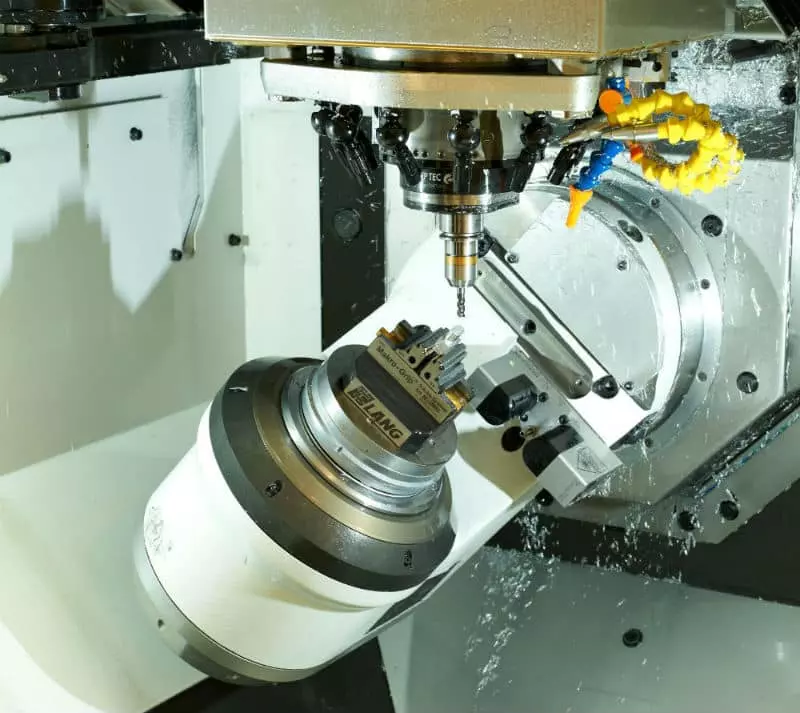
When we shrink parts down to the sub-millimeter range, holding onto them becomes just as difficult as cutting them. You cannot simply throw a microscopic component into a standard vise and expect good results. The physics change, and the margin for error disappears. Proper workholding is often the difference between a perfect component and a piece of scrap metal.
5.1 Why Traditional Clamping Fails at Micro Scale
In standard machining, we rely on heavy mechanical force to keep parts rigid. In micro machining cnc, that same force is destructive. If you apply standard clamping pressure to a thin-walled micro part, you will crush it or warp it. The material deforms while clamped, gets machined flat, and then springs back into a distorted shape once released.
Furthermore, physical clearance is a massive headache. Standard clamps and bolts are often larger than the part itself. They block the tool paths, making it impossible for tiny end mills to reach the necessary features without colliding with the fixture. We have to rethink how we grip the material entirely to produce cnc precision parts without damage.
5.2 Vacuum Fixtures and Custom Micro Fixtures
To solve the distortion problem, we move away from mechanical crushing and toward distributed holding forces. Here is how we secure delicate workpieces:
- Vacuum Tables: This is a go-to for flat, thin parts. By using air pressure to pull the part down, we get even holding force across the entire surface area. This eliminates warping and leaves all edges open for machining.
- Thermoplastic Adhesives: For irregular shapes, we often use specialized waxes or glues. We bond the workpiece to a fixture plate, machine it, and then dissolve the bond with heat or solvent.
- Custom Soft Jaws: We machine custom fixtures that mirror the part’s geometry perfectly, supporting it from all sides rather than pinching it at two points.
Our specialized setup for micro CNC machining ensures even the most delicate components are held securely without compromising their structural integrity.
5.3 Vibration Control and Stability Issues
Vibration is the enemy of micro manufacturing. On a large part, a little chatter might just look like a bad finish. On a micro part, vibration can snap a 0.005″ tool instantly or cause feature deviations that ruin the tolerance.
Because the cutting forces in micro machining are low, people assume holding force can be low too. That is a mistake. The fixture must be incredibly rigid to dampen high-frequency vibrations generated by high-speed spindles (often running at 40,000+ RPM). If the workholding allows even micron-level movement, the tool will deflect, and the precision is lost. We prioritize fixtures with high damping properties to ensure the cnc precision parts remain dead static during the cut.
6. Achievable Precision and Tolerances in Micro Machining
6.1 Typical Tolerance Ranges in Micro CNC Machining
In the world of micro machining cnc, standard manufacturing tolerances simply do not apply. We operate in a realm where precision is measured in microns, not thousandths of an inch. Our equipment is calibrated to achieve ultra-tight specifications that are critical for functioning micro-assemblies.
For most high-precision projects, we typically work within the following ranges:
- Standard Micro Tolerance: ±0.01mm (±0.0004 in)
- Ultra-Precision Tolerance: ±0.002mm (±0.00008 in)
- Surface Finish: Ra 0.4 to Ra 3.2
Achieving these figures requires rigid setups and thermal stability. When you require precision cnc parts that fit perfectly into complex assemblies, adhering to these strict limits is non-negotiable.
6.2 Measurement and Inspection at Micron Level
Verifying dimensions at the micro-scale presents unique challenges. You cannot use a standard caliper or micrometer on a part the size of a grain of rice without risking damage or inaccurate readings. We rely on advanced metrology equipment to ensure every micron is accounted for.
Our quality assurance process includes:
- Optical Measurement Machines (OMM): Non-contact inspection using high-resolution cameras to measure delicate features.
- Coordinate Measuring Machines (CMM): For verifying complex 3D geometries with extreme accuracy.
- 100% Inspection: Critical dimensions are checked on every single unit, not just a random sampling.
As an ISO 9001:2015 certified facility, we ensure that our custom CNC machining services meet the rigorous demands of industries like medical and aerospace, where verification is just as important as production.
6.3 Repeatability vs One-Off Micro Parts
Hitting a ±0.002mm tolerance on a single prototype is difficult, but maintaining that precision across a production run of 10,000 units is the real test of capability. Repeatability is the cornerstone of successful micro manufacturing.
- Prototypes: We focus on proving the concept and dialing in the toolpaths for maximum accuracy.
- Mass Production: We utilize automated Swiss-type lathes and stable 5-axis centers to ensure the 10,000th part is identical to the first.
Whether we are producing a one-off fixture or a high-volume order of cnc precision parts, our process controls minimize deviation. This consistency ensures that parts are interchangeable and perform reliably in the field.
7. Materials Commonly Used in Micro CNC Machining

Selecting the right material is critical when dealing with features measured in microns. At the micro scale, grain structure and material homogeneity impact the final quality of micro machining CNC projects much more than in standard machining. We work with a wide variety of certified raw materials to ensure every component meets strict industry standards.
7.1 Metals: Aluminum, Stainless Steel, Titanium
Metals remain the backbone of precision cnc parts manufacturing. We frequently process high-grade alloys that balance machinability with durability.
- Aluminum (6061, 7075): The most common choice for lightweight structural parts. It machines cleanly and allows for high-speed processing.
- Stainless Steel (303, 304, 316): Essential for medical and food-grade applications due to corrosion resistance. While tougher to machine at micro scales, it provides necessary strength.
- Titanium: Used extensively in aerospace and medical implants for its high strength-to-weight ratio and biocompatibility.
- Brass and Copper: These are preferred for electronic contacts and connectors. Our expertise in brass CNC machining for electrical parts ensures high conductivity and precise threading even on the smallest components.
7.2 Plastics and Engineering Polymers
For applications requiring electrical insulation or low friction, engineering plastics are the go-to solution. Micro machining plastics requires sharp tooling and careful thermal management to prevent melting or deformation.
- PEEK: A high-performance plastic used in medical implants and aerospace due to its thermal stability and chemical resistance.
- Delrin (Acetal): Known for excellent machinability and dimensional stability, making it ideal for tiny gears and precision levers.
- PTFE (Teflon): Chosen for its low friction coefficient, often used in micro-fluidic applications.
- Polycarbonate & ABS: Commonly used for functional prototypes and impact-resistant housings.
7.3 Exotic and Difficult-to-Machine Materials
When standard alloys aren’t enough, we handle exotic materials that demand specialized tooling strategies. Hardened tool steels and tough superalloys present significant challenges in micro machining CNC because they can cause rapid tool wear on micro end mills.
- Tool Steel: Used for mold making and wear-resistant components. We achieve tight tolerances despite the material’s hardness.
- Hardened Alloys: Processing these requires rigid setups and vibration-free spindles to maintain accuracy without breaking fragile micro tools.
We ensure that regardless of the material—whether soft plastic or hard titanium—the surface finish (Ra 0.4 to Ra 3.2) and tolerances (±0.002mm) are consistently maintained.
8. Applications of Micro CNC Machining
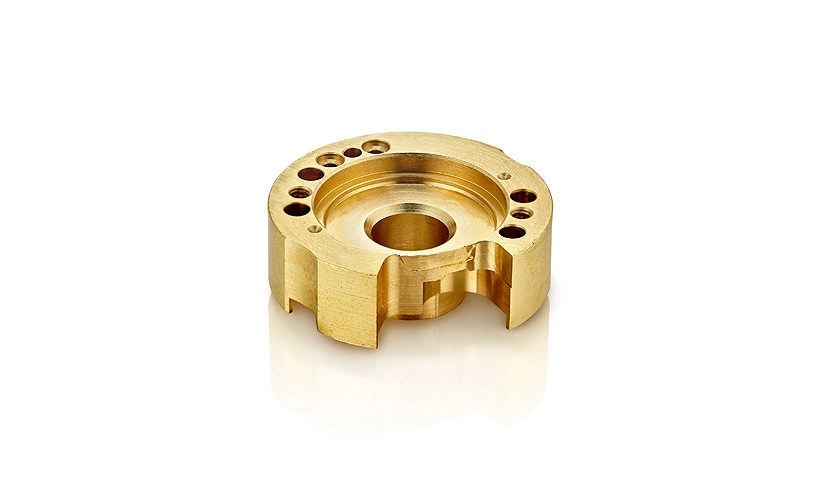
Micro machining CNC technology isn’t just a niche capability; it is the backbone of modern miniaturization. As industries demand smaller, lighter, and more efficient products, the need for cnc precision parts with micron-level tolerances has skyrocketed. Here is where we see this technology making the biggest impact.
8.1 Medical Devices and Surgical Components
The medical sector is perhaps the most critical driver of micro manufacturing. There is zero room for error when a component is destined for the human body. We use micro CNC machining to create intricate geometries that traditional methods simply cannot achieve.
Common applications include:
- Surgical Robotics: Tiny gears and actuators that allow robots to perform minimally invasive surgery.
- Implants: Bone screws, dental implants, and spinal cages made from biocompatible titanium or PEEK.
- Diagnostic Tools: Micro-fluidic channels and sensor housings.
Many of these cylindrical components, such as bone screws and catheter tips, are effectively manufactured as high-quality turned parts using Swiss-style CNC lathes, which excel at maintaining rigidity on long, thin workpieces.
8.2 Aerospace and Precision Cooling Systems
In aerospace, weight is the enemy. Engineers are constantly shrinking control systems and sensors to save fuel. Micro machining CNC allows us to produce lightweight components without sacrificing structural integrity.
Beyond weight savings, thermal management is huge. We machine micro-channels into heat exchangers and cooling plates. These channels, often smaller than a millimeter in width, maximize surface area to dissipate heat efficiently in avionics and satellite systems.
8.3 Electronics and Micro Connectors
As consumer electronics get slimmer and faster, the internal hardware must shrink. The semiconductor and telecommunications industries rely heavily on precision cnc parts to keep us connected.
Key components we machine include:
- Fiber Optic Components: Ferrules and alignment sleeves requiring sub-micron concentricity.
- Test Sockets: Micro-drilled plates used to test semiconductor chips.
- Micro Connectors: Tiny pins and sockets for high-frequency data transmission.
Unlike molding, which can struggle with thin walls and tight tolerances at this scale, CNC machining delivers the sharp edges and flat surfaces needed for perfect electrical contact.
8.4 Watchmaking and Precision Mechanical Parts
Watchmaking is the original micro-manufacturing industry. While traditional watchmakers used manual lathes, modern horology depends on micro machining CNC for consistency and speed.
We aren’t just making gears; we are machining mainplates, bridges, and escapements with complex 3D geometries. The aesthetic finish is just as important as the dimension here. A micro-milled watch part often comes off the machine requiring little to no manual polishing, preserving the sharp, crisp lines that define high-end mechanical movements.
9. Benefits of Micro CNC Machining
9.1 Extreme Accuracy and Feature Resolution
When we talk about micro machining CNC, we are dealing with dimensions where every micron counts. Standard machining setups often struggle to hold tight tolerances on microscopic features, but our specialized equipment is built for this exact purpose. We consistently achieve tolerances ranging from ±0.002mm to ±0.01mm, ensuring that even the most intricate details are executed perfectly.
This level of precision is critical for industries like medical and aerospace, where a deviation the size of a dust particle can cause failure. By utilizing advanced CMM and OMM (optical measurement) inspection methods, we verify that every cut meets the strict requirements of precision micro parts.
9.2 Design Freedom for Miniaturized Components
One of the biggest advantages of using CNC technology for small parts is the ability to create complex geometries that other methods, like micro-molding, simply cannot achieve. With our 5-axis milling and Swiss-type lathe capabilities, we can machine undercuts, complex curves, and tiny internal features in a single setup.
This flexibility allows engineers to design without the constraints of draft angles or mold release issues. Whether you need components made from tough metals like Titanium and Stainless Steel or engineering plastics like PEEK, our micro tip precision engineering ensures that the final part matches your CAD model exactly.
9.3 Scalability from Prototyping to Production
Micro machining offers a seamless path from initial concept to full-scale manufacturing. We support product development cycles starting with a single prototype and scaling up to high-volume mass production without sacrificing quality.
- Fast Turnaround: Quick quotes and efficient cycles for prototypes.
- Consistency: ISO 9001:2015 certified processes ensure the 1,000th part is identical to the first.
- Versatility: Transition easily from milling prototypes to high-volume CNC turning services for larger production runs.
This scalability eliminates the need to switch suppliers as your project grows, providing a reliable, factory-direct solution for small-scale CNC components.
10. Challenges and Limitations of Micro CNC Machining
While micro machining cnc allows for incredible miniaturization, it pushes manufacturing physics to the limit. Producing components with features invisible to the naked eye requires overcoming significant hurdles that don’t exist in standard machining environments. We navigate these challenges daily to deliver parts that meet strict ISO 9001:2015 standards.
10.1 Tool Wear and Tool Breakage
The most immediate challenge in micro machining is the fragility of the cutting tools. When we use end mills and drills with diameters smaller than a human hair, the slightest vibration, runout, or chip accumulation can cause instant tool failure. Unlike standard tooling, micro tools do not just wear down; they often snap without warning.
This issue is amplified when we manufacture hardened steel machining parts or work with tough alloys like Titanium. To combat this, we utilize high-speed spindles and specialized toolpath strategies to reduce cutting forces. Constant monitoring is essential because a broken tool inside a microscopic hole usually means the part is unrecoverable.
10.2 Process Stability and Scrap Risk
Achieving consistent precision cnc parts at a micron level requires absolute process stability. At this scale, factors that are negligible in macro machining become critical failures:
- Thermal Expansion: A temperature shift of just a few degrees in the shop can alter dimensions by several microns, pushing a part out of tolerance (±0.002mm).
- Material Homogeneity: Inconsistencies in the raw material structure can cause unpredictable deflection during cutting.
- Vibration: Even minor floor vibrations can transfer to the workpiece, ruining the surface finish (Ra 0.4).
These variables increase the risk of scrap. We mitigate this through rigid setup protocols and 100% inspection using advanced optical measurement systems, ensuring that only perfect components leave the floor.
10.3 Cost Considerations vs Conventional CNC Machining
Micro machining cnc is generally more expensive per unit volume than conventional machining. The cost drivers are distinct:
- Cycle Times: We often have to run machines at lower feed rates to protect fragile tools, extending production time.
- Tooling Costs: Micro tools are specialized and have shorter lifespans, increasing consumable costs.
- Inspection: Verifying tolerances on cnc precision parts requires high-end non-contact metrology equipment, which adds to the overhead.
However, for industries like medical and aerospace, this investment is necessary. The value lies in the ability to create complex, functional geometries that are impossible to manufacture through stamping or molding. We focus on optimizing the process to keep these costs competitive while maintaining the factory-direct pricing model we are known for.
11. Micro CNC Machining vs Other Micro Manufacturing Methods
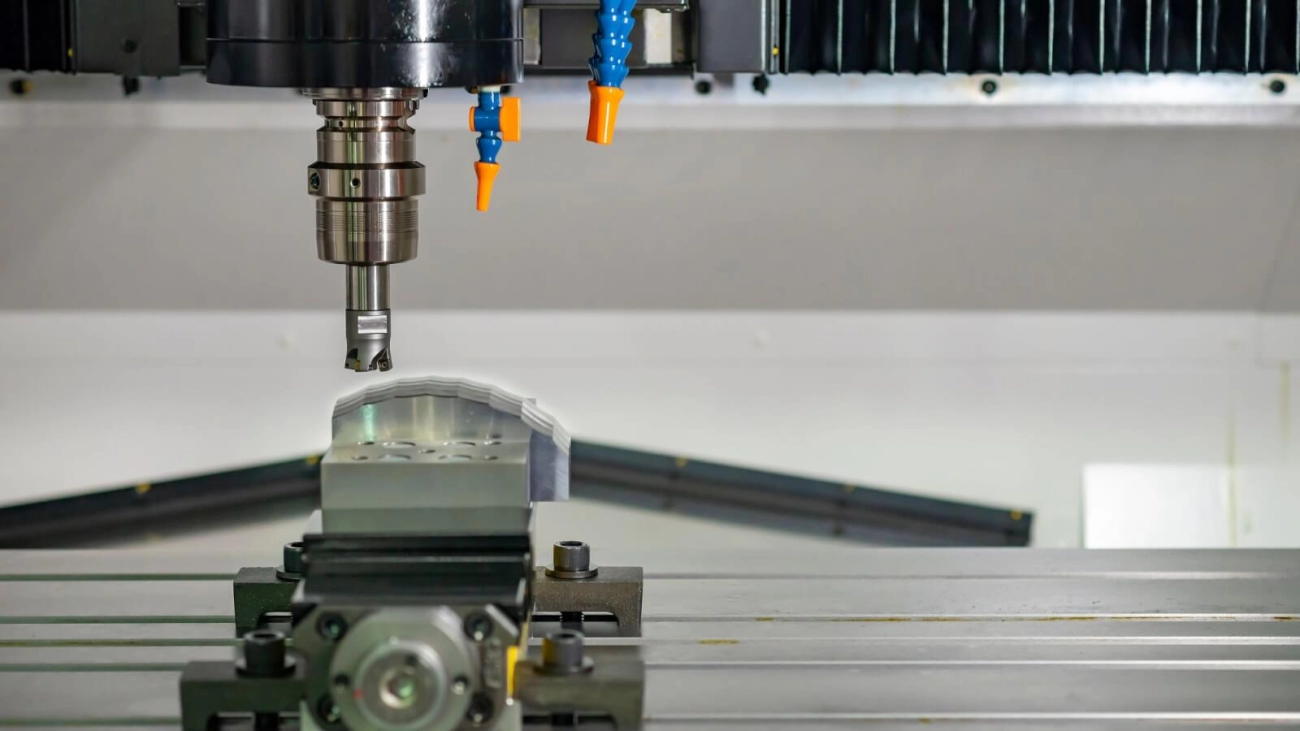
When we look at manufacturing tiny components, micro machining cnc isn’t the only player in the game, but it is often the most versatile. While methods like EDM and laser machining have their place, understanding where CNC stands out helps in selecting the right process for your project.
11.1 Micro CNC vs EDM
Electrical Discharge Machining (EDM) is a common alternative, especially for hard metals. However, the fundamental difference lies in the process mechanics and material limitations.
- Material Versatility: EDM only works on conductive materials. If you need precision cnc parts made from non-conductive engineering plastics like PEEK or Delrin, EDM is off the table. Micro CNC handles both metals and plastics with ease.
- Speed: EDM is generally a slower process involving material erosion. Micro CNC milling and turning are significantly faster, making them more suitable for production runs.
- Geometry: While EDM is excellent for deep, narrow slots or sharp internal corners, CNC is superior for creating complex 3D surface contours.
11.2 Micro CNC vs Laser Micromachining
Laser micromachining uses a focused beam to ablate material. It is incredibly precise but comes with thermal side effects that CNC avoids.
- Heat-Affected Zone (HAZ): Lasers generate intense heat, which can alter the microstructure of the material at the cut edge. Micro CNC is a “cold” process in comparison, preserving the material’s original mechanical properties.
- 3D Capability: Lasers are primarily 2D cutting tools. They struggle with the complex 3D geometries and undercuts that our 5-axis CNC centers achieve effortlessly.
- Surface Finish: CNC machining can achieve smoother surface finishes (down to Ra 0.4) without the recast layers often left by laser processing.
11.3 When CNC Is the Better Choice
Choosing micro machining cnc is usually the right move when your project requires a combination of complex 3D geometry, specific material properties, and tight tolerances without thermal distortion.
We recommend CNC when:
- Material Constraints: You are using non-conductive materials or alloys sensitive to heat.
- Complex Geometries: The part requires true 3D contouring, which is a core strength of our precision CNC milling services.
- Volume Production: You need a process that scales efficiently from a prototype to thousands of units.
- Surface Integrity: The application demands a surface free of heat-affected zones or recast layers.
For high-stakes industries like medical and aerospace, the reliability and repeatability of CNC make it the standard for producing cnc precision parts at the micro scale.
12. How to Choose a Micro CNC Machining Partner
Finding a shop that claims they can handle small parts is easy; finding one that actually delivers consistent micro machining cnc results is a different story. When you are dealing with components barely visible to the naked eye, the margin for error disappears. You need a partner who treats microns like inches.
Here is what you need to scrutinize before handing over your designs.
12.1 Equipment and Machine Capabilities
You cannot produce micro-scale parts on a standard 3-axis mill designed for heavy automotive components. The physics just don’t work. When vetting a supplier, look specifically for high-frequency spindles (often exceeding 40,000 RPM) and machines with superior thermal stability.
Standard equipment often lacks the vibration damping required for cnc precision parts under 1mm in size. We look for specialized Swiss-type lathes or high-precision 5-axis centers. These machines allow for complex geometries without moving the part between fixtures, which is critical for maintaining accuracy. If your potential partner relies solely on traditional setups, they likely cannot handle the intricacies of true micro manufacturing. For complex geometries, the integration of advanced CNC turning and milling capabilities is often the baseline requirement for success.
Key Equipment Checklist:
- High-RPM Spindles: 30k to 60k+ RPM for tiny tools.
- Swiss-Style Lathes: Essential for long, slender micro parts.
- Vibration Control: Polymer concrete bases or isolated foundations.
- Micro-Tooling Management: Laser tool measurement systems.
12.2 Experience with Micro-Scale Tolerances
Experience in general machining does not automatically translate to micro machining. At this scale, tool runout, thermal expansion, and even air pressure changes in the shop affect the final dimensions. You need a team that understands how accurate CNC milling must be when the tolerance window is +/- 1 micron.
Ask specifically about their Quality Control (QC) process. Standard calipers are useless here. A capable shop must have non-contact video measuring systems, white light interferometers, or high-magnification optical CMMs. If they cannot measure it reliably, they cannot make it.
Questions to Ask:
- What is the smallest feature size you have successfully machined?
- Do you have temperature-controlled inspection rooms?
- What is your scrap rate for precision cnc parts with tight tolerances?
12.3 Material and Industry Expertise
Micro machining behaves differently depending on the material. Cutting micro-features in PEEK plastic is a completely different beast than machining micro-gears out of hardened stainless steel or titanium. The cutting forces, heat generation, and chip evacuation strategies change drastically.
Your partner should have a proven track record in your specific industry. Medical device manufacturers need shops certified in ISO 13485, while aerospace clients prioritize AS9100. If a shop specializes in aluminum enclosures, they might struggle with the exotic alloys used in micro-surgical robotics. Always verify they have handled your specific material at a micro-scale before committing to a production run.
13. Future Trends in Micro CNC Machining
The landscape of manufacturing is constantly shifting toward smaller, faster, and smarter production methods. As we push the boundaries of what is physically possible with micro machining cnc, we are seeing distinct trends that will define the next decade of precision manufacturing.
13.1 Automation and Smart Micro Manufacturing
Automation is no longer just for large-scale automotive lines; it is becoming essential for micro-precision environments. Because micro parts are often too small to be handled reliably by human hands, robotic loading and unloading systems are critical for maintaining consistency.
- In-Process Monitoring: Smart sensors now monitor spindle vibration and thermal expansion in real-time, adjusting parameters instantly to maintain the ±0.002mm tolerances we require.
- Lights-Out Manufacturing: Automated Swiss lathes allow for 24/7 production of complex micro components without constant operator intervention.
- Data-Driven Quality: Integration of inspection data directly into the machining workflow ensures that tool wear is compensated for before a part goes out of spec.
13.2 Hybrid Machining and Additive Integration
One of the most exciting developments is the convergence of subtractive and additive technologies. While traditional milling removes material, hybrid systems allow us to build complex internal geometries before finishing them with precision machining.
- Laser Integration: Combining micro machining cnc with laser technology allows for features that are physically impossible with standard cutting tools. For instance, a CNC laser cutter can create microscopic distinct features or surface textures that complement the structural precision of milled parts.
- 3D Printing + CNC: Metal 3D printing (DMLS) creates the near-net shape, and micro CNC machining provides the final critical surfaces and tight tolerances.
13.3 From Micro Machining to Nano Machining
As electronics and medical devices shrink, the line between micro (millionths of a meter) and nano (billionths of a meter) is blurring. While current industrial standards for high-end micro machining sit comfortably in the micron range (0.001mm – 0.010mm), the demand for nano-scale surface finishes is growing.
- Surface Quality: Achieving surface roughness values (Ra) significantly lower than 0.4 requires ultra-precision tooling and specialized abrasive processes.
- Material Science: Machining at this scale requires a deep understanding of grain structures in metals like Titanium and Stainless Steel, as the grain size itself can affect the final geometry of the part.
FAQ: Micro CNC Machining
What is micro CNC machining used for?
**Micro machining CNC** is used to manufacture extremely small, intricate components that require high precision. It is the go-to process for creating parts with complex geometries that are often too small to be seen clearly with the naked eye. We use this technology to produce critical components like surgical instruments, tiny electronic connectors, fuel injector nozzles, and micro-sensors. Essentially, if you need **precision CNC parts** that fit on the tip of a finger, this is the process we use.
How small can CNC machining go?
Modern **micro machining CNC** technology allows us to work with incredibly minute dimensions. We routinely machine parts with diameters as small as 0.5mm or less, with internal features measured in microns. Using specialized equipment like CNC turning centers and Swiss-type lathes, we can drill holes and mill features that challenge the limits of visibility, ensuring even the tiniest details are executed perfectly.
What tolerances can micro CNC machining achieve?
At MS Machining, we specialize in holding ultra-tight tolerances necessary for micro-scale applications. Our equipment and processes are capable of achieving tolerances ranging from **±0.002mm to ±0.01mm**. This level of accuracy is maintained through rigid process control and verified using advanced optical measurement systems, ensuring that every micro component meets exact specifications.
Is micro CNC machining suitable for mass production?
Yes, it is highly scalable. While the setup for **micro machining CNC** requires significant expertise, once the process is dialed in, it is excellent for high-volume manufacturing. Our facility is equipped to handle everything from initial prototyping to full-scale mass production runs. Swiss-style machining is particularly effective for this, allowing for fast cycle times on complex, small-diameter parts without sacrificing quality.
What industries rely most on micro precision machining?
Industries that demand miniaturization and high reliability are the primary users of **micro machining CNC**.
* **Medical:** For implants, surgical tools, and diagnostic devices.
* **Electronics:** For micro-connectors, chip sockets, and housing components.
* **Aerospace:** For sensors, actuators, and instrumentation.
* **Optical:** For lens mounts and fiber optic components.