

Impeller longevity and efficiency are crucial in sectors where fluid movement is essential. An impeller is a revolving part of a compressor or pump that uses mechanical force to transport fluid. Because an impeller’s quality directly affects a system’s performance, polished impellers are a standard option for various applications. This article explores polished impellers’ significance and advantages, production methods, and uses in many sectors.
What is a Polished Impeller?
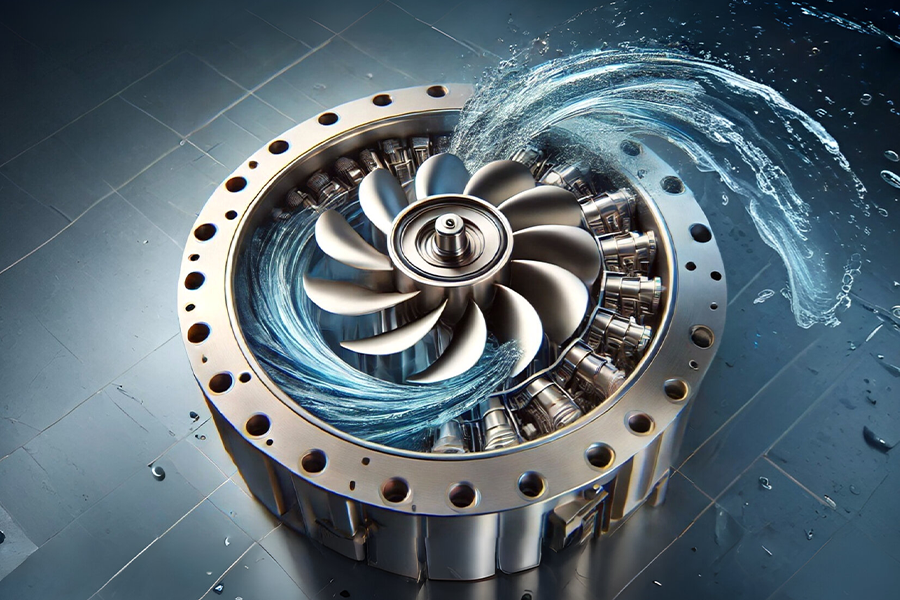
A polished impeller has received surface finishing treatments to improve its efficiency, durability, and smoothness. These impellers are polished to lower friction, stop corrosion, and improve fluid dynamics. They are frequently constructed from bronze, aluminum, or stainless steel.
Advantages of Impeller Polishing
Below, I will describe the advantages of Impeller Polishing:
1. Increased Productivity
Polishing an impeller improves fluid flow and lowers turbulence by reducing surface roughness. This guarantees peak performance, reduces energy usage, and improves system efficiency.
2. Resistance to Corrosion
Impellers work in conditions that expose them to chemicals, harsh fluids, and various temperatures. A polished impeller’s increased corrosion resistance ensures longevity and dependability.
3. Less Damage and Wear
A smooth impeller surface increases the lifespan of the impeller and the pump system by reducing wear and friction. This lowers downtime and maintenance expenses.
4. Improved Suitability
Hygienic conditions are necessary for industries like pharmaceuticals and food manufacturing. A polished impeller is perfect for sanitary applications since it avoids bacterial accumulation and is more straightforward to clean.
5. Improved Aesthetic Appeal
Although the main focus is functionality, polished impellers also have a visual benefit. This is especially helpful in fields where the appearance of equipment is essential.
Production Method for Polished Impellers
Below, I will describe the production method for polished impellers:
1. Selection of Materials
Choosing the right material for the intended use is the first stage in producing a polished impeller. Because of their strength and resistance to corrosion, bronze and stainless steel are frequently utilized.
2. Machining or Casting
Impellers can be manufactured using machining or casting. Casting enables complex designs, while precision CNC machining guarantees high tolerances.
3. Deburring and Grinding
The impeller is ground and deburred to remove sharp edges and flaws and prepare it for polishing.
4. Polishing Methods
A variety of polishing techniques are available, such as:
- Mechanical polishing: This method smoothes the surface using abrasive instruments.
- Electropolishing: An electrochemical process that removes material at a microscopic level, enhancing corrosion resistance.
- Buffing: The last stage that gives the impeller a mirror-like sheen is buffing.
5. Testing and Quality Assurance
Every polished impeller undergoes a thorough testing process to guarantee it meets industry requirements. Some examples are performance testing, surface roughness measures, and dimensional inspections.
Applications of Polished Impellers
Below, I will explain the application of polished impellers:
1. Pumps for Industry
In centrifugal and submersible pumps, where longevity and efficiency are crucial, polished impellers are frequently utilized.
2. Food and Drink Sector
Hygienic conditions are crucial when preparing food and beverages. Polished impellers guarantee adherence to safety standards and prevent contamination.
3. Pharmaceutical Industry
Pharmaceutical producers use polished impellers to sterile fluid handling systems and stop microbiological growth.
4. Marine Sector
Because corrosion is accelerated in saltwater, polished impellers are the best option for maritime applications where durability is an issue.
5. Automotive and Aerospace
Reliable cooling and lubricating systems are essential for high-performance engines, and polished impellers help with these systems.
FAQs
1. Why is impeller polishing important?
Polishing improves corrosion resistance, fluid flow, and efficiency by lowering surface roughness. In sectors like food processing and pharmaceuticals, it also aids in preserving hygiene.
2. How is a polished impeller made?
Buffing, electropolishing, and mechanical polishing are methods used to polish impellers. These techniques minimize friction, smooth out flaws, and enhance performance.
3. What kinds of materials go into making polished impellers?
Because of their strength, resistance to corrosion, and excellent performance in fluid systems, polished impellers are frequently made of stainless steel, bronze, and aluminum.
4. Can pump efficiency be increased by polished impellers?
Indeed, a polished impeller improves fluid flow, lowers energy consumption, and eliminates turbulence, increasing pump longevity and efficiency.
Conclusion
Polished impellers provide many benefits, including increased longevity, excellent hygiene, and corrosion resistance. Their function in various industries highlights their importance in maximizing fluid flow and cutting expenses. Businesses looking for performance and dependability in their fluid-handling system would be wise to invest in a polished impeller.