

Understanding When to Combine CNC Processes
In the competitive landscape of manufacturing, achieving tight tolerances while maintaining production speed is a balancing act. Combining milling, turning, and 5-axis capabilities is not just about utilizing advanced technology; it is a strategic necessity for optimizing workflows. For complex cnc precision parts, relying on a single machining method often creates bottlenecks and accuracy issues. By integrating these processes, we significantly reduce setup times and eliminate transfer errors, ensuring that the final component meets rigorous standards without unnecessary overhead.
Milling vs Turning vs 5-Axis: Process Strengths and Limitations
To make informed procurement decisions, engineers and buyers must understand the unique “DNA” of each machining style. Selecting the right process—or combination of processes—dictates the success of the project.
- CNC Turning: The undisputed champion for cylindrical geometries and rotational symmetry. It offers high speed and excellent surface finishes for shafts and bushings but struggles with non-concentric features.
- CNC Milling: Ideal for prismatic shapes, flat surfaces, and drilling holes off-center. However, standard 3-axis milling requires multiple manual setups for complex parts, increasing the risk of stacking errors.
- 5-Axis Machining: The ultimate solution for intricate geometries and undercuts. It allows the tool to approach the workpiece from virtually any angle, drastically reducing fixture requirements and enabling the production of highly complex cnc precision parts in a single operation.
Common Misconceptions in Multi-Process Machining
A frequent error in sourcing is assuming that sticking to a single, simpler process is always the most cost-effective route. This mindset often leads to hidden costs and extended lead times.
- Myth: “Simpler is Cheaper”
Reality: Forcing a complex part through standard 3-axis milling often requires multiple manual re-fixturing steps. This drives up labor costs and increases the likelihood of scrap due to alignment errors. - Myth: “5-Axis is Always Overkill”
Reality: While the machine hourly rate may be higher, the massive reduction in total cycle time and handling often makes 5-axis or mill-turn combinations more economical for intricate designs. - Myth: “One Machine Fits All”
Reality: No single machine is perfect for every feature. Leveraging a hybrid approach ensures that turning handles the round features efficiently while milling tackles the detailed pockets, delivering superior results faster.
Material Considerations and Machinability
When we look at producing high-quality cnc precision parts, the material selection dictates the entire manufacturing strategy. It is not just about whether the material fits the design application; it is about how it behaves under the cutter. Choosing the right material based on machinability directly impacts cycle time, tool wear, and ultimately, the cost per unit. We always advise engineers to balance the final performance requirements with the reality of machining to minimize rework and ensure consistent quality.
Aluminum, Stainless Steel, and Titanium Strategies
Different metals require vastly different approaches when combining milling, turning, and 5-axis operations. The goal is to optimize material removal rates without sacrificing surface finish.
- Aluminum (e.g., 6061, 7075): This is generally the most forgiving material, allowing for high spindle speeds and fast feed rates. However, chip evacuation is critical in 5-axis machining to prevent re-cutting chips, which can mar the finish.
- Stainless Steel (e.g., 304, 316): These alloys are prone to work-hardening. We have to keep the tool moving constantly—dwelling causes the material to harden instantly, leading to tool failure. For projects involving tougher grades, knowing how to properly manufacture hardened steel machining parts is essential to maintain tight tolerances and prolong tool life.
- Titanium: Heat management is the priority here. Titanium has low thermal conductivity, meaning the heat stays in the tool rather than the chip. We use high-pressure coolant and specialized carbide tooling to manage this thermal load.
Plastics, Composites, and Specialty Materials
Machining non-metals introduces a different set of challenges, primarily revolving around deformation and abrasion rather than cutting force.
- Deformation Risks: Plastics like Delrin or PEEK are prone to warping if clamped too tightly. We use soft jaws or vacuum fixtures to distribute holding pressure evenly preventing the part from springing out of tolerance once released.
- Abrasive Composites: Materials like carbon fiber are incredibly abrasive. Standard tools wear down rapidly, affecting precision. We switch to diamond-coated tools to maintain a sharp edge throughout the run.
- Sequencing: For plastics, we often rough the material and let it “rest” to relieve internal stresses before the final finishing pass. This ensures the final geometry remains stable.
Workflow Optimization for Multi-Process CNC
Optimizing workflow isn’t just about faster spindle speeds; it’s about eliminating the “dead time” when the machine isn’t cutting. When we combine processes, the goal is seamless integration. We focus on reducing handling time and ensuring that every movement adds value. By leveraging advanced CNC precision engineering solutions, manufacturers can significantly boost throughput while maintaining tight tolerances. The key is to stop thinking of milling and turning as separate islands and start treating them as a unified production line.
Sequencing Operations and Toolpath Planning
The order in which we cut metal dictates the success of the part. If we mill a surface before turning the diameter, we might induce vibration or lose concentricity. Generally, we prioritize bulk stock removal with turning, followed by heavy milling, and finish with 5-axis contouring for complex features.
- Smart Sequencing: We group operations to minimize tool changes. If a specific end mill is required for three different features, we program the toolpath to handle all of them before swapping tools.
- Collision Avoidance: In multi-process setups, especially Mill-Turn centers, the risk of tool interference increases. We use simulation software to verify clearance before the machine ever moves.
- Error Reduction: By planning the toolpath to finish critical features in a single setup, we ensure high-quality cnc precision parts without stacking tolerance errors that occur during re-clamping.
Fixturing and Multi-Station Setup
The best machine in the world can’t fix a bad setup. Moving a part manually between a lathe and a mill introduces human error and alignment issues. This is where smart fixturing saves the day.
- Zero-Point Clamping: This allows us to move a fixture from one machine to another with micron-level repeatability, drastically cutting setup time.
- Multi-Station Fixtures: We often load multiple parts onto a tombstone or pallet. While one part is being machined, the operator can load the next, keeping the spindle running continuously.
- Single-Setup Strategy: Utilizing 5-axis CNC machining services often eliminates the need for complex custom fixtures entirely, as the tool can access five sides of the part in one go. This approach is vital for maintaining geometric accuracy and speeding up production cycles.
Comparing Cost, Efficiency, and Risk Across Options
Making the right call between sticking with traditional sequential machining or moving to a combined multi-process approach isn’t just about technology—it’s about the bottom line. We have to evaluate direct costs against the hidden expenses of efficiency losses. While a standard 3-axis mill has a lower hourly rate than a 5-axis center, the math changes quickly when you factor in labor, setup time, and the risk of scrap.
Cost Trade-Offs Between Single vs Multi-Process Machining
When we quote projects for comprehensive CNC machining services, we look at the total throughput, not just the hourly rate of a single machine. Using separate machines for milling and turning often creates a false economy. You might save on machine rates, but you pay double in operator time for re-fixturing.
Here is a breakdown of where the money actually goes:
| Cost Factor | Sequential Machining (Single Process) | Combined Machining (Mill-Turn/5-Axis) |
|---|---|---|
| Setup Labor | High: Requires manual setup for every operation (Op 10, Op 20, etc.). | Low: “Done-in-one” setup reduces operator intervention. |
| Machine Rate | Lower: Standard lathes and mills are cheaper to run per hour. | Higher: Advanced multi-tasking machines have higher overhead. |
| Fixture Costs | High: Multiple custom fixtures needed for different machines. | Moderate: Often requires only one complex fixture or standard workholding. |
| WIP Inventory | High: Parts sit waiting between operations. | Low: Raw material goes in, finished part comes out. |
For high-volume runs, the reduced cycle time of a multi-process setup usually offsets the higher machine rate. For low-volume prototypes, the reduced setup time makes combined machining a clear winner.
Risk Assessment: Tolerances, Surface Finish, and Part Complexity
Risk management in manufacturing is largely about controlling variables. Every time an operator touches a part to move it from a lathe to a mill, you introduce the potential for human error and tolerance stack-up. If you are manufacturing cnc precision parts with tight geometric dimensioning and tolerancing (GD&T) requirements, these small errors can lead to a rejected batch.
Key Risk Factors to Watch:
- Datum Loss: Re-clamping a part on a second machine makes it difficult to maintain perfect concentricity or perpendicularity relative to the features machined in the first operation.
- Surface Blending: Mismatches between turned surfaces and milled features are common when processes are split. 5-axis machining allows for continuous tool paths that leave superior surface finishes.
- Handling Damage: The more a part is moved, the higher the risk of scratches, dents, or drops, especially with softer materials like aluminum or plastics.
By consolidating operations, we eliminate the “hand-off” risks. This ensures that the relationship between features remains exact because the part never leaves the chuck until it is finished.
Prototyping and RFQ Considerations
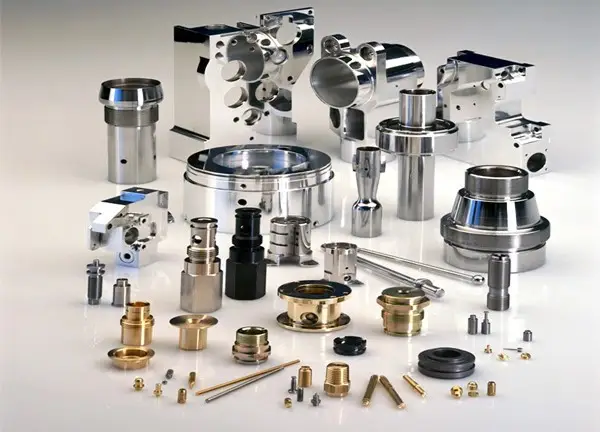
Navigating the transition from digital design to physical manufacturing requires strategic planning, especially when dealing with complex multi-process workflows. We help engineers and procurement teams determine exactly when to validate a design through prototyping and how to structure a Request for Quote (RFQ) to get the most accurate pricing and lead times.
When to Request a Prototype or Test Run
Jumping straight into high-volume production with a complex design is a financial risk. We recommend a prototype or pilot run whenever you are combining milling, turning, and 5-axis CNC machining for the first time on a new part. If your component features tight tolerances (down to +/- 0.005mm) or requires intricate geometries that demand 5-axis simultaneous machining, a test run validates our fixture strategy and toolpaths.
Material sensitivity is another major factor. Expensive materials like Titanium or PEEK behave differently under the stress of multi-axis machining compared to standard Aluminum 6061. A prototype run allows us to dial in feeds and speeds to prevent scrap in the final batch. Understanding the nuances of CNC milling prototype vs production workflows ensures that we catch potential design flaws early, saving you from costly rework delays later.
Key Triggers for Prototyping:
- Complex Geometry: Parts requiring 4-axis or 5-axis movements.
- Tight Tolerances: Verification of critical dimensions before mass production.
- Fit and Function: Ensuring the part mates correctly with other CNC precision parts in your assembly.
- Surface Finish: Verifying that anodizing or plating meets aesthetic standards on the actual substrate.
Effective RFQ Preparation for Multi-Process CNC
To provide an accurate “Instant Quote” and leverage our direct factory pricing, clarity in your RFQ is essential. When you combine turning and milling, the quoting process becomes more technical because we have to calculate machine time across different centers or determine if a multitasking machine is more efficient.
We rely on precise data to optimize your costs. Sending incomplete information forces us to make assumptions that might inflate the price to cover risk. To get the best value and fastest turnaround (as quick as 3-7 days for prototypes), ensure your RFQ package is complete.
RFQ Checklist for Maximum Efficiency:
- 3D CAD Files: We need STEP or IGES files to program our 5-axis machines; PDFs are only for reference.
- Material Specifications: Clearly state the grade (e.g., Stainless Steel 304 vs. 316) as machinability impacts cost.
- Tolerances: Highlight critical dimensions. If standard ISO 2768 is acceptable, state it to reduce inspection time.
- Surface Finishing: Specify requirements like bead blasting, anodizing, or powder coating upfront.
- Quantity: We handle 1 to 100,000+ parts, but the setup cost per unit changes drastically between a single prototype and a full run.
Hybrid Machining in Complex Mechanical Components
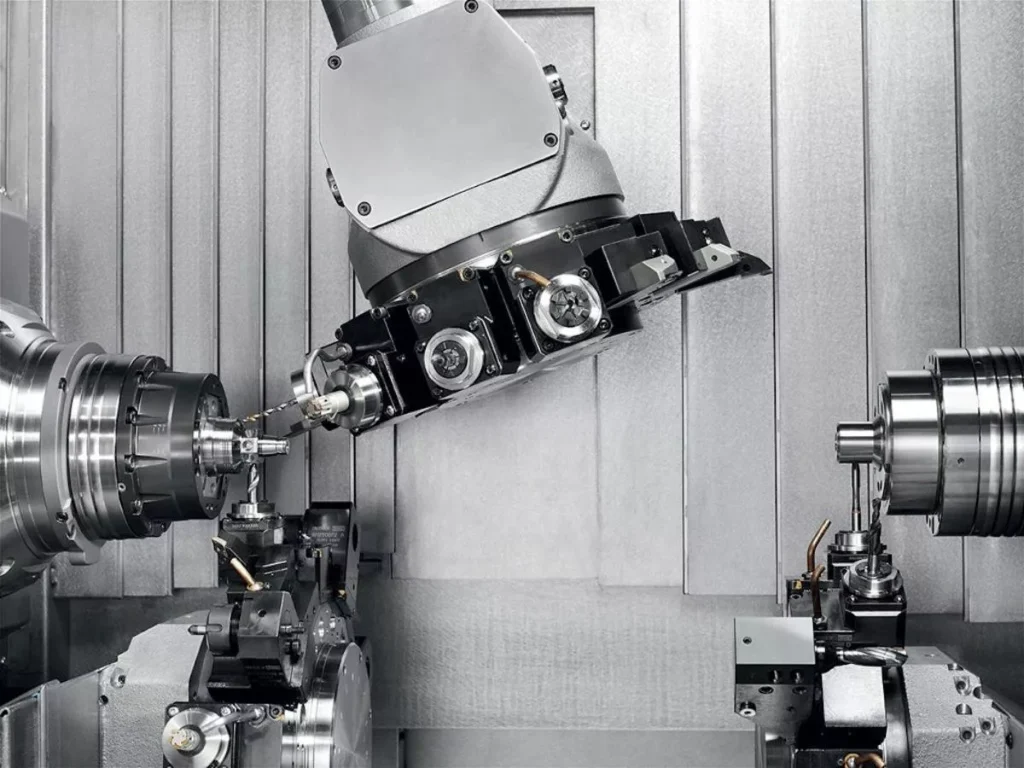
When manufacturing cnc precision parts with intricate geometries, separating operations often leads to stacked tolerance errors. I recall a project involving an aerospace housing that required both heavy material removal and complex contoured surfaces. Initially, we tried turning the main bore and then moving it to a standard mill. The result? High scrap rates due to misalignment during the transfer.
The solution was integrating the workflow. By utilizing a multitasking center or strictly coordinating the transfer to a machine with advanced 5-axis milling capabilities, we maintained a single datum point. This hybrid approach allowed us to:
- Eliminate Re-fixturing Errors: Keeping the part clamped reduces the risk of human error.
- Balance Cycle Times: While the turning spindle handled the roughing, the milling head simultaneously worked on off-center features.
- Improve Surface Continuity: Blending turned and milled finishes became seamless, meeting strict aesthetic and functional requirements.
Lessons from High-Volume Production Runs
Scaling up from a prototype to thousands of units exposes inefficiencies that you might miss in a small batch. In high-volume runs, consistency is king. We learned that the key isn’t just faster cutting speeds, but smarter organization of the entire cell.
Here are the critical lessons for boosting efficiency in large batches:
- Standardize Fixturing: We implemented zero-point clamping systems that work across both our turning centers and mills. This allows us to move a pallet from one machine to another in seconds, not minutes.
- Optimize Tool Life: In long runs, tool wear varies significantly between processes. Selecting high-quality CNC machining tools specifically designed for hybrid loads prevents unexpected downtime.
- Sync Operations: We structure the workflow so that the milling cycle time matches the turning cycle time as closely as possible. This prevents WIP (Work In Progress) from piling up at one station while another sits idle.