
The Core Processes of Custom Sheet Metal Fabrication
Custom sheet metal fabrication involves several key steps that transform raw metal sheets into precise, functional parts. Understanding these core processes helps ensure quality and efficiency in your project.
Cutting Technologies: Laser Cutting, Punching & Shearing
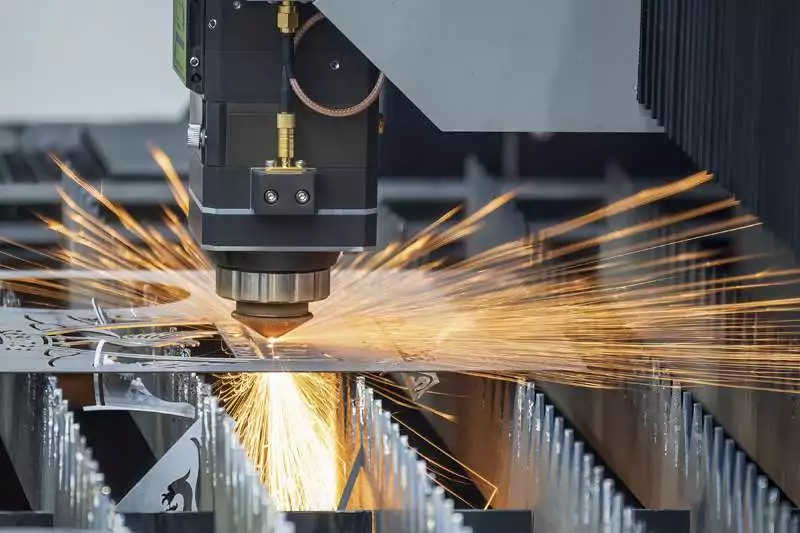
The first stage usually involves cutting the metal to the right shape and size. We use advanced laser cutting services for precision, along with punching and shearing methods for faster material removal. Laser cutting offers tight sheet metal tolerances, while punching is ideal for repetitive holes or shapes. Shearing provides clean, straight cuts for standard sizes.
Metal Forming and Shaping: Bending Press Brake & Metal Stamping
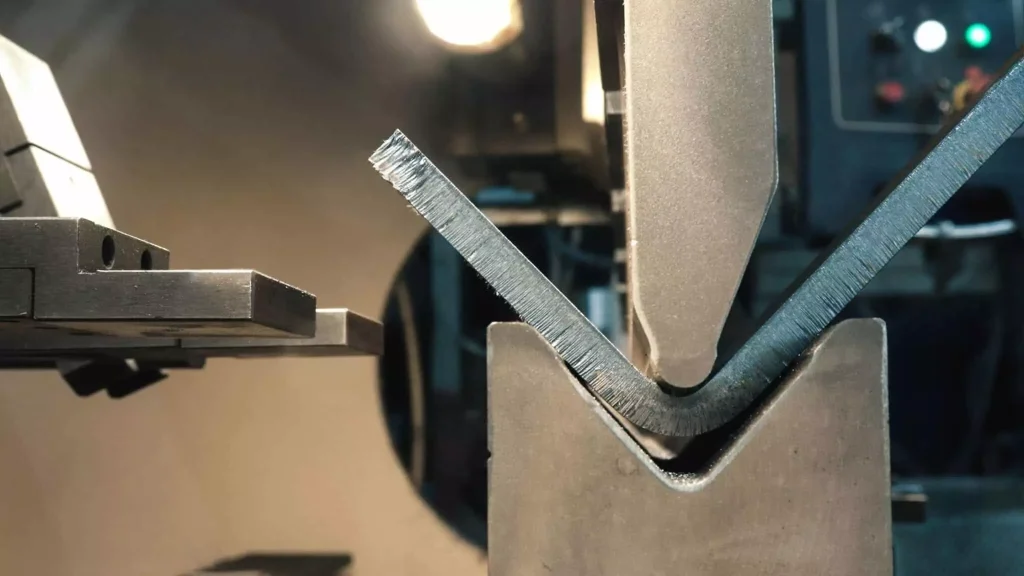
Once cut, metal sheets go through metal forming processes like press brake forming, which bends the material to precise angles without compromising strength. For complex shapes, metal stamping is used, where a die shapes the metal under high pressure, perfect for high-volume runs or detailed features.
Assembly and Joining: Welding, Riveting & Hardware Insertion
The final stage is assembly. This includes TIG welding services known for clean, strong welds ideal for stainless steel and aluminum components. Other joining techniques include riveting and hardware insertion, which provide durable mechanical connections without heat. These ensure your custom metal enclosures or structural parts hold up under stress.
By combining cutting, forming, and assembly with precision CNC machining and expert craftsmanship, custom sheet metal fabrication delivers reliable parts that meet exact specs—whether for rapid prototyping or full-scale production.
Material Selection: Choosing the Right Alloy
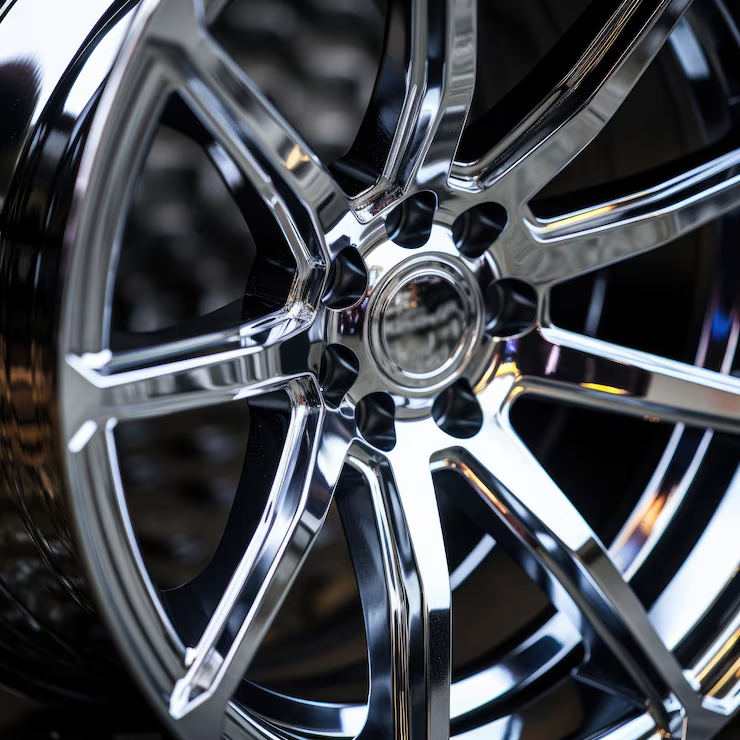
Picking the right material is a crucial step in custom sheet metal fabrication. The choice directly affects durability, cost, and performance, so understanding your options is key.
Stainless Steel Grades and Corrosion Resistance
Stainless steel is popular for its strength and resistance to rust and corrosion. Different grades like 304 and 316 offer varying levels of protection, with 316 ideal for harsh environments. This metal is perfect for applications where lasting durability and clean aesthetics matter, like custom metal enclosures.
Aluminum for Weight-to-Strength Ratio
When weight is a concern but strength can’t be compromised, aluminum stands out. It’s lighter than steel and resists corrosion, making it a top choice for aerospace, automotive, and consumer products that demand a good weight-to-strength ratio. Plus, aluminum fabrication pairs well with precision CNC machining for tight tolerances.
Carbon Steel and Copper for Structural and Conductive Needs
Carbon steel is often used when you need a tough, cost-effective option for structural parts like brackets or chassis. It’s strong, easy to weld, and broadly available in sheet metal gauges. Copper, meanwhile, shines in applications requiring excellent electrical conductivity or thermal management. Custom sheet metal fabrication involving copper is common for electrical components and heat sinks.
Choosing the right alloy upfront ensures your project meets both design and functional goals, preventing costly rework down the line. For detailed metal fabrication that matches your specs, consider our precision CNC milling services and laser cutting capabilities to bring your design to life efficiently and accurately.
Design for Manufacturing (DFM) in Metal Design
 "不支持的图片格式"string(24) "不支持的图片格式"string(24) "不支持的图片格式"https://pub-36eea33d6f1540d281c285671ffb8664.r2.dev/2026/01/19/Custom_Sheet_Metal_DFM_Optimization_dZlRJuCpN.webp)
Design for Manufacturing (DFM) is a critical step in custom sheet metal fabrication that helps optimize parts for both cost and speed. At MS Machining, we focus on designing parts that are not only functional but also easy to produce using our advanced sheet metal processes. This means considering factors like sheet metal tolerances, bend allowances, and material selection early in the design phase to avoid costly revisions.
Optimizing Parts for Cost and Speed
- Simplify designs to reduce cutting and forming time.
- Use standard sheet metal gauges and readily available materials.
- Minimize complex bends that require multiple press brake operations.
- Plan parts for efficient nesting during laser cutting to maximize material use.
Keeping these points in mind speeds up production, lowers costs, and improves overall quality.
Common Design Pitfalls to Avoid
- Overly tight tolerances that complicate fabrication.
- Designs with inaccessible weld points or assembly areas.
- Ignoring material thickness changes after bending, which can cause fit issues.
- Overcomplicating geometries that require multiple setups and increase machining time.
At MS Machining, our team reviews your CAD files early to identify and fix these issues before production starts.
MS Machining Engineering Review Process
Our engineering review dives deep into every part design to ensure manufacturability with precision CNC machining and sheet metal fabrication techniques. We provide feedback on:
- Material choice suitability.
- Bend radii and angles for press brake forming.
- Laser cutting paths and punch hole placements.
- Assembly methods and potential welding or riveting needs.
This collaboration streamlines production and ensures your custom parts meet both quality and budget targets. For projects involving complex laser profiles, consider checking out our CNC laser cutter capabilities to see how we handle intricate designs efficiently.
By partnering with MS Machining early in your design process, you leverage our expertise to deliver precise, cost-effective sheet metal components on time.
Applications: What We Build
At MS Machining, our custom sheet metal fabrication covers a wide range of products tailored to your needs. We specialize in custom metal boxes and enclosures, perfect for protecting electronics, industrial equipment, or any sensitive components. Our expertise also extends to structural metal components like brackets, chassis, and mounting plates that provide reliable support and durability in various applications.
Whether you need sheet metal prototypes for testing and design validation or are ready for mass production runs, we offer flexible solutions to match your project timeline and budget. Our team works closely with you to ensure that every fabricated part meets your specifications, quality standards, and performance requirements.
For complex builds requiring strict tolerances and quality, we back our services with thorough reviews and precision control, ensuring every part fits and functions as intended. This makes us a trusted metal fabrication shop for OEM metal parts as well as custom projects.
By combining advanced processes with a strong understanding of different metals and applications, we help you bring your design from concept to reality efficiently and reliably.
Explore our skills in creating durable and precise components—whether you’re focused on prototypes or volume orders, our expertise ensures top results.
Surface Finishing: The Final Touch
Surface finishing is a critical step in custom sheet metal fabrication that not only enhances the look of your metal parts but also boosts their durability. Whether you’re after aesthetic appeal or long-lasting protection, the right finish makes all the difference.
Aesthetic Finishes
- Powder Coating: Offers a smooth, uniform layer that resists chipping, scratching, and fading. It’s perfect for custom metal enclosures that need vibrant, durable color.
- Anodizing: Commonly used with aluminum fabrication, anodizing creates a corrosion-resistant and wear-resistant surface while allowing for color customization.
- Plating: Metal plating like chrome or nickel adds shine and corrosion resistance, ideal for structural metal components exposed to harsh environments.
- Bead Blasting: Produces a matte, textured finish that masks surface imperfections and primes parts for further coating or painting.
Durability and Environmental Protection
Beyond appearances, finishing protects sheet metal parts from corrosion, weather, and wear—extending their lifespan in demanding settings. This is especially important for stainless steel grades and carbon steel components exposed to moisture or chemicals.
Choosing the right surface finish ensures your custom metal parts perform well and maintain their quality over time. For projects requiring both precision and durability, our team at MS Machining integrates finishing processes seamlessly into the fabrication workflow, helping you get parts ready for installation or use.
Explore how our metal finishing services complement our precision CNC machining and metal fabrication shop offerings, streamlining your project from start to finish. For more on our manufacturing capabilities, check out our expertise in manufacturing oil and gas equipment.
Why Partner with MS Machining?
Choosing MS Machining for your custom sheet metal fabrication means you’re getting precision and quality you can trust. We follow strict ISO standards to ensure every part meets exact specifications, whether it’s a prototype or a full production run. Our skilled team checks every step, so you get consistent results with tight sheet metal tolerances.
Speed matters too. From the moment you upload your CAD file to final delivery, we keep the process smooth and efficient. Our streamlined CAD to CAM workflow and expert design for manufacturing (DFM) reviews help reduce lead times and cut costs without sacrificing quality.
Ready to get started? Upload your CAD files today for a thorough DFM review, and let us help bring your metal components or custom metal enclosures to life with precision and fast turnaround.
For projects requiring top-notch surface finishes, explore our stainless steel polishing services to make your parts stand out both in durability and appearance.