Introduction: Understanding Custom Investment Casting
In the competitive landscape of modern manufacturing, achieving market dominance requires more than just a good design; it demands execution excellence. Custom Investment Casting Solutions stand at the forefront of high-precision manufacturing, offering a pathway to superior product quality and increased market share. At MS-Machining, we leverage over 15 years of industry expertise to transform complex engineering concepts into tangible, high-performance components. By integrating advanced casting techniques with our ISO 9001:2015 certified quality systems, we provide a strategic advantage to businesses looking to optimize their supply chain and deliver exceptional value to their end-users.
What is Investment Casting? A Brief Overview
Investment casting, historically known as lost wax casting, is a precision manufacturing process capable of producing intricate components with exceptional accuracy. The process begins with the creation of a precise wax pattern, which is then coated in a ceramic slurry to form a hardened shell. Once the shell is cured, the wax is melted out—hence the term “lost wax”—leaving behind a hollow cavity. Molten metal, ranging from stainless steel (304, 316) to specialized alloys, is poured into this mold to create the final part.
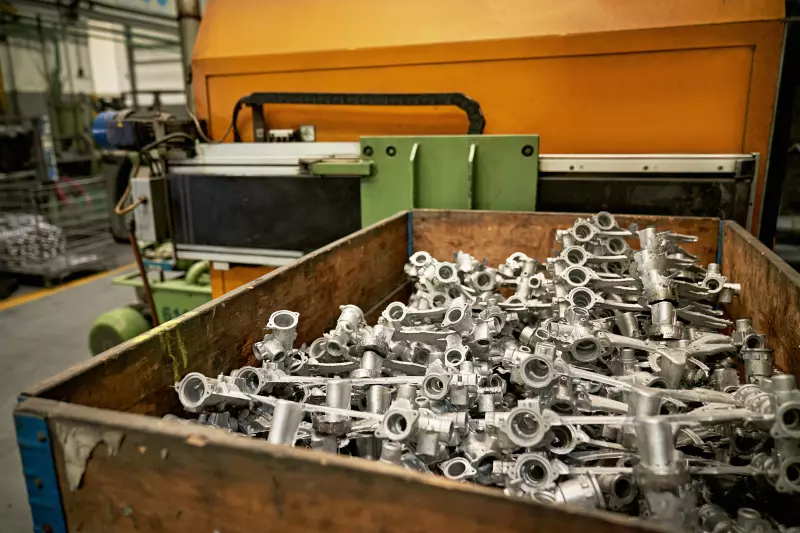
This method is renowned for its ability to produce net-shape components, meaning the cast parts emerge with dimensions very close to the final specifications, significantly reducing the need for extensive secondary processing.
How Custom Investment Casting Differs from Traditional Methods
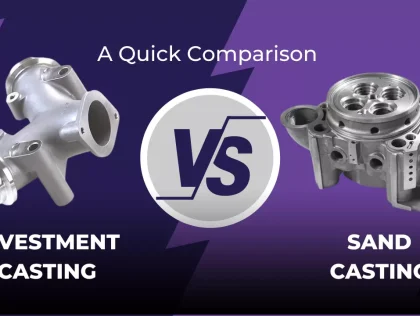
While various manufacturing techniques exist, custom investment casting offers distinct advantages over traditional methods like sand casting or fabrication. Understanding these differences is crucial for selecting the right process for your project:
- Surface Finish: Unlike sand casting, which often results in a rougher surface texture, investment casting delivers a smooth, high-quality finish that often requires no further polishing.
- Dimensional Accuracy: Investment casting achieves much tighter tolerances (up to ±0.005mm in specific applications) compared to other casting methods, ensuring consistency across mass production.
- Material Efficiency: Traditional machining from solid blocks generates significant waste. Investment casting uses only the material necessary for the part and its gating system, making it cost-effective for expensive alloys.
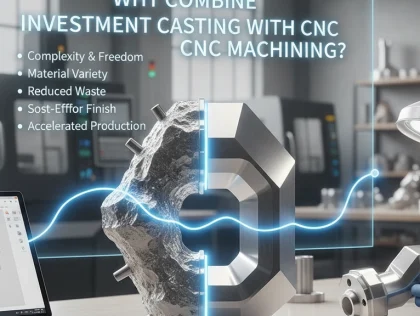
- Complexity: This method allows for the creation of complex internal geometries and thin-walled sections that would be impossible or prohibitively expensive to produce via precision CNC parts machining alone.
The Role of Customization in Achieving Superior Product Quality
Customization is the cornerstone of manufacturing success. Generic solutions rarely meet the rigorous demands of high-performance industries like aerospace, automotive, or medical devices. By engaging in custom investment casting, manufacturers can tailor every aspect of production to the specific needs of the application.
- Material Integrity: We allow for precise alloy selection, ensuring parts meet specific mechanical properties such as corrosion resistance (using 316 Stainless Steel) or high strength (using 17-4PH).
- Design Optimization: Our 1-on-1 engineering support helps clients refine designs for manufacturability before production begins, eliminating potential defects and ensuring structural integrity.
- Integrated Solutions: Customization extends beyond casting. By combining casting with secondary CNC precision parts machining and surface treatments like anodizing or plating, we deliver a finished, ready-to-assemble product that meets the highest quality standards.
The Benefits of Custom Investment Casting for High-Quality Products
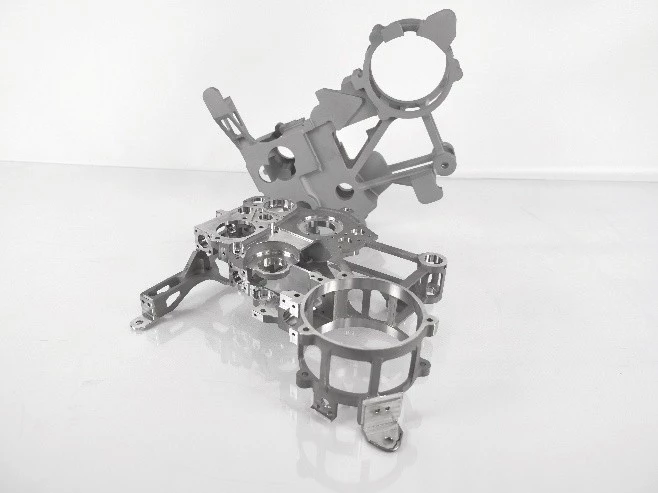
At MS-Machining, we know that achieving dominance in the US market requires more than just a functional part; it requires a component that balances cost, performance, and reliability. Custom investment casting offers a strategic advantage by delivering near-net-shape parts that meet rigorous industrial standards.
Enhanced Precision and Tight Tolerances
One of the primary reasons we recommend this process is its ability to hold extremely tight tolerances. Unlike sand casting, which is better suited for larger, rougher components, our investment casting process (often called lost wax casting) utilizes precise wax patterns and ceramic molds. This allows us to achieve dimensional accuracy up to ±0.005mm, ensuring that every unit produced matches your original CAD design perfectly.
Our ISO 9001:2015 certified protocols ensure that this precision is repeatable across thousands of units. By utilizing advanced investment casting solutions, manufacturers can reduce the risk of assembly failures caused by dimensional variance.
Complex Geometries and Intricate Details
Design freedom is a massive benefit here. We can produce parts with complex internal passageways, thin walls, and undercuts that would be impossible or prohibitively expensive to create using traditional machining methods.
- Consolidated Assemblies: Combine multiple fabricated parts into a single cast unit.
- Weight Reduction: Design intricate internal structures to reduce weight without sacrificing strength.
- Design Flexibility: Create organic shapes and contours that improve fluid dynamics or ergonomics.
Superior Surface Finish and Reduced Post-Processing
A major cost driver in manufacturing is the secondary work required to finish a part. Investment casting delivers a superior surface finish right out of the mold, typically ranging from 125 RMS to 63 RMS. This high-quality “as-cast” finish significantly reduces the need for aggressive grinding or polishing.
While we offer comprehensive surface treatments—such as anodizing, powder coating, and plating—starting with a smoother surface means we spend less time on secondary machining. This efficiency directly lowers the cost per unit compared to machining cnc precision parts from solid block stock, where material waste is higher.
Material Versatility: From Metals to Alloys
We don’t believe in limiting your engineering options. Our facility is equipped to cast a vast array of materials, allowing you to select the exact alloy that meets your mechanical and environmental requirements. Whether you need corrosion resistance for marine applications or high tensile strength for automotive components, we have the capability to pour it.
Common Materials We Cast:
| Material Category | Specific Alloys | Key Properties |
|---|---|---|
| Stainless Steel | 304, 316, 17-4PH | Excellent corrosion resistance and strength. |
| Carbon & Alloy Steel | Low to High Carbon | High durability and wear resistance. |
| Non-Ferrous | Aluminum, Brass, Copper | Lightweight, high conductivity, and aesthetic appeal. |
By tailoring the material composition to the specific application, we help you achieve better product performance and longevity in the field.
How Custom Investment Casting Helps Increase Market Share
To dominate in competitive markets like the US, manufacturers need more than just a working product; they need a strategic manufacturing edge. Custom investment casting solutions provide that leverage by optimizing the balance between production speed, cost efficiency, and superior part performance. At MS-Machining, we help businesses transition from concept to market dominance through our integrated manufacturing capabilities.
Faster Time-to-Market with Custom Solutions
Speed is often the deciding factor in capturing market share. Traditional supply chains that separate casting, machining, and finishing into different vendors create bottlenecks and communication delays. Our “One-Stop Solution” model eliminates these gaps.
By handling everything from initial design consultation to final surface treatment in-house, we significantly reduce lead times. Our engineering team provides 1-on-1 support to identify manufacturability issues early, ensuring that your investment casting molds are right the first time. This streamlined approach allows you to launch products faster than competitors who are stuck managing multiple suppliers.
Cost-Effectiveness for Low and High-Volume Production
One of the biggest misconceptions is that custom casting is only for massive production runs. In reality, investment casting is highly adaptable.
- Reduced Material Waste: Unlike machining from a solid block, casting uses only the material needed for the part, drastically cutting raw material costs.
- Scalability: We offer flexible solutions that work for initial small-batch prototypes and scale seamlessly into mass production.
- Minimizing Secondary Operations: Because we achieve near-net shapes with high precision, the need for extensive secondary machining is reduced. However, when extremely tight tolerances are required, our integrated CNC milling machine components services ensure the final specs are met without the logistical cost of moving parts to a different facility.
Creating Competitive Advantage through Innovation and Customization
Market leaders are often those who can offer features that others cannot. Custom investment casting allows for complex geometries, thin-walled sections, and intricate internal structures that are impossible or too costly to achieve with standard machining or fabrication.
This design freedom allows our clients to innovate—creating lighter, stronger, and more efficient components. By utilizing advanced alloys like Stainless Steel (304, 316, 17-4PH) or specialized Carbon Steel, you can offer a product that outperforms the competition in durability and functionality.
Improved Product Performance and Customer Satisfaction
Ultimately, market share is sustained by product reliability. A part that fails damages your brand reputation. We adhere to strict ISO 9001:2015 standards to ensure that every casting meets rigorous quality benchmarks.
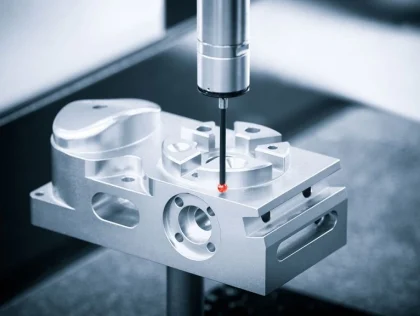
Using advanced testing equipment like Coordinate Measuring Machines (CMM) and Spectrometers, we verify material purity and dimensional accuracy before shipment. High-quality precision cnc parts and castings result in products that last longer and perform better in the field, directly leading to higher customer satisfaction and repeat business.
Key Industries That Benefit from Custom Investment Casting
Custom investment casting is the go-to manufacturing method for industries where failure is not an option. At MS-Machining, we leverage over 15 years of experience to deliver components that meet the rigorous demands of global markets, including the USA and Europe. Our process ensures that complex designs are transformed into functional, high-performance reality.
Aerospace Industry: Precision Parts for High-Performance Applications
In aerospace, weight reduction and structural integrity are critical. Investment casting allows us to produce complex, thin-walled components that would be impossible or too costly to machine from a solid block. We work with high-grade alloys to ensure parts withstand extreme temperatures and stress.
- Complex Geometries: Creating intricate internal cooling channels and aerodynamic shapes.
- Material Integrity: Using advanced spectrometers to verify alloy purity for safety-critical parts.
- Secondary Operations: While casting gets us close to the final shape, we often utilize CNC precision machining to achieve the ultra-tight tolerances required for flight hardware.
Automotive Industry: Reliable and Lightweight Components
The automotive sector demands speed, consistency, and cost-efficiency. Our investment casting process supports both prototyping and mass production, helping manufacturers reduce vehicle weight without sacrificing durability. Unlike rougher methods like sand casting, investment casting provides a superior surface finish right out of the mold.
- Engine Components: Producing turbocharger housings, exhaust manifolds, and valve train parts.
- Scalability: Moving seamlessly from design validation to high-volume manufacturing.
- Surface Finishing: Offering powder coating and plating for corrosion resistance and aesthetic appeal.
Medical Device Manufacturing: Meeting Strict Regulatory Standards
Medical manufacturers rely on us for precision CNC parts and castings that require absolute accuracy and biocompatibility. As an ISO 9001:2015 certified partner, we adhere to strict quality control protocols to ensure every surgical instrument and implant meets industry standards.
- Material Selection: Utilizing Stainless Steel 316 and 17-4PH for corrosion resistance and sterilization capability.
- Net-Shape Manufacturing: Reducing the need for extensive post-processing.
- Quality Assurance: 100% inspection using CMM technology to verify dimensional accuracy.
Energy and Oil & Gas: Durability and Resistance for Extreme Conditions
Equipment in the energy sector faces harsh environments, from deep-sea pressures to corrosive chemical exposure. We provide robust investment casting solutions designed to last, minimizing maintenance downtime for our clients.
- Corrosion Resistance: Casting valves, pumps, and impellers from marine-grade stainless steel and superalloys.
- High Strength: Ensuring components handle high-pressure applications reliably.
- One-Stop Solution: We handle everything from the initial casting to the final heat treatment and machining, streamlining your supply chain.
Factors to Consider When Choosing Custom Investment Casting
When we dive into Custom Investment Casting Solutions, it’s not just about pouring metal into a mold. To get a return on investment and a product that actually works in the field, we have to look at the technical and economic factors driving the project. Ignoring these variables usually leads to cost overruns or parts that fail under stress.
Material Selection: Choosing the Right Alloys and Metals
The choice of material dictates the performance of the final component. Unlike sand casting, which is often reserved for larger, rougher iron parts, investment casting allows us to work with a massive range of alloys, from stainless steel and aluminum to exotic superalloys.
We need to match the material properties—such as heat resistance, tensile strength, and corrosion resistance—to the application. For instance, an aerospace turbine blade requires vastly different metallurgy than a medical bracket. We always advise clients to consider:
- Operating Environment: Extreme heat or corrosive chemicals?
- Weight Requirements: Is aluminum or titanium necessary to reduce load?
- Cost vs. Performance: Does the application truly require a high-grade superalloy, or will a standard carbon steel suffice?
Design for Manufacturability: Optimizing Your Part Design for Casting
DFM (Design for Manufacturability) is where we save the most money. A design that looks good in CAD might be a nightmare to cast if we don’t account for fluid dynamics and cooling rates. We look for uniform wall thicknesses to prevent shrinkage defects and ensure proper draft angles are in place to remove the wax pattern easily.
However, casting can’t always hold every single tolerance perfect on its own. Often, we cast the near-net shape and then utilize precision CNC machining services to finish critical mating surfaces or threaded holes. By combining casting with machining, we get the best of both worlds: complex internal geometries and tight external fits.
Production Volume: Tailoring Solutions for Low or High-Volume Runs
Volume determines the tooling strategy. Investment casting requires an initial investment in a metal die to create the wax patterns. If you are running high volumes (thousands of parts), this tooling cost is amortized quickly, making the per-unit price very competitive.
For low-volume runs or initial product testing, we have to be strategic. Sometimes, it makes sense to look at CNC prototyping benefits to validate a design before cutting expensive hard tooling. If the volume is low but the complexity is high, we might use 3D-printed wax patterns to bypass the metal die stage entirely, allowing for faster iteration without the heavy upfront costs.
Quality Control and Testing: Ensuring Consistency in Every Part
In my experience, consistency is what builds market share. We can’t afford to have one batch of cnc precision parts or castings differ from the next. A robust quality control plan is essential for Custom Investment Casting Solutions, especially in regulated sectors like automotive or medical.
Key QC measures we implement include:
- Dimensional Inspection: Using CMM (Coordinate Measuring Machines) to verify tolerances.
- Chemical Analysis: Spectrometry to ensure the alloy composition is exact.
- Non-Destructive Testing (NDT): X-ray or dye penetrant inspection to detect internal voids or surface cracks that aren’t visible to the naked eye.
The Cost Structure of Custom Investment Casting
Understanding the financial breakdown of custom investment casting solutions is vital for making informed manufacturing decisions. While the initial numbers might look different compared to methods like sand casting or fabrication, the total cost of ownership often tells a different story. At MS-Machining, we help you navigate these costs to ensure you get the best value for your budget.
Upfront Tooling and Setup Costs
The investment casting process, often called lost wax casting, requires the creation of a precision metal die (mold) to produce the wax patterns.
- Initial Investment: This tooling represents a significant upfront cost, generally higher than sand casting patterns but lower than high-pressure die casting molds.
- Tooling Longevity: We design our tooling for durability. Once the master die is created, it can produce thousands of consistent wax patterns, amortizing the initial cost over the production run.
- Design Verification: Before cutting metal for the mold, our engineering team reviews the design to prevent costly modifications later.
Material and Production Costs for Custom Castings
Production costs are driven by the complexity of the part, the type of material used, and the labor involved in the shell-building process.
- Material Efficiency: We work with a wide range of materials, including stainless steel (304, 316, 17-4PH), carbon steel, and non-ferrous alloys. Because investment casting is a near-net-shape process, we use less raw material compared to machining a part from a solid block.
- Labor Factors: The process involves multiple steps—wax injection, shell building, dewaxing, pouring, and knockout. While this is labor-intensive, our optimized workflow and automation in key areas help keep unit costs competitive.
Long-Term Cost Savings: Reducing Waste and Minimizing Post-Processing
The true economic advantage of investment casting lies in the reduction of secondary operations. By achieving complex geometries and tight tolerances right out of the mold, we eliminate the need for extensive machining.
- Near-Net Shape: We cast features like holes, slots, and undercuts that would be expensive to machine. This significantly reduces waste and cycle time.
- Integrated Solutions: When tighter tolerances are required, we provide a one-stop solution. Instead of sourcing separate vendors, we handle the secondary operations in-house. For substantial components requiring final sizing, our large part CNC machining services ensure the cast parts meet exact specifications without the logistical cost of moving parts between suppliers.
- Surface Finish: The superior surface finish of investment casting often eliminates the need for polishing or grinding, further reducing the cost per part.
Technology Advancements in Custom Investment Casting
Modern manufacturing isn’t just about pouring metal; it’s about integrating smart technology to reduce lead times and eliminate defects. At MS-Machining, we leverage advanced industrial techniques to ensure our investment casting solutions meet the rigorous demands of the US market. By combining traditional craftsmanship with modern tech, we deliver parts that fit your specs perfectly the first time.
3D Printing and Rapid Prototyping for Investment Casting
Speed is everything when you are trying to capture market share. Traditionally, creating the metal tooling for wax patterns could take weeks. Today, we utilize rapid prototyping technologies, including 3D printing, to create wax or PMMA patterns directly from a CAD file.
- No Hard Tooling Required: Ideal for low-volume runs or testing a design before mass production.
- Design Verification: Allows engineers to physically inspect precision cnc parts and cast geometries early in the development cycle.
- Faster Turnaround: Cuts weeks off the initial development phase, getting your product to market sooner.
Automation and Robotics in the Casting Process
Consistency is the key to quality in investment casting. We utilize automated systems to handle repetitive tasks, particularly during the shell-building phase. Robotic arms can dip wax trees into ceramic slurry with perfect uniformity, ensuring the shell thickness is consistent across every single part.
This automation eliminates the variables of manual handling, resulting in:
- Uniform Thermal Expansion: Reduces the risk of shell cracking during the dewaxing or pouring stages.
- Higher Dimensional Stability: Ensures that the final metal part matches the intended tolerances.
- Scalability: Allows us to ramp up production volumes without sacrificing quality.
AI and Machine Learning for Enhanced Quality Control
Quality control is where technology truly separates professional manufacturers from the rest. While we rely on our ISO 9001:2015 certified processes, the industry is moving toward data-driven inspection. Advanced Coordinate Measuring Machines (CMM) and Spectrometers generate massive amounts of data regarding dimensional accuracy and material composition.
By analyzing this data, we can identify potential trends in wear or tolerance drift before they become critical issues. This proactive approach ensures that whether you need raw castings or fully finished CNC machining services, the final output maintains 100% integrity. We use these advanced insights to guarantee that every batch meets the strict standards required by industries like aerospace and medical devices.
Challenges in Custom Investment Casting
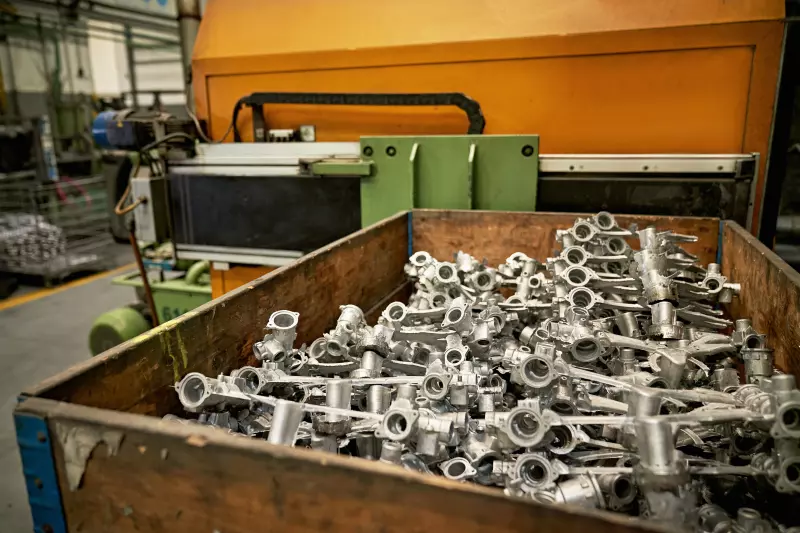
While Custom Investment Casting Solutions offer incredible design freedom and precision, the process isn’t without its hurdles. As a manufacturer committed to ISO 9001:2015 standards, we believe in being transparent about these challenges so we can navigate them together effectively.
Material Limitations and Selection Challenges
One of the first roadblocks we encounter is selecting the right alloy that balances performance with castability. Not every metal flows perfectly into complex, thin-walled molds. For instance, while we specialize in stainless steel (304, 316, 17-4PH), carbon steel, and copper alloys, certain superalloys can be prone to segregation or porosity if not handled with exact temperature controls.
- Fluidity Issues: Some alloys cool too quickly, failing to fill intricate details.
- Reaction with Mold Material: High-temperature reactive metals can sometimes degrade the ceramic shell.
- Shrinkage Rates: Different materials shrink at different rates, requiring precise calculations during the wax pattern design.
We provide 1-on-1 engineering support to ensure your material choice doesn’t just look good on paper but works flawlessly in production.
Managing High Initial Investment for Tooling and Setup
Let’s be real—investment casting requires a metal die to create the wax patterns, and that upfront tooling cost can be significant. For low-volume runs, this initial expense might seem steep compared to other methods like sand casting or simple machining. However, this cost is an investment in efficiency.
By creating near-net-shape parts, we significantly lower the amount of material waste and secondary labor required. This approach helps you reduce CNC machining costs over the total production run, as you aren’t paying to turn a solid block of metal into chips. The key is balancing that initial setup fee against the long-term unit price savings.
Maintaining Quality Across Production Runs
Consistency is the name of the game in manufacturing. In investment casting, variables like shell temperature, pouring speed, and cooling times must be strictly controlled to avoid defects like shrinkage, porosity, or surface inclusions. Ensuring that the 1,000th part is identical to the 1st requires rigorous process control.
To overcome this, we utilize advanced testing equipment, including Spectrometers for material purity and CMM (Coordinate Measuring Machines) for dimensional accuracy. Whether we are producing raw castings or delivering finished precision cnc parts after secondary operations, our 100% inspection protocols ensure that quality remains stable, protecting your brand’s reputation in the market.
Best Practices for Maximizing the Benefits of Custom Investment Casting
To truly leverage Custom Investment Casting Solutions for market dominance, you need more than just a foundry; you need a strategic approach to manufacturing. Moving from a prototype to full-scale production requires attention to detail and adherence to proven industrial practices. Here is how we help you get the best results.
Collaborating with Experienced Casting Engineers
The most successful projects start with early collaboration. Instead of finalizing a design in isolation, bring our engineering team in during the concept phase. We provide 1-on-1 technical consultation to identify potential casting issues before tooling begins.
By integrating CNC precision engineering principles early, we can suggest modifications that improve flow, reduce porosity, and enhance structural integrity. This proactive approach prevents costly revisions later and ensures your components meet strict ISO 9001:2015 standards from the very first pour.
Why Early Collaboration Matters:
- Feasibility Analysis: Determine if investment casting is the right fit or if sand casting might be better for larger, lower-tolerance parts.
- Material Selection: Expert advice on choosing between stainless steel (304, 316), carbon steel, or specialized alloys.
- Cost Reduction: Identifying features that drive up tooling costs unnecessarily.
Design Optimization: Ensuring Efficiency in the Casting Process
Optimizing your design for the “lost wax” process is critical for achieving net-shape quality. The goal is to minimize the need for secondary operations, such as machining cnc precision parts, which saves both time and money. We focus on Design for Manufacturability (DFM) to ensure complex geometries are castable with high repeatability.
Key Optimization Strategies:
| Design Feature | Optimization Tip | Benefit |
|---|---|---|
| Wall Thickness | Maintain uniform thickness (min 2-3mm). | Prevents shrinkage defects and warping. |
| Draft Angles | Add slight angles to vertical walls. | Easier wax pattern removal; longer tool life. |
| Fillets & Radii | Avoid sharp internal corners. | Reduces stress concentrations and cracking. |
| Tolerances | Specify tight tolerances only where necessary. | Lowers cost and rejection rates. |
Long-Term Relationship with a Reliable Casting Partner
Consistency is the key to maintaining market share. Establishing a long-term partnership with a manufacturer like MS-Machining ensures that your product quality remains stable across batches. We offer a true one-stop solution, handling everything from the initial casting to precision machining and surface finishing (like anodizing or polishing).
When you work with a single partner for the entire lifecycle, you eliminate supply chain fragmentation. We understand your specific requirements, hold your history, and can scale production from prototypes to mass manufacturing without relearning your product. This reliability allows you to focus on sales and innovation while we handle the complexities of production.