
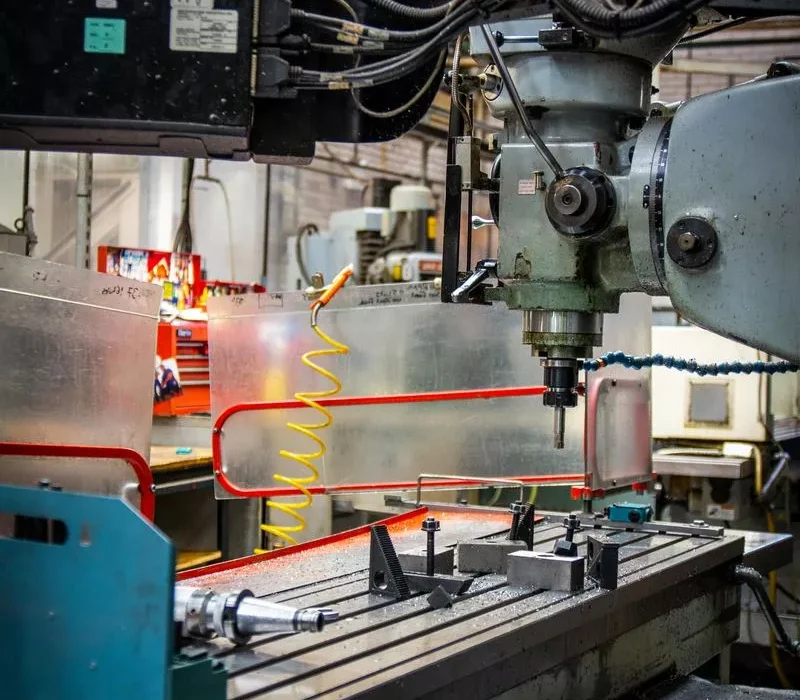
What Is a CNC Welding Machine?
A CNC welding machine is a computer-controlled system designed to automate the welding process, delivering precision and consistency that manual methods struggle to match. Most modern CNC welders rely on fiber laser welding systems for their high accuracy and clean welds, especially on delicate or complex metal parts.
Key Components of a CNC Welding Machine
- Fiber laser source: Provides a powerful and focused laser beam for precise welding.
- CNC controller: The brain of the system, using programmed instructions to guide the weld.
- Multi-axis positioning system: Typically includes X, Y, Z axes plus rotary movements for complex geometries.
- Welding head: Directs the laser beam and manages welding parameters.
- Cooling system: Keeps components at optimal temperatures during operation.
CNC Welding vs. Traditional Welding
Compared to traditional arc welding methods like MIG or TIG, CNC laser welding offers:
- Higher precision with minimal thermal distortion.
- Faster welding speeds.
- Cleaner joints with less post-weld finishing.
- Reduced operator exposure to fumes and heat.
Similarly, unlike handheld laser welding, CNC machines ensure repeatability and efficiency in high-volume production.
Common Types of CNC Welding Machines
- CNC laser welding platforms/tables: Fixed work area suited for flat or moderately complex parts.
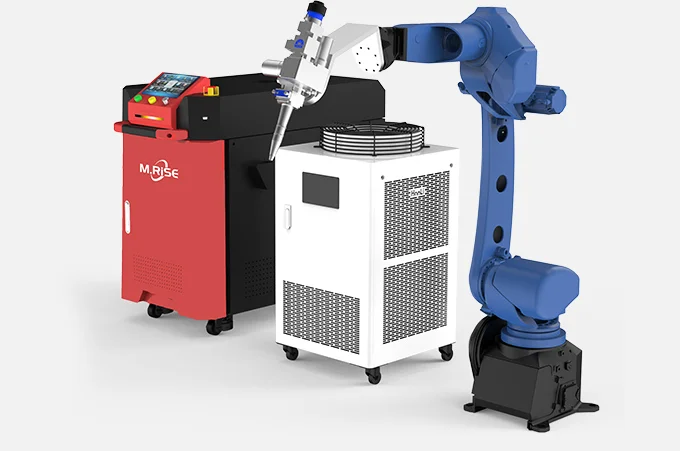
- Robotic arm integrations: Flexible, programmable arms for 3D welding and complex paths.
- Stud welding variants: Specialized for attaching fasteners with precision and speed.
In , a CNC welder combines advanced automation and fiber laser technology to enhance productivity and weld quality across industries.
How Does a CNC Welding Machine Work?

A CNC welding machine automates welding through a precise, step-by-step process. First, the welding path and parameters are programmed using CAD/CAM software. This digital blueprint guides the machine’s fiber laser source to focus a high-energy beam exactly where it’s needed. The laser delivers controlled heat, creating a molten pool on the metal surface. As the welded area cools, it solidifies into a strong, clean joint with minimal distortion.
Fiber laser technology plays a big role here, offering high energy efficiency, deep penetration, and a minimal heat-affected zone. This means the weld is both strong and precise, with less risk of warping thin or heat-sensitive materials.
Advanced CNC welding machines also feature real-time monitoring and auto-adjustments, making sure every weld stays consistent and meets quality standards throughout production. This level of control sets CNC laser welding machines apart from traditional manual methods, ensuring repeatable, high-precision metal welding.
If you want to understand how CNC technology powers manufacturing, check out our detailed guide on what CNC stands for in manufacturing.
Key Benefits of CNC Welding Machines Over Manual Welding
CNC welding machines bring major advantages compared to manual welding, especially in precision metal welding and production efficiency. Here’s a quick breakdown:
| Benefit | Details |
|---|---|
| Precision & Repeatability | Achieves ±0.15mm accuracy with defect rates under 1%. Perfect for high-precision jobs. |
| Speed & Efficiency | Up to 60% faster cycle times. Runs 24/7 with minimal downtime. |
| Lower Labor & Waste | Cuts labor costs and reduces material scrap. Less need for post-weld cleanup. |
| Minimal Thermal Distortion | Ideal for thin sheets, complex shapes, and heat-sensitive metals like aluminum or stainless steel. |
| Cost Savings & ROI | Saves on rework, consumables, and labor, often paying back in under 18 months. |
| Improved Safety | Reduces operator exposure to fumes, heat, and arc flashes. |
Thanks to fiber laser welding systems, CNC welders offer consistent quality and automation that manual welding can hardly match. Whether you’re working on automotive parts or delicate electronics, the repeatability and speed make CNC welding machines a smart investment for U.S. manufacturers focusing on efficiency and quality.
Explore how advanced CNC welding automation integrates with metal machining processes like those used in automotive CNC machining to optimize production workflows.
Top Applications and Industries for CNC Welding Machines
CNC welding machines are used across many key industries where precision and consistency matter most.
- Automotive: Ideal for welding body components, battery trays, and chassis parts. The high precision CNC welding for automotive parts ensures strong, lightweight joints that meet strict quality standards.
- Aerospace and Medical: These sectors demand high-strength, low-distortion welds on materials like titanium and aluminum. Automated fiber laser welding systems deliver reliable results on complex, heat-sensitive components.
- Sheet Metal Fabrication: CNC laser welding machines handle cabinets, enclosures, and custom sheet metal parts with minimal thermal distortion and excellent repeatability.
- Electronics and Jewelry: For micro-precision welding on tiny components, CNC controlled welding offers unparalleled accuracy and clean welds that manual methods can’t match.
- Other Applications: From kitchenware and elevator parts to mold production and lithium battery manufacturing, CNC welding automation supports diverse materials and geometries efficiently.
This broad range of applications shows how versatile an automatic laser welder can be, especially when paired with robotic or platform-based CNC systems tailored for specific industry needs. For example, if you want to learn more about precision metalworking setups, exploring large part CNC machining can give you insight into complementary manufacturing processes.
Types of CNC Welding Machines Available in 2026
CNC welding technology has come a long way, offering a variety of options to fit different production needs and budgets. Here are the main types of CNC welding machines you’ll find this year:
-
Platform/Table CNC Laser Welders
These are entry-level automatic laser welders designed for flat parts and simple geometries. Perfect for small to medium batch runs, they provide reliable precision without the complexity of robotic systems.
-
Robotic CNC Systems
Ideal for 3D and complex welding paths, these robotic laser welders integrate multi-axis movement and programmable arms for high flexibility. They’re the go-to choice in industries requiring intricate welds on automotive frames or aerospace components.
-
Hybrid 3-in-1 Machines
Combining welding, cutting, and cleaning in one unit, hybrid systems enhance workflow efficiency. These multifunctional fiber laser welding systems save space and reduce handling time, especially beneficial in high-volume production facilities.
-
High-Power CNC Laser Welders
Ranging from 1000W to 6000W, these heavy-duty CNC welders handle thicker materials like stainless steel and aluminum with deep penetration and fast cycle times. They’re essential for industries needing robust, high-strength welds while maintaining precision.
Choosing the right CNC welding machine depends on your specific requirements for material, complexity, and production scale. Whether you’re looking for a simple platform welder or a robotic system, modern CNC welding automation ensures consistent quality and efficiency.
For more insight into precision manufacturing processes, you might find our detailed guide on high-precision CNC machining helpful.
Key Factors to Consider When Choosing a CNC Welding Machine
Picking the right CNC welding machine means balancing several important factors to get the best fit for your needs and budget. Here’s what to keep in mind:
- Power and Laser Source: Look for reliable fiber laser sources from top brands like Raycus, IPG, or MAX. They differ in power efficiency, beam quality, and cost. Choosing the right power level depends on your material thickness and welding speed requirements.
- Axis Configuration and Work Area: Depending on your parts, you may need multi-axis setups—X, Y, Z, plus rotary axes—for complex geometry. Also, the size of the work area should fit your largest parts comfortably.
- Material Compatibility: Not all CNC laser welders handle every metal equally well. Check if the machine supports the metals you work with most, like stainless steel, aluminum, or titanium.
- Ease of Programming and User Interface: A user-friendly CNC controller and software that integrate smoothly with CAD/CAM files save time and reduce errors. This is critical for fast setup and consistent production.
- Maintenance, Cooling, and Support: Fiber laser welding systems require proper cooling and routine maintenance for peak performance. Verify the availability of after-sale support and service, especially for long-term reliability.
- Budget Range: Entry-level CNC laser welding machines start around $10,000 to $20,000. Industrial-grade systems with advanced robotics and higher power come at $50,000 or more. Consider your production volume and payback period carefully.
Working with experienced partners like MS Machining can help you select and customize a CNC controlled welding solution tailored to your production needs. They specialize in integrating automated welding machines for precision metal welding, ensuring your investment matches your goals and keeps downtime minimal. For more on advanced manufacturing tech, explore their expertise in CNC optical machining.
CNC Welding vs. Manual Welding: Head-to-Head Comparison
Here’s a quick breakdown comparing CNC welding machines with manual welding across key factors:
| Factor | CNC Welding Machine | Manual Welding |
|---|---|---|
| Speed | Up to 60% faster cycles | Slower, depends on operator |
| Precision | ±0.15mm accuracy | Variable, skill-dependent |
| Consistency | High repeatability, defect rates <1% | Inconsistent, higher rework rates |
| Cost per Part | Lower over time due to automation | Higher labor costs, material waste |
| Skill Required | Moderate (programming needed) | High (welding expertise needed) |
| Suitable Volumes | Best for production runs | Ideal for one-offs or field repairs |
When Manual Welding Still Wins
- Small, custom jobs or field repairs
- Hard-to-program shapes or locations
- Low volume or prototype work
When CNC Welding Dominates
- High-volume production with tight tolerances
- Complex geometries needing uniform weld quality
- Heat-sensitive or thin materials requiring minimal distortion
By choosing a CNC laser welding machine, manufacturers gain precision metal welding with consistent output, while manual welding remains useful for flexible, on-the-spot tasks. For precision projects, especially in automotive or aerospace, CNC welding integration is the clear advantage. For more insights on automated metalworking, check out our guide on precision CNC milling services.
Maintenance Tips and Best Practices for CNC Welding Machines
Keeping your CNC welding machine in top shape ensures consistent quality and longer service life. Here’s how to maintain your CNC laser welding machine effectively:
- Daily and Weekly Checks
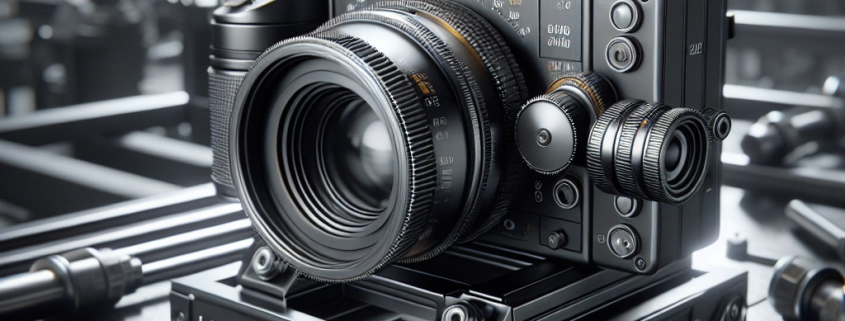
- Inspect and clean fiber laser lenses and protective windows to prevent dirt buildup that can reduce weld precision.
- Monitor and maintain the cooling system; proper temperature control is crucial to avoid overheating during long cycles.
- Check alignment of the welding head and multi-axis positioning to maintain accuracy within ±0.15mm.
- Software Updates and Parameter Optimization
- Regularly update CNC controller software and firmware to access new features and improve system stability.
- Fine-tune weld parameters such as laser power, speed, and focus based on material type and thickness for the best results.
- Troubleshooting Common Issues
- Watch for signs of fiber laser power drops, welding inconsistencies, or unexpected defects, which often signal lens damage or misalignment.
- Address cooling failures immediately to prevent damage to key components.
- Keep a log of welding performance and maintenance activities to identify recurring problems early.
Following these maintenance tips reduces downtime and maximizes your CNC welding automation’s productivity and precision. For advanced CNC integration or support, partnering with experienced manufacturers like MS Machining can provide tailored solutions built for reliability and efficiency in the U.S. market.
For related equipment and upgrades, explore MS Machining’s selection of laser cutting machines designed for streamlined metal fabrication workflows.