
What Is CNC Turning?
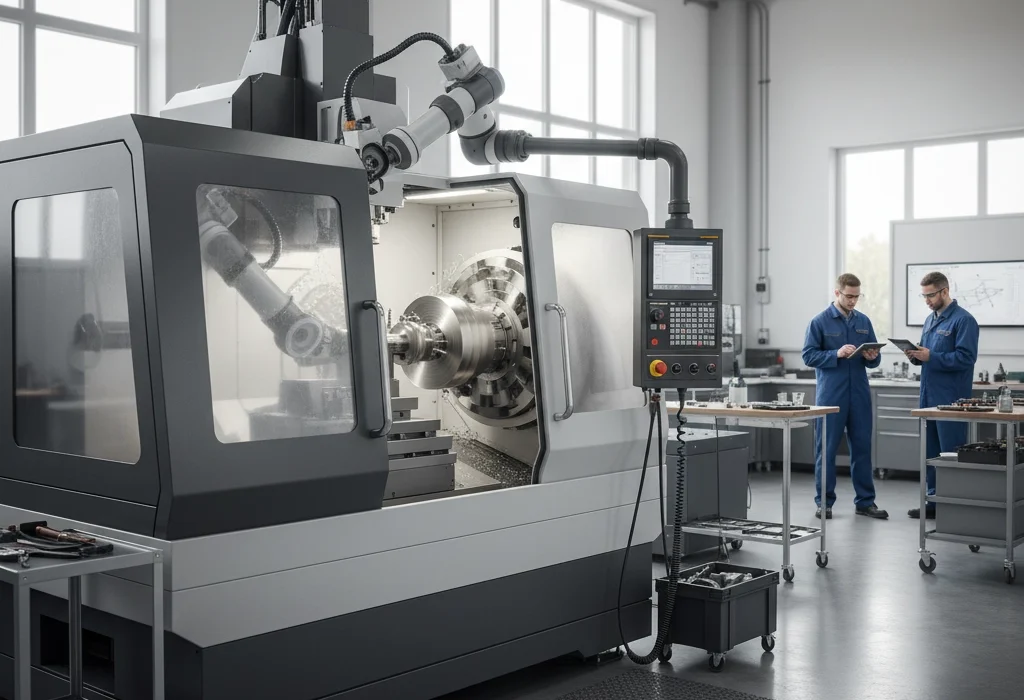
CNC turning is a machining process where the workpiece rotates while a stationary cutting tool shapes it. This basic principle allows precise removal of material to create symmetrical parts along the workpiece’s axis. Think of it as spinning the raw material while the tool carves away what’s needed.
Common CNC Turning Machines
- 2-axis lathes: Simple machines controlling the rotation and tool movement along a single axis, ideal for basic cylindrical parts.
- Multi-axis turning centers: Advanced lathes with live tooling that can perform milling, drilling, and tapping operations on the rotating part without removing it from the machine.
Typical Parts Made by Turning
- Shafts for motors or pumps
- Pins and dowels
- Bushings and sleeves
- Flanges and collars
- Threaded components like screws and bolts
Precision and Surface Finish
CNC turning can achieve tight tolerances, often around ±0.001 inches (±0.025 mm), depending on the material and machine quality. Surface finishes can be smooth, ranging from Ra 16 to Ra 32 microinches, and even finer finishes are possible with specialized tooling or secondary processes.
Best Materials for Turning
Because turning primarily deals with rotational symmetry and tougher cutting forces, ideal materials include:
- Aluminum alloys like 6061 and 7075 for lightweight, machinable parts
- Stainless steels such as 304 and 17-4PH for corrosion resistance and strength
- Carbon and alloy steels for general durability
- Brass and copper for excellent machinability and electrical conductivity
- Some engineering plastics like Delrin or PEEK when low friction or chemical resistance is needed
CNC turning is a go-to choice when your design calls for precision, tight cylindrical features, or threaded elements, offering fast cycle times with consistent quality.
What Is CNC Milling?
CNC milling is a machining process where a rotating cutting tool removes material from a stationary or sometimes moving workpiece. Unlike turning, where the workpiece spins, milling uses a spinning tool to carve out shapes, slots, pockets, and contours with high precision.
Milling machines come in different configurations, mainly 3-axis, 4-axis, and 5-axis simultaneous setups. The extra axes add flexibility for complex geometries, allowing the tool to approach the part from multiple angles. This capability is crucial for creating intricate parts like housings, brackets, manifolds, molds, and other complex prismatic components.
Typical tolerances achieved in CNC milling range around ±0.001” (±0.02 mm), with fine surface finishes usually between Ra 32 and Ra 125. Milling excels at producing detailed features like deep pockets, undercuts, and curved surfaces that would be difficult or impossible to achieve with turning alone.
For those needing precision machined parts, CNC milling is a versatile option that can handle a wide range of materials. You can learn more about the materials commonly used in CNC machining on our detailed CNC machining materials list.
Turning vs Milling – Side-by-Side Comparison
| Feature | CNC Turning | CNC Milling |
|---|---|---|
| Workpiece Movement | Rotates around a fixed axis | Generally stationary or moves linearly while the tool rotates |
| Typical Geometries | Cylindrical shapes: shafts, pins, bushings, threaded parts | Complex prismatic parts: housings, brackets, slots, contours |
| Material Removal Rate | Higher for round parts | Slower on complex shapes but flexible |
| Setup Time & Cost | Faster setup for simple round parts | Longer setup, especially on multi-axis machines |
| Tolerance Capability | Tight tolerances achievable (±0.001″ common) | Equally tight, especially with 4- and 5-axis milling |
| Surface Finish | Smooth finishes on cylindrical surfaces | Fine finishes on flat and contoured surfaces |
| Tooling Cost | Lower tooling cost, fewer tools needed | Higher tooling cost due to diverse cutters and inserts |
This table highlights the core differences between CNC turning vs milling and helps you decide which process fits your part’s geometry, finish, and tolerance needs.
For parts demanding precise cylindrical features, turning is typically faster and more cost-effective. On the other hand, milling shines when handling complex shapes requiring pockets, slots, or contours, especially with advanced 4-axis or 5-axis CNC milling machines.
If you want to explore expert CNC milling options, check out our detailed overview of multi-axis CNC machining services.
When to Use Turning, Milling, or Both
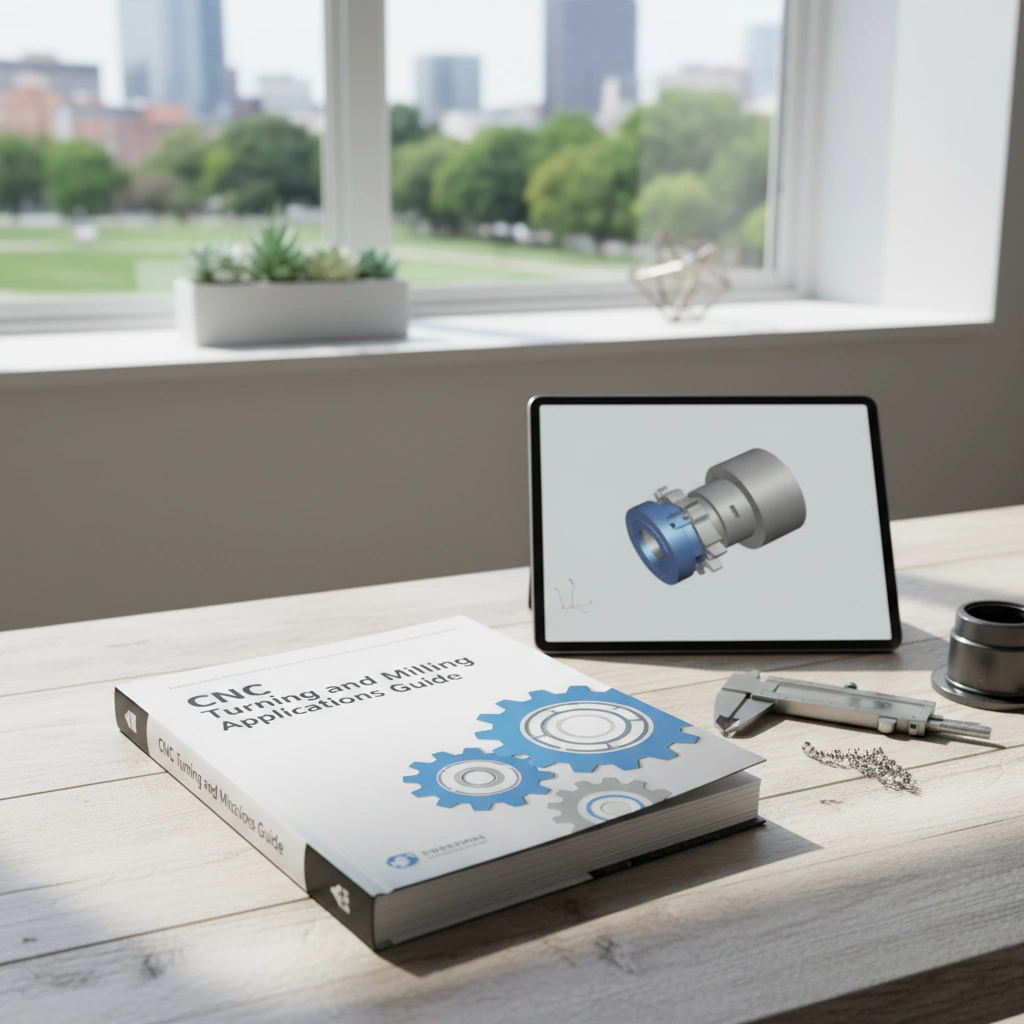
Choosing between CNC turning and milling depends largely on the part’s design and function. Sometimes one process is clearly better, but often parts need a mix of both to achieve the final shape and precision.
Parts Best Suited Only for Turning
- Cylindrical shapes: Shafts, pins, bushings, and threaded rods with round profiles are ideal for turning.
- Rotational symmetry: Components where the main features revolve around a central axis, such as flanges and collars.
- Simple contours: When the workpiece requires consistent diameters or tapers with minimal complex features.
Parts That Can Only Be Milled
- Complex, prismatic shapes: Housings, brackets, manifolds, and molds with multiple flat faces and sharp edges.
- Internal cavities: Pockets, slots, and channels that require tool access from different angles.
- Non-rotational parts: Components with asymmetrical features or complex 3D surfaces often need multi-axis milling.
Parts That Require Both Turning and Milling
About 80% of medium-complexity metal parts need a combination of turning and milling to meet their design specifications. This includes parts that start as a turned shape (like a cylinder) but then require milling to add complex features or holes.
Examples:
| Part Type | Turning Needs | Milling Needs |
|---|---|---|
| Hydraulic Cylinder | Outer diameter and shoulders | Mounting holes, ports, and flats |
| Pump Impeller | Central hub and shaft | Blade profiling and complex contours |
| Automotive Gearbox Housing | Cylindrical bore and shaft faces | Bolt patterns, pockets, and mounting surfaces |
These parts often demand high accuracy and tight tolerances, which is why many shops now use combined processes or mill-turn centers to streamline production.
By understanding the strengths of each process, you can optimize part design, reduce costs, and improve lead times while ensuring top-quality finished components.
The Power of Combined Turning & Milling (Mill-Turn Centers)
Mill-turn centers combine CNC turning and milling in a single machine, allowing complex parts to be completed in one setup. These machines feature live tooling, which means rotating tools can operate on a spinning workpiece, plus advanced axes like C-axis, Y-axis, and sub-spindles for multi-directional cutting and part handling. This capability turns a lathe into a complete machining center.
What Mill-Turn Machines Can Do:
- Perform milling operations (slots, pockets, drilling) on turned parts
- Use live tooling for milling while the spindle turns the part
- Employ sub-spindles for automatic part transfer, enabling multi-sided machining
- Execute 5-axis machining with Y-axis movement and C-axis indexing
Benefits of Mill-Turn Centers
| Benefit | Description |
|---|---|
| Single Setup | Eliminates multiple part transfers, reducing error and time |
| Improved Accuracy | Keeps part positioning consistent throughout all operations |
| Shorter Lead Times | Combines steps that usually require separate machines |
| Lower Costs | Cuts labor and overhead by consolidating processes |
MS Machining’s Mill-Turn Strengths
At MS Machining, our mill-turn machines support multi-axis precision cutting with live tooling, ensuring you get complex, turned-and-milled parts quickly and consistently. This means faster turnaround without sacrificing quality—ideal for prototypes and production runs alike.
For more on CNC machining basics and how various operations compare, check out our detailed insights on what CNC machines really do.
Materials Commonly Used in Turning and Milling
When it comes to CNC turning and milling, the choice of material plays a big role in the process, cost, and final quality. Here are some of the most common materials we work with:
- Aluminum: Popular grades like 6061 and 7075 are great for lightweight, strong parts. MIC-6 aluminum is often used for stable, flat base plates because of its minimal warping.
- Stainless Steel: Common grades such as 303, 304, 316, and 17-4PH offer excellent corrosion resistance and strength, ideal for parts requiring durability and precision. You can find more on different stainless steel grades and casting options in our detailed stainless steel grades casting guide.
- Carbon & Alloy Steels: These provide a solid balance of strength and machinability for various industrial parts.
- Brass & Copper: Excellent for electrical components and decorative parts due to their conductivity and finish.
- Engineering Plastics: Materials like Delrin, PEEK, and ULTEM are used when parts need to be lightweight, wear-resistant, or require chemical stability.
Choosing the right material depends on your application needs, tolerance requirements, and expected operating environment. If stainless steel is on your list, our resources on stainless steel investment casting can offer more insights into getting precision parts.
Tolerances and Quality Expectations in CNC Turning and Milling
When it comes to CNC turning and milling, tolerances play a critical role in ensuring parts fit and function as intended. Standard tolerances commonly achieved are around ±0.001″ (±0.02 mm), which suits most production and prototype needs. For higher precision applications, tighter tolerances can be held, but this usually means more careful process control and inspection.
In addition to basic dimensional control, manufacturers often apply Geometric Dimensioning and Tolerancing (GD&T) standards. GD&T defines the allowable variation in form, orientation, and location of features, which helps guarantee consistent part interchangeability and assembly without guesswork or rework.
Surface finish is another key quality factor. Typical finishes after turning or milling range between Ra 32 to Ra 125 microinches. For applications requiring smoother surfaces—like sealing faces or cosmetic parts—special tooling and optimized cutting parameters can push finishes even finer.
Balancing tolerance and surface finish requirements early in the design stage helps optimize manufacturing costs and quality. If you’re interested in seeing how precise milling can boost part performance, check out our detailed precision CNC milling services to explore the possibilities.
Cost Drivers and How to Optimize CNC Turning and Milling
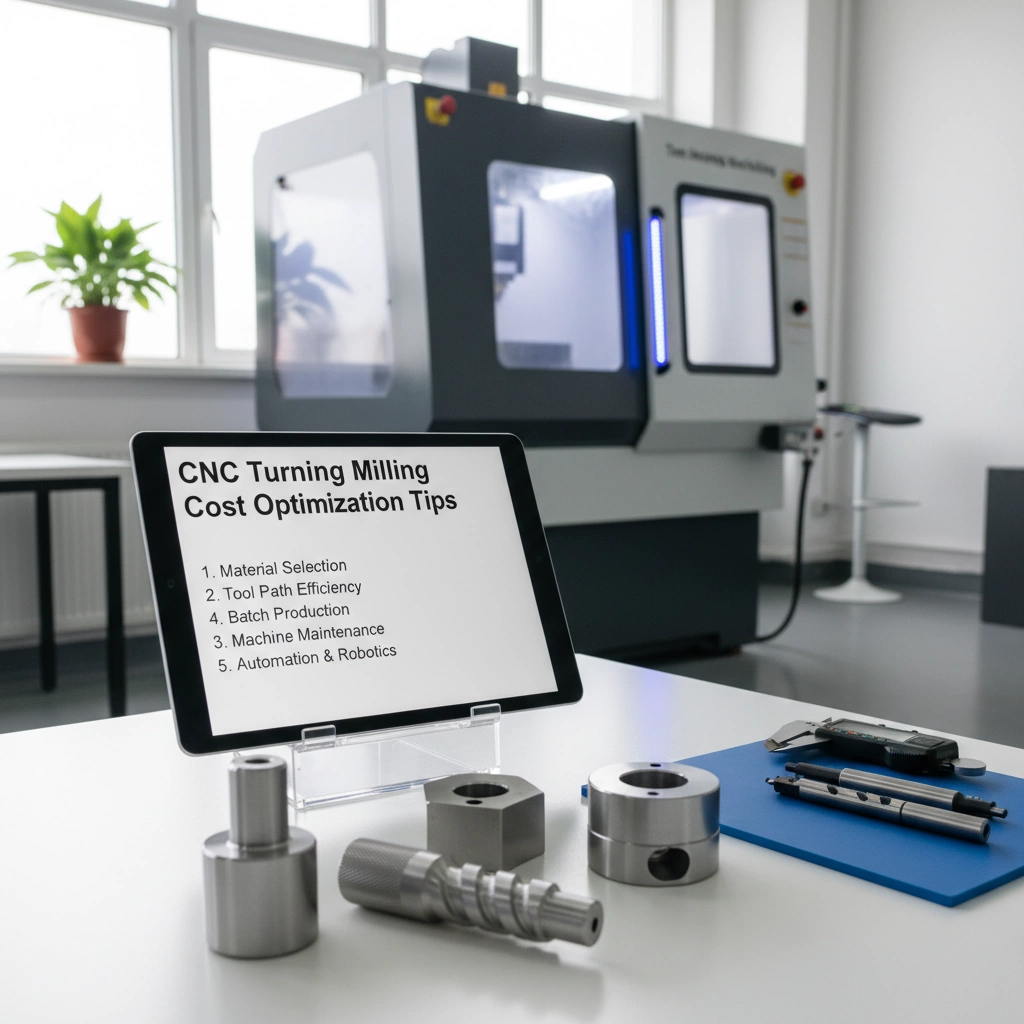
When it comes to CNC turning and milling, several factors drive the overall cost of your parts. Understanding these can help you make smart decisions to keep budgets in check.
Material Selection Impact
Material choice plays a big role. Metals like aluminum are easier and faster to machine, making them more cost-effective compared to harder materials like stainless steel or alloy steels. Engineering plastics, while lighter, might require specialized tools that affect pricing. Always consider availability and machinability when selecting materials.
Batch Size vs Per-Part Price
Larger batch sizes generally lower the per-part cost because the setup time and machine programming spread across more pieces. Small runs or prototypes will naturally be pricier per part due to setup time. If you plan multiple iterations or high volume, consolidate runs to save on labor and machine time.
Design for Manufacturability Tips
Design adjustments can significantly reduce costs when both turning and milling are needed:
- Simplify Geometries: Avoid overly complex shapes that require multiple setups or special fixtures.
- Combine Features: Use features that can be made in a single setup with mill-turn centers to save time.
- Minimize Tight Tolerances: Apply precise tolerances only where necessary—looser tolerances speed up machining.
- Optimize Wall Thickness: Uniform wall thickness avoids deflection and reduces scrap.
- Use Standard Tooling Dimensions: Designing with common tool sizes can reduce tooling costs.
By keeping these points in mind, you can balance quality and cost effectively in your turning and milling projects. For more on prototype considerations, check out our detailed guide on how to create a prototype.
Choosing the Right CNC Turning and Milling Partner
Picking the right CNC turning and milling partner is critical to getting your parts right, on time, and within budget. Here are key questions to ask before committing:
- What certifications do they hold? Look for ISO 9001 for quality management, AS9100 if you’re in aerospace, and ITAR compliance for defense projects. These show a commitment to high standards.
- What machines do they have? A solid partner should provide a detailed machine list—covering multi-axis CNC turning centers, live tooling lathes, and 4- or 5-axis milling machines—to handle your part’s complexity.
- How do they ensure quality? Ask about their quality control process. Are inspection reports standard? Do they use in-process checks, CMMs, or other precision measurement tools?
- Can they meet your lead times? Reliable lead times reduce your project risks. Check their track record for meeting deadlines consistently.
MS Machining stands out because we combine advanced mill-turn capabilities with a robust quality system trusted by aerospace, medical, and automation industries. You can find more about our precision CNC machining services and how we handle complex parts in one place on our custom CNC machining parts manufacturing page.
Choosing a partner with proven experience, top certifications, and strong process controls will save you headaches and help get your prototype or production parts done right the first time.