

CNC Tubing Bender vs CNC Pipe Bender – Know the Difference
If you’re shopping for bending equipment, you might be wondering: What’s the difference between a CNC tubing bender and a CNC pipe bender? While they sound similar, the distinction matters—and it often comes down to wall thickness, collapse risk, and mandrel support needs.
Wall Thickness & Collapse Risk
- Tubing typically has thinner walls and tighter tolerances. This makes it prone to wrinkling, ovality, or wall collapse during bending, especially with small bend radii.
- Pipe usually has thicker walls and a larger diameter, which means it’s less likely to collapse or wrinkle but harder to bend precisely without defects.
Here’s a quick side-by-side:
| Feature | CNC Tubing Bender | CNC Pipe Bender |
|---|---|---|
| Wall Thickness | Thin (as low as 0.035″) | Thicker (often >0.100″) |
| Diameter Range | Smaller to mid (up to ~4″) | Larger diameters (4″ and up) |
| Collapse Risk | High on tight bends | Lower due to wall thickness |
| Typical Applications | Automotive, HVAC, furniture | Heavy plumbing, construction |
| Precision Needed | High (tight tolerances, complex shapes) | Moderate (less detail-critical) |
When Do You Truly Need Mandrel Support?
Mandrel support is the secret weapon against wrinkles and collapses when bending thin-walled tubing, especially:
- Thin walls (<0.065″) combined with small centerline radii (CLR) bends.
- Materials prone to cracking or deformation, like stainless steel.
- Applications demanding near-perfect cross-section integrity, such as aerospace or automotive frames.
If your tubing specs regularly hit these conditions, a CNC mandrel tube bender is a must-have. Without mandrel support, you risk wrinkles, flat spots, or even tube collapse, leading to scrapped parts and wasted time.
Bottom line: If you need precision bends on thin-walled tubing or tough materials, choose a CNC tubing bender with mandrel support. For simpler, thicker-walled pipe bends, a CNC pipe bender usually gets the job done. Knowing these differences upfront saves you headaches—and money.
Mandrel vs Non-Mandrel CNC Bending – Which One Do You Actually Need?
When it comes to CNC tubing benders, the key decision is whether you need mandrel bending or if a non-mandrel setup will do. Mandrel bending uses a flexible steel rod inside the tube to support the material during tight-radius bends, preventing wrinkles, excessive ovality, and wall thinning. Non-mandrel bending, on the other hand, simply bends the tube without internal support, which can work fine for larger radii or thicker-walled tubes but struggles with thin walls or tight bends.
Here’s a quick visual guide to what happens inside the tube depending on the method:
| Issue | Mandrel Bending | Non-Mandrel Bending |
|---|---|---|
| Wrinkles | Almost none | Common in tight bends |
| Ovality (Shape) | Minimal distortion | Significant ovality |
| Wall Thinning | Controlled, minimal | Severe, especially on tight CLR |
Real World Examples Where Mandrel Is a Must
- Tube OD 25 mm × 1.2 mm wall × CLR 1×OD – Mandrel recommended to avoid collapsing
- Tube OD 40 mm × 2.0 mm wall × CLR 1.5×OD – Mandrel preferred but non-mandrel possible with caution
- Tube OD 60 mm × 1.5 mm wall × CLR 1×OD – Mandrel required for stainless steel or thin walls
If you’re dealing with thin-walled stainless steel tubing or require tight radius tube bending, mandrel support ensures the part retains strength and shape. Conversely, non-mandrel benders work well for structural tubing with thicker walls or larger bend radii, where surface finish is less critical.
Understanding these limits helps you avoid wasted costs on mandrel tooling when it’s not needed—or preventing rejects and rework by getting the support you do need.
For precision work in fields like aerospace or automotive, mandrel bending is often a must. For less demanding applications like basic furniture frames or some HVAC tubing, non-mandrel bending saves time and tooling costs.
If you want to see how these different bending options affect your parts, check tools like MS Machining’s bending software for simulation, ensuring the method matches your tube specs and production goals. For projects requiring high precision and reliability, explore their heat exchanger parts manufacturing to get a sense of material handling quality in complex bends.
Core Features Every Modern CNC Tubing Bender Must Have in 2026

When choosing a CNC tubing bender in 2026, certain features are must-haves to keep your shop competitive and efficient.
Number of Axes: 3 to 12 and What It Means for Your Parts
- 3-4 axes: Best for simple bends with minimal stacking.
- 5-7 axes: Handles complex bends and tighter CLR (Centerline Radius).
- 8-12 axes: Ideal for multi-bend, multi-plane parts and advanced stacking.
More axes mean greater flexibility but come with higher costs and complexity.
Boosting Systems (Pressure Die Assist)
Boosting applies extra pressure at the bend, reducing wrinkles and deformation. Pressure die assist is crucial for thin-walled or small-diameter tubing, improving bend quality without slowing production.
Electric vs Hydraulic Servo: What’s Best?
| Feature | Electric Servo | Hydraulic Servo |
|---|---|---|
| Speed | Faster cycle times | Slower but powerful |
| Repeatability | ±0.05° standard | ±0.1° standard |
| Power Consumption | Lower, energy-efficient | Higher energy use |
| Maintenance | Less frequent, cleaner | Requires more upkeep |
Electric CNC tube benders are leading the market for precision and lower operating costs, while hydraulic machines excel with high-torque demands.
Tooling Quick-Change Systems
Quick-change tooling saves hours on setups, allowing fast switches between jobs without compromising accuracy. Look for systems that use standardized, modular tooling to reduce downtime and tooling costs.
Software: Open vs Proprietary, Offline Programming & Simulation
- Open software: More customization, easier integration with existing systems.
- Proprietary software: Optimized for the bender, easier out-of-the-box but less flexible.
- Offline programming & simulation: Critical for reducing trial bends and speeding up new job setups.
Investing in CNC tubing benders with advanced software capabilities directly impacts productivity and reduces waste. For shop owners focusing on aerospace or automotive tubes, combining this with precision CNC machining services is a game-changer, like those provided by MS Machining’s CNC machining metal parts.
Having these core features ensures your CNC tubing bender handles everything from simple shop jobs to complex multi-axis work without breaking the bank or production flow.
Key Technical Specifications to Compare
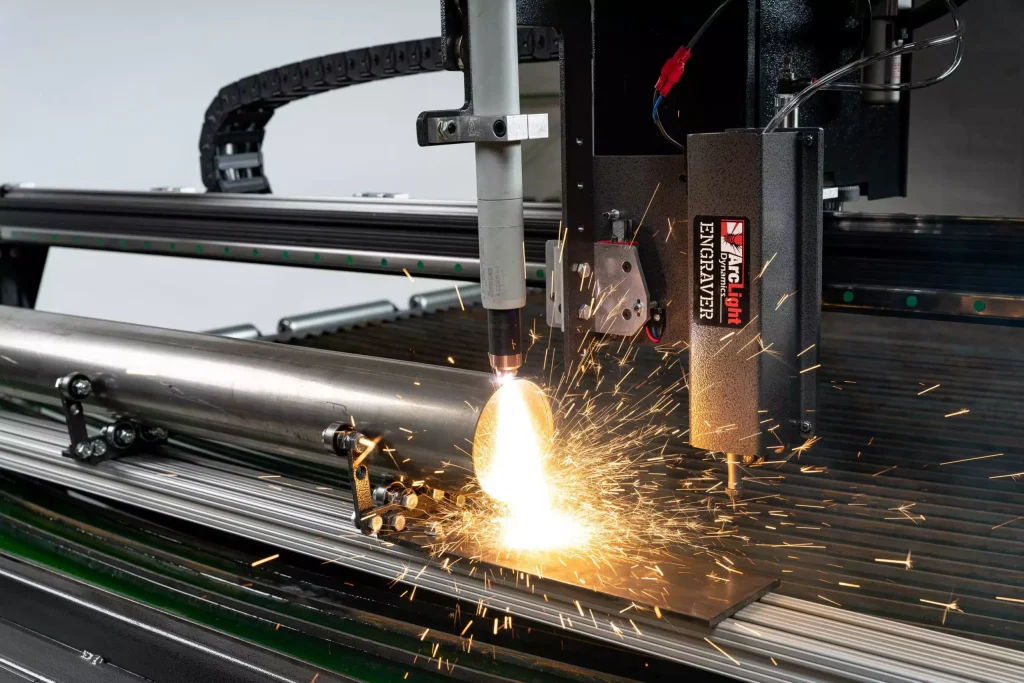
When choosing a CNC tubing bender, knowing the right specs matters. Here’s what you want to keep an eye on:
| Specification | What It Means for You |
|---|---|
| Max Tube OD Capacity | Biggest tube diameter the machine can bend. Make sure it fits your largest parts. |
| Max Wall Thickness | How thick the tube walls can be, typically listed separately for mild steel and stainless steel. Thicker walls need more power and sometimes mandrel support. |
| Minimum CLR (Centerline Radius) | Tightest bend radius the machine can handle without deforming the tube. Critical for parts needing sharp bends. |
| Bend Speed & Return Speed | How fast the machine completes a bend and resets. Faster speeds improve throughput but watch for trade-offs on accuracy. |
| Repeatability | Accuracy over multiple bends, commonly ±0.05° or ±0.1°. Tighter repeatability means less scrap and rework, especially in precision industries. |
| Machine Footprint & Weight | Physical size and weight matter if you have limited floor space or need portability. Larger machines handle bigger tubes but need more room. |
Choosing specs that fit your tube sizes, materials, and production volume ensures you get a reliable CNC tube bender that boosts accuracy and productivity.
For more details on precision in metal work, check out our high-precision CNC turning and milling services.
Industries That Live or Die by CNC Tube Bending Quality
Certain industries depend heavily on the precision and reliability of CNC tubing benders. In automotive manufacturing, especially for roll cages, tight tolerances and strong, consistent bends are critical for safety and performance. Aerospace and hydraulic systems demand ultra-precise bends in stainless steel or aluminum tubing to ensure leak-free connections and proper fluid flow.
In HVAC and refrigeration, accurate tube bending means better system efficiency and fewer leaks, directly affecting both installation time and energy costs. Fitness equipment manufacturers require consistent, smooth bends to maintain structural integrity and aesthetics. Likewise, motorcycle and bicycle frame builders need CNC tubing benders that deliver exact bends to meet strength and design benchmarks without compromising ride quality.
Even in furniture and architectural applications, the quality of the bend influences the final product’s strength, appearance, and durability. Whether it’s a sleek handrail or a structural support, CNC tubing bending machines tailored for these markets ensure the best results.
Choosing the right CNC mandrel tube bender or multi-axis CNC bender can be the difference between meeting strict industry standards or falling short. For comprehensive solutions related to precision fittings, you might find our guide on pressure regulators helpful as well.
Pricing Reality Check – 2026 Market Ranges
When shopping for a CNC tubing bender in 2026, it’s important to understand the typical price bands and what comes with them:
- Entry-level 3-axis electric machines handle tube diameters from 38 to 50 mm. These are great for straightforward jobs and smaller shops looking for precision without breaking the bank.
- Mid-range mandrel CNC benders usually offer 7 to 9 axes and can accommodate tubes up to 80 mm in diameter. These are popular for bending stainless steel or tighter radius jobs, where mandrel support prevents wrinkling and wall thinning.
- High-end 12-axis machines or models with dual-stack/dual-radius capability can handle large diameters between 100 and 168 mm. They’re ideal for complex, multi-radius bends and heavy-duty, high-volume production.
Don’t overlook hidden costs: Tooling packages, operator training, shipping, and installation can add significantly to your total investment. Budget for these extras upfront to avoid surprises later.
For a closer look at how these machines perform, you can check out details on what is a 5-axis CNC machine to understand more about how axis count affects complexity and pricing.
Top CNC Tubing Bender Brands in 2026 (Honest Comparison)
Here’s a quick look at five major global CNC tubing bender brands, followed by how MS Machining stands out:
| Brand | Strengths | Weaknesses |
|---|---|---|
| Brand A | High-tech multi-axis control | Long lead times |
| Brand B | Excellent build quality | Premium pricing |
| Brand C | Strong in aerospace sector | Limited North American support |
| Brand D | Wide tooling options | Complex software |
| Brand E | Robust hydraulic systems | Higher energy use |
Where MS Machining excels:
- Offers top-tier European/Japanese components with 30–40% better price/performance than most European brands.
- Fastest delivery in the industry, with typical lead times of 12–16 weeks.
- Local North American support ensures quick service and lifetime remote diagnostics.
For shops wanting high precision and reliability without the usual wait or markup, MS Machining is a smart choice that ticks all the boxes. Discover how their CNC tubing benders complement your custom needs with modern features and solid backing. Plus, check out their custom CNC machining services to see how they can help streamline your entire manufacturing process.
Why MS Machining CNC Tubing Benders Are the Smart Money Choice
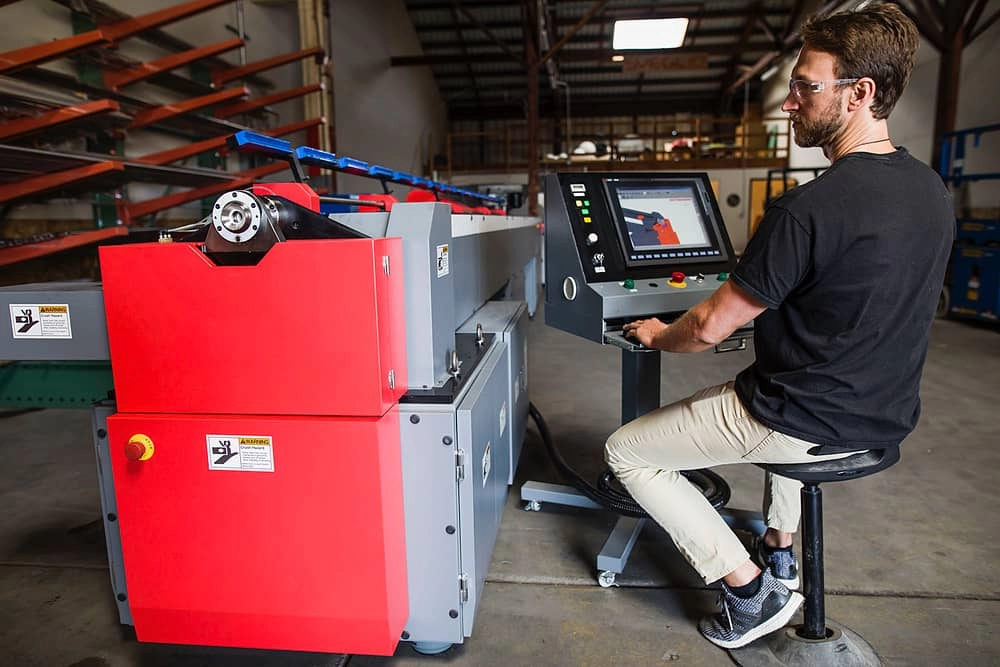
MS Machining CNC tubing benders stand out because they combine top-tier European and Japanese components with local assembly and support right here in the U.S. That means you get reliable machines built to high standards without the usual long wait times or extra costs. Our benders offer a standard repeatability of ±0.05°, delivering precise bends every time, all at 30–40% less than comparable European brands.
We understand that lead time matters — that’s why MS Machining machines typically ship within 12 to 16 weeks, the fastest in the industry. Plus, you get lifetime remote diagnostics and free software updates, so your investment keeps improving over time without surprise service charges.
If you want precision tube bending with trusted components, quick delivery, and ongoing support tailored for American shops, MS Machining is the smart money choice. For more on how precision machining plays into quality customization, check out our detailed insights on precision CNC milling services.
How to Spec the Perfect CNC Tubing Bender for Your Shop (Step-by-Step)
Choosing the right CNC tubing bender isn’t guesswork—it’s about matching the machine to your real needs. Here’s a straightforward way to spec your perfect bender:
-
List Your Top 5 Tube Sizes & Materials
Start by noting the most common tubing diameters and materials you work with—whether it’s stainless steel, mild steel, or alloy tubing. Knowing this helps ensure your machine supports max tube OD and wall thickness.
-
Define Your Tightest CLR and Thinnest Wall
What’s the smallest centerline radius (CLR) you’ll need to bend? How thin are the walls on your most delicate tubes? These factors determine if you need mandrel bending and the minimum CLR capability your machine must offer.
-
Calculate Required Axes & Stack Capability
How complex are your bend patterns? Simple shapes might only need 3 axes, while more complex jobs could require 7 to 12 axes or even dual-stack setups. This affects both tool path flexibility and speed.
-
Consider Your Budget vs ROI
Balance upfront investment with expected returns. Look beyond buying price—factor in tooling costs, training, maintenance, and production gains. Use a budget vs ROI worksheet to keep it clear (download our free worksheet for this step).
Having this info ready means you’ll pick a CNC mandrel tube bender that fits your workflow, cuts downtime, and grows with your shop’s needs. For a deeper dive into tube materials and their machining, check out our detailed guide on CNC machining materials.
Common Mistakes Shops Make When Buying Their First (or Next) CNC Bender
Buying a CNC tubing bender is a big investment, but there are a few classic mistakes shops often make that you can easily avoid.
- Buying too small and outgrowing it fast: It’s tempting to save upfront by choosing a smaller machine. But if your production grows or your tube sizes change, you could be stuck upgrading again in 18 months. Think ahead about your future needs, not just today’s projects.
- Ignoring tooling costs: The machine itself is only part of the expense. Good tooling—dies, mandrels, backing shoes—can add up quickly, especially if you need quick-change setups or multi-axis tooling. Budget for tooling so you’re not caught off guard.
- Choosing the cheapest controller: Controllers are the brain of your CNC mandrel tube bender. Picking a low-cost, no-name controller might save money initially, but expect frustration with slower programming, limited features, and less reliable repeatability. Investing in a quality controller means fewer headaches down the road.
Avoid these pitfalls to get a machine that grows with your shop and delivers reliability from day one. For more on how to choose the right equipment for your shop, check out our detailed guide on casting vs CNC machining benefits to understand precision manufacturing choices.
Frequently Asked Questions About CNC Tubing Benders
How long does tooling last?
Tooling life depends on materials, usage, and maintenance but typically lasts between 1 to 3 years in high-volume shops. Proper care, cleaning, and storage can extend life significantly. Investing in quality tooling upfront saves downtime and replacement costs down the road.
Can I bend square tube or solid materials on the same machine?
Yes, many modern CNC tubing benders handle square, rectangular, and some solid bars with the right tooling. However, bending solids often requires more power and specialized dies. Check your machine’s specs and talk to your supplier about the best tooling options to cover all your bends safely and precisely.
Electric vs hydraulic CNC tube bender in 2026 – which is better?
Electric models lead on energy efficiency, speed, and repeatability, especially for light to medium-duty jobs. Hydraulic benders still dominate heavy-duty, thick-wall, and stainless steel mandrel bending where power and force are essential. Choosing between them depends on your typical parts and shop priorities like power use or cycle time.
Do you ship and install in the US, Canada, and Australia?
Yes, reputable manufacturers like MS Machining offer shipping and professional installation services across North America and Australia. This helps ensure your CNC tubing bender is set up correctly for peak performance and backed with local support, avoiding downtime and installation headaches.
If you want to learn more about related precision equipment, please check out our guide on CNC laser metal cutting machines for complementary solutions in custom tube fabrication.