
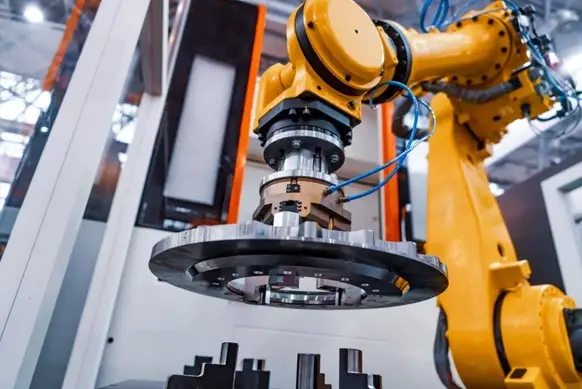
The line between CNC machining and industrial robotics hasn’t just blurred—it has completely vanished.
At MS Machining, we’ve spent over 20 years perfecting the precision manufacturing required to bridge this gap. Whether you’re integrating automated machine tending to hit “lights-out” production targets or sourcing high-tolerance components for a complex robotic bicep assembly, precision is the only factor that dictates your success.
In this guide, you’ll learn exactly how 5-axis milling and multi-axis interpolation are redefining the technical standards for CNC robots.
If you’re ready to see how aerospace-grade accuracy powers the next generation of robotic automation, let’s dive right in.
The Anatomy of a CNC Robot
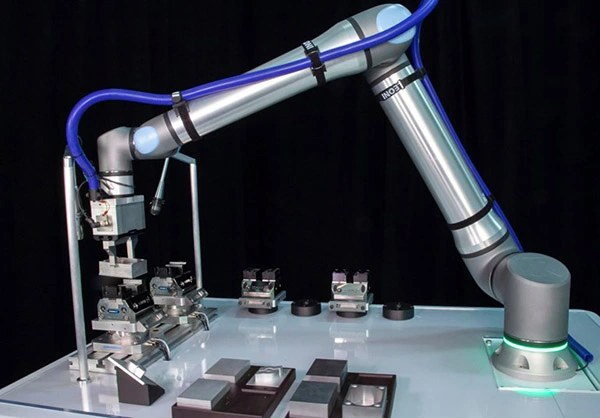
In the world of CNC robots, precision isn’t just a goal—it’s a requirement. When I design and machine components for industrial automation, I know that a fraction of a millimeter can be the difference between a high-performing system and a mechanical failure. Building a reliable robot starts with understanding the hardware that allows for repeatable, high-speed movement.
Structural Backbone: High-Strength Alloys

The frame of a robot must be both lightweight and incredibly rigid to handle dynamic loads. I rely on precision machining of high-grade materials to ensure these structures don’t flex under pressure.
- Aluminum Alloy 7075 Machining: This is my go-to for robotic joint housings and frames. It offers the strength of steel but keeps the arm light enough for high-speed cycles.
- Stainless Steel & Tool Steel: Used in high-stress areas where wear resistance is paramount.
- Rigidity: Proper CNC milling ensures that the kinematic chain components maintain alignment, preventing vibration during rapid acceleration.
Case Study: The Robotic Bicep Assembly
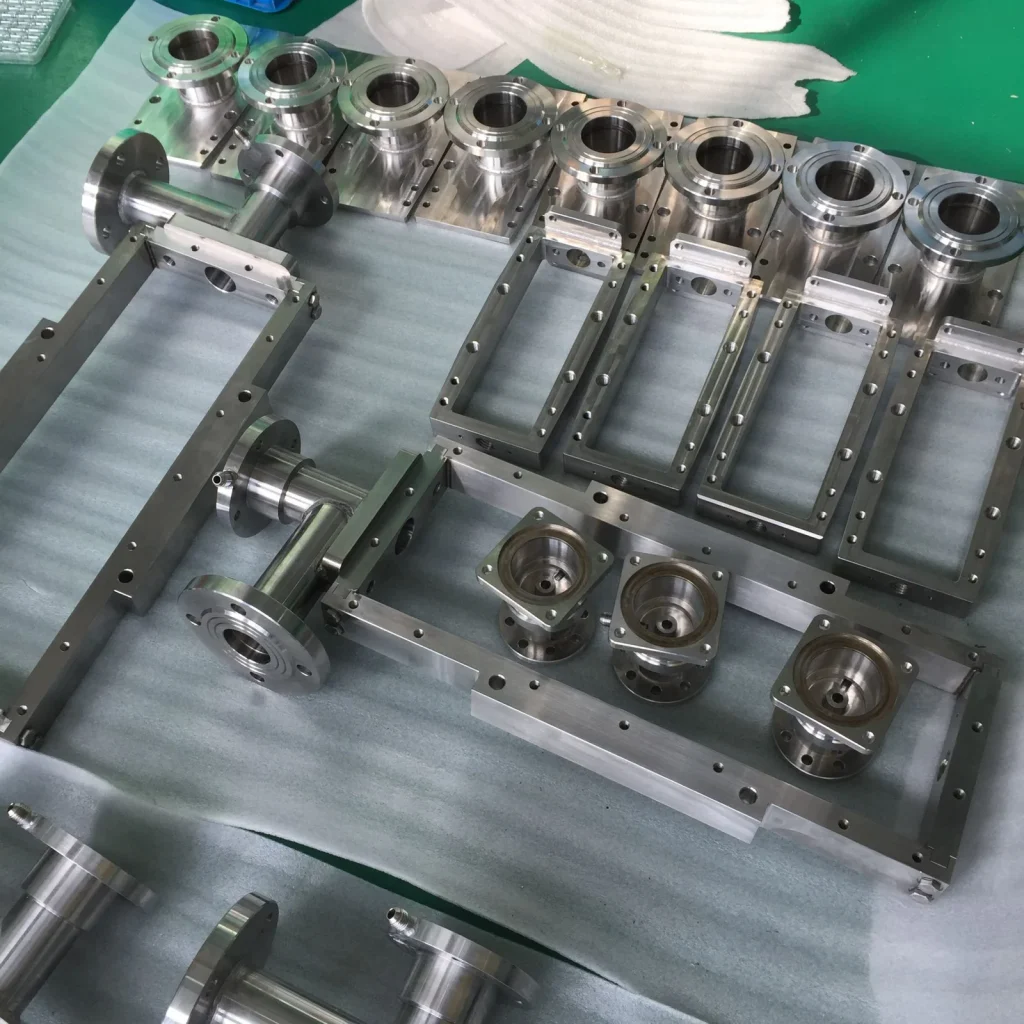
Analyzing a robotic bicep assembly reveals the true complexity of robotic arm machining. This component acts as the primary leverage point for the entire system, demanding high-tolerance components that fit together perfectly.
- Tight Tolerances: I machine these assemblies to tolerances within +/- 0.0002 inches to ensure seamless integration with servo motor mounts.
- Weight Optimization: Through strategic pocketing and 5-axis milling, I reduce the mass of the bicep without sacrificing structural integrity.
- Alignment: If the bearing bores in the bicep are even slightly out of parallel, the entire arm will experience premature gear wear.
Precision Joints and Multi-Axis Interpolation
For a robot to move fluidly, the interaction between the precision actuators and the machined joints must be flawless. This is where multi-axis interpolation becomes critical.
- Smooth Motion: I focus on the surface finish of joint seats to minimize friction, allowing the controller to execute complex paths without “choppy” movements.
- End-of-Arm Tooling (EOAT): The precision of the base joints dictates the accuracy of the tool at the end of the line.
- Zero-Backlash Fits: By machining components that accommodate high-precision harmonic drives, I ensure the CNC robot maintains its position even under heavy payloads.
The synergy between advanced software and rugged, precisely machined hardware is what defines the modern industrial automation system. Without a foundation of high-quality CNC parts, even the smartest AI cannot perform.
Maximizing Efficiency with CNC Robots and Automated Integration
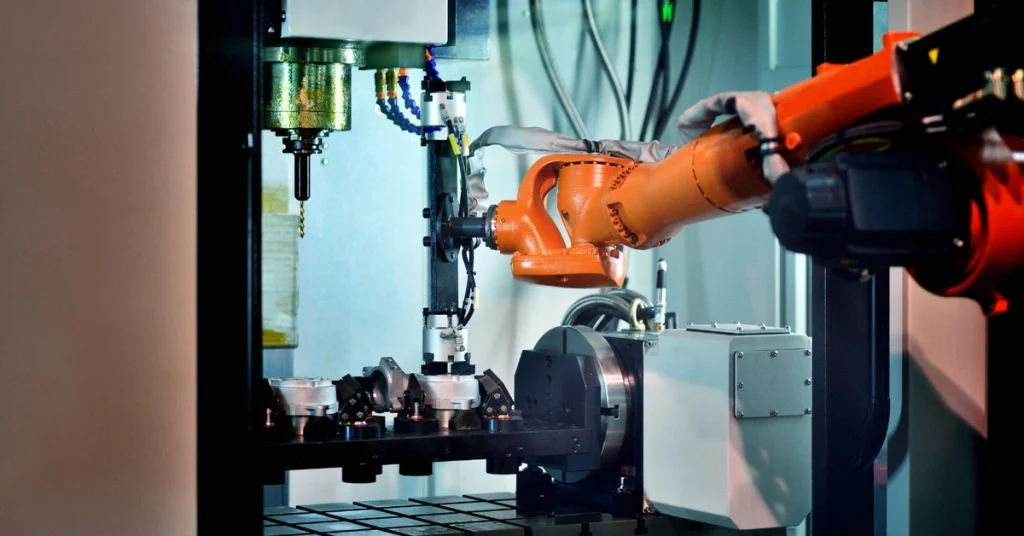
Integrating cnc robots into the modern machine shop is the most effective way to eliminate downtime and maximize ROI. We’ve moved beyond manual loading to a fully synchronized environment where industrial automation systems handle the repetitive tasks that used to slow us down. This shift allows us to focus our expertise on the complex cnc machining and manufacturing requirements that our clients demand.
Automated Machine Tending and Lights-Out Production
The primary driver of our productivity is automated machine tending. By using a dedicated cnc robot arm, we achieve true “lights-out” manufacturing. This means our spindles keep turning long after the lights go out, significantly increasing our total throughput without adding labor costs.
- 24/7 Operation: Robots don’t need breaks, allowing for continuous production cycles.
- Reduced Human Error: Eliminating manual loading prevents misaligned parts and scrapped material.
- Safety: Robots handle heavy or sharp workpieces, keeping our technicians safe from repetitive strain and hazards.
Consistency, Throughput, and the MS Machining Advantage
Consistency is the hallmark of a world-class shop. Our cnc robotics integration ensures that every loading cycle is performed with sub-millimeter precision, maintaining the integrity of high-tolerance components across thousands of units.
| Feature | Manual Operation | CNC Robot Integration |
|---|---|---|
| Uptime | Limited to labor shifts | 24/7 Continuous operation |
| Cycle Consistency | Variable (Human fatigue) | 100% Repeatability |
| Throughput | Moderate and fluctuating | High and predictable |
| Scalability | Difficult/Labor dependent | Rapid and automated |
Operating out of our 30,000+ sq. ft. facility, we provide the infrastructure needed for scalable production. We combine our vast floor space with advanced cnc engineering services to ensure that your custom OEM manufacturing projects transition smoothly from design to high-volume automated output. This aggressive approach to cnc manufacturing robotics is why we remain a leader in the precision machining industry.
Advanced 5-Axis CNC Machining for Robotics Applications
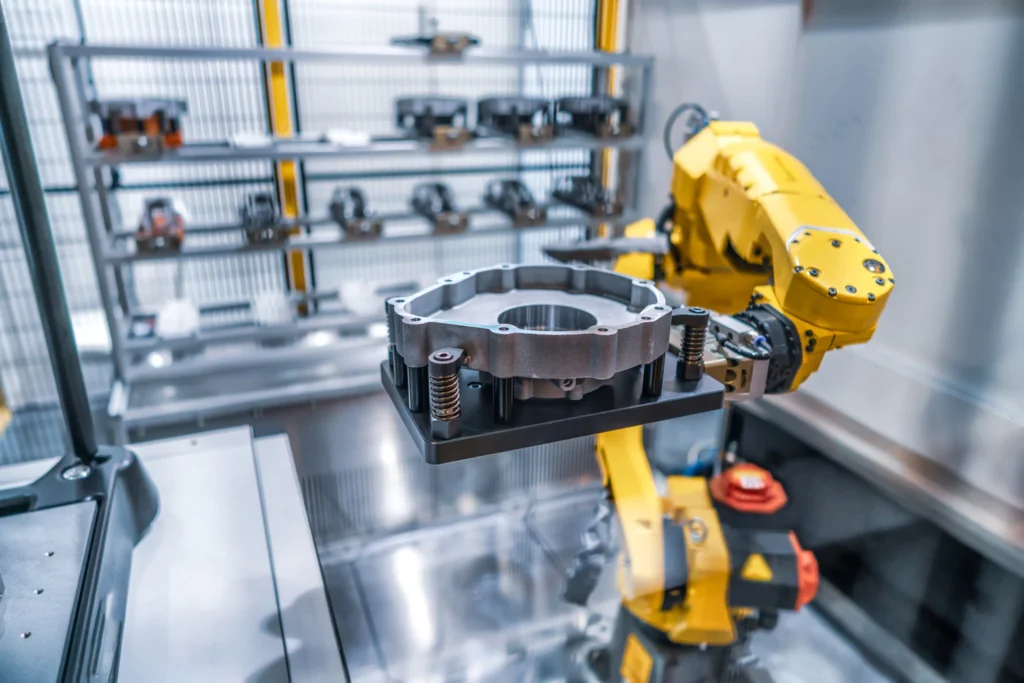
When we talk about cnc robots, we’re talking about components that require motion on multiple planes. Standard 3-axis milling often falls short when producing the contoured surfaces found in high-end robotic arm machining. By utilizing advanced 5-axis technology, we eliminate the limitations of traditional setups, allowing for the creation of organic shapes and deep undercut features essential for modern robotics.
Precision for Complex Geometries
Modern robotic joint housings and sensor mounts are rarely simple cubes. They require complex internal channels and precise mounting points at awkward angles. Our 5-axis milling services allow the cutting tool to approach the workpiece from all directions, ensuring that even the most intricate micro-machining CNC requirements for internal sensors are met with absolute accuracy.
Efficiency and Reduced Setup Time
The biggest advantage of 5-axis machining is “Done-in-One” production. By machining five sides of a part in a single operation, we significantly reduce setup time and eliminate the risk of misalignment during part transfers.
- Minimized Human Error: Fewer setups mean less chance for positioning mistakes.
- Superior Surface Finishes: Shorter cutting tools can be used for more stable, high-speed milling.
- Complex Contouring: Perfect for creating aerodynamic and ergonomic aerospace robotics parts.
Material Versatility for Robot Components
Whether you’re developing high-stress joints or lightweight frames, material selection is critical. Our 5-axis centers handle a wide range of industrial metals:
| Material Type | Typical Robotics Application | Key Advantage |
|---|---|---|
| Titanium (Grade 5) | High-stress joint housings | High strength-to-weight ratio |
| Stainless Steel 316/304 | Medical/Food grade robotics | Corrosion and heat resistance |
| Aluminum 7075-T6 | UAV and drone frames | High fatigue strength and lightweight |
| Inconel | High-temperature industrial arms | Exceptional thermal stability |
For simpler components like robotic sensor mounts, we also provide specialized bracket CNC services that ensure structural integrity and perfect alignment within the kinetic chain.
Quality Control in the Age of Automation
Maintaining Stability in a Climate-Controlled Environment
When manufacturing CNC robots and automation equipment, thermal stability is just as critical as the cutting tools we use. Even minor temperature fluctuations can cause metal to expand or contract, ruining the tight tolerances required for precision actuators. That is why our 30,000+ sq. ft. facility is fully climate-controlled. By stabilizing the environment, we ensure that every robotic joint housing we machine maintains its dimensional accuracy from the first cut to final assembly.
The 3x QC Line Process
In the world of robotics, a single failure point can crash an entire production line. We don’t take chances with “good enough.” Our quality assurance involves a multi-stage inspection process designed to catch deviations before they ever leave the shop floor.
- In-Process Inspection: Machinists verify dimensions immediately after critical operations.
- CMM Verification: Complex geometries are validated using Coordinate Measuring Machines.
- Final Assembly Check: We test fitment for assemblies, ensuring high-tolerance components function seamlessly together.
Certifications and Traceability for Critical Sectors
Building aerospace robotics parts or medical surgical bots requires more than just precision; it requires accountability. We provide complete traceability for every project. This includes verifying the specific material for CNC machining used in your components, ensuring the alloy grade meets strict Defense and Medical standards. From the raw stock to the finished part, our documentation proves that your hardware is built to perform under pressure.
Choosing the Right OEM Partner for CNC Robots

Selecting a manufacturing partner for robotics isn’t just about finding a shop with machines; it’s about finding a team that understands the stakes of industrial automation. At our facility, we bridge the gap between massive scale and technical precision to ensure your designs transition perfectly from CAD to the assembly line.
Capacity vs. Expertise
While our floor boasts 60+ advanced machining centers, our true value lies in over 20 years of hands-on experience. For complex cnc robots, having the equipment is only half the battle. You need a partner who knows how to maintain tool stability during long runs of intricate robotic joint housings and servo motor mounts. We balance high-volume output with the meticulous care required for custom OEM manufacturing.
Global Supply Chain and Engineering Support
We support innovators across the United States, providing seamless logistics and reliable lead times from Texas to Massachusetts. Our engineering-first approach means we act as a technical partner rather than a silent vendor, helping you refine designs for better manufacturability and cost-efficiency.
- Scalable Production: We handle everything from rapid prototyping to full-scale industrial runs.
- Material Strength: We specialize in high-durability builds, including CNC machined components made from carbon steel for heavy-duty robotic frames and structural bases.
- Technical Partnership: Get direct access to engineers who understand the nuances of precision actuators and kinematic chain components.
| Feature | Our Standard for Robotics |
|---|---|
| Equipment | 60+ High-speed CNC machining centers |
| Experience | 20+ Years in precision engineering |
| Reach | National (US-wide) supply chain support |
| Philosophy | Engineering-led, quality-first manufacturing |
CNC Robots FAQ: Common Questions on Automation and Precision
We receive many questions about how cnc robots are redefining the standards of modern manufacturing. Whether you are looking to integrate a single arm or overhaul an entire production line, understanding the tech behind the automation is the first step toward better ROI.
What is the difference between a CNC machine and a CNC robot?
While both are computer-controlled, they serve different primary functions:
- CNC Machines: Specialized tools (like mills and lathes) built for high rigidity and material removal.
- CNC Robots: Versatile manipulators designed for movement. In a modern shop, we use robot cnc units for automated machine tending, parts transfer, and secondary operations like deburring or assembly.
Can a robotic arm perform 6-axis CNC milling?
Yes. While a robotic arm generally lacks the extreme rigidity of a stationary mill, it excels in robotic arm machining for large-scale parts or complex, non-linear geometries. For projects requiring high-precision CNC machining, we typically use a dedicated 5-axis center, but robots offer the 6th axis of motion needed for intricate reach-around tasks that traditional machines can’t touch.
Which materials are best for high-stress robotic joints?
The durability of a robot depends entirely on its high-tolerance components. We focus on materials that offer high strength-to-weight ratios:
- Aluminum Alloy 7075: The standard for lightweight robotic frames.
- Stainless Steel: Necessary for medical or food-grade robotics requiring high hygiene.
- Titanium: Essential for aerospace robotics. Our titanium CNC machining services ensure these high-stress joints can withstand extreme fatigue without failing.
How does automated machine tending improve ROI?
Integrating cnc robots into the workflow directly impacts the bottom line by eliminating “dead time” between cycles.
| ROI Factor | Benefit of CNC Robotics |
|---|---|
| Spindle Utilization | Enables true lights-out manufacturing 24/7. |
| Labor Costs | One operator can manage multiple cells simultaneously. |
| Consistency | Robotic loading ensures identical placement every time, reducing scrap. |
| Throughput | Faster cycle transitions compared to manual part swapping. |
By utilizing multi-axis interpolation and smart automation, we help our partners move from manual bottlenecks to a streamlined, scalable production model.