
The Importance of Dimensional Accuracy in High-Volume Production
Impact on Product Quality
In high-volume production, dimensional variations have a direct impact on the functionality and overall quality of the product. Even minor deviations can cause parts to misalign during assembly or lead to product malfunctions, which compromise performance. Such variations often necessitate costly rework and generate scrap, driving up production expenses and extending lead times. Ensuring tight dimensional control is therefore essential to maintain seamless operation and meet stringent quality standards.
The Need for Consistency in Mass Production
Consistency across large production batches is vital to satisfy both customer expectations and regulatory requirements. Dimensional fluctuations from one batch to another can result in inconsistent part quality, undermining product reliability and performance. This inconsistency not only disrupts the supply chain but also risks damaging brand reputation and diminishing customer trust. In a competitive market like the United States, where quality and reliability are paramount, maintaining uniform dimensions is critical to sustaining product acceptance and driving sales.
How CNC Precision Machining Minimizes Dimensional Variations
1. Computer-Controlled Precision
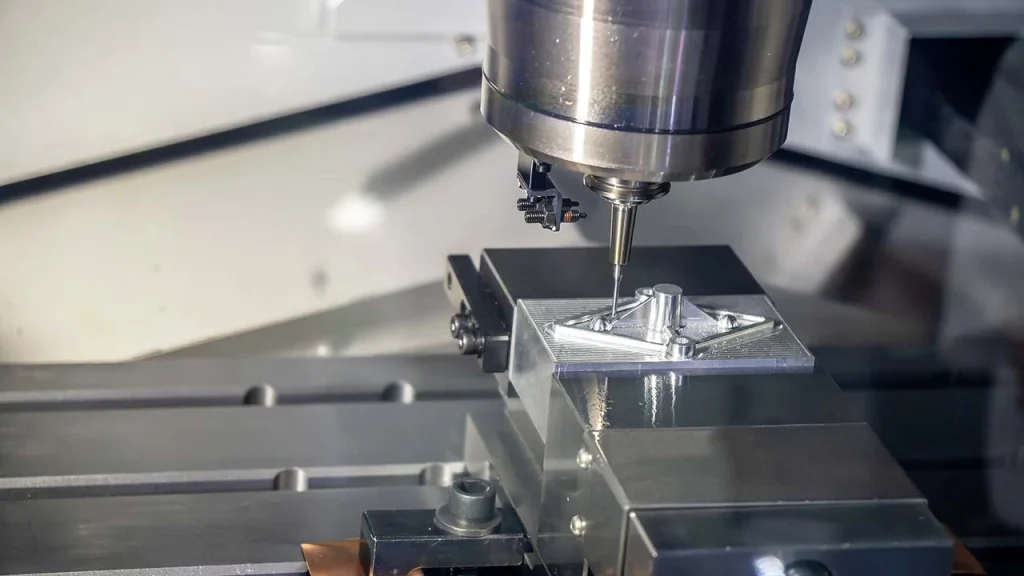
CNC precision machining relies on computer-controlled equipment to take human error out of the equation. This technology ensures every part is made within very tight tolerances, so dimensions don’t stray from the design specs. The result is consistent quality across thousands of parts, which is especially important in high-volume production where even the smallest variation can cause issues down the line.
2. Real-Time Monitoring and Adjustments
Modern CNC machines come equipped with sensors and software that monitor production in real-time. If any dimensional irregularities are detected during machining, the system can instantly adjust the cutting process to bring the part back within spec. This immediate correction reduces scrap and rework, saving both time and material costs.
3. High Repeatability and Consistency
One of the biggest advantages of CNC machining is its ability to produce the same part repeatedly with minimal variance. This high repeatability is crucial when manufacturing large batches, making sure each component matches the required specifications exactly. Industries like aerospace, automotive, and medical devices depend heavily on this consistency to guarantee product reliability and safety.
For manufacturers looking for top-notch detail and accuracy, our precision CNC milling services offer the advanced machining capabilities necessary to keep dimensional variations to a minimum, helping you stay competitive in the market.
Key Advantages of CNC Precision Machining in High-Volume Production

1. Increased Efficiency and Reduced Cycle Time
- Key Point: CNC precision machining speeds up the production process by reducing cycle times, which boosts overall manufacturing efficiency.
- Pain Point: Long production cycles often cause missed deadlines and delay product launches, hurting client satisfaction.
- Solution: CNC machines work faster and more accurately than manual methods, helping manufacturers hit tight schedules while controlling costs.
2. Reduced Scrap and Rework Costs
- Key Point: Dimensional inconsistencies lead to excess scrap and rework, driving up production expenses.
- Solution: CNC precision machining minimizes errors, significantly cutting scrap rates and reducing costly rework. This improvement makes production more efficient and cost-effective.
3. Enhanced Quality Control
- Key Point: Consistent quality is crucial for meeting industry standards and customer expectations. Poor quality control risks failing inspections, causing delays and dissatisfaction.
- Solution: CNC machining provides automated, repeatable processes that ensure each part meets exact specs. This leads to fewer defects, smoother inspections, and higher customer trust.
4. Cost-Effectiveness for Large Runs
- Key Point: Mass production involves high costs, especially for labor and materials.
- Solution: CNC precision machining reduces waste and optimizes material use, lowering the cost per part. This makes large production runs more affordable and sustainable.
For industries demanding tight tolerances and efficiency, such as aerospace or defense manufacturing, CNC precision machining proves indispensable. Companies looking to enhance their operations should consider military machining and defense components services for maximizing production reliability and minimizing waste.
How CNC Precision Machining Services Help Overcome Common Challenges in High-Volume Production
1. Maintaining Consistent Quality Across Large Batches
A major challenge in high-volume production is keeping quality uniform across thousands or even millions of parts. Manual or less precise methods often can’t guarantee this consistency, leading to variations that affect product performance and appearance. CNC precision machining solves this by providing automated, computer-controlled processes that maintain strict dimensional control on every piece. This ensures each batch meets exact functional and aesthetic requirements without compromise.
2. Meeting Tight Deadlines While Reducing Costs
Producers often struggle to hit tight production timelines while staying within budget. Traditional methods can slow things down and increase waste, making it harder to deliver on time without cost overruns. CNC machining cuts cycle times by accurately handling parts faster and reducing the need for rework. This efficiency helps manufacturers meet deadlines reliably while controlling expenses—key for competitive high-volume runs.
3. Handling Complex Geometries in Mass Production
Complex part designs with intricate features are tough to replicate accurately when producing large volumes. Conventional machining may lose precision, resulting in defects or scrap. CNC machining excels here by precisely translating complicated digital designs into physical parts. It can reproduce every detail consistently, making sure the final product perfectly matches specifications even in massive quantities. For example, components requiring special finishes or precise tolerances—like those found in high-speed turbines—benefit significantly from CNC capabilities. (See our guide on spiral groove bearing for high-speed turbines for detailed insights.)
4. Reducing Material Waste in Large-Scale Production
Material waste adds up quickly in high-volume runs, driving costs up and impacting sustainability goals. CNC precision machining helps by optimizing material use through accurate cutting paths and minimizing scrap. This focused approach reduces waste significantly, lowering both production expenses and environmental footprint. The result is a more cost-effective process that maximizes raw material efficiency—essential when running large batches where even small savings multiply. For businesses focusing on metals like aluminum, specialized services such as aluminum CNC machining parts further enhance precision and material utilization.
In , CNC precision machining addresses the core pitfalls of mass production—quality variations, tight deadlines, complex designs, and waste—by delivering high accuracy, repeatability, and efficiency. This makes it an indispensable solution for manufacturers aiming to excel in high-volume production with consistent, cost-effective results.