
Understanding CNC Milling and CNC Turning
What is CNC milling and how it works
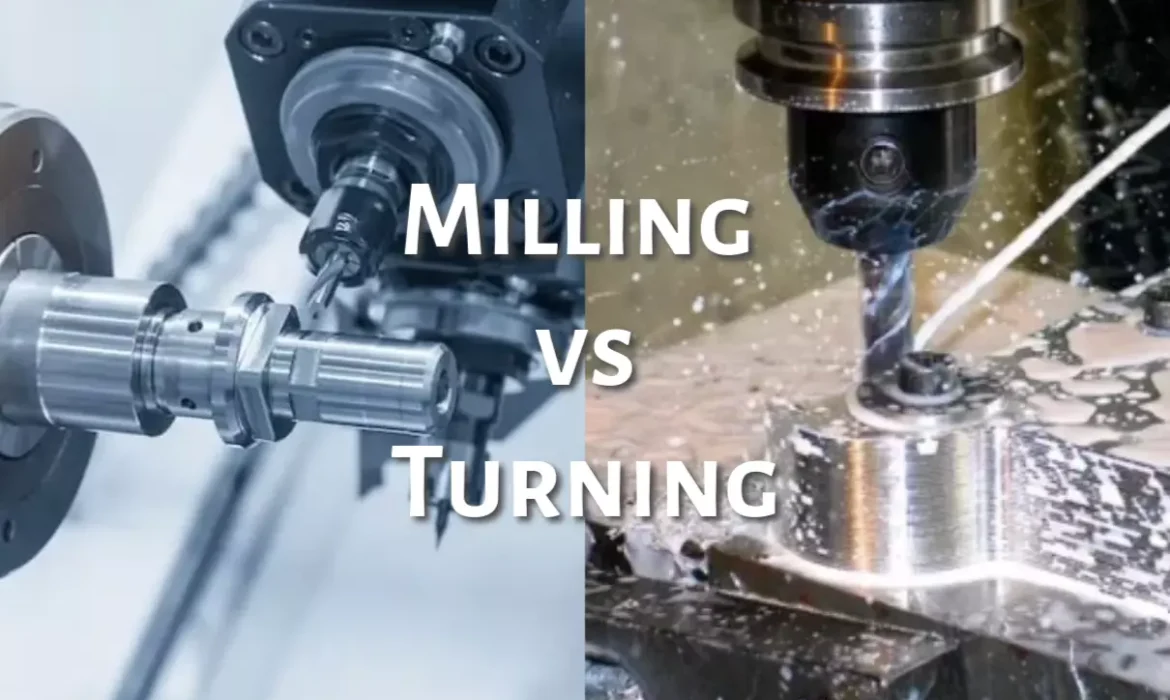
CNC milling is a subtractive manufacturing process where a rotating multi-axis cutting tool removes material from a stationary workpiece to create precise shapes, slots, holes, and contours. Controlled by computer numerical control (CNC) software, milling machines can execute complex 3D designs with high accuracy. This process is ideal for producing prismatic parts with flat or irregular surfaces, offering versatility for various materials including metals, plastics, and composites. The cutting tool moves along multiple axes to shape the part, making it perfect for custom or intricate components.
What is CNC turning and when it is used
CNC turning involves rotating the workpiece while a stationary cutting tool shapes its exterior or interior surfaces. This process is predominantly used for parts with rotational symmetry, such as shafts, cylinders, and cones. The workpiece spins on a spindle, and the cutting tool moves linearly to carve out the desired profile. CNC turning excels at producing round parts efficiently with high dimensional accuracy and excellent surface finishes. It is commonly selected when manufacturing components like bolts, pulleys, and bushings, especially when consistent diameters and smooth finishes are required.

Key Differences Between CNC Milling and CNC Turning
Part geometry and design suitability
CNC milling is best for parts with complex, 3D shapes—flat surfaces, slots, pockets, and intricate contours. Milling machines use rotating cutting tools to shape the material from many angles. On the other hand, CNC turning is ideal for rotational parts like shafts, cylinders, and cones. The workpiece spins while a stationary cutting tool trims its outer diameter or bores holes.
| Feature | CNC Milling | CNC Turning |
|—————————|———————————-|——————————-|
| Best suited for | Complex 3D shapes, prismatic parts | Round, rotational parts |
| Tool movement | Multi-axis, tool moves around part | Part rotates, tool moves linearly |
| Common examples | Brackets, molds, housings | Shafts, bushings, pins |

Tolerances and dimensional accuracy
Both processes achieve tight tolerances, but CNC turning typically offers better repeatability on diameters and concentric features due to constant part rotation. Milling excels at fine details on flat surfaces but may require more setup checks for multidimensional accuracy.
- Turning: +/- 0.0002 inches common for diameters
- Milling: +/- 0.001 inches typical on complex contours
Surface finish and secondary operations
Turning usually results in smoother surface finishes on cylindrical features with minimal post-processing. Milling may leave tool marks on complex faces, often needing secondary operations such as polishing or deburring for cosmetic or functional reasons. Some milling setups include finishing passes to improve surface quality.
Material compatibility and cutting behavior
Both CNC milling and turning handle a wide range of materials—aluminum, steel, stainless steel, titanium, and plastics. However:
- Milling tends to generate more heat in hard materials due to tool contact duration; chip evacuation is critical.
- Turning generally offers quicker material removal on round shapes with less tool wear.
For specialized materials like stainless steel investment castings, understanding cutting forces is vital; relevant techniques are explained in guides on stainless steel investment casting.
Understanding these core differences in part geometry, accuracy, finish, and material interaction helps in selecting the right CNC process for your parts.
How to Choose the Right CNC Process for Your Parts
Part shape: prismatic vs rotational components
Choosing between CNC milling and CNC turning often starts with the part’s shape. Milling is best for prismatic parts—those with flat surfaces, sharp edges, and complex contours. Turning excels at producing rotational components like shafts, bushings, and rings, where the part spins against the cutting tool. If your design leans toward cylindrical or symmetrical round shapes, turning is usually the way to go.
Production volume and batch size considerations
Think about how many parts you need.
- Low to medium volumes often benefit from CNC milling because of its setup versatility and ability to handle complex features quickly.
- High-volume runs typically favor CNC turning since the spindle rotation allows for faster cycle times on rotational parts, boosting efficiency.
Cost structure and machining efficiency
| Factor | CNC Milling | CNC Turning |
|---|---|---|
| Setup costs | Moderate | Lower, especially for round parts |
| Cycle time | Longer for simple round parts | Faster on rotational parts |
| Material waste | Higher, due to complex cuts | Lower, thanks to turning chips |
| Tooling costs | Higher, due to multiple tools | Lower, uses fewer tools |
Evaluating these factors helps you reduce overall machining costs while balancing quality and efficiency.
Lead time and production flexibility
When lead time is tight, CNC turning often delivers faster for simple, rotational components because of quicker setup and cutting speeds. Milling offers greater flexibility to handle design changes or complex shapes without a complete tooling overhaul. If your parts require frequent design tweaks, milling might save time in the long run.
For combining both processes on intricate parts, partnering with experts who offer both milling and turning services ensures smoother production flow and shorter lead times. Experienced shops like MS Machining can guide you in balancing these needs.
Common Design Mistakes When Selecting CNC Milling or Turning
Overcomplicating part geometry
One big mistake is making your part geometry more complex than it needs to be. Overly detailed shapes can drive up costs and lead times because they require extra machining steps or multiple setups. Keep designs clean and focused on functionality, which helps CNC milling or turning run smoothly without unnecessary hassles.
Applying unnecessarily tight tolerances
Tight tolerances can seem like a safe bet, but setting them stricter than necessary adds time and expense. Think about what’s truly critical for your part’s performance and specify those dimensions carefully. Overly tight specs often mean more rework, slower production, and higher costs with no real added value.
Ignoring process limitations during design
Each CNC method has its limits. Designing without considering the unique strengths and weaknesses of milling versus turning can cause issues later. For example, some shapes are better suited to turning’s rotational cutting, while others fit milling’s multi-axis approach. Not accounting for this can mean additional setups or even design revisions. Getting early input from your machining partner, especially from experts in CNC machining services, can help steer your design in the right direction before production starts.
Milling vs Turning in Real Production Scenarios
Prototypes and low-volume parts
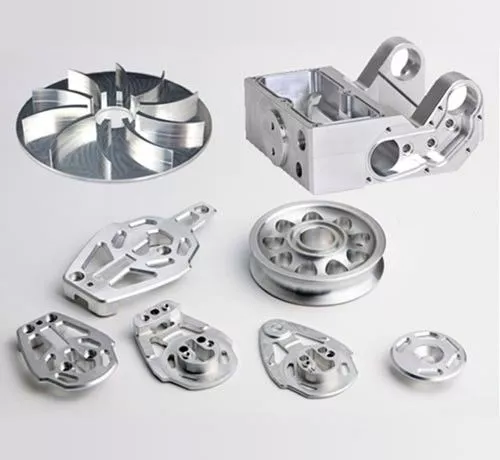
When working on prototypes or low-volume parts, flexibility and quick turnarounds are key. CNC milling often shines here because it handles complex shapes and fine details with ease. Milling allows you to test various design features without investing in specialized tooling. CNC turning, while excellent for simpler, rotational parts, may not offer the same versatility for intricate prototypes. Both processes can deliver high precision, but milling is usually preferred for one-off or small runs where design changes are frequent.
Medium to high-volume production runs
For medium to high-volume production, efficiency and repeatability become critical. CNC turning is often more cost-effective for parts with rotational symmetry, like shafts and threaded components, because it can rapidly produce consistent shapes at scale. Milling works well for prismatic parts but may require longer cycle times, impacting cost at higher volumes. Many manufacturers optimize costs by choosing turning for simpler shapes and milling for more complex geometries. Understanding your batch size and part design helps select the right approach to balance speed and quality.
Complex parts requiring combined milling and turning
Some parts demand the best of both worlds — intricate features combined with symmetrical sections. In such cases, using combined CNC milling and turning operations is the solution. This hybrid approach can reduce setup times, improve dimensional accuracy, and minimize secondary operations. Many advanced shops offer multi-axis CNC machines capable of both milling and turning in one setup, saving time and ensuring precision. For complex parts, working with a skilled CNC engineering partner can maximize manufacturing efficiency and manage costs effectively.
For tailored advice on precision milling and turning, check out our detailed insights on CNC engineering for precision metal and plastic parts.
How an Experienced CNC Machining Partner Adds Value
Process recommendation based on part function
Choosing between CNC milling and CNC turning depends heavily on your part’s function and design. An experienced CNC machining partner will evaluate the geometry, material, and intended use to recommend the most efficient process. This ensures your parts aren’t just made—they’re optimized for durability, performance, and cost-effectiveness. Whether you have complex prismatic shapes needing milling or rotational components better suited for turning, expert guidance steers you to the right choice.
DFM feedback to reduce cost and lead time
Design for Manufacturing (DFM) feedback is another major advantage of working with seasoned CNC professionals. They identify potential design hurdles early, suggesting tweaks that simplify machining without sacrificing quality. This insight reduces unnecessary machining steps, slashes production time, and lowers costs. When you integrate DFM advice upfront, you get faster turnaround and smoother production runs, especially important for the U.S. market’s tight schedules.
Ensuring consistency across production batches
Consistency is key if you’re running medium to high-volume batches. A reliable CNC machining partner uses proven methods and quality controls to keep every part uniform from start to finish. This reduces scrap, minimizes rework, and keeps your production on schedule. With expert oversight, you maintain tight tolerances and surface finishes that meet your specs every time, whether you rely on milling or turning processes.
For tailored CNC milling or turning services that help optimize your production, consider established providers specializing in custom CNC machining, ensuring quality and precision for your parts.