
You might already know that CNC milling pricing varies wildly between suppliers…
But do you know exactly why?
For engineers and procurement teams, opaque quotes can make product development and budgeting a frustrating guessing game.
In this post, I’m going to break down the real factors behind the cost—from material costs and part complexity to the often overlooked labor and setup costs.
You’ll learn exactly how to leverage Design for Manufacturability (DFM) and optimize batch size to ensure you get transparent cost insights and the best value for your project.
Let’s dive right in.
Main Factors That Affect CNC Milling Prices
Understanding the cost structure of precision CNC parts is essential for optimizing your project budget. At MS Machining, we believe in complete transparency. The final quote for any machined component is never arbitrary; it is a calculated result of specific manufacturing variables. By adjusting these levers, clients can significantly influence the final price without compromising on quality.
Material Costs: Metal Type, Alloys, and Machinability
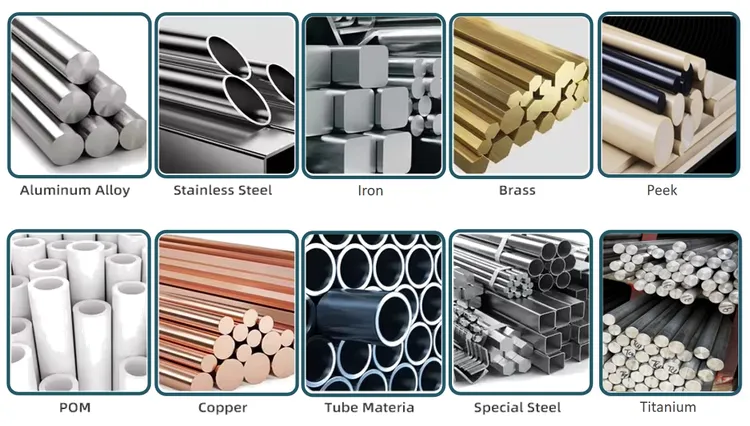
Material selection is the primary baseline for cost. This expense is twofold: the raw market price of the stock material and its “machinability”—how easily it can be cut. High machinability ratings allow for faster feed rates, reducing machine time and overall cost.
- Aluminum (6061, 7075): Cost-effective and highly machinable. Ideal for prototyping and structural parts.
- Stainless Steel (303, 304, 316): Higher raw cost and harder to machine, increasing tool wear and cycle time.
- Titanium & Specialty Alloys: Premium raw cost with low machinability, requiring specialized tooling and slower speeds.
- Plastics (PEEK, POM/Delrin, ABS): Vary widely; Delrin is easy to machine, while PEEK is an expensive engineering-grade thermoplastic.
| Material | Raw Cost | Machinability | Cost Impact |
|---|---|---|---|
| Aluminum 6061 | Low | High | $ |
| Brass C360 | Medium | Very High | $$ |
| Stainless Steel 304 | Medium | Low | $$$ |
| Titanium Grade 5 | High | Very Low | $$$$ |
Part Complexity: Geometry, Features, and Tolerances
The complexity of a design directly dictates machining hours. Simple block shapes with flat surfaces are the most economical to produce. Costs rise as geometry requires specialized interventions:
- Tight Tolerances: Achieving our standard high precision (up to +/- 0.001mm) requires slower finishing passes and rigorous inspection.
- Complex Features: Deep pockets, thin walls, and undercuts often require custom tooling or slower cutting speeds to prevent part deformation.
- Design Optimization: We provide DFM (Design for Manufacturability) support to identify features that drive up costs unnecessarily.
Machine Type and Axis Configuration (3-Axis, 4-Axis, 5-Axis)
Different cnc precision parts require different equipment. We utilize a range of machinery to match the job’s needs, but machine selection impacts the hourly rate.
- 3-Axis Milling: The most affordable option, suitable for parts with simple geometries worked from a single side.
- 4-Axis & 5-Axis Milling: Essential for complex, multi-sided components. While the hourly rate is higher, 5-axis machining can actually reduce costs for complex parts by eliminating the need for multiple manual setups (re-fixturing).
Surface Finish and Post-Processing Requirements
The “as-machined” finish is the standard and most cost-effective option. Adding secondary processes improves aesthetics and durability but adds steps to the production chain.
- Standard Finishes: Bead blasting and smoothing remove tool marks.
- Chemical Treatments: Anodizing (Type II/III), Chromate Conversion, and Passivation protect against corrosion.
- Cosmetic Finishes: Polishing, Powder Coating, and Laser Engraving add labor and material costs.
Batch Size and Production Volume Considerations
Volume is the most powerful lever for reducing unit price. CNC machining involves significant upfront “setup costs”—programming the machine (CAM), preparing fixtures, and tooling setup.
- Prototyping (Low Volume): Setup costs are amortized over only a few parts, resulting in a higher price per unit. We support MOQs as low as 1 unit.
- Mass Production (High Volume): Once the machine is running, the setup cost is spread across thousands of parts. This drastically lowers the per-unit price, making CNC milling viable for larger production runs.
Labor and Setup Costs in CNC Milling
When clients ask what drives CNC Milling Pricing, they often focus on the material block, but the human element and preparation are just as critical. The machine is only as good as the setup and the code running it. Labor costs are usually fixed per batch, meaning they hit harder on low-volume orders but dilute significantly as production scales up.
Programming and Toolpath Preparation
Before a single chip is cut, our engineers have to tell the machine exactly what to do. This stage, known as CAM (Computer-Aided Manufacturing) programming, involves converting your 3D CAD model into G-code.
This is a non-recurring engineering (NRE) cost. If your design is simple, programming might take an hour. If you need complex cnc precision parts with intricate 3D contours, we spend significantly more time optimizing toolpaths to ensure efficiency and prevent tool breakage.
- CAD Analysis: Checking for manufacturability issues.
- Tool Selection: Choosing the right end mills and drills for the job.
- Path Optimization: Reducing “air cutting” time to lower the final run cost.
Fixturing, Clamping, and Part Setup
Rigidity is everything in machining. We have to secure the workpiece so it doesn’t move under the immense force of the cutter. Standard setups using vises are quick and cost-effective. However, complex geometries often require custom workholding solutions.
If a part needs to be flipped multiple times to reach different faces, the setup cost increases because an operator must manually reposition it. For high-volume runs, such as those seen in automotive CNC machining, we often build custom fixtures or vacuum plates. While this increases the upfront setup cost, it drastically reduces the time it takes to swap parts, saving money in the long run.
Operator Expertise and Inspection Requirements
The machine doesn’t run on autopilot. Skilled machinists are required to monitor the process, adjust offsets, and manage tool wear. The level of inspection you require also directly impacts the labor cost.
Standard in-process checks are part of our routine. However, if you demand a 100% inspection report or detailed CMM (Coordinate Measuring Machine) data for every single unit, that requires dedicated man-hours.
Cost Impact of Labor & Setup:
| Factor | Low Cost Impact | High Cost Impact |
|---|---|---|
| Programming | Simple 2D profiles | Complex 3D surfaces & organic shapes |
| Fixturing | Standard vise jaws | Custom soft jaws or jigs |
| Setup Operations | Single setup (3-axis) | Multiple flips or 5-axis indexing |
| Inspection | Standard sampling | 100% CMM dimensional reporting |
Machine Time and Operational Costs
When we calculate quotes for cnc precision parts, machine time is often the single largest cost driver. It’s a simple equation: the longer a machine is tied up producing a specific component, the higher the cost. This isn’t just about the clock ticking; it involves the intensity of the operation and the resources consumed during the process.
Spindle Speeds, Feed Rates, and Cycle Time
Cycle time is dictated heavily by the material’s machinability. Softer metals like aluminum allow us to run high spindle speeds and aggressive feed rates, clearing material quickly. However, harder materials like stainless steel or titanium require us to slow down significantly to prevent heat buildup and tool failure.
- High-Speed Machining: Used for softer alloys and plastics; reduces cycle time and cost.
- Low-Speed Precision: Required for tough alloys or complex geometries; increases cycle time.
Complex 3D surfacing on a 5-axis machine also extends cycle time compared to simple 2D cutting, as the machine must make finer passes to achieve the desired surface finish.
Tool Wear and Replacement Costs
Creating precision cnc parts with tolerances as tight as +/- 0.001mm requires sharp, high-quality tooling. Standard end mills work fine for general prototyping, but specialized carbide tools are necessary for hardened metals.
Tool wear is a direct cost factor. If a project involves abrasive materials, we go through cutters faster. Every time a tool wears out, the machine must be stopped, the tool replaced, and the offset recalibrated. This downtime and the cost of the consumables themselves are factored into the final price. For sectors requiring robust components, such as when manufacturing oil and gas equipment, using high-grade tooling is non-negotiable to ensure part integrity.
Energy Consumption and Maintenance Factors
Running advanced CNC equipment is energy-intensive. A 5-axis machining center consumes significantly more power than a standard 3-axis mill, especially during heavy roughing operations.
Beyond electricity, there is the cost of reliability. To maintain our ISO 9001:2015 and IATF 16949 certifications, we adhere to strict maintenance schedules. Regular calibration, lubrication, and laser interferometry checks ensure our machines remain capable of holding micron-level tolerances. These operational overheads ensure that every part we ship meets the quality standards our clients expect.
Design and Engineering Impact on Cost
The initial design phase is where the biggest savings happen. Before a single chip is cut, the geometry and engineering specifications determine the baseline for CNC milling pricing. At MS Machining, we work closely with clients to ensure designs are optimized for our manufacturing processes, preventing unnecessary costs down the line.
Design for Manufacturability (DFM) Strategies
Design for Manufacturability (DFM) is about modifying a design to make it easier and cheaper to produce without sacrificing performance. We provide expert feedback to identify features that drive up costs unnecessarily.
- Internal Radii: Avoid sharp internal corners. CNC tools are round; requiring a sharp corner necessitates expensive EDM (Electrical Discharge Machining) processes. Adding a radius allows standard end mills to cut the feature quickly.
- Wall Thickness: Thin walls can vibrate or warp during machining, requiring slower feed rates and special care. Thickening walls stabilizes the part.
- Hole Depth: Deep, narrow holes require specialized long-reach tools and are prone to breakage. Limiting hole depth to diameter ratios helps control costs.
We frequently apply these strategies when reviewing aluminum CNC machining parts, ensuring that lightweight designs remain rigid enough for high-speed milling.
Reducing Tolerance Stack-Up and Rework
Tight tolerances are necessary for precision CNC parts, but applying them to every single dimension is a common mistake that inflates pricing. If every feature is toleranced to +/- 0.001mm, the machine must run slower, and inspection time doubles.
We encourage clients to focus tight tolerances only on critical mating surfaces. Improper tolerancing can lead to “stack-up,” where acceptable variations in individual features add up to a total assembly failure. By defining tolerances correctly from the start, we eliminate the need for costly rework and ensure parts fit together perfectly the first time.
Optimizing Part Orientation and Toolpaths
How a part is oriented in the CNC machine significantly impacts the final price. The goal is to machine as many features as possible in a single setup. If a design requires the operator to manually unclamp, flip, and reclamp the part multiple times, labor costs rise, and accuracy can suffer.
- Minimize Setups: We aim to design toolpaths that access the maximum surface area in one go, often utilizing 4-axis or 5-axis machining.
- Standard Tooling: Designing features that can be cut with standard tool sizes avoids the cost of custom tooling.
This optimization is particularly critical for complex geometries, such as manifold components essential in fluid control systems, where multi-sided access is required. Efficient orientation reduces “air cutting” time and accelerates the overall production cycle.
Material and Volume Optimization Strategies
Smart decision-making regarding materials and production quantities can significantly lower your CNC Milling Pricing without compromising the functionality of the final component. At MS Machining, we work closely with clients to identify where costs can be trimmed through strategic material selection and volume planning.
Choosing Cost-Effective Alloys Without Sacrificing Quality
Material selection is often the primary cost driver in manufacturing. While high-performance superalloys like Titanium or Inconel offer superior properties, they are expensive to buy and slower to machine, which drives up machine time. For many cnc precision parts, standard grades like Aluminum 6061 or Stainless Steel 304 provide the necessary strength and durability at a fraction of the cost.
We recommend evaluating the actual environmental and mechanical requirements of your application. If a part does not require extreme heat resistance or specific chemical inertness, switching to a more machinable material can drastically reduce costs. Our team assists in selecting engineering precision metal and plastic parts that balance performance with budget, ensuring you aren’t paying for material properties you don’t use.
Common Material Swaps to Save Costs:
- Aluminum 6061 instead of 7075 (if ultra-high stress resistance isn’t needed).
- Delrin (POM) instead of PEEK (for general-purpose plastic components).
- Carbon Steel instead of Stainless Steel (if corrosion is not a primary concern or if plating is applied).
Minimizing Waste Through Efficient Nesting and Layout
Waste reduction starts at the design and programming stage. In CNC milling, we begin with a block of material and subtract what isn’t needed. If a design requires a non-standard stock size that leaves excessive scrap, the material cost increases unnecessarily.
Our Design for Manufacturability (DFM) process analyzes part geometry to ensure it fits efficiently within standard stock dimensions. By optimizing the layout and minimizing the amount of material that needs to be removed, we reduce cycle times and material waste. This efficiency directly translates to a lower price per unit.
Scaling Production: When Larger Batches Reduce Unit Cost
One of the most effective ways to lower the price per part is increasing the batch size. CNC milling involves significant upfront “setup costs,” which include programming, tooling preparation, and machine calibration.
- Low Volume: If you order 1 prototype, that single part bears 100% of the setup cost.
- High Volume: If you order 1,000 units, the setup cost is amortized across the entire batch, reducing the individual unit price to a fraction of the prototype cost.
We support clients through every stage, from initial rapid CNC machining services for prototypes to full-scale mass production. While we have no Minimum Order Quantity (MOQ), planning for larger production runs allows us to optimize machine usage and pass those savings directly to you.
Transparent Quoting and Client Communication
At MS Machining, we believe that understanding the cost structure shouldn’t be a guessing game. Clear communication ensures that you know exactly what you are paying for, from the raw material to the final inspection. We aim to provide quotes within 24 hours so you can move forward with your project without unnecessary delays.
Breaking Down Costs for Better Decision-Making
A detailed quote does more than just give you a total price; it acts as a roadmap for your budget. When we break down the costs, you can see exactly how much is allocated to materials, machine setup, and actual run time. This transparency allows you to identify cost drivers early.
- Material vs. Labor: See if expensive alloys are consuming your budget or if complex geometries are driving up labor hours.
- Setup Fees: Understand how one-time engineering costs impact low-volume orders compared to mass production.
- Feature Analysis: Identify if specific tight tolerances on your cnc precision parts are disproportionately increasing the price.
Comparing Quotes Across Suppliers
When evaluating bids from different shops, it is essential to compare apples to apples. A significantly lower price often signals a compromise in quality or service. You need to verify that the supplier includes necessary quality assurance steps and certifications.
- Certifications: Ensure the shop holds ISO 9001:2015 or IATF 16949 certifications to guarantee consistency.
- Scope of Work: Check if the quote covers DFM feedback and material certifications.
- Capabilities: Review their specific CNC turning and milling services to ensure they have the right equipment for your job.
Understanding Hidden Costs: Post-Processing, Inspection, Shipping
The machining cost is rarely the final landed cost. To avoid surprises, you must account for the secondary processes required to get your precision cnc parts ready for end-use. We emphasize outlining these potential “hidden” costs upfront.
- Surface Finishing: Treatments like anodizing, plating, or powder coating are usually separate line items.
- Quality Reports: Detailed inspection reports and documentation often require additional engineering time.
- Logistics: Shipping fees, especially for international delivery, and import duties must be calculated into your total project cost. We manage global logistics to streamline this, but the costs remain a factor.
Common Mistakes That Increase CNC Milling Costs
We see a lot of designs come through our shop, and honestly, many of them carry unnecessary costs due to simple oversights. Understanding what affects CNC milling pricing often comes down to avoiding a few common pitfalls that drive up machine time and labor without adding real value to the final product.
Over-Specifying Tolerances or Surface Finishes
One of the fastest ways to blow your budget is applying tight tolerances to every single dimension. While we excel at manufacturing cnc precision parts, demanding +/- 0.001″ (or tighter) on features that don’t interact with other components forces us to use specialized inspection equipment and slower feed rates.
The same logic applies to surface finishes. If a part is going to be hidden inside an assembly, it doesn’t need a cosmetic finish. Only request high-end finishing, such as our stainless steel polishing services, for surfaces that are visible or require specific functional smoothness.
- Standard Tolerance: +/- 0.005″ is usually sufficient for non-critical features.
- Critical Tolerance: Save the tight specs for bearing fits and mating surfaces.
- Surface Finish: Standard “as-machined” (125 Ra) is the most cost-effective option.
Ignoring DFM Recommendations
Design for Manufacturability (DFM) isn’t just a buzzword; it’s a money-saver. When we provide feedback on a design, we are trying to help you avoid features that are difficult or risky to machine. Ignoring these suggestions often leads to:
- Deep Pockets: Requires long tools prone to vibration, slowing down cutting speeds.
- Sharp Internal Corners: Impossible for a round end mill to cut directly, requiring expensive EDM processes or smaller tools.
- Thin Walls: These can warp under cutting pressure, leading to scrap and rework.
Listening to DFM feedback ensures your precision cnc parts are optimized for the machining process, keeping the price per unit down.
Poor Batch Planning and Frequent Repositioning
Ordering parts “on-demand” one by one is inefficient for CNC milling. A significant portion of the cost is the initial setup—loading the program, setting the tools, and calibrating the fixture. If you order 10 parts in 10 separate orders, you pay for that setup 10 times. Consolidating into a single batch amortizes that setup cost across all units.
Additionally, parts designed without thinking about how they will be held in the machine can be costly. If a part needs to be manually unclamped, flipped, and reclamped five times to reach all faces, labor costs skyrocket. Designing for fewer setups (or using 5-axis machining where appropriate) drastically reduces run time.
How Experienced CNC Machining Services Optimize Pricing
Working with a seasoned manufacturing partner is about more than just getting parts cut; it’s about finding the most value for your budget. We don’t just look at a drawing and give a price; we analyze the entire project to see where CNC Milling Pricing can be optimized without cutting corners on performance.
Balancing Cost, Quality, and Lead Time
In manufacturing, there is often a tug-of-war between speed, quality, and cost. An experienced shop helps you navigate this trade-off. We work with you to understand the critical function of your cnc precision parts to determine where we can save money and where we need to invest more.
- Lead Time Flexibility: If you can wait a few extra days, we can often batch your parts with similar jobs to lower setup costs.
- Quality Tiers: We identify which features require critical precision and which can have standard tolerances, preventing you from paying for unnecessary perfection.
Advising on Material, Finish, and Tolerances
A significant portion of the cost is locked in during the design phase, specifically regarding materials and finishes. We actively review your requirements to suggest alternatives that function identically but cost less to machine.
For instance, if you specify a hard-to-machine alloy but a standard grade would suffice, we will let you know. We guide clients in selecting the best introduction of stainless steel grades or aluminum alloys that offer the right balance of machinability and durability. We also flag surface finish requirements that might require expensive manual polishing if a standard “as-machined” finish would work for internal components.
Implementing Efficient Production Strategies
The way a part is machined impacts the price as much as the design itself. We utilize advanced equipment to reduce the number of setups required. By using a 5-axis CNC milling machine, we can machine complex geometries on multiple sides of a part in a single operation.
Strategies we use to lower unit costs include:
- Smart Nesting: Arranging parts on the raw material to minimize scrap waste.
- Optimized Toolpaths: Programming the machine to cut faster while preserving tool life.
- Reduced Handling: Minimizing manual intervention ensures consistent precision cnc parts and lowers labor costs.