If you’re exploring how to scale precision manufacturing, CNC mass production is a game changer you need to understand. Whether you’re shifting from prototyping to large-quantity runs or weighing CNC machining against other high-volume methods, the challenge is clear: how to achieve consistent, cost-effective parts at industrial scale without sacrificing quality. In this post, you’ll discover why so many industries rely on high volume CNC machining to deliver tight tolerances, repeatability, and efficiency — and how partnering with experts like MS Machining can transform your production capabilities. Ready to unlock the power of CNC for your mass production needs? Let’s dive in.
What Is CNC Mass Production?
CNC mass production refers to the automated manufacturing process using computer numerical control (CNC) machines to produce large quantities of precise, consistent parts. Unlike prototyping, which focuses on creating a few sample parts to validate designs, CNC mass production scales up to produce thousands or even millions of identical components with high efficiency. Compared to other high-volume methods like injection molding or stamping, CNC machining offers greater flexibility and tighter tolerance control without the need for expensive molds or dies.
Key Features of CNC Mass Production:
- Automation: CNC machines operate with minimal human intervention, often running fully automated shifts.
- Repeatability: Consistent accuracy ensures every part matches exact specifications batch after batch.
- Tight Tolerances: CNC achieves precision levels that meet strict engineering requirements, essential for critical applications.
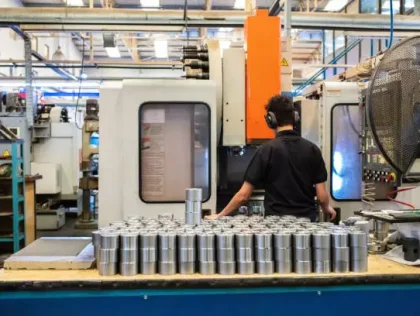
- Lights-Out Operation: Advanced programming and robust machines enable unattended, overnight production runs, maximizing throughput.
By leveraging these features, CNC mass production delivers scalable, high-precision manufacturing solutions ideal for industries demanding quality and efficiency at scale.
Key Advantages of CNC Machining for Mass Production
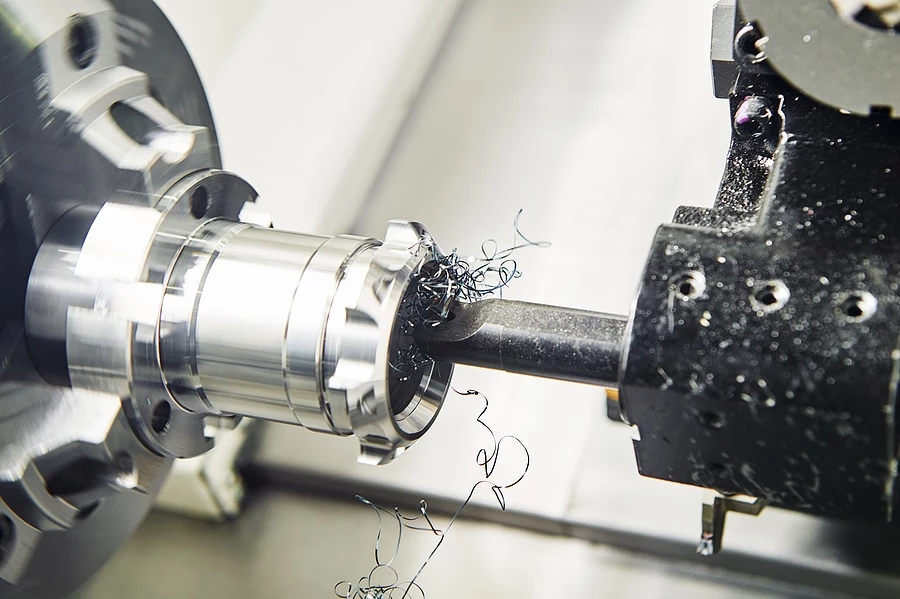
CNC mass production delivers unmatched precision and consistency across large batches, ensuring every part meets tight tolerances without compromising quality. Once the initial programming and setup are complete, labor and operational costs drop significantly, making it cost-effective for high-volume CNC machining runs.
Fast cycle times are achieved through advanced tooling and smart fixturing, speeding up production without sacrificing accuracy. Plus, CNC machines handle a wide variety of materials—metals, plastics, composites—offering flexibility that many other processes can’t match.
Scalability is a major strength here: CNC production machining can easily grow from mid-volume runs to full-scale mass production without costly retooling. This flexibility helps lower the per-part cost as volumes rise, making CNC a smart choice for cost-effective CNC scaling.
Additionally, CNC processes come with built-in quality control through programmed steps, reducing defects and enhancing repeatability. This automated consistency supports reliable output over long runs, boosting overall manufacturing efficiency. For businesses looking for precision CNC mass production with solid cost and quality advantages, CNC machining is a top contender.
Limitations and When CNC Mass Production May Not Be Ideal
While CNC mass production offers many benefits, it’s not always the best fit. Here are some limitations to consider:
- Higher upfront costs: Programming, tooling, and setup require a bigger initial investment compared to some other methods.
- Material waste: CNC is subtractive, so excess material is cut away, leading to more scrap compared to additive or molding processes.
- Slower per-part speeds: At ultra-high volumes, methods like injection molding or stamping often produce parts faster and cheaper.
- Design restrictions: Features like thin walls, deep undercuts, or complex internal geometries can be challenging or costly with CNC machining.
Comparison: CNC vs Injection Molding, Die Casting & Stamping
| Feature | CNC Machining | Injection Molding | Die Casting | Stamping |
|---|---|---|---|---|
| Volume Thresholds | Mid to high volumes (100s to 10,000s+) | Very high volumes (10,000s+) | Very high volumes (10,000s+) | Extremely high volumes (100,000s+) |
| Lead Times | Moderate (due to programming/setup) | Longer upfront tooling time | Long tooling setup | Tooling setup can be costly |
| Cost per Part | Decreases at scale, higher at low volumes | Very low at high volumes | Low at high volumes | Lowest at very high volumes |
| Tolerances | Tight tolerances (down to microns) | Moderate tolerances | Moderate tolerances | Less precise |
| Design Flexibility | High, but limited for thin walls/undercuts | Limited by mold design | Limited by mold design | Limited to sheet metal shapes |
Given these points, CNC mass production works best when precision and flexibility matter more than ultra-high volume and lowest cost per part.
For clients weighing CNC production machining options against molding or stamping, understanding these trade-offs is key to choosing the right process.
For more insights on manufacturing methods, exploring heavy CNC machining can provide a deeper understanding of capacity and application limits.
How to Optimize CNC Processes for High-Volume Efficiency

Maximizing efficiency in CNC mass production starts with smart fixture and workholding design. Quick-loading setups cut downtime, letting operators swap parts fast and keep the machines running. Paired with optimized toolpaths and high-speed machining strategies, this speeds up cycle times while maintaining precision.
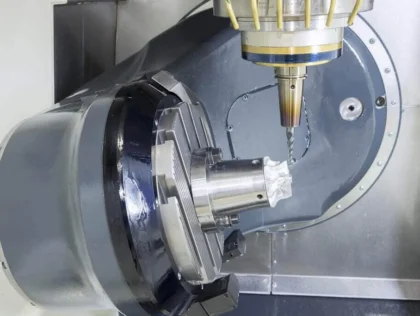
Utilizing multi-axis simultaneous operations helps reduce the number of setups and repositioning steps, saving hours over large batches. To further boost productivity, automation like robotic arms, pallet changers, and bar feeders can keep machines fed and parts moving around the clock.
Consistent material selection and reliable sourcing streamline production and reduce delays. On quality, integrating Statistical Process Control (SPC), Coordinate Measuring Machines (CMM), and other quality assurance systems ensures every part meets tight tolerances without slowing the line.
Finally, adopting lights-out CNC production — where machines run unattended overnight or on weekends — can drastically increase output without increasing labor costs. These optimizations together make CNC machining for large quantities both cost-effective and reliable.
For specialized metal components, exploring CNC machining metal parts services can provide further insights into efficient material handling and machining setups tailored for mass production.
Industries and Real-World Applications of CNC Mass Production

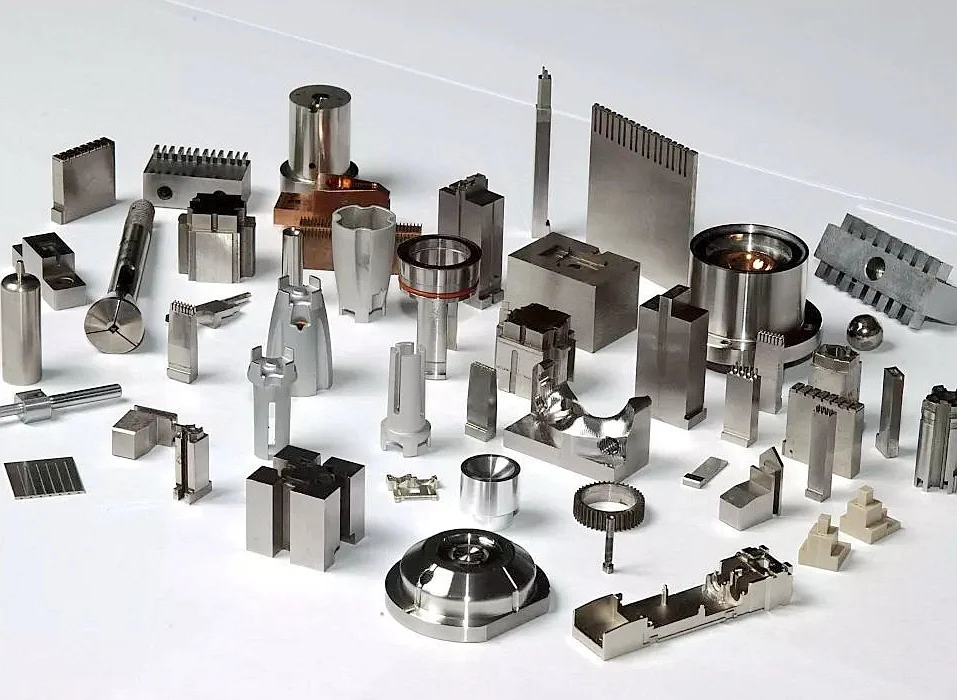
CNC mass production plays a crucial role across many industries where precision and repeatability are non-negotiable. In the automotive sector, high-volume CNC machining produces engine components, brackets, and shafts that require consistent quality and tight tolerances for safety and performance. Aerospace applications depend on CNC for structural fittings and housings that must meet stringent specifications to ensure reliability in extreme conditions.
The medical field benefits from CNC machining for mass production of implants, surgical tools, and device enclosures, where accuracy and biocompatible materials are critical. Electronics manufacturers rely on CNC for heat sinks, connectors, and other custom parts, enabling efficient thermal management and connectivity in large quantities.
Additionally, consumer goods and industrial equipment manufacturers turn to CNC machining for large quantities of components that demand tight quality control and consistency. This versatility across sectors highlights CNC production machining’s value in delivering precision, scalability, and cost-effective manufacturing at scale.
For more on precision manufacturing, check out our high-precision CNC parts services that serve these demanding industries efficiently.
Transitioning from Prototyping to CNC Mass Production

Moving from prototyping to full-scale CNC mass production requires careful planning and execution to ensure efficiency and quality. The first step is a thorough Design for Manufacturability (DFM) review—this helps identify any design tweaks needed to optimize parts for CNC production, reducing machining time and cost.
Next is prototype validation, where you test initial parts for fit, function, and finish to catch any issues early. Based on these results, fixture development and pilot runs follow—custom fixtures speed up part loading and improve repeatability during larger runs. Pilot runs simulate full production to fine-tune the process and tooling.
After ironing out all kinks, you can move to full production ramp-up, scaling smoothly to meet your volume goals while maintaining tight tolerances. Throughout this phase, ongoing support with iterative feedback and cost analysis helps optimize production, reduce waste, and drive down per-part costs.
For a seamless and cost-effective transition, partnering with experts in CNC production machining can make a big difference. MS Machining, for example, offers support from design to production with state-of-the-art CNC milling machines and precision processes tailored for high-volume runs. Check out our CNC machining solutions to learn how we assist businesses scaling from prototype to mass production.
Why Partner with MS Machining for Your CNC Mass Production Needs
When it comes to CNC mass production, MS Machining stands out with its state-of-the-art multi-axis CNC equipment that delivers precision and consistency for large quantities. Our experienced engineering team focuses on tight tolerances and efficient setups, ensuring your project gets the attention it deserves.
We have a proven track record in high-volume CNC machining, handling complex parts with ease while maintaining competitive lead times. Plus, our operations follow rigorous ISO-aligned quality systems, so you can trust every batch meets strict standards.
Cost-effective CNC scaling is a priority here—our dedication to optimizing production keeps your per-part costs low without compromising quality. Whether you need automated CNC production runs or specialized fixtures, we tailor solutions to fit your needs.
Ready to streamline your manufacturing process? Contact MS Machining for quotes or a consultation on how our CNC machining for large quantities can boost your efficiency and reduce costs.
Explore our advanced capabilities, including multi-axis machining, on our CNC milling machine service page to see how we can support your mass production goals.