
What is CNC Gear Machining?
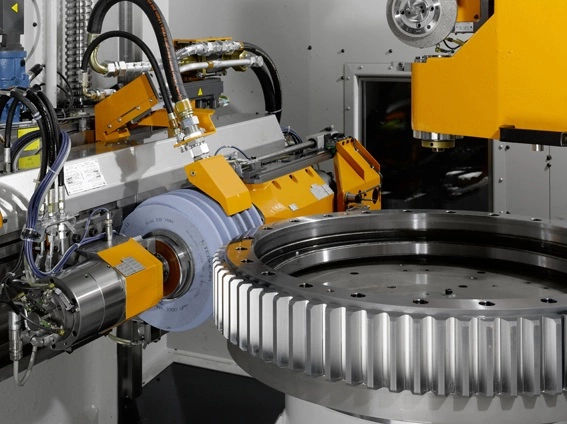
CNC gear machining is the process of producing gears using computer numerical control (CNC) machines. Unlike traditional gear cutting methods that rely heavily on manual operations and mechanical setups, CNC gear machining uses software-driven machines to carve, shape, and finish gears with unmatched precision and efficiency.
Evolution from Traditional to CNC Precision
- Traditional methods: Manual gear cutting, hobbing on mechanical machines, and hand-finishing.
- CNC era: Automated, computer-guided machining offers higher accuracy, complex gear geometries, and faster turnaround.
This shift to CNC gear manufacturing allows for much tighter tolerances and exceptional repeatability across large production runs. Complex tooth profiles and custom gear shapes are now easier to produce consistently.
Key Advantages of CNC Gear Machining
| Advantage | Description |
|---|---|
| Tight tolerances | High precision reduces errors and improves fit |
| Repeatability | Identical gears produced every run |
| Complex geometries | Capable of involute curves and custom tooth profiles |
| Reduced lead times | Faster setup and automated processes |
Compared to Conventional Gear Cutting
| Feature | CNC Gear Machining | Conventional Gear Cutting |
|---|---|---|
| Accuracy | ± microns range | Limited by manual adjustments |
| Gear types handled | Spur, helical, bevel, worm, custom | Mostly standard external gears |
| Automation | Fully automated, computer-controlled | Manual or semi-automated |
| Production volume flexibility | Great for both prototypes and mass production | Better for small runs or simple gears |
| Setup time | Quick digital setups | Longer mechanical setup |
CNC gear machining represents a leap forward, especially where precision gear grinding and custom CNC gears with complex profiles are needed. This tech is ideal for industries demanding the highest quality gears, such as automotive, aerospace, and robotics.
Common Materials for CNC Machined Gears
When it comes to CNC gear machining, choosing the right material is crucial to meet the demands of your application. Here are the most common materials used:
- Steel and alloy steels: These are go-to choices for high-strength applications. They handle heavy loads and high stress, making them ideal for automotive transmissions and industrial machinery. Steel gears often undergo heat treatment to boost durability and wear resistance.
- Stainless steel: Preferred for its corrosion resistance, stainless steel is perfect in environments exposed to moisture or chemicals. It’s common in aerospace and medical device gears where reliability and longevity matter.
- Aluminum: If weight savings are a priority, aluminum CNC gears are the answer. They’re lightweight yet sturdy enough for many robotics or light-duty applications. Plus, aluminum offers good machinability and thermal properties.
- Brass and bronze: These materials shine in low-friction and wear-resistant scenarios, like in marine gears or instruments requiring quiet operation. Brass gear machining also benefits from its excellent machinability and corrosion resistance.
Several factors influence which material you pick for custom CNC gears:
- Load and stress levels: Heavier loads demand stronger materials like alloy steels.
- Operating environment: Corrosive or wet settings need stainless steel or bronze.
- Cost considerations: Aluminum and brass often cost more but can reduce total system weight or enhance performance.
- Machinability: Some materials are easier to machine to tight tolerances, impacting lead times and precision.
Selecting the optimal material ensures the finished CNC machined gears meet both performance and budget requirements. For detailed insights on precision manufacturing of complex components, exploring high-precision CNC machining can offer further guidance.
Primary CNC Gear Machining Processes
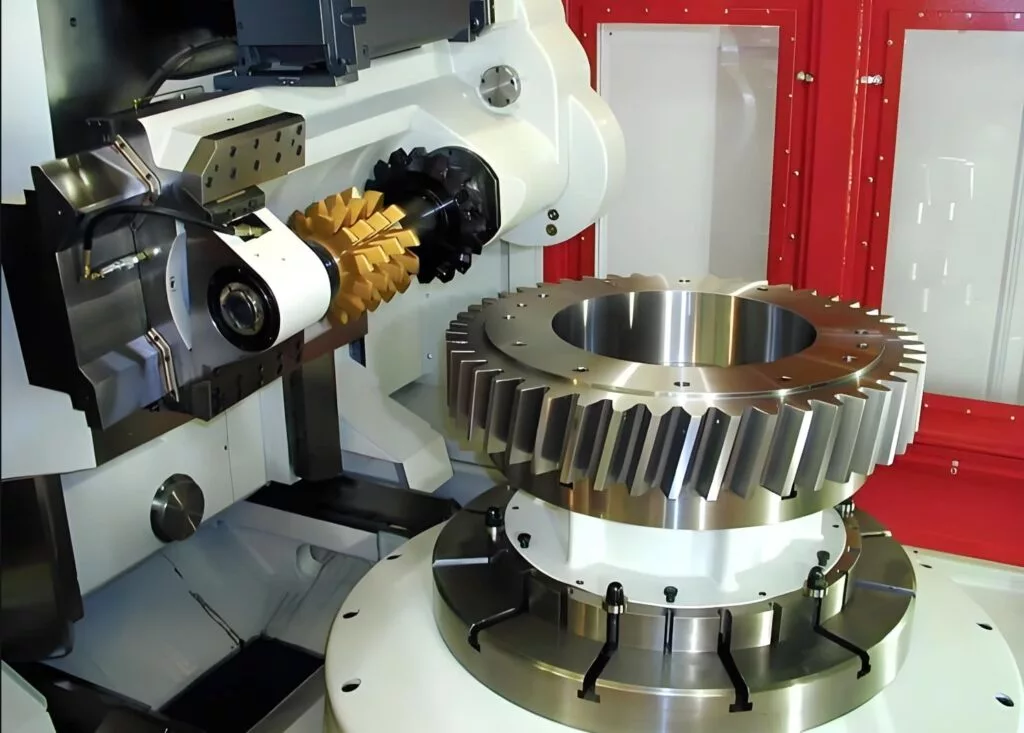
CNC gear machining relies on a variety of specialized processes, each suited for different gear types and production needs.
- Gear hobbing is a top choice for high-volume external gears. It’s fast, efficient, and produces consistent quality, making it popular in automotive and industrial settings.
- Gear milling stands out for its versatility, especially when working with custom or complex gear profiles that standard hobbing can’t handle. It allows for detailed gear tooth profiling and custom shapes.
- Gear shaping excels at cutting internal gears and gear clusters where access is limited. This process offers precise results for complex assemblies like planetary systems.
- Gear grinding focuses on precision finishing. It’s often the final step to achieve superior surface quality, smooth operation, and high-precision gear tolerances, critical for aerospace and high-performance applications.
Beyond these, additional methods such as broaching, skiving, and EDM (Electrical Discharge Machining) serve specialized roles. For example, EDM is great for extremely hard materials or intricate gear tooth designs that other methods struggle with.
Choosing the Right Process
When selecting a CNC gear cutting method, consider:
- Production volume: High volumes favor gear hobbing or milling, while low-volume, high-precision needs might call for shaping or grinding.
- Gear geometry: Complex or internal gears often require specialized shaping or skiving.
- Tolerance and surface finish: Precision gear grinding and finishing techniques are best for tight tolerances and smooth finishes.
For steel CNC gears or stainless steel gear machining, starting with hobbing or milling followed by precision grinding is common to meet performance standards. Customized processes are frequently tailored to client needs, ensuring quality and repeatability.
If you’re exploring manufacturing hardened steel parts or need recommendations for custom CNC gears, check out resources on manufacturing hardened steel machining parts for insight on process optimization.
Types of Gears Produced via CNC Machining
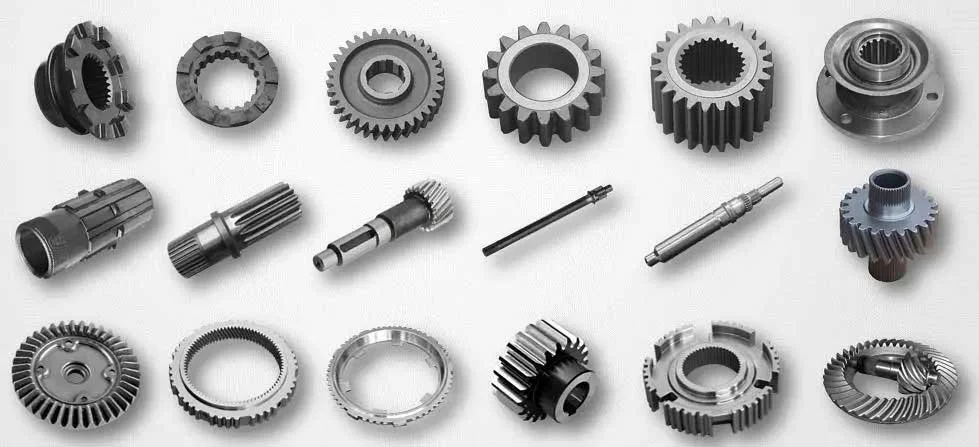
CNC gear machining allows the production of various gear types, each designed to meet specific mechanical needs.
- Spur Gears: These are the simplest and most common gears, featuring straight teeth parallel to the axis. They’re easy to manufacture using CNC gear hobbing and ideal for low to moderate speeds. Spur gears are widely used in applications like conveyors and simple gearboxes due to their straightforward design and cost-effectiveness.
- Helical Gears: With angled teeth, helical gears deliver smoother and quieter operation than spur gears. Thanks to their design, they handle higher loads and are perfect for automotive transmission gears and heavy machinery that require durability and noise reduction. CNC helical gear machining ensures tight tolerances for optimal performance.
- Bevel Gears: Designed for power transmission between intersecting shafts, bevel gears have conical shapes and angled teeth. They find use in differential drives and aerospace components where precise angular power transfer is critical. CNC bevel gear production guarantees accuracy and superior tooth profiling.
- Worm Gears: These feature a screw-like worm meshing with a worm wheel, offering high reduction ratios and self-locking properties, which makes them suitable for lifting mechanisms and conveyors. CNC worm gear cutting is essential for maintaining the fine tolerances needed for efficient operation.
- Other Variants: CNC machining also excels in producing internal gears, rack and pinion systems, and complex planetary gears. These specialized gears are often found in robotics, industrial machinery, and automotive systems, where customized CNC machined gears deliver precise motion control and reliability.
Each gear type benefits from CNC gear finishing techniques that enhance accuracy and durability, tailored to fit the needs of industries demanding precision and performance.
Industry Applications of CNC Machined Gears
CNC machined gears play a crucial role in various industries across the United States thanks to their precision and durability.
- Automotive: Used extensively in transmissions, differentials, and steering systems where tight tolerances and reliability are essential. Steel CNC gears are common here for strength, while some lightweight parts use aluminum CNC gears.
- Aerospace: From engine components and landing gear to actuation systems, aerospace demands high-precision gear tolerances and materials like specialty alloys. Custom CNC gears help meet the stringent standards in this field. For more on aerospace-grade components, see our aerospace machining components services.
- Robotics and Automation: Precise motion control in robotics relies heavily on high-quality spur gear manufacturing and helical gear machining, ensuring smooth and accurate operation.
- Industrial Machinery: Conveyors, pumps, and heavy equipment use various gear types like bevel gears and worm gears produced through CNC gear milling and precision gear grinding for long-lasting performance.
- Medical Devices and Renewable Energy: Specialized low-noise and high-reliability gears are essential here. Stainless steel gear machining and advanced finishing techniques ensure durability and performance in critical applications. Checkout our stainless steel polishing services for gears requiring outstanding surface quality.
These industries benefit from CNC gear machining’s ability to produce consistent, high-quality gears tailored for specific operational demands, helping businesses stay competitive and efficient.
Benefits and Considerations in CNC Gear Machining
CNC gear machining brings clear advantages in precision, durability, and performance. The computer-controlled process achieves tight tolerances and consistent gear tooth profiling, essential for high-precision gear operation. This accuracy improves gear lifespan and reduces vibration and noise in applications like automotive transmissions and aerospace components.
Key Benefits:
- Precision: Achieves repeatable high-accuracy cuts for complex gear geometries.
- Durability: Consistent machining helps meet material and design specs for longer-lasting gears.
- Performance: Smooth gear profiles reduce wear and improve mechanical efficiency.
Quality Control and Finishing
Proper quality control is critical throughout CNC gear manufacturing. Post-machining processes such as heat treatment strengthen the gear material, enhancing resistance to load and fatigue. Also, precision gear grinding or other finishing techniques improve surface finish and ensure gears meet strict tolerance requirements.
Cost Factors: Prototyping vs. Production
| Aspect | Prototyping | Production Runs |
|---|---|---|
| Volume | Low (single or small batch) | High |
| Cost per Gear | Higher due to setup costs | Lower with economies of scale |
| Lead Time | Shorter design iteration | Optimized for mass output |
| Flexibility | High (custom changes easy) | Less flexible once set |
Choosing between prototyping and production runs depends on your project’s scale and customization needs.
Choosing a Reliable Partner
Selecting a reliable CNC gear manufacturer is vital for meeting exact specifications and delivery demands. Look for partners experienced in custom CNC gears who offer thorough process guidance—from steel CNC gears to aluminum or brass options—while maintaining consistent quality.
For reference, understanding the range of materials and machining capabilities can help when evaluating suppliers, such as learning about various materials a CNC machine can cut.
With these factors in mind, CNC gear machining delivers high-quality gears tailored to stringent industry demands across automotive, aerospace, and industrial sectors.