
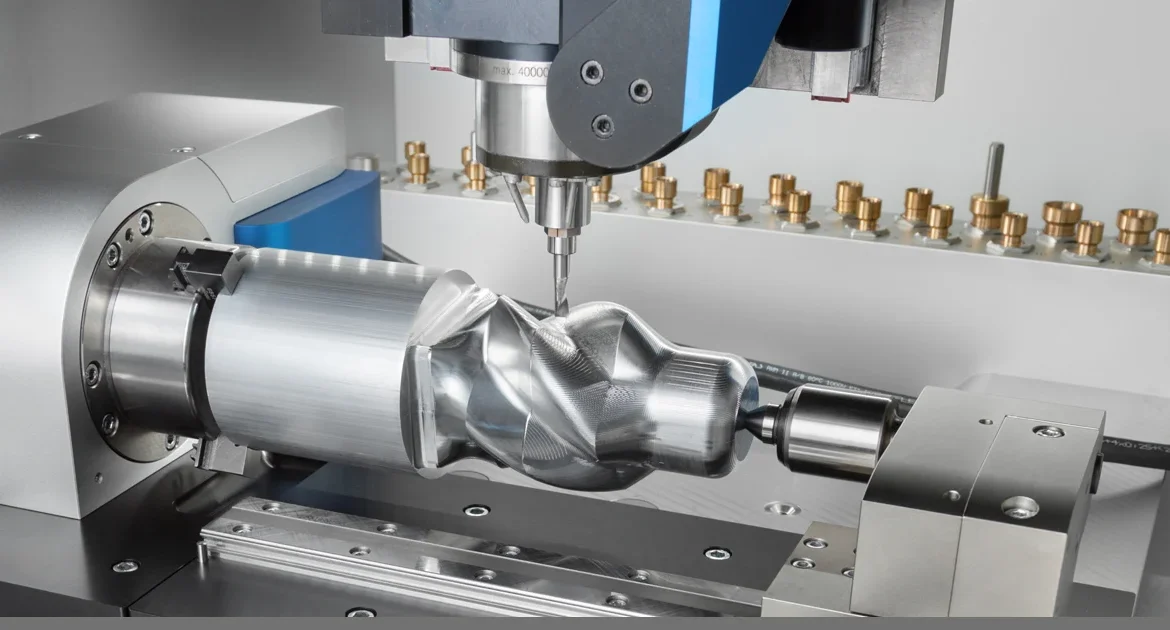
Basics of CNC Axes
When diving into axis CNC machining, understanding the different axes is key. Most CNC machines move the tool or workpiece along multiple axes, which define how parts are cut and shaped.
There are two main types of axes:
- Linear axes (X, Y, Z): These move the tool or workpiece in straight lines—left to right (X), front to back (Y), and up and down (Z). This is the foundation for most CNC machining.
- Rotary axes (A, B, C): These allow rotation around one of the linear axes. For example, the A-axis rotates around the X-axis, B around Y, and C around Z. Rotary axes add complexity and flexibility, letting machines handle angled or contoured surfaces.
Together, these axes control the tool and workpiece movement, enabling precise cuts from simple drilling to complex 3D shaping. Different CNC machines come with varying axis configurations—3-axis, 4-axis, 5-axis, and even more—each one expanding machining capabilities.
Common setups like the 3-axis CNC machine move tools along X, Y, and Z but can’t tilt or rotate the part during machining. Adding rotary axes (like on a 4-axis CNC machine) lets the tool approach parts from different angles without repositioning. The most advanced, like 5-axis CNC machining, provides simultaneous movement in all directions, opening doors to intricate parts with fewer setups.
In :
- Linear axes define basic directional movement.
- Rotary axes enable rotation, increasing part accessibility.
- More axes mean greater machining flexibility, reduced setups, and more complex part machining.
Choosing the right CNC axis configuration depends on the part’s complexity and production needs—knowing how these axes work helps you pick the perfect setup for your project.
3-Axis CNC Machining
3-axis CNC machining moves the tool or workpiece along three linear axes: X, Y, and Z. This setup controls movement side-to-side, front-to-back, and up-and-down, allowing precise cutting on flat or simple surfaces. It’s the most common and cost-effective CNC axis configuration, making it ideal for straightforward jobs.
Advantages of 3-axis CNC machining include:
- Easy programming and operation
- Lower machine and maintenance costs
- Fast part setup for basic shapes
- Excellent for drilling, pocketing, and milling simple flat profiles
However, there are some limitations:
- Multiple setups are needed to machine all sides of a complex part
- Difficulty handling angled or curved features in one run
- Limited ability to work on complex geometries without repositioning
Because of these factors, 3-axis machining is best suited for parts with flat surfaces or basic shapes that don’t require intricate detail on multiple sides. It’s a reliable choice for many manufacturing needs, especially when balancing cost and speed.
For precision CNC machining services that utilize 3-axis and advanced multi-axis configurations, MS Machining offers expert solutions tailored to your project needs.
4-Axis CNC Machining
4-axis CNC machining builds on the basics of 3-axis by adding a rotary axis—usually called the A-axis—that rotates the workpiece around the X-axis. This extra axis lets you access more sides of a part without flipping it manually, cutting down on setups and improving accuracy.
There are two main ways 4-axis machines operate: indexed and continuous. Indexed 4-axis moves the rotary axis in fixed steps to machine specific angles, while continuous 4-axis allows smooth, ongoing rotation during cutting, which is great for helical or complex curved features.
Compared to 3-axis CNC machining, the 4-axis setup offers major benefits:
- Fewer setups: It can handle multiple faces or cylindrical features in a single sequence.
- Better access: Perfect for parts with round profiles or features wrapped around a cylinder.
However, 4-axis machining still has limits. It’s not ideal for extremely complex geometries requiring simultaneous multi-axis movement, which a 5-axis machine would handle better.
This CNC axis configuration suits parts like cams, helical gears, and multi-sided components where full 5-axis simultaneity isn’t necessary. If your project involves these shapes, a 4-axis CNC machine is a solid, cost-effective choice. For more on advanced machining capabilities, check out our metal CNC machining services.
5-Axis CNC Machining
5-axis CNC machining offers full simultaneous movement by combining three linear axes (X, Y, Z) with two rotary axes (usually A and B). This allows the cutting tool to approach the workpiece from virtually any angle, enabling much greater flexibility than 3- or 4-axis machines.
There are two main types of 5-axis operation:
- 3+2 (indexed): The rotary axes position the part for machining, but remain fixed during cutting.
- True simultaneous 5-axis: All five axes move together continuously for complex tool paths.
Advantages of 5-Axis CNC Machining
- Single-setup machining reduces the need for multiple clamping and repositioning, saving time and improving accuracy.
- Superior surface finish and tighter tolerances are possible due to optimized tool angles and smoother tool paths.
- Capable of machining complex contours and undercuts that are impossible or very difficult on lower-axis machines.
Limitations
- Programming 5-axis jobs is more complicated and requires advanced CAD/CAM software and skilled operators.
- Machines and maintenance costs are generally higher than simpler configurations.
Best Applications
5-axis CNC machining excels in producing intricate parts such as aerospace components (like turbine blades), impellers, and molds with deep undercuts or complex geometries. It’s ideal for industries where precision and part complexity justify the investment.
For those working with complex materials or needing precise aerospace CNC parts, leveraging 5-axis CNC machining can offer significant advantages in production and quality.
For more on materials commonly used, check out our guide on stainless steel grades for casting, which are often machined using multi-axis CNC equipment.
Key Comparisons: 3-Axis vs. 4-Axis vs. 5-Axis CNC Machining

When choosing between 3-axis, 4-axis, and 5-axis CNC machining, it’s important to consider the complexity of the part, setup time, precision, cost, and production speed. Here’s a quick side-by-side look to help you decide which axis CNC machining configuration fits your project best:
| Feature | 3-Axis CNC Machining | 4-Axis CNC Machining | 5-Axis CNC Machining |
|---|---|---|---|
| Complexity Handled | Basic shapes, flat profiles | Cylindrical parts, indexed rotations | Complex contours, undercuts, angled features |
| Setup Time | More setups required | Fewer setups, better access | Usually single setup |
| Precision | Good for simple parts | Improved on rotary surfaces | Highest accuracy and surface finish |
| Cost | Lowest machine and operation cost | Moderate cost add for rotary axis | Highest machine and programming cost |
| Production Speed | Fast for simple jobs | Moderate speed gains | Fastest for complex parts |
When to Choose Each CNC Axis Configuration
- 3-Axis CNC Machining: Best for simple parts like flat profiles or basic drilling where cost and quick setup matter.
- 4-Axis CNC Machining: Ideal if you need fewer setups and better access for cylindrical or multi-sided parts but don’t require full contouring complexity.
- 5-Axis CNC Machining: Perfect for highly complex aerospace components, molds with undercuts, or parts needing superior surface finish—worth the higher investment for precision and efficiency.
Real-World Efficiency Gains
Using multi-axis milling with 4 or 5 axes reduces manual setups, cutting down total machining time and potential errors. For example, switching from 3-axis to 5-axis can:
- Slash setup time by over 50%
- Improve precision on complex features
- Allow complete machining in a single run, boosting throughput
To learn more about how advanced CNC milling improves speed and precision, check out our detailed look at rapid CNC machining speed and applications.
Choosing the right axis configuration depends heavily on your part’s geometry, tolerance requirements, and budget. Understanding the distinct capabilities of each axis CNC machining setup helps make that decision clear and ensures you get the best value for your project.
Advantages of Multi-Axis Machining
Multi-axis CNC machining offers several clear benefits, especially when dealing with complex parts. One of the biggest advantages is reduced setups, meaning fewer times you need to reposition the workpiece. This cutbacks on error accumulation, which boosts overall precision. With fewer setups, the risk of misalignment or dimensional inaccuracies drops significantly.
Another key benefit is improved accuracy and surface quality. Multi-axis machines, like 4-axis and 5-axis CNC machines, allow for more precise tool paths and smoother cuts, resulting in cleaner finishes and tighter tolerances. This leads to less post-processing and higher-quality final parts.
Using multi-axis machining also means shorter lead times and lower overall costs for complex parts. Since many operations can be performed in a single setup, production speeds up, reducing labor and machine time. This efficiency often translates into cost savings, especially for aerospace, automotive, and medical components where precision and complexity are paramount.
Lastly, these machines provide enhanced design freedom for engineers. The ability to move tools and parts on multiple axes lets manufacturers deliver intricate geometries and undercuts that wouldn’t be possible with 3-axis CNC machines. This flexibility in design opens up new possibilities for innovation without compromising manufacturability.
For companies looking to optimize their production process, embracing multi-axis machining is a key step toward better precision and cost-effectiveness.
Explore how precision CNC machining can elevate your manufacturing by visiting our CNC engineering precision metal plastic parts solutions.
Common Applications Across Industries

Multi-axis CNC machining plays a vital role in various industries due to its precision and flexibility. In aerospace, 5-axis CNC machining is essential for producing turbine blades and complex structural components that require tight tolerances and excellent surface finishes. The automotive sector relies on multi-axis milling for engine parts, prototypes, and intricate molds that demand both strength and precision.
In the medical industry, CNC axis configurations help create implants and surgical instruments with exacting detail and biocompatible finishes. For mold and die manufacturing, 4-axis and 5-axis CNC machines carve out intricate cavities and cores with precision that traditional machining can’t match. Meanwhile, general manufacturing benefits from CNC axis machines for custom prototypes and production runs, streamlining processes while reducing lead times.
Choosing the right CNC axis setup ensures your parts meet quality standards while optimizing production efficiency. For complex part machining needs, our experience in precision CNC machining can deliver consistent results tailored to your industry’s requirements. Explore our custom CNC machining services to see how we handle diverse projects with multi-axis milling expertise.
Choosing the Right Axis Configuration for Your Project
Picking the right axis CNC machining setup is key to balancing cost, quality, and lead time. Here’s what to keep in mind:
- Part Complexity: Simple shapes often do fine with 3-axis CNC machining, but parts with curved surfaces, undercuts, or multiple faces usually benefit from 4-axis or 5-axis machines.
- Material: Harder materials may require more precise, multi-axis milling to avoid tool wear and ensure smooth finishes.
- Tolerances: Tight dimensional or surface finish requirements often push projects toward 5-axis CNC machining for better accuracy and fewer setups.
- Budget: Multi-axis machines and programming increase initial costs, so weigh whether the complexity justifies the expense.
- Volume: For high-volume production, investing in more advanced axis configurations can save time and reduce per-part cost over runs.
Cost considerations extend beyond the machine itself. Programming time, toolpath optimization, and operational training impact overall expenses. Partnering with a seasoned provider like MS Machining can help you choose the most efficient axis configuration, ensuring your project meets specs on time without unnecessary costs. Our experience with multi-axis milling means we can guide you through the trade-offs and deliver precision CNC machining tailored to your needs.
For more insights on CNC machining fundamentals and equipment, check out how CNC machining works.
Why Choose MS Machining for Multi-Axis Projects
At MS Machining, we specialize in precision 3-axis, 4-axis, and 5-axis CNC machining services designed to tackle your most complex projects. Our team combines deep expertise with cutting-edge technology to deliver exceptional results on time and within budget.
What Sets MS Machining Apart?
| Feature | Benefit |
|---|---|
| Advanced CNC axis configurations | Handle complex geometries with ease—from simple 3-axis jobs to full simultaneous 5-axis machining |
| State-of-the-art equipment | High-precision milling and rotary axis CNC machines ensure top quality and tight tolerances |
| Quality assurance | Rigorous inspection processes guarantee your parts meet exact specifications every time |
| Experience with complex parts | Proven track record in aerospace, automotive, medical, and mold industries |
| On-time delivery & competitive pricing | Efficient processes keep your projects on schedule and within your budget |
We’ve supported clients across the U.S. with everything from simple prototypes to intricate aerospace components requiring advanced tool path optimization. For example, our expertise extends into 4-axis CNC machining for rotary features, which you can explore in more detail on our 4-axis CNC mill capabilities.
By choosing MS Machining, you gain a partner committed to precision, reliability, and cost-effective multi-axis milling solutions tailored to your project needs.
Ready to improve your manufacturing process? Discover why we’re the trusted choice for multi-axis CNC machining projects.