
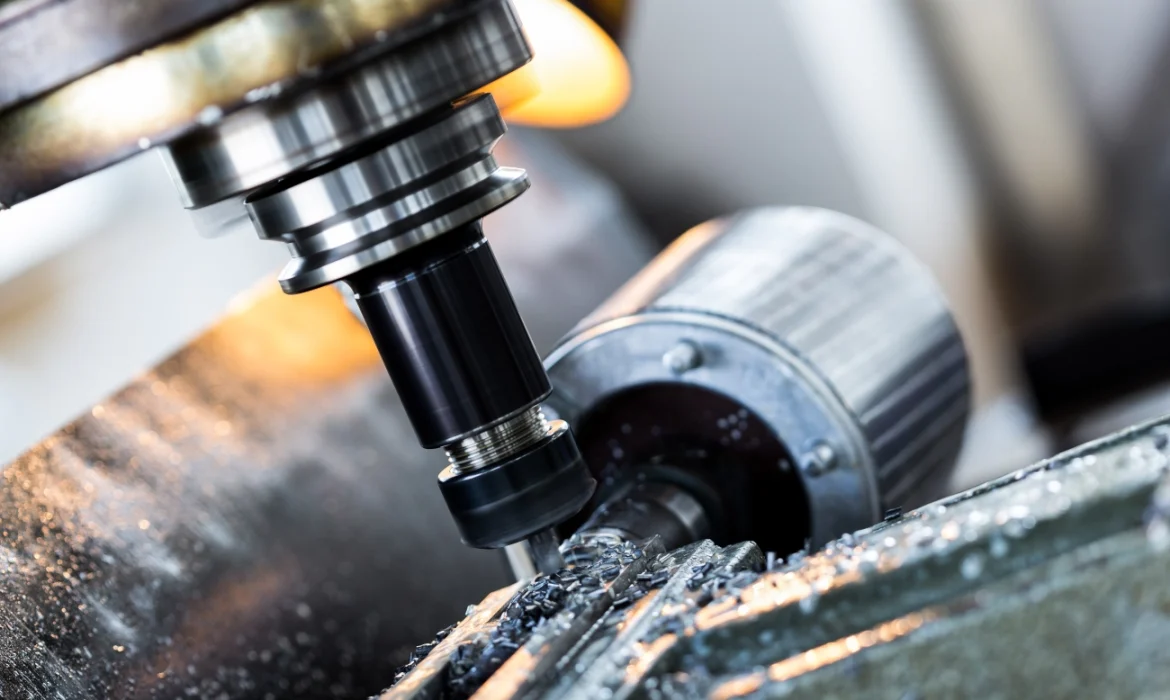
Key Advantages of Aluminum for CNC Machined Parts
Aluminum is the go-to material for many custom aluminum CNC parts in the U.S. because it delivers a rare combination of strength, low weight, machinability, and cost efficiency. For CNC machined aluminum components, it often gives you the best “performance per dollar” of any metal.
Excellent Strength-to-Weight Ratio
Aluminum alloys offer high tensile strength at a fraction of the weight of steel, making them ideal for aerospace aluminum parts, lightweight CNC aluminum structures, and mobile or handheld devices.
Typical strength-to-weight comparison for common CNC aluminum alloys:
| Alloy | Temper | Density (g/cm³) | Tensile Strength (MPa) | Strength-to-Weight (MPa / g·cm⁻³, approx.) | Typical Use Case |
|---|---|---|---|---|---|
| 6061 | T6 | 2.70 | 290–320 | ~110–120 | General CNC aluminum parts, frames, housings |
| 7075 | T6 | 2.81 | 510–570 | ~180–200 | 7075 aluminum CNC aerospace brackets, high-load parts |
| 5083 | H116 | 2.66 | 275–350 | ~105–130 | Marine, structural, corrosion-critical parts |
With this balance, you can reduce mass without sacrificing structural integrity, improve efficiency (fuel, battery, motion), and lower shipping and handling costs.
Superior Machinability and Chip Control
Aluminum is one of the most machinable industrial metals. For precision aluminum machining, that translates directly into:
- Higher cutting speeds and feeds → shorter cycle times and lower cost.
- Cleaner chip formation → better chip evacuation, less tool clogging, and more stable processes.
- Longer tool life → reduced tool changes and more consistent tolerances.
Alloys like aluminum 6061 machining run especially smoothly on high-speed mills and turning centers, making them ideal for both CNC aluminum prototyping and production.
Natural Corrosion Resistance & Anodizing Compatibility
Aluminum forms a thin, stable oxide layer that gives natural corrosion resistance in many environments. When you need more protection or aesthetics, anodized aluminum parts offer:
- Type II anodizing (decorative/industrial) for dyed colors and improved wear resistance.
- Type III hardcoat anodizing for abrasive or high-wear applications.
This combination makes aluminum a strong candidate for outdoor products, marine hardware, EV battery enclosures, and consumer electronics housings that must stay attractive and durable.
Thermal and Electrical Conductivity
Aluminum conducts heat and electricity efficiently, which is critical in modern electronic and EV designs.
- High thermal conductivity → ideal for aluminum heat sink machining, LED housings, power electronics, and motor controllers.
- Good electrical conductivity → suitable for RF housings, grounding components, and certain bus bars and connectors.
You can integrate structural and thermal functions in one CNC aluminum part, reducing component count and simplifying assembly.
Full Recyclability and Sustainability
Aluminum is 100% recyclable without losing its mechanical properties. Recycled aluminum requires a fraction of the energy needed for primary production, which matters more and more in the U.S. market.
Choosing aluminum for custom aluminum parts supports:
- Lower lifecycle carbon footprint.
- Easier reclamation of scrap from CNC aluminum machining service operations.
- Sustainability targets in automotive, aerospace, and consumer brands.
For many projects, aluminum gives you the ideal mix of performance, manufacturability, and environmental responsibility—exactly what you want from modern CNC machined aluminum components.
Most Common Aluminum Alloys for CNC Machining Parts (2026)
When we talk custom aluminum CNC parts in the U.S., 90% of the work comes down to choosing the right alloy. Here’s how I look at it in 2026.
6061-T6 – The Workhorse for CNC Machined Aluminum Components
If you’re not sure what to pick, start with 6061-T6 aluminum machining.
- Why we use it so much: Great strength-to-weight, easy to machine, weldable, affordable.
- Typical uses: Brackets, frames, enclosures, jigs, fixtures, consumer products.
- Best for: General-purpose CNC aluminum parts where you want good performance without paying aerospace pricing.
7075-T6 – Aerospace-Grade 7075 Aluminum CNC
7075-T6 is the go-to when you need high strength and stiffness.
- Why pick it: Much stronger than 6061, very popular in aerospace and performance parts.
- Typical uses: Drone hubs, structural aerospace aluminum parts, motorsport components, firearm components.
- Trade-off: Higher cost, a bit tougher to machine, not as weldable. Ideal when weight and strength matter more than price.
Other Key Aluminum Alloys We Machine a Lot
We run a wide range of precision aluminum machining jobs, including:
- 6082 – Similar to 6061 but with slightly better strength; common in EU specs and often used as an equivalent where 6061 isn’t specified.
- 5083 – Excellent corrosion resistance, great for marine and harsh environments.
- 2026 – High-strength alloy with very good fatigue resistance; often used in aircraft structures.
- 5052 – Very formable, solid corrosion resistance; good for bent or formed CNC machined aluminum components and panels.
- MIC-6 – Cast aluminum tooling plate; super stable, great for precision bases, plates, and fixtures where flatness matters.
If you need complex, tight-tolerance parts from these alloys using 3-axis or 5-axis aluminum machining, our team can support you end to end. For multi-op work that blends milling and turning, our CNC turning and milling services are often the most cost-effective way to go.
Quick Aluminum Alloy Selection Guide
| Alloy | Relative Strength | Machinability | Corrosion Resistance | Typical Applications | Cost Level* |
|---|---|---|---|---|---|
| 6061-T6 | Medium | Excellent | Good | General custom aluminum parts, housings | $ |
| 7075-T6 | Very High | Good | Fair | Aerospace, performance, structural parts | $$$ |
| 6082 | Medium–High | Good | Good | Structural frames, machine parts | $$ |
| 5083 | Medium | Fair | Excellent | Marine, outdoor, high-corrosion environments | $$ |
| 2026 | High | Fair–Good | Fair | Aerospace skins, fittings, high-fatigue parts | $$$ |
| 5052 | Low–Medium | Good | Very Good | Panels, bent parts, covers, electronics | $ |
| MIC-6 | Medium (cast) | Excellent | Good | Precision plates, tooling, fixtures | $$ |
*Cost level is relative and depends on market conditions, thickness, and volume.
If you share your part file and basic requirements (strength, weight, environment, finish), I can quickly point you to the right alloy and machining route—whether that’s CNC aluminum prototyping or higher volume production. For more on how we handle complex profiles and tight tolerances, check out our CNC milling services for complex components: advanced CNC milling capabilities.
Design Guidelines for Aluminum CNC Machining Parts (DFM)
Smart design is the fastest way to get stronger aluminum CNC parts at a lower price. Here’s how I recommend you design custom aluminum CNC parts for clean machining, stable tolerances, and lower unit cost.
Minimum Wall Thickness for CNC Aluminum Parts
Aluminum machines well, but thin walls will chatter, warp, or go out of tolerance if you push them too far.
General starting points for CNC machined aluminum components:
- Non-structural walls:
- Milled: ≥ 0.04–0.06 in (1.0–1.5 mm)
- Turned: ≥ 0.03–0.05 in (0.8–1.2 mm)
- Structural walls / 7075 or 2026 parts:
- Prefer ≥ 0.08 in (2.0 mm) for better stability
- Tall walls (height > 6x thickness):
- Add ribs or step the wall to avoid vibration and bending
If you need ultra-thin walls on 6061 or 7075 aluminum CNC parts, call it out clearly and expect higher machining time and cost.
Ribs, Bosses, and Undercuts: Keep It Stiff and Machinable
Use ribs and bosses to add strength without making the part heavy or expensive.
Ribs:
- Thickness: 40–60% of the adjacent wall thickness
- Height: ideally ≤ 3x rib thickness to avoid chatter
- Add fillets at the base: ≥ 0.03–0.06 in (0.8–1.5 mm) for smoother machining and better load transfer
Bosses:
- Diameter: ≥ 2x hole diameter for tapped holes
- Height: ≤ 3x boss diameter to keep them rigid
- Add fillets where the boss meets the floor: ≥ 0.03 in (0.8 mm)
Undercuts:
- Avoid unnecessary undercuts; they require special tools or extra setups
- If you must have them:
- Keep them shallow and accessible from one direction
- Standardize groove widths to common cutter sizes
- Consider redesigning with a step, slot, or two-part assembly instead
Corner Radii: Avoid Sharp Inside Corners
Sharp inside corners are slow to machine and stress concentrators. Aluminum loves smooth transitions.
- For pockets and internal corners:
- Use inside radii ≥ tool radius, ideally 0.04–0.08 in (1–2 mm)
- Match radii to standard end mill sizes (e.g., 1/8″, 1/4″, 3/8″)
- For deep pockets:
- Use larger corner radii to allow stiffer, longer tools
- Consider relief pockets if a mating part needs a truly sharp edge
- Outside corners can be left sharp, but small edge breaks (0.01–0.02 in / 0.25–0.5 mm) are better for handling and anodizing.
Thread Design and Practical Tolerances in Aluminum
Good thread design is a big deal for reliable aluminum CNC machining parts.
Threads:
- Use standard UNC/UNF thread sizes whenever possible
- Minimum thread engagement:
- Steel fastener in aluminum: 1.5× diameter (e.g., 0.25 in screw → 0.38 in thread depth)
- For high-load or frequent assembly:
- Use helicoils or key inserts in 6061/7075 aluminum
- Avoid very small taps (< #2-56 / M2) unless absolutely required
Tapped holes and access:
- Add chamfers (0.01–0.02 in) at hole openings
- Keep enough clearance for tooling around the hole
- Through-holes are generally cheaper than blind holes
Tolerances (practical for aluminum CNC machining):
- Non-critical features: ±0.005–0.010 in (±0.13–0.25 mm)
- Precision features (fits, bearing bores): ±0.001–0.002 in (±0.025–0.05 mm)
- Very tight tolerances below this are possible on key features but will raise cost and cycle time
How to Reduce Cost Without Killing Performance
You can keep your CNC aluminum parts high-performing and still cut cost if you design with the machining process in mind.
Simple changes that save real money:
- Standardize features:
- Reuse the same hole diameters and depths
- Use common radii and standard thread sizes
- Design for fewer setups:
- Avoid features that require flipping the part many times
- Combine features so they can be made in one or two orientations
- Relax tolerances where possible:
- Only keep tight tolerances on truly critical surfaces
- Loosen cosmetic or non-mating features to ±0.005–0.010 in
- Use machinist-friendly geometry:
- Avoid super-deep pockets, tall thin walls, or micro features if they’re not function-critical
- Break sharp edges instead of adding complex chamfers everywhere
- Plan finishing early:
- If you’ll anodize, allow for coating thickness in your fits
- Keep cosmetic surfaces accessible for bead blasting or polishing
When we review prints, we’ll flag cost drivers and suggest easier machining approaches. Our 5-axis aluminum machining capabilities also help reduce setups and keep tight features aligned; you can see how we run complex multi-sided parts on our 5-axis CNC milling equipment.
Achievable Tolerances and Surface Finishes for Aluminum CNC Machining Parts
When you’re buying custom aluminum CNC parts in the U.S., tolerances and surface finish usually decide whether a part drops right into your assembly or becomes a headache. I treat both as critical from the start of the quoting process.
Standard vs. Tight Tolerances on Aluminum CNC Parts
For most CNC machined aluminum components, we hold practical, production-ready tolerances without driving costs through the roof:
- Standard production tolerances (cost‑effective)
- ±0.01 mm (±0.0004″) typical for critical dimensions on milled and turned features
- ±0.02 mm to ±0.05 mm for non-critical features, overall lengths, and cosmetic areas
Ideal for brackets, housings, general fixtures, and most consumer/industrial parts
- Tight tolerances for precision aluminum machining
With optimized fixturing, climate-controlled inspection, and stable processes, we can hold: - ±0.005 mm (±0.0002″) on key bores, shafts, and datums in controlled runs
- Matched fits (H7/g6 style) on bearing seats and sliding fits
- GD&T features like flatness, perpendicularity, and true position checked via CMM
Real-world examples we routinely run:
- 5-axis aluminum machining of optical housings with ±0.005 mm on bore diameters
- Custom aluminum parts for automation systems with ±0.01 mm on locating faces and dowel holes
If you need very tight tolerances, I always recommend we review your drawings first so we can balance tolerance vs. cost and call out tight limits only where they truly matter. For more complex features we often pair this with our dedicated 4-axis CNC machining services to keep parts accurate and repeatable.
As-Machined Surface Roughness (Ra)
Aluminum machines cleanly, which helps a lot with finish. Typical as‑machined Ra values we deliver on CNC aluminum parts are:
- Ra 1.6–3.2 μm (63–125 μin) – standard milling and turning, good for most structural and functional components
- Ra 0.8–1.6 μm (32–63 μin) – fine passes, sharp tools, and optimized feeds/speeds for improved cosmetics and sealing surfaces
- Ra ≤0.4 μm (16 μin) – achievable on select critical surfaces with extra finishing operations (fine boring, honing, or polishing)
For many CNC aluminum prototyping and production jobs, the standard as‑machined finish is more than enough, especially when surfaces will be hidden or later coated.
Post-Processing Options for Anodized Aluminum Parts
Once the part is machined to spec, the surface treatment does two things: protects the part and dial in the look. Here’s what we commonly deliver for CNC machined aluminum components:
Anodizing (Type II & Type III)
Type II anodizing (decorative / protective)
- Good corrosion resistance and nice cosmetic finish
- Clear, black, and custom colors available
- Great for consumer products, housings, and general-purpose anodized aluminum parts
Type III hardcoat anodizing
- Much thicker, harder, and more wear-resistant layer
- Ideal for aerospace aluminum parts, automation components, high-wear slides, and firearm-related hardware
- Typically darker shades (gray/black), can slightly change dimensions, so we plan tolerances around the coating thickness
We factor in build-up and penetration when we machine aluminum 6061, 7075, and other alloys for hardcoat applications, so your final dimensions land where you expect.
Chromate Conversion Coating
- Commonly known as Alodine
- Excellent for electrical grounding and conductivity while adding light corrosion protection
- Thin, almost no dimensional impact – good for tight tolerance aluminum CNC machining parts
- Widely used in aerospace, defense, and electronics
Powder Coating
- Thick, durable, and highly cosmetic
- Adds strong impact and chemical resistance
- Best when you don’t need ultra-tight tolerances on coated surfaces
- Good match for custom aluminum parts used in enclosures, industrial equipment, and outdoor products
Bead Blasting & Polishing
Bead blasting
- Gives a uniform matte or satin look
- Great for hiding minor machining marks and prepping for anodizing or powder coating
- Very popular on lightweight CNC aluminum housings and consumer electronics shells
Polishing
- From simple brightening to near-mirror finishes
- Often used on visible high-end components or decorative elements
- Usually paired with clear anodizing to keep the polished look while adding protection
If you need help choosing the right tolerance stack and finish for your CNC aluminum parts, I typically start by asking:
- Where is the part used?
- Which features are truly critical?
- Is function, lifetime, or appearance your top priority?
Once we know that, we can dial in the machining tolerances, Ra targets, and coating stack so you get reliable performance without paying for unnecessary overkill.
CNC Processes Used for Aluminum CNC Machining Parts at MS Machining
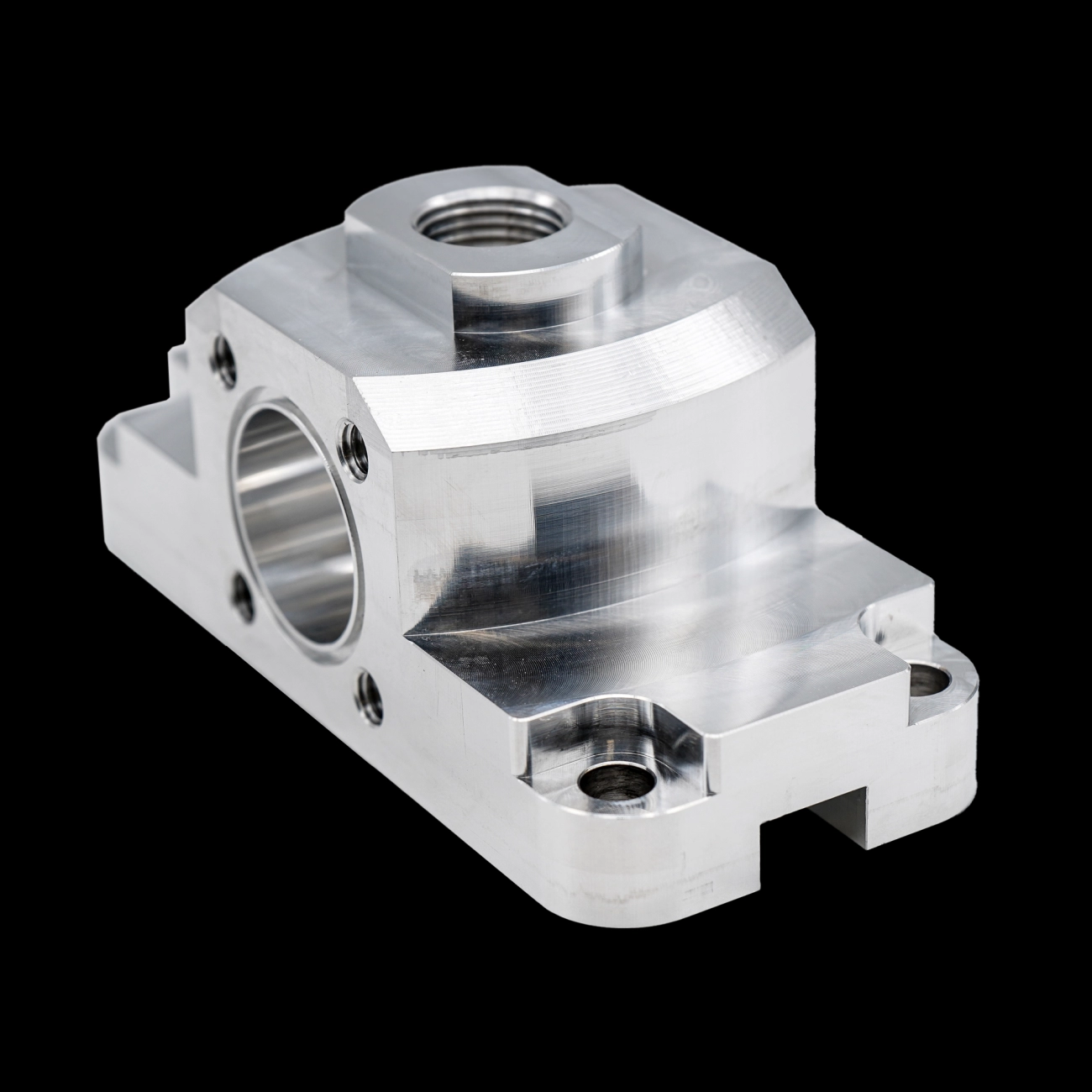
At MS Machining, we’ve built our shop around one thing: fast, accurate, and repeatable aluminum CNC machining for US customers who care about quality and lead time.
3-Axis, 4-Axis, and 5-Axis Aluminum Milling
We run a full fleet of 3-axis, 4-axis, and 5-axis machining centers specifically tuned for aluminum:
- 3-axis milling – Best for simple to moderately complex custom aluminum parts where you want low cost and quick turnaround. Ideal for brackets, plates, and basic housings.
- 4-axis milling – Adds rotary capability for multiple sides in one setup, reducing fixturing and improving accuracy on features like bolt circles and side ports.
- 5-axis milling – Our go-to for complex precision aluminum machining:
- Organic shapes, deep pockets, and tight features in one clamping
- Ideal for aerospace aluminum parts, 5-axis aluminum machining for robotics, drones, and medical components
- Better surface finish and tighter positional accuracy on critical faces
If you need help deciding what process fits your part, our engineering team can review your model as part of our custom CNC machining services at: custom CNC machining services.
CNC Turning and Mill-Turn for Aluminum Components
For round and shaft-type CNC machined aluminum components, we rely on high-speed turning and mill-turn:
- CNC turning – Efficient for bushings, pins, sleeves, pulleys, and aluminum spacers
- Stable process for tight runout and concentricity
- Great for medium to high volumes where price per piece matters
- Mill-turn centers – Turn, mill, and drill in one setup
- Perfect when your custom aluminum parts have both turned diameters and milled flats, slots, or side holes
- Reduces setup time, improves consistency, and cuts lead time
Swiss Machining for Small Precision Aluminum Parts
When parts get tiny, we move to Swiss CNC machining:
- Best for small, slender precision aluminum machining components
- Excellent for pins, inserts, miniature connectors, and medical/robotics parts
- Supports tight tolerances and clean surface finishes on micro-features
If your part is thin, long, or easily deflected, Swiss machining often gives a more stable and cost-effective solution than standard lathes.
In-House Secondary Operations and Finishing
We keep key secondary operations in-house to control quality, cost, and timing for custom aluminum CNC parts:
- Deburring and edge breaking for safe handling and assembly
- Tapping, reaming, and thread forming for both standard and fine threads
- Bead blasting and basic polishing to prep for anodizing or coating
- Assembly and light kitting when you need ready-to-install subassemblies
Paired with our CNC engineering services—including manufacturability feedback and process planning—we can take your cnc aluminum parts from raw billet to ready-to-ship product with tight control at every stage: CNC engineering services.
Industry Applications for Aluminum CNC Machining Parts
Aerospace Aluminum CNC Parts
We machine lightweight CNC aluminum components for flight-critical and non-flight-critical aerospace projects across the U.S. Common parts include:
- Structural brackets and mounting plates
- Avionics housings and RF-friendly enclosures
- Drone frames, gimbals, and motor mounts
We use grades like 6061-T6 and 7075-T6 for high strength and tight tolerances, with full traceability, inspection reports, and anodized aluminum parts for corrosion resistance.
Automotive & EV Aluminum CNC Components
For automotive and EV customers, we focus on precision aluminum machining that keeps weight down and performance up:
- Battery enclosures and module covers
- Aluminum heat sink machining for controllers and inverters
- Brackets, sensor mounts, and structural supports
We support everything from quick CNC aluminum prototyping for new EV platforms to low-volume production runs, and we can advise when CNC is a better fit than casting by comparing to processes like those in our overview of investment casting vs CNC machining.
Medical Device Aluminum Parts
We supply CNC machined aluminum components to medical and lab OEMs that need clean, stable, and repeatable parts:
- Surgical instrument components
- Imaging system brackets and housings
- Lab automation and fixture parts
We focus on consistent aluminum machining tolerances, clean edges, and surface finishes that work well with cleaning and sterilization processes.
Robotics & Automation Aluminum Parts
For robotics, factory automation, and warehouse systems, our custom aluminum CNC parts are built for stiffness, accuracy, and weight savings:
- Robot arm joints, end-of-arm tooling, and adapter plates
- Linear motion carriages and mounting plates
- Custom frames and sensor brackets
Here, our 5-axis aluminum machining really shines on complex geometries, undercuts, and consolidated multi-part designs.
Consumer Electronics & Hardware
We help U.S. startups and established brands build premium-looking anodized aluminum parts for:
- Device enclosures and bezels
- Heat-dissipating housings and internal frames
- Knobs, levers, and cosmetic covers
Example: we supported a hardware startup with CNC aluminum prototyping of a compact electronics housing, then scaled to low-volume production with clear and black Type II anodizing—no tooling cost, fast revisions, and consistent cosmetic quality across batches.
Cost Drivers of Custom Aluminum CNC Parts
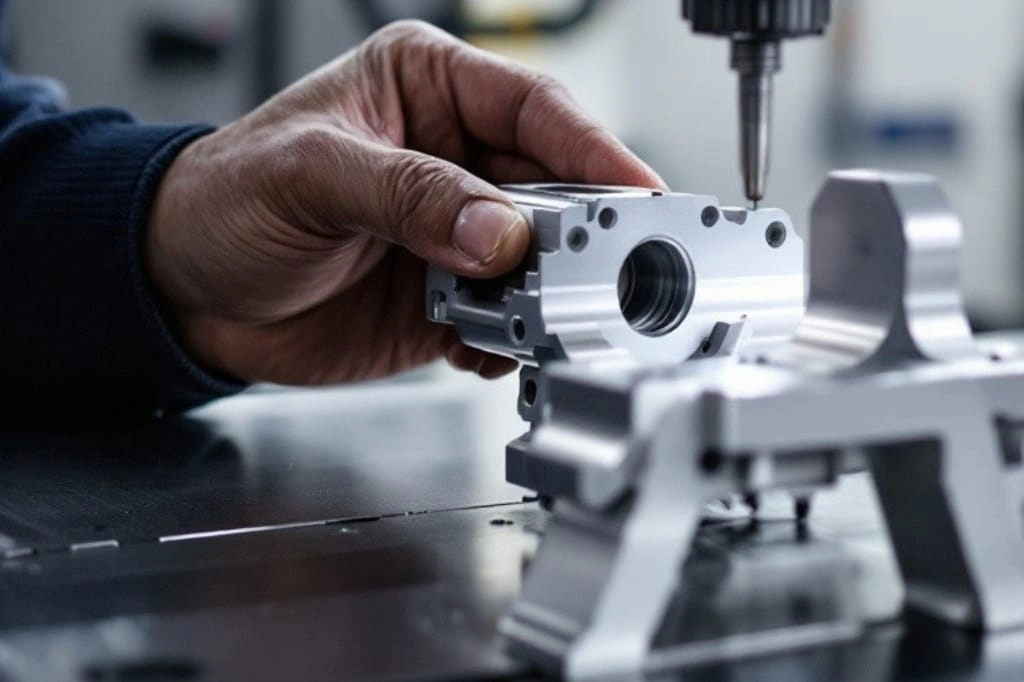
When we quote custom aluminum CNC parts, we look at a few core levers that really move price up or down. If you understand these, it’s much easier to design around cost and hit your budget.
1. Material Grade Selection Impact
Not all aluminum is priced the same. Your choice of alloy directly affects both material and machining cost.
- 6061-T6 – The most cost-effective choice for most CNC aluminum parts. Great machinability, widely available, ideal for structural brackets, housings, and general components.
- 6082 / 5052 / 5083 – Slight bump in cost compared to 6061 depending on stock form and size, often chosen for better corrosion or weldability.
- 7075-T6 / 2026 – High-strength aerospace grades. Material is more expensive, wears tools faster, and usually requires more careful programming and inspection. Expect a noticeable cost increase per part.
- MIC-6 / cast tooling plate – Great for flatness-critical parts like fixtures and plates, but typically costs more than standard extruded 6061.
If you don’t truly need aerospace-level strength, sticking with 6061 aluminum machining is usually the best balance of performance and price. We’ll often suggest alternative alloys during quoting if we see an easy cost win.
2. Part Complexity and Feature Count
Complexity is the single biggest driver for CNC machined aluminum components.
Cost goes up with:
- More setups – If we have to flip the part multiple times or use a 5th axis just to reach features, cycle time jumps.
- Deep pockets and thin walls – Require slower feeds, lighter cuts, and more toolpaths to avoid chatter and distortion.
- Tight tolerances and GD&T – Extra probing, fine finishing passes, and more detailed inspections.
- Small holes, micro-features, fine text – Need smaller tools, more passes, and higher risk of tool breakage.
- Thread count and type – Lots of tapped holes, thread milling, or special thread forms add incremental cost.
If you can simplify geometries, combine features, or relax tolerances in non-critical areas, you’ll see an immediate price drop on custom aluminum parts.
3. Annual Volume vs Per-Piece Price
We run everything from one-off CNC aluminum prototyping to tens of thousands of parts. Volume changes the per-piece economics.
Prototypes (1–10 pcs)
- Higher price per part because programming, setup, and fixturing are spread over just a few pieces.
- Best for design validation and fast iterations.
**Low-volume runs (20–200
How to Choose the Right Aluminum CNC Machining Partner in 2026
Picking the right shop for aluminum CNC machining parts matters more than ever in 2026. Lead times are tight, tolerance requirements are tougher, and you can’t afford surprises. Here’s how I evaluate a machining partner in a practical, no-nonsense way.
1. Check the Right Certifications First
For serious work—especially aerospace, EV, or medical—certs aren’t optional.
Key certifications to look for:
| Certification | What It Covers | When It Matters |
|---|---|---|
| ISO 9001 | General quality management | Any production part, consistent quality |
| AS9100 | Aerospace + defense quality | Flight hardware, UAVs, satellite parts |
| IATF 16949 | Automotive quality systems | EV components, brackets, housings |
If a supplier claims to do “precision aluminum machining” for aerospace or automotive but can’t show valid certs and audit records, I walk away.
2. In-House Capability vs Brokers
You want a shop that actually runs the parts, not just forwards your RFQ to whoever is available that week.
Ask direct questions:
- Do you own the 3-axis / 4-axis / 5-axis mills used for my parts?
- Is CNC turning / mill-turn done in-house?
- Are anodizing and basic finishing handled internally or outside?
- Can I visit the facility or do a virtual video walk-through?
A true aluminum CNC machining service should show you machines, sample parts, and a clear process—not just a price and a delivery date. For example, our own aluminum CNC machining services are built around in-house 5-axis milling, mill-turn, and small-batch prototyping so we control quality and schedule.
3. Be Realistic About Lead Times (Prototype vs Production)
If a quote sounds too fast to be real, it usually is.
Typical realistic ranges I see in the U.S. market:
| Type of Order | Typical Lead Time* | Notes |
|---|---|---|
| Rapid prototype (simple) | 3–7 business days | Basic 6061 parts, standard finish |
| Prototype (complex / 5-axis) | 1–2 weeks | Tight tolerances, multiple ops |
| Pilot run (50–500 pcs) | 2–4 weeks | Fixtures, process tuning needed |
| Production (1k–100k+ pcs) | 4–8+ weeks | Capacity planning, finishing, QA |
*All depends on material, finish, and complexity, but these windows are realistic.
If a shop promises same-week delivery on complex 5-axis aluminum machining with hardcoat anodizing at scale, I push for a very detailed plan—or I don’t trust the date.
4. Quality Control and Inspection You Can See
Quality is not about what they say; it’s about what they measure and document.
Minimum QC expectations:
- Calibrated equipment: CMM, height gauges, surface finish testers.
- Incoming material control: Mill certs for 6061, 7075, 5083, etc.
- In-process checks: First article inspection (FAI) and critical dimension checks on the machine.
- Final inspection reports:
- Dimensional report with actual values
- Material certs and finish certs
- For aerospace: FAIR / AS9102 when needed
Ask for sample inspection reports from similar CNC machined aluminum components. If they hesitate or show something sloppy, that’s a red flag.
5. Customer Support and Engineering Collaboration
Your best machining partner acts like an extension of your engineering team, not just a vendor.
Look for:
- DFM feedback before cutting chips
- Suggestions on wall thickness, ribs, tolerances, and thread specs
- Cost-reduction ideas without compromising function
- Fast, clear communication
- Response to RFQs within 24 hours
- Clear answers on risk areas, not just “no problem”
- Stable project management
- One point of contact from quote to delivery
- Regular updates for prototypes and production runs
A strong partner will happily review STEP files, discuss tolerances, and advise on finishes like anodized aluminum parts early on, not after problems appear. If you need deeper engineering support for custom aluminum CNC parts, a specialized shop like ours that focuses on aluminum CNC machining is usually more responsive and reliable than a general “we do everything” job shop.
In 2026, the right aluminum CNC machining partner is the one who can prove quality with certifications, show you real in-house capability, give honest lead times, back it all up with inspection data, and collaborate closely with your engineering team from RFQ to production.
Why Choose MS Machining for Aluminum CNC Machining Parts
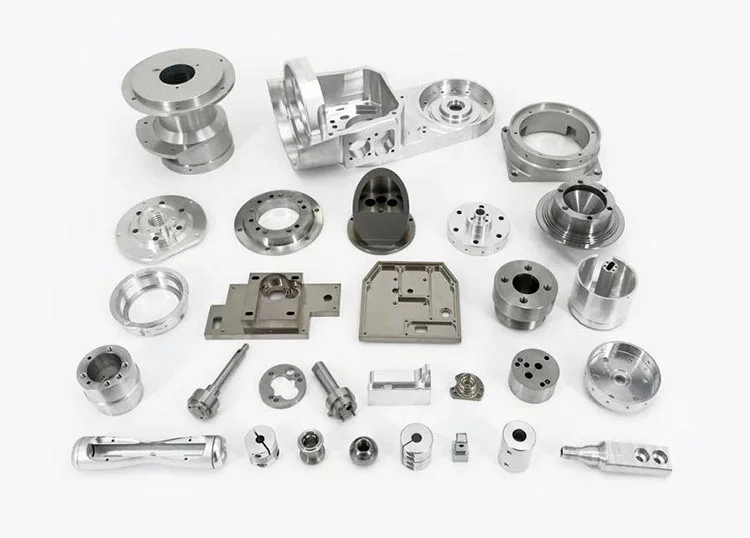
When you need reliable custom aluminum CNC parts in the U.S. market, we’ve built MS Machining around doing that one thing extremely well.
15+ Years Focused on Precision Aluminum Parts
We’ve spent more than 15 years dialing in our process for CNC machined aluminum components—6061, 7075, 5083, MIC-6, and more.
What that means for you:
- Stable, repeatable quality on tight-tolerance parts
- Proven experience with aerospace, EV, medical, and robotics requirements
- Practical DFM suggestions that actually work on the shop floor
State-of-the-Art 5-Axis Aluminum Machining
Our shop is built around 5-axis aluminum machining, supported by high-speed 3-axis mills, turn-mill centers, and Swiss machines. For complex, lightweight precision aluminum machining, especially low-volume/high-mix work, our 5-axis cells let us cut setups, hold tighter features, and shorten lead times. You can see how we approach this on our article about why 5-axis machining is ideal for low-volume, high-mix manufacturing at MS Machining:
- Fewer setups = better accuracy on multi-face parts
- Cleaner geometry for complex housings, brackets, and heat sinks
- Faster iteration from prototype to production
Free DFM Feedback in 24 Hours
Send us your CAD and we’ll turn around DFM for aluminum parts within 24 hours—no charge.
We’ll point out:
- Thin walls that might chatter, warp, or drive cost
- Tolerance stacks that are tighter than they need to be
- Simple geometry tweaks that cut cycle time without hurting performance
From Prototype to 100K+ Production Runs
Whether you need CNC aluminum prototyping or long-term production of custom aluminum parts, we keep it under one roof:
- Rapid prototypes: small batches to prove fit and function
- Pilot runs: bridge tooling and validation builds
- Scaled production: up to 100,000+ cnc aluminum parts annually with documented process control
Our broader CNC precision machining services are structured to keep your parts consistent from first article to last.
Real Success Stories, Real Results
We’ve helped:
- A U.S. drone startup cut weight on 7075 aluminum frames while holding tight flatness and stiffness
- An EV customer redesign a battery enclosure for better heat dissipation and lower machining cost
- A medical OEM move a critical aluminum component to us after quality issues with a previous supplier, reducing rejects and delivery risk
Most of our new projects come from referrals. Customers stay with us because we’re responsive, transparent on cost drivers, and serious about quality on every anodized aluminum part we ship.
FAQ on Aluminum CNC Machining Parts
1. What is your MOQ for custom aluminum CNC parts?
We keep it flexible for U.S. customers.
| Order Type | Typical MOQ |
|---|---|
| Prototypes / R&D builds | 1–5 pcs |
| Pilot runs | 20–100 pcs |
| Production orders | 100+ pcs (up to 100k+) |
If you have a real project and clear drawings, I’ll quote even a single part.
2. How fast can you deliver aluminum CNC prototypes?
- Simple parts: 3–5 business days after order confirmation
- Medium complexity: 7–10 business days
- Complex 5-axis parts or multiple finishes: 10–15 business days
Lead time depends on material, complexity, finish, and how fast we lock in the drawings and DFM.
3. Can you machine 7075 aluminum with thin walls?
Yes, we do 7075 aluminum CNC thin-wall parts routinely.
- Minimum wall thickness (typical): 0.5–0.8 mm (0.02–0.03″)
- For very thin walls, we may:
- Adjust toolpaths and step-down
- Use special fixturing and support
- Recommend local wall thickening in high-load areas
Send your model; we’ll give specific DFM feedback and realistic limits.
4. 6061 vs 7075 – which aluminum is better for my CNC part?
| Feature | 6061-T6 | 7075-T6 |
|---|---|---|
| Strength | Medium | Very high |
| Machinability | Excellent | Very good |
| Corrosion resistance | Very good | Good with proper coating |
| Cost | Lower | Higher |
| Typical use | General, brackets, enclosures | Aerospace, high-stress components |
- Choose 6061 if you want balanced performance + lower cost
- Choose 7075 if you need high strength, high stiffness, weight savings
If you’re unsure, send your application (load, environment, budget), and I’ll recommend the right grade.
5. Do you offer clear and hardcoat anodizing in-house?
Yes, we handle Type II (clear/colored) and Type III hardcoat anodizing for anodized aluminum parts.
- Type II: cosmetic, corrosion resistance, multiple colors
- Type III: thicker, harder coating for wear and harsh environments
We also support chromate conversion, powder coating, bead blasting, and polishing on CNC machined aluminum components.
6. What tolerances can you hold on aluminum CNC machining parts?
- Standard tolerance: ±0.05 mm (±0.002″)
- Tight tolerance (with proper GD&T and fixturing): up to ±0.005–0.01 mm (±0.0002–0.0004″) on critical features
- Threads and fits: per ISO / UNC / UNF standards or your spec
Final tolerances depend on part size, geometry, and inspection method. We confirm all critical dimensions before cutting.
7. Can you help optimize my design (DFM) for custom aluminum parts?
Yes. I treat DFM for aluminum parts as part of the service, not an upsell.
We’ll review:
- Wall thickness and ribs
- Tool access for 3/4/5-axis
- Tapped hole depth and thread sizes
- Tolerance stack-up vs actual need
You get free DFM feedback within 24 hours on most RFQs.
8. Do you support low-volume aluminum machining and repeat orders?
Absolutely.
- Low-volume aluminum machining: ideal for startups, EV, robotics, and medical prototypes
- We store programs, setups, and QC data so we can repeat your job quickly and consistently
- Scaling from 10 pcs → 10,000+ pcs is built into our process
9. What files do you need for a CNC aluminum parts quote?
To quote fast and accurately, send:
- 3D model: STEP, STP, IGES, or Parasolid
- 2D drawing (if available): PDF with tolerances, threads, finishes
- Material: e.g., 6061-T6, 7075-T6, 5083, 2026, etc.
- Quantity: prototype + estimated annual volume
- Finish: anodize type, color, any special coating
If you’re still conceptual, we can start from a basic model and refine together.
10. Can you handle both CNC milling and turning for aluminum components?
Yes, we run:
- 3-axis, 4-axis, and 5-axis aluminum machining
- CNC turning and mill-turn for shafts, housings, and flanges
- Swiss machining for small, high-precision aluminum parts
For background on our equipment and process, you can look at how we approach CNC milling machine projects and apply the same rigor to aluminum.
11. Do you provide inspection reports and material certs for aluminum CNC parts?
Yes, on request:
- Material certificates (mill certs)
- Inspection reports (FAI, critical dimensions, CMM data)
- Surface finish reports where required
This is standard for aerospace aluminum parts, medical components, and automotive jobs.
12. Can you match an existing anodized color or finish on my parts?
We can usually get very close:
- Use RAL / Pantone references or a physical color sample
- Cosmetic parts may need a small test run to dial in color and texture
- For consistent appearance,