
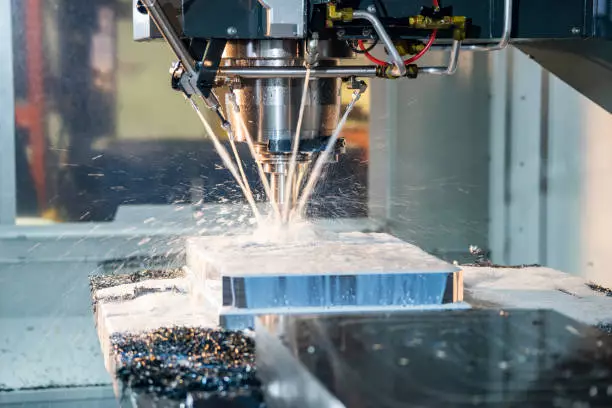
Introduction: Why Aluminum is a Popular Material for CNC Machining
Aluminum stands as the cornerstone of modern manufacturing, dominating the CNC landscape due to its exceptional balance of physical properties and cost-effectiveness. At MS Machining, we leverage the versatility of this metal to deliver cnc precision parts that meet rigorous industry standards. From rapid prototyping to full-scale production, aluminum allows for high-speed machining without compromising on structural integrity.
Properties of Aluminum Ideal for Machining
Aluminum is favored by engineers and machinists alike for its superior machinability index. It allows for rapid material removal rates while maintaining minimal tool wear, which directly translates to faster lead times—often as quick as 3–7 days for prototypes.
Key properties include:
- High Strength-to-Weight Ratio: Essential for reducing the overall mass of assemblies in aerospace and automotive sectors.
- Thermal Conductivity: Excellent heat dissipation makes it ideal for electronic enclosures and heat sinks.
- Corrosion Resistance: Naturally resistant to oxidation, which can be further enhanced through our in-house surface finishes like Type II and Type III Anodizing.
- Dimensional Stability: Capable of holding tight tolerances down to ±0.01mm, ensuring reliability for complex geometries.
Common Aluminum Alloys Used in CNC Applications
Selecting the right alloy is critical for performance. MS Machining supports a comprehensive range of aluminum grades, each suited for specific mechanical requirements:
- Aluminum 6061: The most versatile grade, offering a strong balance of weldability, corrosion resistance, and workability.
- Aluminum 7075: A high-strength “aircraft grade” alloy, utilized when parts face high stress and fatigue.
- Aluminum 6063: Preferred for architectural applications and parts requiring a superior surface finish after anodizing.
- Aluminum 5052: Known for exceptional corrosion resistance, particularly in marine environments.
- Aluminum 2026: High fatigue strength, commonly used in aerospace structural components.
- Aluminum 6082: A structural alloy with excellent corrosion resistance, often used in highly stressed applications.
Applications Where Aluminum is Preferred Over Other Metals
While steel offers hardness and titanium provides extreme strength, aluminum is the preferred choice for precision cnc parts requiring lightweight performance and thermal efficiency. It is the standard material for functional prototypes and end-use parts where weight reduction is a priority without sacrificing durability.
Typical applications include:
- Aerospace & Drones: Lightweight structural components and frames.
- Electronics: Heat sinks and custom housings that require effective thermal management.
- Automotive: Brackets, engine components, and suspension parts.
- Medical Devices: Surgical tools and equipment housings requiring sterilization compatibility.
Benefits of CNC Machining Aluminum Parts
Aluminum remains the top choice for manufacturers because it balances machinability with high-performance physical properties. At MS Machining, we leverage these characteristics to deliver cnc precision parts that meet rigorous industrial standards.
Lightweight Yet Strong Components
For industries like aerospace and automotive, reducing weight is non-negotiable for fuel efficiency and speed. Aluminum offers an exceptional strength-to-weight ratio. We frequently machine high-strength grades like 7075 and 6061, which provide the structural integrity needed for critical airframe or engine components without the heavy mass of steel.
High Dimensional Accuracy and Tight Tolerances
Aluminum is highly stable during the cutting process, allowing us to hold extremely tight tolerances. Our facility routinely achieves precision levels as fine as ±0.01mm. By utilizing advanced 5-axis CNC machining capabilities, we can produce complex geometries with minimal setups, ensuring that every feature aligns perfectly with your CAD data.
Excellent Surface Finish and Aesthetic Appeal
One of the biggest advantages of aluminum is how well it finishes. Right off the machine, it has a clean look, but it also accepts secondary treatments better than most metals. We offer a variety of in-house finishes to enhance both function and aesthetics:
- Anodizing (Type II & III): Adds color and surface hardness.
- Bead Blasting: Creates a uniform matte texture.
- Polishing: Achieves a mirror-like shine.
- Powder Coating: Provides durable, custom coloring.
Efficient Prototyping and High-Volume Production
Aluminum is softer than steel, meaning it can be machined faster, which directly reduces cycle times and costs. This makes it ideal for both rapid iteration and mass production. With our rapid CNC machining services, we can turn around functional aluminum prototypes in as little as 3 to 7 days, allowing you to validate designs quickly before scaling up to thousands of units.
Corrosion Resistance and Material Longevity
Aluminum naturally forms a protective oxide layer that resists rust and degradation. This makes our precision cnc parts suitable for harsh environments, including marine and outdoor applications. When combined with anodizing, the lifespan of these components increases significantly, ensuring long-term reliability.
of Aluminum Machining Benefits
| Benefit | Key Advantage | Typical Application |
|---|---|---|
| Weight Reduction | High strength-to-weight ratio | Aircraft brackets, automotive housings |
| Precision | Tolerances down to ±0.01mm | Medical devices, robotics |
| Speed | Faster machining speeds | Rapid prototyping, consumer electronics |
| Finishing | Accepts anodizing & coating | Consumer goods, cosmetic parts |
When Aluminum CNC Machining Makes Sense
Choosing the right manufacturing process is critical for balancing cost, speed, and part performance. Aluminum CNC machining is often the sweet spot for projects that demand high-performance metal parts without the high upfront tooling costs of casting. Here is when opting for machining is the smartest move for your production line.
Complex Geometries Requiring Precision Milling or Turning
When your design features intricate cuts, internal cavities, or non-standard angles, CNC machining is superior. Unlike casting, which can struggle with undercuts, or manual machining, which lacks consistency, our 3, 4, and 5-axis CNC centers can navigate complex geometries with ease.
We consistently achieve tolerances as tight as ±0.01mm, ensuring that every feature matches your CAD file exactly. For cylindrical components requiring rotational symmetry and tight concentricity, our advanced CNC lathe machine capabilities deliver precision that other methods simply cannot match. This level of accuracy is non-negotiable for cnc precision parts used in aerospace and medical assemblies.
Low to Medium Production Volumes with Custom Requirements
If you need anywhere from a single prototype to a few thousand units, machining is generally more cost-effective than creating expensive molds for die casting. At MS Machining, we support:
- Rapid Prototyping: Get functional metal parts in as little as 3–7 days.
- Bridge Production: Scale from 1 unit to 1,000+ without waiting weeks for tooling fabrication.
- Design Flexibility: You can modify your design between batches without scrapping thousands of dollars in hard tooling.
Parts Requiring Secondary Finishing or Assembly Compatibility
Aluminum is an excellent candidate for post-processing, and machining provides the surface quality necessary for these finishes to adhere correctly. Whether you need Type II/III Anodizing for corrosion resistance, bead blasting for a matte look, or chromate conversion for conductivity, machined surfaces are uniform and clean.
Furthermore, machined aluminum holds threads and tight fits better than cast alternatives. If your assembly requires precise mating surfaces or durable threaded holes, precision cnc parts ensure your components fit together perfectly right off the machine.
Applications Demanding Lightweight Structural Components
When weight reduction is a priority but plastic isn’t strong enough, machined aluminum is the standard. We utilize high-strength grades like Aluminum 7075 and 6061 to produce structural components that withstand significant stress while keeping the overall assembly weight down. This strength-to-weight ratio is essential for robotics arms, drone frames, and automotive brackets where every gram counts.
When Aluminum CNC Machining May Not Be the Best Option
While Aluminum CNC Machining is often the gold standard for prototyping and low-to-mid-volume production, it isn’t a magic wand for every manufacturing challenge. There are specific scenarios where the physics or the economics simply point to a different solution. Knowing when to pivot can save you significant time and budget.
Extremely high-volume production where casting is more economical
CNC machining is a subtractive process, meaning we cut away material to create the part. This takes time. When your production needs scale into the hundreds of thousands (100,000+ units), the cycle time per part in a CNC mill becomes a bottleneck.
- Cost Efficiency: For massive volumes, die casting or injection molding usually offers a lower price per unit, despite higher upfront tooling costs.
- Material Waste: Machining generates chips (scrap), whereas casting uses material more efficiently.
Parts with extremely tight tolerances better suited for other metals
We routinely achieve tolerances of ±0.01mm with aluminum. However, aluminum is a relatively soft metal with a high coefficient of thermal expansion.
- Thermal Stability: If a part is subjected to fluctuating temperatures, aluminum may expand and contract more than harder metals like steel.
- Hardness: For precision cnc parts requiring extreme wear resistance or rigidity without any flex, harder alloys like stainless steel or titanium are often superior choices.
Cost-sensitive applications where raw aluminum or alternative methods are cheaper
If weight reduction and corrosion resistance aren’t critical to your application, aluminum might be an unnecessary expense.
- Material Cost: Mild steel is generally cheaper than aluminum grades like 6061 or 7075.
- Geometry: For simple structural brackets or enclosures, sheet metal fabrication (bending and cutting) is far faster and cheaper than milling a solid block of aluminum.
High-stress or high-temperature components where aluminum is insufficient
Aluminum alloys have limitations regarding heat and fatigue. Even high-strength 7075 aluminum cannot match the thermal resistance of superalloys. For components exposed to extreme heat (like engine exhaust manifolds) or constant high-impact stress, opting for comprehensive CNC metal machining using steel or specialized alloys is the safer engineering path. Aluminum will lose strength significantly as temperatures rise above 400°F (200°C).
Key Considerations for Aluminum CNC Machining
Getting the most out of Aluminum CNC Machining requires more than just loading a block of metal into a machine. To ensure we deliver high-quality components on budget, we have to look closely at material selection, design constraints, and processing strategies. Here is what we prioritize during the planning phase.
Alloy selection based on mechanical and thermal properties
Not all aluminum is created equal. The success of your project often hinges on choosing the right grade for the job. We typically select alloys based on the specific mechanical stress and thermal environment the part will endure.
- 6061-T6: The industry workhorse. It offers a great balance of strength, weldability, and corrosion resistance.
- 7075: Used when high strength is non-negotiable, often rivaling some steels, making it ideal for aerospace applications.
- 5052: Best for parts requiring bending or forming due to its higher fatigue strength and workability.
Design for manufacturability (DFM) principles for aluminum parts
Smart design is the fastest way to reduce costs. We encourage following Design for Manufacturability (DFM) principles to ensure cnc precision parts are produced efficiently. This means avoiding excessively deep pockets with small radii, which require specialized, fragile tools. Keeping wall thicknesses consistent prevents warping during the machining process. Understanding the core CNC machining basics allows designers to create geometries that are practical to manufacture rather than just theoretical concepts.
Tooling and machining strategy to minimize waste and maximize efficiency
Aluminum is soft, but it can be “sticky,” leading to built-up edges on cutting tools if not managed correctly. We use specialized carbide tooling with polished flutes to ensure rapid chip evacuation.
- High-Speed Machining (HSM): We run high spindle speeds to take advantage of aluminum’s machinability, reducing cycle times.
- Tool Path Optimization: Modern CAM software helps us minimize air cutting and material waste.
- Coolant Strategy: Proper flood coolant is essential to clear chips and manage heat, ensuring the dimensional accuracy of precision cnc parts.
Surface treatments and finishing options for aluminum
Raw aluminum forms a natural oxide layer, but for durability and aesthetics, secondary finishes are often necessary.
- Anodizing (Type II & III): Increases corrosion resistance, surface hardness, and allows for color customization.
- Bead Blasting: Creates a uniform matte texture, hiding tool marks.
- Chem-Film (Chromate Conversion): Maintains electrical conductivity while offering corrosion protection.
- Powder Coating: Provides a thick, durable, and colorful protective layer.
Industry Applications and Use Cases
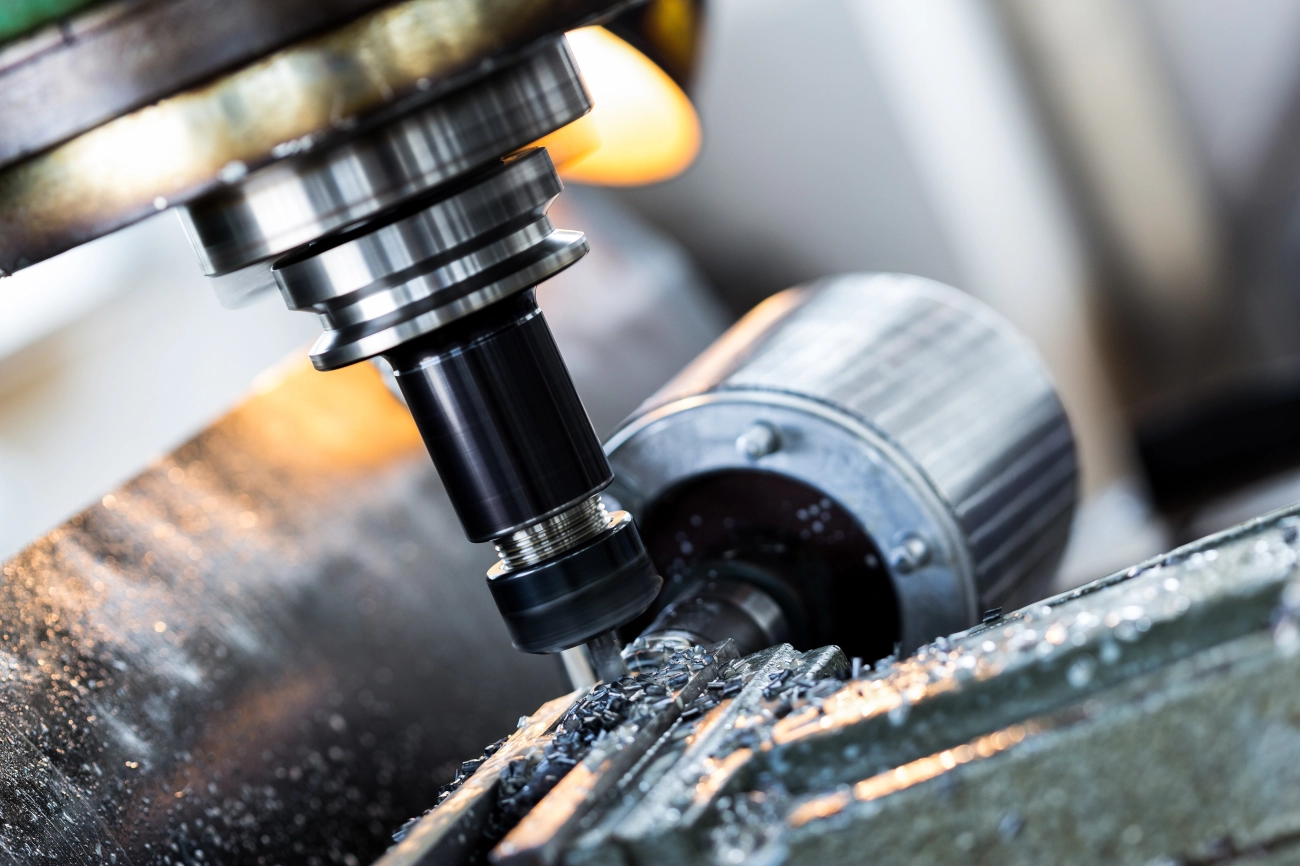
Aluminum CNC machining is the backbone of manufacturing across sectors that demand a balance of strength, weight reduction, and precision. At MS Machining, we leverage 3, 4, and 5-axis CNC centers to deliver cnc precision parts tailored to the strict standards of these industries.
Aerospace: Lightweight Airframe and Engine Components
In aerospace, every gram counts. We frequently machine high-strength alloys like Aluminum 7075 because they offer the strength of steel at a fraction of the weight.
- Key Components: Wing structures, engine mounts, and landing gear parts.
- Why CNC? It achieves the complex geometries and tight tolerances (±0.01mm) required for flight safety that casting simply cannot match.
Automotive: Custom Brackets, Housings, and Prototypes
The automotive industry relies on us for both rapid prototyping and end-use production. Whether it is a custom bracket for a performance vehicle or a complex transmission housing, our CNC aluminum cutting capabilities allow engineers to test fit and function within days, not weeks.
- Speed: 3–7 day lead times for prototypes.
- Versatility: Capable of handling everything from one-off custom parts to high-volume production runs.
Medical: Surgical Tools and Precision Equipment Parts
Medical devices require materials that are non-toxic, easy to sterilize, and machined to microscopic accuracy. We utilize Aluminum 6061 and 6063 to manufacture precision cnc parts used in life-saving equipment.
- Applications: MRI machine components, surgical handles, and diagnostic equipment housings.
- Quality Assurance: Our ISO 9001:2015 certification ensures every part meets the rigorous traceability and quality standards of the medical field.
Electronics and Consumer Devices: Housings and Heat Sinks
Aluminum is an excellent thermal conductor, making it the top choice for heat management in electronics. We machine intricate heat sinks and durable enclosures for consumer tech.
- Thermal Management: Efficiently dissipates heat to protect sensitive circuits.
- Aesthetics: Parts often undergo bead blasting or anodizing (Type II/III) to achieve a premium, consumer-ready finish.
Robotics and Industrial Automation: Structural and Functional Components
Robotic arms and automation systems require low inertia to move quickly and accurately. Machined aluminum provides the necessary stiffness without the weight of steel, reducing wear on motors and actuators.
- Use Cases: Robot chassis, joint components, and end-of-arm tooling.
- Durability: Surface treatments like anodizing protect these moving parts from wear and corrosion in harsh industrial environments.
Cost and Efficiency Considerations
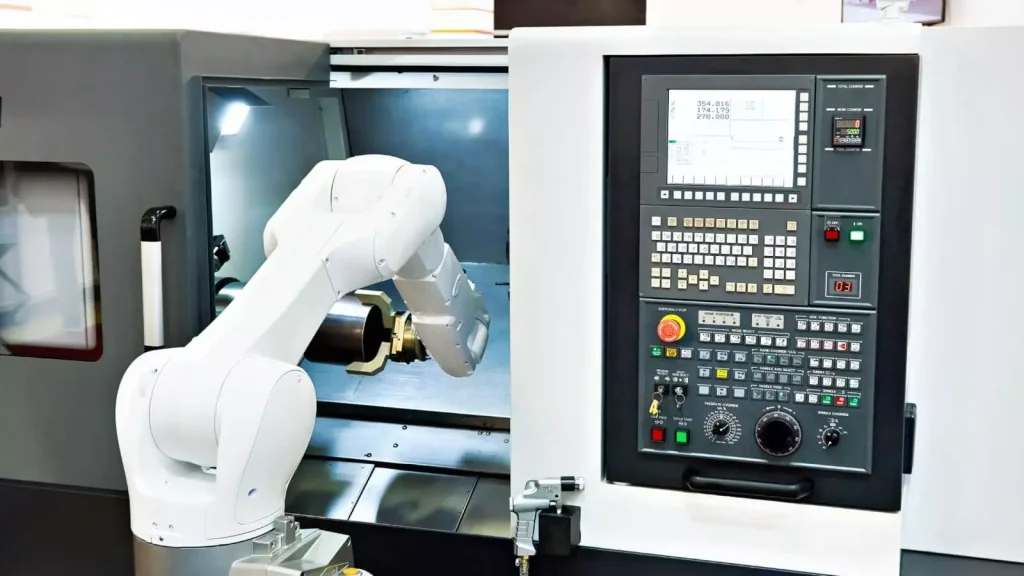
Material costs and scrap reduction strategies
Aluminum remains one of the most cost-effective metals for manufacturing, but CNC machining is inherently a subtractive process. You are paying for the initial block of material, not just the final component. To maximize value, we recommend selecting standard stock sizes that are close to your final part dimensions to minimize material waste. Additionally, choosing widely available grades like 6061 over specialized alloys like 7075—unless the specific mechanical properties are absolutely necessary—can significantly lower raw material expenses.
Machining time and labor efficiency
Machine time is the biggest driver of cost in this process. Complex parts that require the cutter to remove large volumes of material or demand multiple reorientations increase the bill. We utilize advanced 3, 4, and 5-axis CNC milling capabilities to reduce the number of setups required. By consolidating operations, we cut down on labor time and machine hours, which allows us to maintain rapid lead times of 3–7 days for prototypes while keeping production costs competitive.
Balancing quality, speed, and budget
Achieving the perfect balance requires understanding where precision is critical. While we can hold tolerances as tight as ±0.01mm for high-end **precision cnc parts**, applying these strict standards to every single surface of a part is often unnecessary and expensive. We encourage defining critical features clearly while allowing standard tolerances for non-critical areas. This approach ensures you get high-quality **cnc precision parts** where it counts without inflating the budget. Our instant online quoting system helps you visualize how different quantities and specifications impact the final cost, giving you full control over the project’s economics.
Common Challenges in Aluminum CNC Machining
While aluminum is generally considered distinctively machinable, achieving tight tolerances requires overcoming specific material behaviors. At MS Machining, we anticipate these hurdles to ensure the consistent delivery of high-quality cnc precision parts.
Chip management and tool wear
Aluminum—especially softer grades like 6061—can be “gummy” compared to harder metals. It tends to stick to the cutting edges, creating a Built-Up Edge (BUE). This accumulation degrades surface quality and accelerates tool failure. We mitigate this through:
- High-pressure coolant systems: Flushing chips away immediately to prevent re-cutting.
- Polished carbide tools: Reducing friction to stop material from adhering to the cutter.
Surface oxidation and finishing issues
Raw aluminum begins to oxidize almost immediately upon exposure to air, which can affect conductivity and aesthetics. Furthermore, machine chatter can leave visible marks if the setup lacks rigidity. To address this, we often apply secondary CNC milling surface finishes such as anodizing (Type II or III) or bead blasting. These treatments not only mask minor machining lines but also seal the surface against corrosion.
Thermal expansion affecting precision
Aluminum has a relatively high coefficient of thermal expansion. During aggressive high-speed machining, the workpiece generates significant heat. If a part is machined to final size while hot, it may shrink out of tolerance once it cools.
- Temperature control: We monitor heat generation closely.
- Roughing vs. Finishing: We separate roughing passes (bulk removal) from finishing passes to allow the material to stabilize, ensuring we hit tolerances as tight as ±0.01mm.
Choosing the right cutting tools and speeds
Using the wrong tooling strategy is the fastest way to ruin precision cnc parts. Tools designed for steel often have the wrong geometry for aluminum. We utilize:
- High helix angles: To pull chips up and out of deep pockets efficiently.
- Fewer flutes (2 or 3): Providing larger gullets for massive chip evacuation.
- Optimized speeds: Running high spindle speeds with calculated feed rates to shear the metal cleanly rather than tearing it.
Best Practices for Successful Aluminum CNC Machining
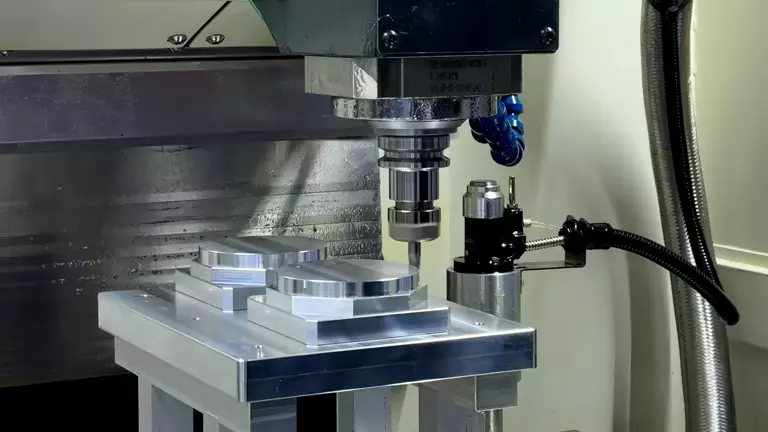
To get the most out of Aluminum CNC Machining, you need more than just good equipment; you need a smart approach. Following these best practices ensures you get high-quality parts while keeping costs and lead times in check.
Collaboration with experienced CNC engineers
You shouldn’t have to guess if your design is manufacturable. Partnering with a team that specializes in custom CNC machining services saves significant time and money. We review designs to catch potential bottlenecks—like deep pockets or impossible undercuts—before we cut a single chip. Open communication allows us to suggest minor design tweaks that make machining faster and cheaper without compromising functionality.
Design optimization and prototype testing
Never skip the testing phase. Optimizing your design for manufacturability (DFM) is crucial for efficient production.
- Simplify Geometry: Remove unnecessary complexity to reduce machining time.
- Standardize Radii: Use standard corner radii to avoid custom tooling.
- Prototype First: Run a small batch of cnc precision parts to verify fit and function before committing to mass production.
Regular quality inspection and process monitoring
Consistency is the name of the game. We implement rigorous quality control measures to ensure every component meets the print specifications.
- In-process Probing: Verifies dimensions while the part is still in the machine.
- CMM Inspection: Coordinate Measuring Machines confirm tight tolerances on complex features.
- Visual Checks: Ensures the surface finish meets aesthetic standards.
Understanding exactly what is CNC precision machining helps set realistic expectations for tolerances and quality standards, ensuring the final output aligns with your requirements.
Leveraging CNC software and CAM optimization
Modern manufacturing relies heavily on data. We use advanced CAM (Computer-Aided Manufacturing) software to calculate the most efficient tool paths. This technology helps us:
- Reduce Cycle Times: Optimizes cutting speeds and feeds.
- Extend Tool Life: Prevents tool breakage and wear.
- Minimize Waste: Nests parts efficiently to use less raw material.
By leveraging these digital tools, we deliver high-quality precision cnc parts with shorter turnaround times.