
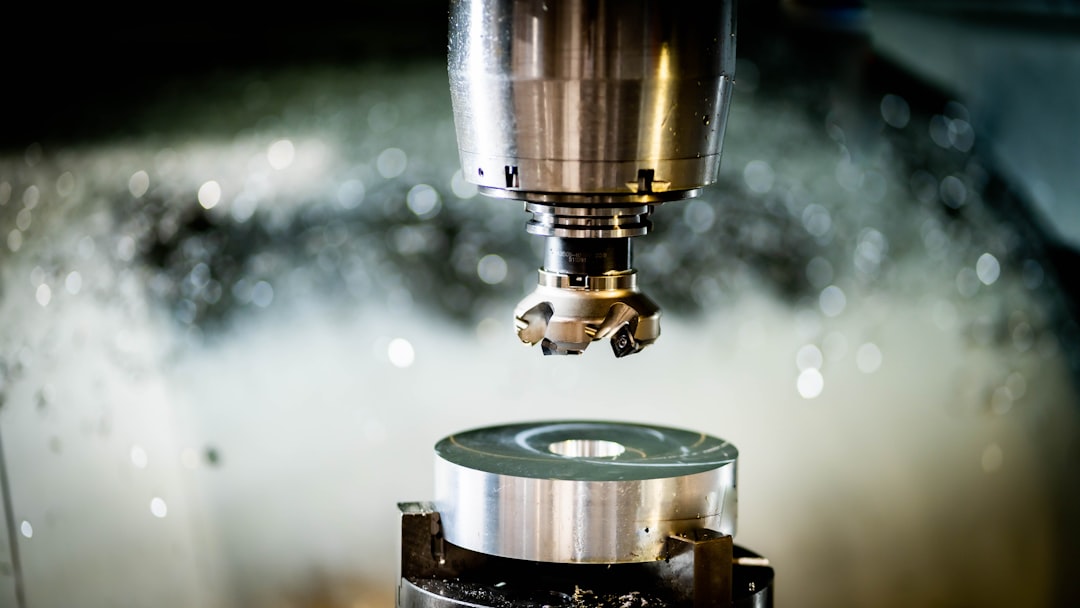
Precision CNC machining services have become increasingly vital as industries demand components with ever-tighter tolerances. Achieving these exacting specifications requires a sophisticated synergy of advanced technology and refined machinability strategies. This article delves into the methodologies, specialized equipment, and process controls essential for producing parts with minimal dimensional variation. Understanding these technical capabilities helps manufacturers select the optimal production path for their most demanding applications.
The evolution of modern machining continues to push the boundaries of geometric dimensioning and tolerancing (GD&T). Current systems can routinely hold tolerances within a few microns, enabling the fabrication of critical components for aerospace, medical, and semiconductor industries. As we progress through 2026, the industry incorporates enhanced thermal stability, vibration damping, and automated measurement systems that maintain accuracy throughout extended production runs. This level of performance ensures reliability in high-stakes environments where even minor deviations can lead to tolerance stack-up issues and component failure.
Technologies Enabling Tight Tolerances
Advanced machine tools form the foundation of high-precision work. Features such as linear motor drives, ceramic bearing spindles, and climate-controlled environments minimize variables that threaten part integrity. In 2026, many specialized facilities utilize real-time compensation systems that dynamically adjust for thermal expansion and tool wear compensation during the cutting process.
Furthermore, in-process inspection—such as on-machine probing—verifies dimensions without requiring parts to be removed from the fixture. This minimizes setup-induced errors and ensures that extreme precision is consistently maintained across full production batches.
Material Considerations
Different materials present unique challenges when pursuing tight tolerances. Factors such as thermal conductivity, hardness, and residual stress must be carefully accounted for during CNC process planning. In 2026, specialized alloys and advanced composites that respond exceptionally well to optimized cutting parameters are becoming standard. Understanding these material characteristics allows for precision that delivers exceptional results in complex computer numerical control processes.
Tooling Strategies
High-performance tooling is essential for success. Diamond-coated carbide tools and custom geometries reduce cutting forces and improve surface finish metrics (Ra/Rz). By employing sophisticated CAM (Computer-Aided Manufacturing) systems, providers can monitor tool life and automatically compensate for drift in multi-axis machining applications, ensuring consistent quality throughout the tool’s lifespan.
Process Optimization
Successful implementation requires comprehensive process optimization, including detailed analysis of fixture design and complex machining sequences. CNC simulation software plays a crucial role in predicting potential distortion, significantly improving first-article inspection (FAI) success rates before full-scale production begins.
Environmental control also directly impacts capabilities. Maintaining consistent temperature and humidity levels reduces variation caused by external factors. Many providers invest heavily in climate-controlled spaces specifically designed to support high-accuracy manufacturing in 2026 and beyond.
Quality Control Systems
Rigorous quality assurance protocols distinguish top-tier machining providers. Statistical process control, Coordinate Measuring Machines (CMM), and optical inspection systems verify that parts meet specified tolerances. In 2026, data analytics and artificial intelligence enhance these systems by identifying trends and potential deviations before they affect finished parts. This proactive approach ensures consistent delivery of components that satisfy the most demanding requirements.
Documentation and traceability have gained even greater importance. Complete records of manufacturing parameters, AS9100/ISO9001 compliance documentation, and material certifications provide full accountability and facilitate continuous improvement.
Multi-Axis Capabilities
The adoption of 5-axis CNC configurations has transformed the production of complex geometries. By reducing the number of setups, manufacturers can virtually eliminate cumulative errors associated with multiple re-fixturings. This efficiency is indispensable when pursuing tight tolerances across complex features on a single part.
Applications Requiring Precision Machining
Several industries depend heavily on these advanced services to meet their technical requirements. Medical implants demand strict biocompatibility and precision, while aerospace components must withstand extreme thermal and mechanical stress. The semiconductor industry relies on such capabilities for manufacturing equipment parts that operate at microscopic scales. Defense applications also utilize these processes for guidance systems and optical components where deviation cannot be tolerated.
Future Developments
Emerging trends such as hybrid manufacturing (combining additive and subtractive processes) and nanoscale machining will further redefine the limits of tolerance. These advancements will expand the possibilities for achieving and verifying extremely tight tolerances in the coming years.
Selecting the Right Partner
Choosing a provider with proven experience in tight tolerance work is essential. Evaluation criteria should include equipment capabilities, quality systems, and a track record of Design for Manufacturing (DFM) collaboration. The best outcomes are achieved when the service provider offers consultation early in the design phase, helping to define realistic tolerance requirements and optimize for both functionality and cost-effective scalability.
Achieving tight tolerances requires a precise balance of technology and engineering expertise. If you have a project requiring custom CNC machining solutions, [contact our engineering team today] to discuss your requirements and begin the journey from concept to finished product.