

What Is Metal Cutting Laser CNC and How Does It Work?
Metal cutting laser CNC combines advanced fiber laser technology with precise computer numerical control (CNC) to cut metal sheets accurately and efficiently. At its core, a fiber laser metal cutting machine generates a powerful, focused beam of light through an optical fiber, delivering high energy in a tiny spot on the metal surface. This intense beam melts, burns, or vaporizes the metal in the cutting path.
The CNC system controls the laser cutter’s movement, following programmed instructions to achieve precise shapes and cuts. Operators input designs via CAD software, which the CNC controller translates into movement commands, guiding the laser head along the metal with micrometer accuracy.
Key to this process are assist gases such as oxygen, nitrogen, or air. These gases help remove molten metal from the cutting area, improve cut quality, and cool the workpiece. For example:
- Oxygen enhances cutting speed on mild steel by creating an exothermic reaction.
- Nitrogen prevents oxidation, ideal for stainless steel and aluminum for clean, burr-free edges.
Step-by-Step Workflow:
- Design Creation: CAD software creates the cutting pattern.
- CNC Programming: The design is converted into CNC code.
- Machine Setup: Metal sheet placement and setup of assist gas type and pressure.
- Laser Cutting: The fiber laser beam moves as per CNC commands, cutting through metal with precision.
- Assist Gas Application: Gases blow away molten material, ensuring clean cuts.
- Finishing: Cut parts are removed, often requiring minimal post-processing due to smooth edges.
This process allows for high-precision metal fabrication with tight tolerances and consistent quality, making the CNC laser cutter for sheet metal an essential tool in modern manufacturing.
Key Advantages of Laser CNC Metal Cutting
Laser CNC metal cutting offers a powerful blend of precision, speed, and versatility that makes it stand out in modern fabrication. Thanks to fiber laser metal cutting machines, you get razor-sharp accuracy, often down to a few microns, which is perfect for high precision metal fabrication projects like aerospace parts or medical devices.
Speed is another big plus. Fiber lasers can cut through metals like stainless steel or aluminum much faster than traditional methods, reducing production time significantly. This efficiency lowers costs while maintaining clean edges with minimal burrs, cutting down on secondary finishing work.
The non-contact nature of CNC laser cutting means less tool wear and no mechanical stress on the metal, which helps preserve material integrity and reduces waste. With precise control over assist gases and beam power, manufacturers can cut a wide range of metals with varying thicknesses while keeping accuracy tight.
Real-world examples include custom automotive components and signage parts where clean edges and quick turnaround boost productivity. Plus, the versatility of CNC laser cutters for sheet metal accommodates everything from prototypes to heavy equipment parts, delivering consistent quality without extra hassle.
All these advantages translate into cost savings and improved workflow, making laser CNC metal cutting the go-to choice for many U.S. fabrication shops. For tailored solutions in metal parts production or CNC machining services, companies often lean on specialists like MS Machining to ensure top results.
Types of Laser CNC Machines for Metal Cutting
When it comes to metal cutting laser CNC machines, fiber laser technology leads the pack in the U.S. market. Fiber laser cutters excel because they offer faster speeds, higher precision, and greater energy efficiency compared to traditional CO2 lasers. The main limitation of CO2 laser machines is their lower efficiency on metals, especially reflective surfaces like stainless steel. That makes fiber lasers the go-to choice for industries focused on high precision metal fabrication.
There are also hybrid laser systems that combine fiber and CO2 technologies, providing flexibility for cutting both metals and non-metals. This versatility comes with trade-offs in speed and maintenance but is useful for shops handling diverse materials.
Power ranges for fiber laser cutters vary widely, from around 1kW for thinner metals up to 12kW or more for heavy-duty industrial applications. Higher wattage means the ability to cut thicker metals faster and cleaner. Bed setups differ too—some machines have fixed beds suitable for sheet metal, while others have moving tables or rotary attachments to handle tubes and pipes.
Safety design is another area where you’ll notice variation. Fully enclosed fiber laser CNC machines are standard now to protect operators from laser exposure and fumes, while some older or smaller CO2 systems may have less robust shielding.
For those needing expert metal laser cutting services, MS Machining offers advanced fiber laser CNC cutting combined with expert CNC operations tailored to your fabrication needs. Check out their metal parts fabrication and CNC operations for more on their capabilities.
Materials and Thickness Capabilities
Laser CNC metal cutting works well with a wide range of metals, including stainless steel, aluminum, carbon steel, copper, brass, and titanium. The type of metal and its properties like reflectivity and thermal conductivity directly affect the cutting quality and thickness limits.
Fiber laser metal cutting machines are especially good for reflective metals such as aluminum and copper, which can be tricky for other laser types due to their high reflectivity. This helps deliver clean, precise cuts with minimal heat distortion. Thickness capability depends mainly on the laser power: low-power fiber lasers (around 1-3 kW) efficiently cut thin sheets up to about 1/4 inch, while high power fiber lasers, like 12kW models, can cut through thicker plates, even reaching several inches in some cases.
Thermal conductivity plays a role too — metals like copper quickly conduct heat away from the cut zone, so higher laser power or slower cutting speeds might be necessary to get a smooth, burr-free edge. Using the right assist gas, such as nitrogen or oxygen, also helps optimize cut quality across different metals and thicknesses.
For detailed precision machining beyond laser cutting, integrating methods like 5-axis CNC machining can enhance finished part accuracy. MS Machining has insight into combining laser cutting with advanced CNC techniques for custom metal fabrication needs. You can explore benefits of 5-axis CNC precision parts for a closer look at complex metalworking applications.
Laser CNC Metal Cutting vs. Alternative Methods
When it comes to metal cutting, Laser CNC stands out but it’s important to see how it compares with alternatives like plasma cutting, waterjet, and traditional milling or shearing. Here’s a quick comparison to help with your choice:
| Method | Precision | Speed | Edge Quality | Material Thickness | Waste Level | Best For |
|---|---|---|---|---|---|---|
| Laser CNC Metal Cutting | High (up to 0.1mm) | Fast | Clean, burr-free | Thin to medium (up to ~1.5 in steel) | Low | Stainless steel, aluminum, prototypes, detailed parts |
| Plasma Cutting | Moderate (~0.5mm) | Very fast | Rough edges, needs finishing | Medium to thick (up to several inches) | Medium | Thick steel, quick cuts, heavy-duty fabrication |
| Waterjet Cutting | High | Moderate | Smooth, no heat affected zone | Very thick (over several inches) | Low | Heat-sensitive metals, composites, thick materials |
| Milling/Shearing | Variable (depends on tool) | Slow to moderate | Depends on blade/tool quality | Usually thick/hard metals | Higher (chips, scrap) | Large sheets, structural parts, simple cuts |
Choosing the Right Method
- Laser CNC metal cutting is best if you need high precision, clean edges, and minimal waste on thinner metals like stainless steel or aluminum.
- Plasma cutting works better when speed is critical and material thickness is high but expect rougher edges.
- Waterjet is great for thick, heat-sensitive materials where thermal distortion is a concern.
- Milling/shearing suits simpler cuts on thicker stock but can be less efficient and precise.
For detailed precision metal fabrication, especially in industries needing burr-free edges and clean cuts, a fiber laser metal cutting machine offers unmatched versatility. To explore options optimized for sheet metal, check out MS Machining’s range of metal CNC machines designed for high precision and efficiency.
Applications Across Industries
Metal cutting laser CNC technology is widely used across many industries thanks to its precision and versatility. In the automotive sector, it helps create intricate parts with tight tolerances, speeding up assembly lines. Aerospace manufacturers rely on fiber laser metal cutting machines for lightweight, high-strength components that demand exact cuts. The signage industry benefits from clean, burr-free metal cutting, producing sharp, attractive designs in both stainless steel and aluminum.
Medical device makers use laser CNC cutting to produce parts with extreme accuracy and cleanliness, essential for safety and functionality. Electronics manufacturers trust high-precision metal fabrication to cut tiny components with minimal waste. For prototype development, laser CNC ensures fast turnaround and flexibility, which MS Machining supports with customized CNC services. Heavy equipment manufacturers also use powerful fiber laser cutters to handle thick metals needed for durable parts.
From custom metal laser cutting services to large-scale production runs, this technology fits diverse industrial needs with speed and quality. For deeper insight into CNC trends shaping manufacturing, exploring MS Machining’s guide on prototype CNC machining can be very helpful. With expert support, businesses in the U.S. can leverage laser CNC metal cutting advantages for efficient, reliable outcomes.
Factors to Consider When Choosing a Metal Cutting Laser CNC Machine
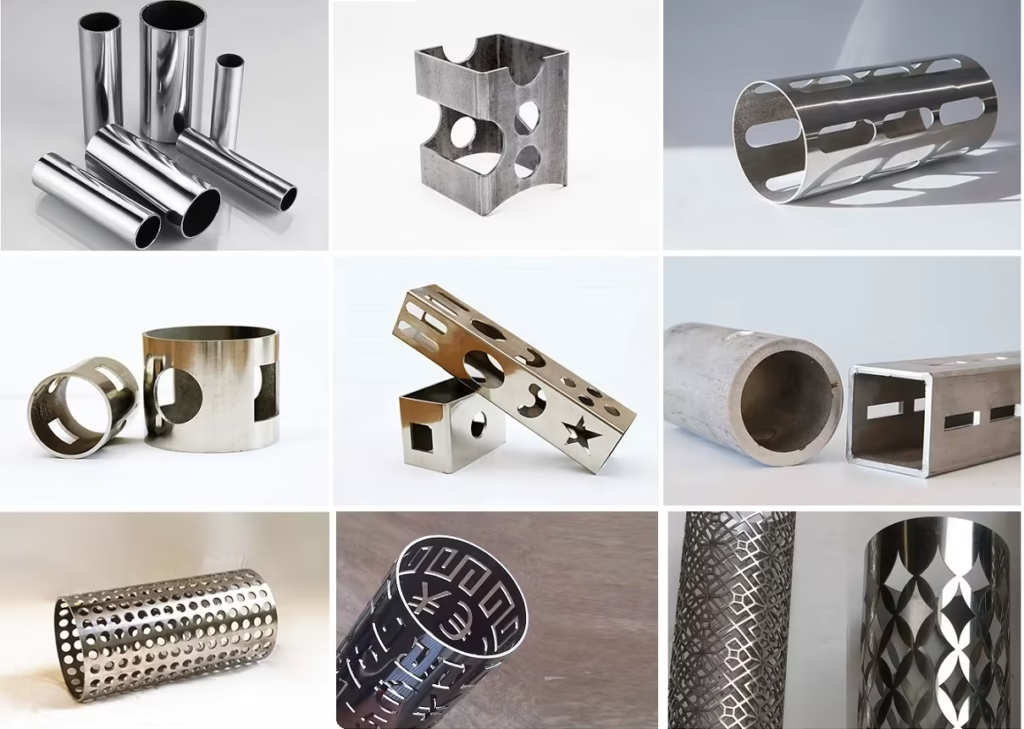
Selecting the right metal cutting laser CNC machine means balancing several important factors to fit your production needs and budget. Here’s a simple buying checklist to guide your decision:
- Laser Power: Choose based on the materials and thicknesses you plan to cut. Higher wattage fiber laser metal cutting machines handle thicker metals faster, but they come at a premium.
- Work Area Size: Match the machine’s bed size to your typical sheet sizes. Larger beds offer flexibility but usually cost more and take up more space.
- Software & Automation: Look for CNC systems with advanced control software that supports automated nesting software laser features to optimize material use and boost throughput.
- Safety Features: Ensure the machine includes enclosures, smoke extraction, and safety interlocks to protect operators.
- Maintenance Needs: Evaluate routine upkeep requirements and machine reliability. Fiber lasers generally need less maintenance than CO2 models.
- Energy Efficiency: Fiber laser CNC cutters are usually more energy-efficient, saving you costs over time.
- Cost & ROI: Factor in upfront costs, operating expenses, and potential savings from precision cutting and reduced waste.
Making the right choice depends on your manufacturing goals, metal types, and production volume. For precision and reliability in various cutting scenarios, consider integrating this with high-accuracy processes like those offered by CNC precision machining services to complete your workflow smoothly.
Maintenance, Safety, and Best Practices
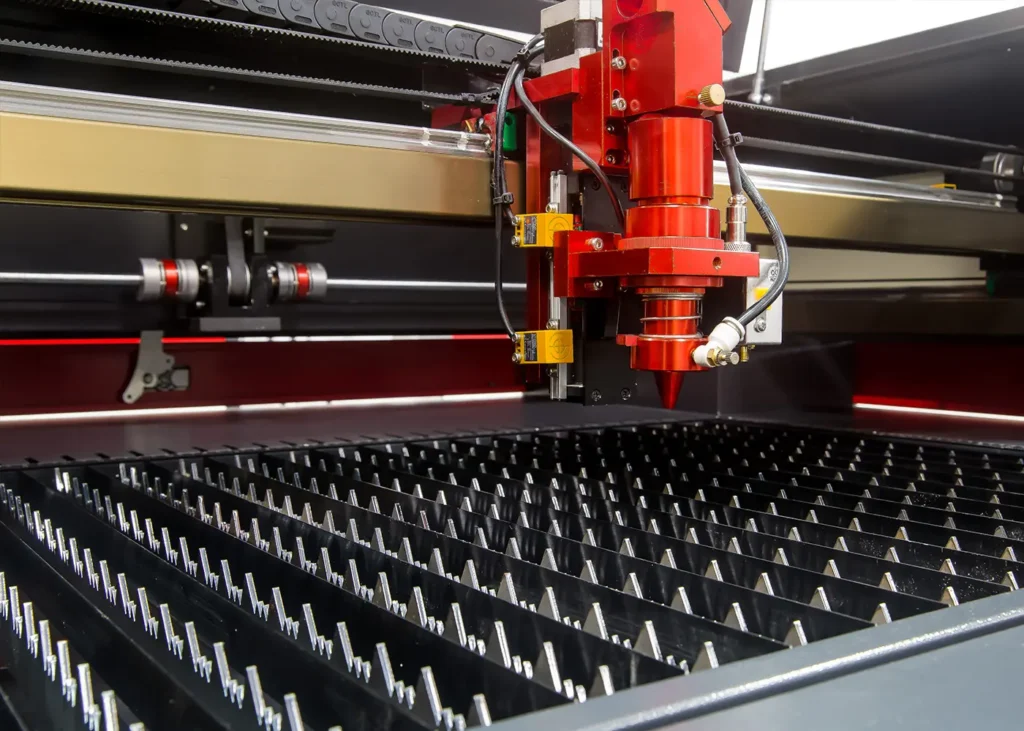
Keeping your metal cutting laser CNC machine in top shape means routine maintenance is a must. Regularly clean lenses and mirrors to ensure the fiber laser beam stays strong and precise. Check alignment and inspect assist gas lines to avoid interruptions. Lubricate moving parts and monitor CNC components to prevent unexpected breakdowns.
Operator safety should never be overlooked. Always use proper eye protection designed for fiber laser wavelengths, and ensure the workspace has adequate ventilation to manage fumes from laser cutting stainless steel or other metals. Follow all safety interlocks and lockout procedures; remember, these high-power fiber lasers can cut through skin and material alike.
For optimal cutting, use software for automated nesting to reduce waste and increase throughput. Adjust settings based on metal type—reflective metals like aluminum may require different parameters than steel. Fine-tuning laser power and speed for each material thickness ensures burr-free metal cutting and sharp, clean edges every time.
Balancing maintenance, safety, and process optimization guarantees your CNC laser cutter for sheet metal runs smoothly, safely, and efficiently—delivering the high precision metal fabrication results your projects demand.
Explore how advanced setups improve productivity and safety in CNC machine metal cutting at MS Machining.
The Future of Metal Cutting Laser CNC Technology
The future of metal cutting laser CNC technology is shaping up fast with exciting trends that boost efficiency and innovation. Artificial intelligence (AI) is becoming a game changer, helping machines optimize cutting paths and improve accuracy automatically. Automation is also taking center stage, enabling higher throughput with less human intervention, which is perfect for scaling production while maintaining precision.
Energy efficiency is another focus, as newer fiber laser metal cutting machines and hybrid systems use less power, reducing costs and environmental impact. Hybrid methods that combine laser with other cutting technologies are gaining traction, providing greater versatility and expanding what you can achieve with a single machine.
MS Machining stays ahead by adopting these advancements, offering state-of-the-art CNC laser cutters for sheet metal that keep clients competitive in today’s fast-paced market. With AI-driven software, energy-saving innovations, and hybrid machine options, MS Machining is your partner for the next generation of high precision metal fabrication. For cutting-edge services and prototyping, you can also explore our detailed low volume prototype injection molding capabilities alongside CNC machining solutions.
These future-focused trends ensure metal laser cutting remains the top choice across industries with smarter, faster, and more sustainable technology.