
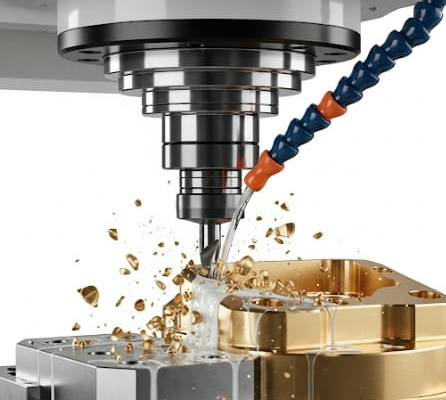
Why Choose Brass for Custom Machining Projects?
When you’re looking for custom brass machining, the material itself offers several clear benefits that make it a top choice for precision parts.
Key Advantages of Brass
- Excellent Machinability: Brass machines smoothly with minimal tool wear, speeding up production while maintaining precision.
- Corrosion Resistance: Its natural resistance to rust and corrosion makes it ideal for parts exposed to moisture or harsh environments.
- Electrical Conductivity: Brass offers good electrical conductivity, perfect for components like connectors and terminals.
- Attractive Finish: It polishes well, providing both functional and aesthetic benefits, from shiny hardware to decorative elements.
Brass vs. Aluminum, Steel, and Copper
| Property | Brass | Aluminum | Steel | Copper |
|---|---|---|---|---|
| Machinability | High (free machining) | Moderate | Lower (harder) | Moderate |
| Corrosion Resistance | Excellent | Good (with coating) | Varies (rusts easily) | Excellent |
| Electrical Conductivity | Good | Moderate | Poor | Excellent |
| Surface Finish | Smooth, polished look | Matte or anodized | Rough without treatment | Shiny but softer |
| Cost-effectiveness | Great for medium-high volume | Good for lightweight parts | Good for strength-reliant parts | Expensive, softer |
Cost-Effectiveness for Your Projects
Brass often hits the sweet spot for medium to high-volume runs because:
- Fast CNC brass machining reduces labor and tool costs.
- It avoids post-processing issues common in harder metals.
- Its durability means fewer rejects and longer-lasting parts.
- Compared to copper, brass is less costly but retains most beneficial properties.
Choosing brass for your custom CNC parts means getting the right balance of performance, appearance, and cost—making it a smart material for many industries and applications.
Common Brass Alloys Used in CNC Machining
When it comes to custom brass machining, choosing the right alloy is key to getting the best performance and cost-efficiency. The most popular brass alloys you’ll encounter include:
-
C360 Brass: Known as free-machining brass, C360 is a top choice for CNC brass machining. It offers excellent machinability, allowing for fast, precise cuts with minimal tool wear. This alloy is ideal for producing complex parts quickly and cost-effectively.
-
C260 Brass (Cartridge Brass): This alloy has higher copper content, which gives it better strength and corrosion resistance than C360. It’s great for applications requiring durability and moderate machinability, such as fittings and electrical components.
-
Naval Brass: Designed for marine environments, naval brass contains tin for improved corrosion resistance, especially in saltwater. It’s often used where harsh conditions demand long-lasting custom CNC machined brass components.
-
Lead-Free Brass: With increasing regulations against lead-containing alloys due to health concerns, lead-free options are gaining traction. These alloys maintain good machinability and strength while meeting modern environmental and safety standards.
Choosing the Right Brass Alloy
Selecting the proper brass grade depends largely on your project’s:
- Strength requirements: Heavier duty parts may call for C260 or naval brass, while C360 covers general machining needs.
- Electrical conductivity: C260 and naval brass provide better conductivity, key for electrical components.
- Lead content restrictions: Lead-free brass is essential for potable water fittings or applications with strict environmental guidelines.
Understanding these factors helps ensure your CNC brass machining project hits both performance and budget targets. For intricate designs, multi-axis machining techniques can maximize the potential of these alloys—more on that in our guide to CNC precision engineering.
CNC Machining Processes for Custom Brass Parts
When it comes to custom brass machining, CNC turning is a go-to process for producing precise shafts, fittings, and connectors. It offers fast, repeatable machining of cylindrical parts with tight tolerances. For more complex shapes like brackets and housings, CNC milling shines by removing material layer-by-layer to create detailed geometry and sharp features.
For intricate, three-dimensional brass parts, multi-axis machining (3, 4, or 5-axis) allows the cutting tool to approach the workpiece from various angles. This capability handles complex contours and undercuts with ease, ensuring high precision and excellent surface finish.
Secondary operations such as threading, knurling, drilling, and tapping are routinely integrated into CNC brass machining to add functional details. These finishing touches enhance assembly and usability without compromising surface quality.
Overall, custom CNC machined brass components benefit from tight tolerances and superior finishes, making them ideal for demanding applications that require reliability and consistent performance.
For deeper insights on milling complexities, explore our detailed explanation of CNC milling processes.
Applications and Industries Relying on Custom Brass Machining
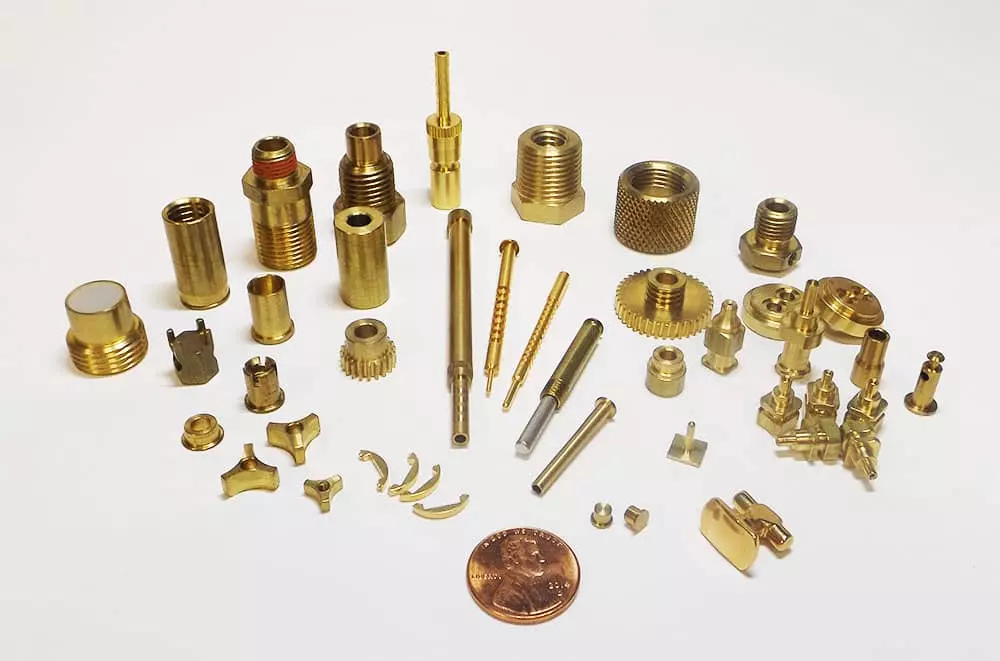
Custom brass machining plays a vital role across various industries thanks to brass’s unique properties. In plumbing and fluid control, brass is the go-to for valves, fittings, and nozzles because of its excellent corrosion resistance and durability in wet environments. Electronics rely heavily on brass connectors, terminals, and heat sinks, where its conductivity and precise machinability ensure reliable performance.
The automotive and aerospace industries often choose brass for bushings, fasteners, and sensors, benefiting from its strength and ability to withstand harsh conditions. Medical and instrumentation sectors depend on precision brass parts for their stability and accuracy in critical devices. Meanwhile, consumer hardware uses brass for knobs, handles, and decorative elements, where its attractive finish and ease of customization boost product appeal.
Brass’s combination of corrosion resistance, machinability, and conductivity helps solve many industry challenges—improving longevity, performance, and cost-efficiency across these applications. Whether you need corrosion-resistant brass parts, high precision brass fittings machining, or custom CNC machined brass components for specialized uses, brass remains a reliable and versatile choice.
Design Considerations and Best Practices for Brass CNC Parts
When working on custom brass parts, optimizing machinability is key. Avoid thin walls and sharp corners—they can cause stress and lead to warping or breakage during CNC brass machining. Also, keep in mind brass’s thermal expansion; parts can shift slightly under heat, so plan tolerances accordingly. Chip formation is another factor—design features that allow smooth chip flow to prevent jams and improve surface finish.
Be clear about your desired tolerances, surface finishes, and any plating early in the design stage. These affect not just performance but also cost and lead times. For example, specifying nickel or gold plating upfront helps ensure surface treatments integrate seamlessly with the machining process.
Preparing your CAD files right is critical. Common pitfalls include insufficient detail on tolerance zones, overlooked draft angles, or missing threaded features. These can cause costly delays or reworks when producing high precision brass parts.
Finally, consider prototyping versus production scaling. Brass prototypes help validate designs and machining strategies before committing to medium or high-volume CNC brass parts production. This staged approach saves money and ensures your custom brass components perform exactly as needed. For insights on rapid prototyping benefits that can complement your brass machining projects, check out our guide on the advantages of rapid prototyping.
Surface Finishes and Post-Processing Options for Brass
Custom brass machining parts often require different surface finishes and post-processing to meet both functional and aesthetic needs. Here’s a quick rundown of common finishes and their benefits:
| Finish Type | Description | Benefits | Impact on Corrosion & Conductivity |
|---|---|---|---|
| As-machined | Raw finish straight from machining | Cost-effective, good for prototypes | Moderate corrosion resistance, no plating effects |
| Polishing | Smooth and shiny surface | Enhances appearance, reduces surface roughness | Slightly better corrosion resistance due to smoother surface |
| Bead Blasting | Matte, uniform texture | Removes machining marks, improves paint adhesion | Neutral impact on conductivity, improves consistency |
| Passivation | Chemical treatment removing surface contaminants | Boosts corrosion resistance, extends part life | Improves oxidation resistance without affecting conductivity |
Plating Options for Brass Components
Adding plating is common in brass CNC machining to improve durability and appearance, especially in custom brass parts used in electronics or decorative hardware:
- Nickel plating: Strong corrosion resistance, good wear protection, slightly reduces conductivity
- Chrome plating: High gloss, excellent corrosion and wear resistance, minor impact on conductivity
- Gold plating: Excellent conductivity, great corrosion resistance, used for electrical contacts and premium finishes
Choosing the right post-processing method depends on whether the focus is on functionality, like corrosion resistance and electrical performance, or aesthetics such as shine and texture.
For detailed machining of intricate parts requiring tight finishes, our advanced multi-axis CNC milling equipment ensures superior surface quality, supporting finishes like polishing and plating. (Check out our precision mechanical parts services for more.)
Quality Control and Tolerances in Brass Machining
Precision brass machining demands strict quality control to meet tight tolerances consistently. Common inspection methods include Coordinate Measuring Machines (CMM) for accurate 3D measurements and optical comparators to verify dimensions and surface profiles. These tools help catch any deviations early, ensuring that custom brass parts meet exact specifications from prototype through full production runs.
Certified processes under standards like ISO and AS9100 add another layer of reliability, especially for industries with rigorous quality requirements such as aerospace and medical. These certifications guarantee that every batch of custom CNC machined brass components maintains uniformity and precision.
To keep tolerances tight, consistent inspections combined with clear communication on specs help prevent costly reworks and delays. Whether you need high precision brass parts or corrosion-resistant brass fittings machining, strong quality control is key for dependable outcomes.
For complex multi-axis parts or intricate features, integrating quality checks during machining streamlines production and upholds standards throughout project scaling. This focus on quality ensures your brass CNC turning and milling projects deliver both accuracy and repeatability.
Why Partner with MS Machining for Your Custom Brass Projects
When it comes to custom brass machining, MS Machining stands out with state-of-the-art CNC facilities and a team of expert engineers ready to tackle your most challenging projects. Whether you need precision brass machining for complex geometries or quick CNC brass cutting for high-volume runs, we deliver fast turnaround times without sacrificing quality. Our competitive pricing makes us a smart choice for both prototypes and full production runs.
We understand tight deadlines and work closely with you to meet them, ensuring your custom CNC machined brass components are exactly to spec and delivered on time. Ready to experience reliable brass machining services with unmatched precision? Contact MS Machining today for quotes and project inquiries tailored to your needs.
For related capabilities in precision CNC components, check out our custom industrial equipment manufacturing expertise here.