
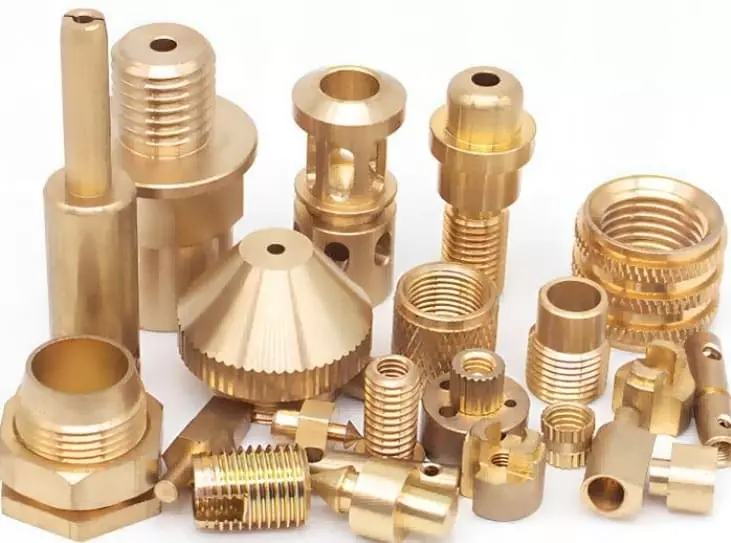
What Are Brass CNC Turned Parts?
Brass CNC turned parts are precision components made by shaping brass stock on a CNC lathe. CNC turning uses computer-controlled cutting tools that rotate the brass workpiece to carve out detailed geometries with high accuracy.
Basics of CNC Turning for Brass
- The brass rod or bar spins on a chuck.
- Cutting tools move along axes to remove material.
- Operations include facing, grooving, threading, and parting.
- Produces round or cylindrical shapes efficiently.
Turning vs. Milling
| Aspect | Turning | Milling |
|---|---|---|
| Workpiece movement | Rotates | Stationary |
| Tool movement | Linear | Multi-directional |
| Ideal for shapes | Cylindrical, round parts | Flat or irregular surfaces |
| Typical brass parts | Bushings, pins, valves | Complex 3D shapes |
Turning excels at making brass precision turned parts with consistent diameters and smooth finishes.
Common Brass CNC Turned Parts
- Fittings: Connect pipes and tubes in plumbing.
- Connectors: Electrical and mechanical joining points.
- Valves: Control fluid or gas flow.
- Bushings: Bearing surfaces for rotating shafts.
- Pins: Fastening or locating parts.
By choosing CNC turning for brass, manufacturers combine speed, accuracy, and cost efficiency—perfect for producing high-quality custom brass CNC components across industries.
Properties of Brass Ideal for CNC Turning
Brass is a top choice for CNC turned parts because of its excellent machinability. This means brass cuts cleanly and forms chips easily, which helps achieve smooth finishes and precise details with less tool wear. Its natural ability to resist corrosion also makes brass components last longer, even in moist or harsh environments.
Beyond durability, brass has great electrical and thermal conductivity, making it ideal for connectors, terminals, and other conductive parts. The metal’s warm golden color adds an aesthetic appeal, which is why brass precision turned parts often serve both functional and decorative roles.
Additionally, brass provides low friction properties, which is perfect for moving parts like bushings or valves. It also has natural antimicrobial qualities, which is a bonus in medical and plumbing applications where hygiene matters. Overall, brass CNC turned parts combine performance, longevity, and visual appeal, fitting well into various industries.
Popular Brass Alloys for Turned Parts
When it comes to brass CNC turned parts, selecting the right alloy is key for performance, cost, and application needs. Here are the most popular brass alloys used:
- C36000 (Free-Machining Brass): This is the go-to alloy for high-volume production. Its excellent machinability reduces cycle times and tooling wear, making it ideal for precision brass connectors, fittings, and valve components where efficiency matters.
- C26000 (Cartridge Brass): Known for its superior forming and bending capabilities, C26000 works well for parts that require secondary shaping after turning. It’s often used in brass plumbing fittings and decorative components that need some flexibility.
- C46400 (Naval Brass): With enhanced corrosion resistance — especially against seawater — this alloy is perfect for marine environments. Naval brass turned components handle harsh conditions without sacrificing strength or finish.
- Lead-Free Brass Alloys (e.g., Eco-Brass): Increasingly in demand due to regulations, these lead-free options ensure safe use in potable water systems and other compliant applications, without compromising machinability or durability.
Choosing the right alloy affects not just the performance but also production costs. For example, C360 brass machining lowers overall expenses through faster cycles, while specialized alloys like naval brass might carry a premium for their durability.
Explore our expertise in precision brass parts, including custom brass CNC components, to find the ideal alloy fit for your project’s requirements. For complex parts with tight specs, integrating turning with other CNC processes can optimize results—learn more about our CNC milling machines to see how multi-process machining benefits brass components.
The CNC Turning Process for Brass Parts
CNC turning brass parts starts with selecting the right material based on the part’s function—whether it’s a precision brass connector or a sturdy valve component. The brass bar or rod is securely clamped into the lathe, ensuring stability throughout the process. The first machining stage, roughing, removes excess material quickly, shaping the basic form. Then, finishing passes refine dimensions and surface quality, achieving tight tolerances often as precise as ±0.01mm.
Advanced methods like multi-axis turning and live tooling allow complex geometries and features to be cut without multiple setups. Swiss-style machining is popular for producing small, precise brass turned parts like bushings and fittings with exceptional repeatability and surface finish. After turning, secondary operations such as threading, drilling, or plating are often integrated directly into the workflow, streamlining production.
This efficient, precise process is why brass CNC turned parts consistently meet high standards in both function and appearance. For more on how advanced machining methods elevate part quality, see our detailed page on CNC turning and milling.
Advantages of Brass CNC Turned Parts
Brass CNC turned parts offer several key benefits that make them a top choice for many industries, especially here in the U.S.
Precision and Repeatability
- CNC turning delivers high precision with tight tolerances (often ±0.01mm).
- Complex geometries like intricate fittings, connectors, and valve components are easily reproduced without variation.
- This consistency is critical for applications requiring exact fit and function.
Cost-Effectiveness
- Ideal for medium to high volume runs, brass CNC machining reduces per-unit cost significantly.
- Faster setup and cutting times compared to manual machining increase efficiency.
- Free-machining brass alloys like C36000 lower tool wear, further cutting costs.
Superior Performance
- Brass turned parts excel in corrosion resistance, making them perfect for plumbing or marine use.
- Their low friction properties and natural antimicrobial qualities suit electrical connectors and medical instruments.
- Good thermal and electrical conductivity ensure reliable performance in demanding environments.
Comparison With Other Metals
| Property | Brass | Aluminum | Stainless Steel | Copper |
|---|---|---|---|---|
| Precision Machining | Excellent | Good | Moderate | Moderate |
| Corrosion Resistance | Very good | Good (coated) | Excellent | Good |
| Cost | Moderate | Low | High | High |
| Electrical Conductivity | Very good | Moderate | Poor | Excellent |
| Surface Finish & Aesthetics | Natural golden shine | Dull, anodized | Shiny, polished | Reddish luster |
Brass strikes a balance between machinability, durability, and aesthetics that aluminum or copper can’t always match. For example, compared to stainless steel, brass CNC turned parts are easier and cheaper to produce while still holding up well under stress and corrosion.
In applications demanding reliable, precise, and cost-effective parts, brass is often the preferred material for CNC turning. Our team ensures every custom brass part meets these high standards for performance and quality.
For specialized applications like flowline fittings essential for oil and gas operations, brass CNC turning delivers both precision and durability. You can see how we apply these advantages in real-world solutions at MS Machining.
Industry Applications of Brass CNC Turned Parts
Brass CNC turned parts play a key role across many industries thanks to their precision, durability, and corrosion resistance. In plumbing and HVAC, brass fittings, valves, and connectors are standard because they handle water and air flow reliably while resisting corrosion. The electrical and electronics sector depends on precision brass electrical terminals, connectors, and other conductive components that require tight tolerances and excellent conductivity.
In automotive manufacturing, brass bushings, sensors, and fluid system parts benefit from brass’s low friction and wear resistance, ensuring smooth operation and longer service life. Medical device makers use custom brass CNC components like instrument parts and implants, taking advantage of brass’s antimicrobial properties and biocompatibility.
Aerospace and marine industries rely on naval brass turned components for their enhanced corrosion resistance in harsh environments, making them ideal for hardware exposed to saltwater and extreme conditions. Beyond these, brass precision turned parts find uses in instrumentation, consumer goods, and decorative hardware where both performance and visual appeal matter.
If you’re interested in complex brass components, exploring our advanced CNC milling services for complex components can provide additional precision manufacturing options that complement brass CNC turning.
Design Considerations and Best Practices for Brass CNC Turned Parts
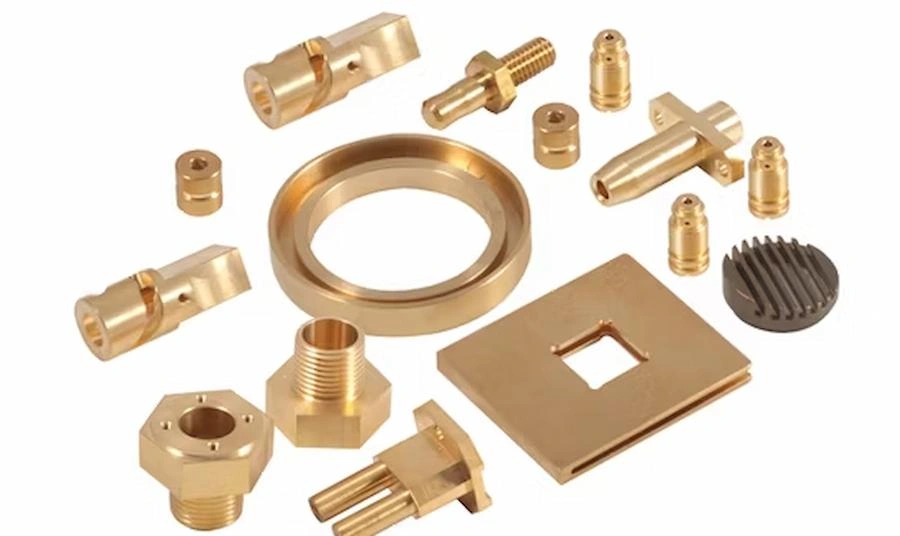
When designing brass CNC turned parts, keeping manufacturability in mind can save time and cost down the line. Here are some practical tips to optimize your designs:
- Design for Manufacturability (DFM):
- Keep features simple and avoid overly tight radii to reduce tool wear.
- Use standard thread sizes and common dimensions whenever possible.
- Design parts with uniform wall thickness to prevent deformation during machining.
- Tolerance Guidelines:
- Brass CNC lathe parts typically achieve tolerances of ±0.01mm (±0.0004 inches) reliably.
- Tight tolerances can increase costs, so only specify what your application truly requires.
- Consider geometric tolerances like concentricity and surface finish early in the design phase for critical features.
- Surface Finish Options:
- Brass naturally offers a smooth finish, but additional polishing or plating can improve corrosion resistance and aesthetics.
- For functional surfaces like sealing faces or bearing areas, specify surface roughness values (Ra) appropriate to performance needs.
- Common Challenges and Solutions:
- Tool wear is a key concern; selecting sharp, carbide tools and optimizing feed rates helps extend tool life.
- Chip control is critical with brass — using proper coolant and chip breakers on inserts avoids build-up and machine downtime.
- Avoid deep cuts in one pass to reduce tool deflection and ensure higher precision.
- Prototyping to Production Scaling:
- Start with prototypes to validate design details and tolerances, making adjustments based on testing.
- When scaling to production volumes, evaluate tooling strategies to maximize efficiency and consistency.
- Partnering with an experienced CNC machining provider like MS Machining ensures smooth transition from prototype to full-scale runs.
By following these design and process best practices for brass precision turned parts, you’ll get parts that not only fit your application perfectly but are also cost-effective and produced on time. For more on achieving precision and quality, see our detailed guide on CNC turning precision parts.
Quality Control and Standards at MS Machining
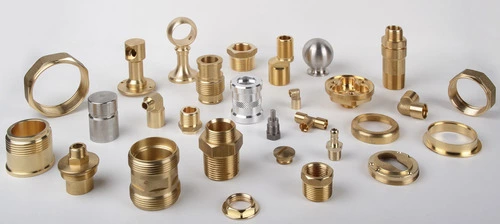
At MS Machining, quality control for brass CNC turned parts is a top priority. We use advanced inspection processes like Coordinate Measuring Machines (CMM), optical measurement, and thorough material certification to ensure every part meets exact specifications. Our strict adherence to ISO standards and industry regulations guarantees consistent product quality and reliability.
We focus on zero defects by running rigorous testing throughout the manufacturing process. This attention to detail ensures that our brass precision turned parts perform flawlessly in your applications, whether for plumbing, electrical, or automotive needs. Partnering with MS Machining means you get custom brass CNC components that are both accurate and dependable every time.
For more on how advanced machining methods can improve your project, explore our guide on rapid CNC machining.
Why Choose MS Machining for Custom Brass Turned Parts
When you need custom brass CNC components you can trust, MS Machining stands out for several reasons:
| Feature | Benefit |
|---|---|
| Advanced CNC Capabilities | High precision and complex geometry handling |
| Experienced Engineering Team | Expert advice, design optimization |
| Fast Turnaround | Quick production to meet tight deadlines |
| Competitive Pricing | Cost-effective manufacturing without compromise |
| Global Delivery | Reliable shipping anywhere in the U.S. and beyond |
| Tailored Custom Solutions | Parts made exactly to your specs, no guessing |
We use state-of-the-art CNC turning machines along with multi-axis technology to produce brass precision turned parts with tight tolerances and excellent surface finish. Our engineering team works closely with you from prototype to final production, ensuring your brass fittings CNC turning or other parts meet all performance requirements.
Choosing MS Machining means peace of mind with quality brass parts built for your specific needs—whether you need high-precision brass bushings or custom brass valve components. Our focus on fast, reliable service and competitive pricing helps you get your projects done efficiently.
Learn more about how our innovative methods can enhance your brass part production in our post on innovative CNC sheet metal fabrication methods, which complements our turning capabilities perfectly.