Are you tired of unpredictable delays stalling your product development cycle?
In the race to market, obtaining a functional prototype quickly isn’t just a luxury—it’s a necessity. Yet, many engineers and procurement specialists struggle to pin down exactly how long the process should take.
You might be wondering: Why do some tools take weeks to cut while others are ready in days?
As a manufacturing partner at MS Machining with decades of experience in rapid tooling, I’ve seen exactly where time gets lost—and how to save it.
In this guide, you’re going to discover the 6 Key Factors That Affect Prototype Injection Molding Lead Time.
From mold design complexity to material availability, we’ll break down the variables that impact your schedule and share proven strategies to help you secure a faster rapid prototype molding turnaround.
Let’s dive right in.
Factor 1: Part Design Complexity and Geometry
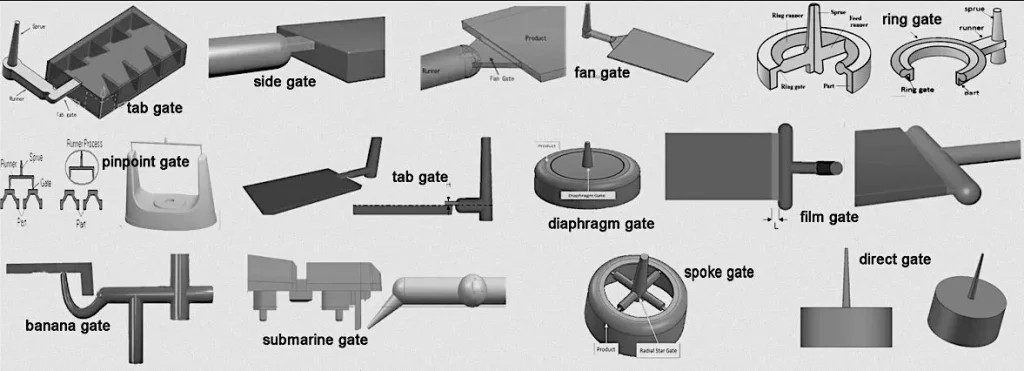
The most significant variable in your prototype injection molding lead time is the physical design of the part itself. While we specialize in manufacturing complex geometries that others might turn away, intricate features inevitably require more time to engineer and machine.
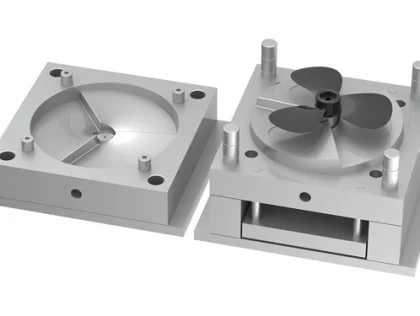
Features like undercuts, deep ribs, and non-uniform wall thickness force us to create more complex molds. A simple “open-and-shut” mold can be machined quickly, but if your design requires side-actions, sliders, or extensive EDM (Electrical Discharge Machining) work to form detailed cavities, the fabrication timeline naturally extends.
The Critical Role of DFM Reviews
We prioritize Design for Manufacturability (DFM) reviews before cutting a single piece of steel or aluminum. This step is crucial for reducing mold design complexity impact. By identifying issues like impossible undercuts or areas prone to sink marks early, we prevent costly tooling revisions later. A thorough DFM review ensures that the transition from CAD to physical mold happens without unexpected stops.
Practical Design Tips for Speed
To accelerate your injection molding prototype timeline, consider these optimization strategies during the design phase:
- Uniform Wall Thickness: Keep walls consistent, ideally <6mm (our optimal range), to prevent warping and reduce cooling time.
- Draft Angles: Apply generous draft angles to vertical walls to ensure easy part ejection without sticking.
- Simplify Geometry: Where possible, remove cosmetic complexities that don’t affect function.
- Tolerance Management: Only apply tight tolerances (e.g., our high-precision ±0.3%) to critical mating surfaces, as tighter specs require slower, more precise machining.
Leveraging Advanced Machining
When complex geometry is unavoidable, we utilize 5-axis CNC machining. Unlike traditional 3-axis setups, our 5-axis capabilities allow us to machine complex mold contours and deep cavities in fewer setups with higher precision. This technology significantly cuts down the prototype mold fabrication time, allowing us to deliver high-fidelity parts even for challenging designs.
Factor 2: Mold Material and Tooling Approach

The material you choose for the mold itself is often the single biggest variable in prototype injection molding lead time. When speed is the priority, we typically recommend shifting away from traditional hardened steel in favor of aluminum tooling. Because aluminum is softer and has excellent thermal conductivity, our machining centers can cut the core and cavity significantly faster, reducing the prototype mold fabrication speed from months to just 1–3 weeks.
Aluminum vs. Steel Prototype Molds
For low volume injection molding runs intended for market testing or fit checks, aluminum tooling offers the best balance of speed and cost. However, if your prototype phase requires tens of thousands of cycles or involves abrasive glass-filled resins, semi-hardened steel (like P20) may still be necessary despite the longer lead time.
- Aluminum Molds: Ideal for quick turn injection molding. They are faster to machine and polish but wear out faster.
- Steel Molds: Required for high-precision, high-volume production. They take longer to cut and heat treat but offer superior durability.
Leveraging Rapid Tooling Techniques
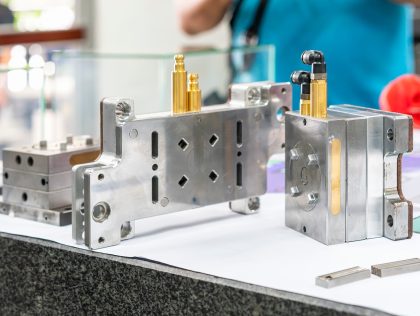
To further compress the timeline, we utilize standardized mold bases and modular inserts (often referred to as MUD bases). Instead of machining a full custom mold base from scratch, we focus our CNC machining basics and resources solely on the inserts that shape your part. This modular approach allows us to swap inserts quickly and get parts on the press faster.
With our 30,000+ sq. ft. facility and in-house tooling capabilities, we control the entire schedule. We don’t rely on external tool shops, which eliminates shipping delays and allows us to react instantly to design changes.
Comparison of Tooling Materials for Prototypes:
| Feature | Aluminum Tooling | Soft Steel (P20) | Hardened Steel |
|---|---|---|---|
| Typical Lead Time | 1–3 Weeks | 2–5 Weeks | 4–8+ Weeks |
| Machining Speed | Very Fast | Moderate | Slow |
| Tool Life | < 5,000 Shots | ~50,000 Shots | 100,000+ Shots |
| Cost | Low | Medium | High |
| Best For | Rapid Prototyping | Bridge Production | Mass Production |
Factor 3: Accuracy and Completeness of Provided Information
One of the most common, yet avoidable, delays in the prototype injection molding lead time is the “ping-pong” of emails caused by incomplete data. When we receive a CAD file that lacks critical details, our engineering team has to pause the clock to ask for clarification. We cannot cut steel or aluminum until we know exactly what you need.
To ensure a rapid prototype molding turnaround, the information package you provide must be comprehensive from day one. Ambiguity regarding surface finish, draft angles, or material grades forces us to hold off on the Design for Manufacturability (DFM) review.
Key information required to minimize delays:
- 3D CAD Files: preferably in STP or IGES format.
- 2D Drawings: Essential for specifying critical tolerance callouts that the 3D model cannot convey.
- Material Specifications: Clearly defined resin or metal powder grades.
- Insert Requirements: If your part requires threaded inserts, we need to know if they are standard or require custom CNC machining brass components.
Experienced partners anticipate potential issues like shrinkage rates (which can be 13%–25% in MIM) or air venting traps before they become problems. However, we rely on your initial data to make those calls accurately. A detailed quoting process and collaborative review at the start prevent costly revisions later, ensuring your injection molding prototype timeline stays aggressive and predictable.
Factor 4: Material (Resin) Selection and Availability

The raw material you specify is often an overlooked bottleneck in the prototype injection molding lead time. If your design calls for a common stock resin like ABS or Polypropylene, we can typically pull from inventory or source it within 24 hours. However, specifying specialized engineering resins, high-performance grades like PEEK, or requiring custom Pantone color matching can freeze production for weeks while we wait for the supplier to ship.
To ensure injection molding material availability doesn’t derail your schedule, we break down the typical impact of different material classes below:
| Material Category | Examples | Sourcing Time | Impact on Timeline |
|---|---|---|---|
| Standard Commodity | ABS, PP, PE, Polystyrene | In Stock / 1-2 Days | Fastest (Immediate start) |
| Engineering Grade | Nylon (PA6/66), PC, POM (Acetal) | 3-5 Days | Moderate (Standard procurement) |
| High-Performance | PEEK, Ultem, PPS, PSU | 2+ Weeks | Slow (Special order required) |
| Custom Colors | Specific Pantone/RAL Match | 3-4 Weeks | Slowest (Requires compounding) |
Strategies for Faster Procurement
To maintain a quick rapid prototype molding turnaround, we recommend the following strategies during the initial development phase:
- Start with Stock: Use readily available “house resins” for initial fit and form testing to avoid waiting on shipping.
- Parallel Processing: If you need an exotic resin, order the material immediately while we focus on the mold design and machining.
- Flexible Tolerances: Allow for equivalent grade substitutions that are chemically similar but easier to source domestically.
- Supply Chain Planning: We leverage established relationships with major plastic distributors to secure engineering resins faster than standard market rates.
Factor 5: Surface Finish, Texturing, and Post-Processing Requirements
The specific finish you require on your molded parts is a major variable in the prototype injection molding lead time. While the molding process itself is fast, preparing the mold surface to achieve a specific texture or gloss level adds significant hours to the tooling phase.
How Finishes Impact the Timeline
Standard “as-machined” finishes are the quickest option because they require minimal manual intervention after the mold cavity is cut. However, if your design calls for a high-gloss SPI-A2 finish or a specific grain texture, we must add distinct processing steps.
- Manual Polishing: High-gloss finishes require skilled technicians to hand-polish the mold steel, which can take days depending on the part’s complexity.
- EDM Texturing: Applying specific textures often requires Wire EDM or sinker EDM processes to burn the pattern into the metal, extending the rapid tooling lead time.
- Overmolding & Inserts: Designs requiring metal inserts or soft-touch overmolding add complexity to the cycle time and material handling.
Balancing Aesthetics with Speed
For many rapid prototype molding projects, functionality is the priority. We often advise clients to start with a lower-grade finish (like a light bead blast) for the initial T1 samples. This allows you to validate the geometry and fit immediately. We can always refine the mold surface for higher cosmetic standards in later iterations.
Integrated Secondary Operations
Sometimes, it is faster to machine a feature after molding rather than building a complex mechanism into the prototype tool. Our facility utilizes custom CNC machining services to handle secondary operations like precision boring, tapping, or facing. By keeping these post-processing steps in-house alongside our molding and assembly lines, we eliminate the logistical delays of shipping parts to third-party finishers.
Comparison of Surface Finishes and Time Impact:
| Finish Level | Description | Impact on Lead Time | Best Use Case |
|---|---|---|---|
| As-Machined | Tool marks visible | Minimal (Fastest) | Internal parts, fit checks |
| Bead Blast | Matte, uniform look | Low (+1-2 Days) | Consumer electronics, housings |
| SPI-B (Paper) | Smooth, semi-gloss | Medium (+2-3 Days) | General cosmetic parts |
| SPI-A (Diamond) | High-gloss mirror | High (+3-5+ Days) | Lenses, transparent parts |
| Textured | Specific grain/pattern | High (+3-5+ Days) | Automotive trim, grips |
Choosing the right finish strategy early in the design phase prevents surface finish prototype delays and keeps your project on schedule.
Factor 6: Manufacturer Capacity and Operational Efficiency
Even if your design is flawless and materials are in stock, your prototype injection molding lead time ultimately depends on the bandwidth of the manufacturing floor. A shop queue can be the biggest bottleneck in the entire process. If a vendor lacks machine availability or workforce depth, your urgent project sits in line behind others.
The Impact of Shop Scale on Turnaround
Operational efficiency isn’t just about working fast; it’s about having the capacity to handle volume surges without compromising speed. Small job shops often struggle when multiple orders hit simultaneously, leading to extended delays.
We mitigate this risk through sheer scale and resource allocation. Our operation is built to maintain a rapid prototype molding turnaround regardless of current workload:
- Facility Size: We operate a 30,000+ sq. ft. climate-controlled facility, allowing us to run multiple production lines simultaneously.
- Workforce: With 200+ skilled workers, we have the manpower to run shifts around the clock when deadlines are tight.
- Equipment Availability: By maintaining a robust fleet of high-precision CNC milling machines and EDM units in-house, we don’t have to outsource mold fabrication, keeping the entire timeline under our control.
Streamlining Logistics and Validation
Beyond the machine time, external factors like logistics and validation protocols play a huge role in the final delivery date. Injection molding vendor capacity also refers to the ability to manage these peripheral tasks efficiently.
- Parallel Workflows: We integrate R&D, QC, and assembly lines. While the mold is being machined, our quality team prepares validation fixtures, ensuring no time is lost between molding and inspection.
- Testing Demands: Complex validation or specific material certifications can add days to the schedule. An experienced partner anticipates these requirements upfront.
- Shipping Logistics: Whether it is domestic routing or international freight, having an established logistics network ensures that finished prototypes don’t get stuck on a loading dock.
Choosing a partner with scalable capacity ensures that your project moves immediately from design to production, avoiding the “hidden” delays of a backed-up shop floor.
Strategies to Minimize Prototype Injection Molding Lead Times
Reducing the prototype injection molding lead time isn’t just about working faster; it is about working smarter from the initial design phase through to final production. By aligning your engineering requirements with our manufacturing capabilities, you can significantly cut down the days or weeks spent in the development cycle.
We have broken down the primary factors and actionable tactics to help you streamline your project in the table below:
| Factor | Impact on Timeline | Optimization Strategy |
|---|---|---|
| Part Complexity | Intricate features require longer mold machining and EDM work. | Simplify non-critical features and ensure uniform wall thickness (<6mm optimal). |
| Tooling Material | Steel molds take weeks to harden and polish. | Opt for aluminum tooling or soft steel for rapid low-volume runs. |
| Material Selection | Exotic resins may have long shipping lead times. | Use standard, in-stock engineering resins for the first iteration. |
| Documentation | Incomplete CAD data causes back-and-forth delays. | Provide complete 3D files and clear 2D prints with critical tolerances. |
Best Practices for Rapid Turnaround
To consistently achieve a rapid prototype molding turnaround, we recommend focusing on three core areas:
- Early DFM Collaboration: Engage with us early in the design phase. Our engineering team reviews designs to catch manufacturability issues—like undercuts or deep ribs—before steel is cut. This prevents costly tooling modifications later.
- Leverage High-Speed Machining: We utilize fast CNC machining to fabricate mold cavities quickly. This approach allows us to produce high-precision aluminum or soft steel molds in a fraction of the time required for production tooling.
- Select a Scalable Partner: Working with a shop that has limited capacity often leads to bottlenecks. Our facility operates with over 200 skilled workers and integrated processes (including QC and assembly), ensuring your project doesn’t get stuck in a queue.
Real-World Benchmarks
While every project varies based on geometry and volume, optimized projects often see significant time savings. By utilizing standard mold bases and readily available materials, a prototype injection molding lead time of 7 to 15 days is achievable for less complex parts. For highly complex geometries requiring multi-slide molds or tight tolerances (±0.005mm), the timeline may extend, but early planning ensures we hit your critical launch dates.