

Selecting the appropriate machining technique significantly impacts production efficiency, cost, and quality in precision manufacturing. Traditional machining processes and Wire Electrical Discharge Machining (Wire EDM) are well-known procedures that are frequently compared. Each has unique benefits and uses, so knowing how they differ is essential to making wise choices during production.
Table of Contents
Overview of Wire Electrical Discharge Machining (EDM)
Electrical discharges are used in the non-traditional machining method called wire EDM to cut through metal. This method removes material from a workpiece by continually discharging electrical currents through a thin wire electrode. A dielectric fluid, usually deionized water, is used during the procedure to assist in cleansing away debris and stabilizing electrical discharges.
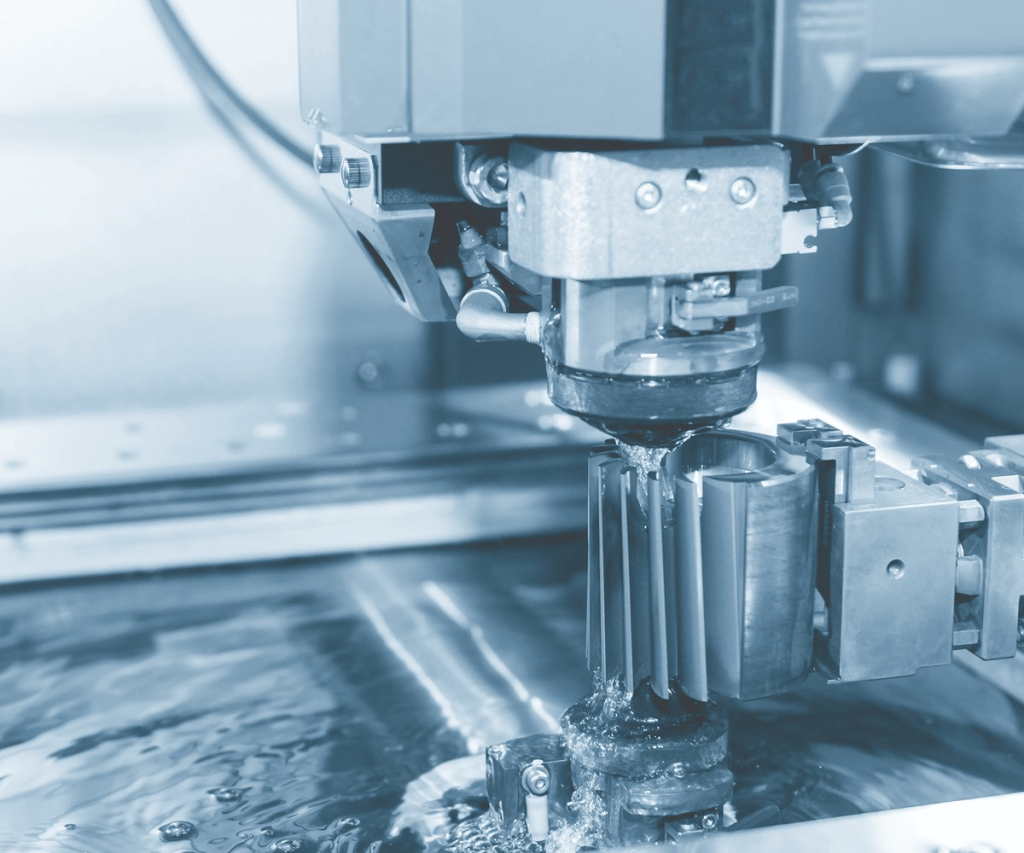
Advantages of Wire Electrical Discharge Machining(EDM):
Below, I will describe the following Advantages of Wire Electrical Discharge Machining:
- High Precision: Wire Electrical Discharge Machining is well known for its remarkable precision and capacity to create complex forms and minute details. Applications needing intricate geometries and close tolerances are ideally suited for it.
- No Mechanical Stress: Wire Electrical Discharge Machining is appropriate for complex or sensitive materials since it does not require physical contact between the tool and the workpiece, which reduces the possibility of mechanical stress and deformation.
- Versatility with Hard Materials: Hard materials that are challenging or impossible to manufacture using conventional methods can be effectively machined with Wire Electrical Discharge Machining. Materials such as carbide, titanium, and hardened tool steels fall under this category.
- Complex Geometries: The technology allows for creating intricate features that would be difficult to accomplish using traditional machining methods.
Disadvantages of Wire Electrical Discharge Machining(EDM):
Below, I will explain the several disadvantages of Wire Electrical Discharge Machining:
- Slower Processing Time: Compared to traditional machining, wire Electrical Discharge Machining typically removes material slower, making it less effective in high-volume production situations where speed is essential.
- High Initial Costs: Wire Electrical Discharge Machining setup and equipment can be costly, making it infeasible for small-scale or low-budget projects.
- Limited Material Thickness: Depending on the machine’s capabilities, the thickness of material that can be processed successfully with Wire Electrical Discharge Machining is limited.
Traditional Machining: Overview
Traditional machining includes various operations, including milling, turning, drilling, and grinding. These techniques employ cutting instruments to physically remove material from the workpiece to obtain the required shape and dimensions.

Advantages of Traditional Machining:
Below, I will describe the following Advantages of Traditional Machining:
- Increased Rates of Material Removal: Conventional machining techniques are more suited for high-volume production because they often offer quicker material removal rates.
- Cost-Effectiveness: When considering the initial setup and tooling expenses, traditional machining processes are more economical in numerous applications.
- Flexibility: Traditional machining techniques can handle various materials and thicknesses, offering flexibility for various manufacturing demands.
- Well-Established Technology: Traditional machining has a long history and a large selection of tools and equipment, making locating resources and capable operators more straightforward.
Disadvantages:
Below, I will describe the following disadvantages:
- Reduced Accuracy: While good precision can be achieved with standard machining, Wire Electrical Discharge Machining often delivers higher accuracy and finer detail.
- Mechanical Stress: In classical machining, the physical cutting motion can cause mechanical stresses and distortions, particularly in complex or fragile materials.
- Tool Wear: Conventional machining tools deteriorate with time and need regular replacement, which raises the overall cost.
Comparative Analysis on Basis of Industrial Features
A comparison of these two methods can be seen here:
- Precision and Accuracy: Wire Electrical Discharge Machining is the best option for producing complex and delicate components since it specializes in providing unmatched precision. Its capacity to reach incredibly close tolerances guarantees intricate, high-quality products. While it may produce precise cuts, traditional machining frequently falls short of Wire EDM’s ability to make exact tolerances and fine details.
- Material Versatility: Tough materials like titanium, tungsten, and super alloys can be challenging to cut with standard machining. However, wire Electrical Discharge Machining is incredibly effective in cutting these materials. However, traditional machining is more adaptable when it comes to managing a range of operations on softer and more diversified materials, such as metals, plastics, and wood.
- Cost and Speed: Conventional machining is typically faster and more economical for more significant, more straightforward items due to its higher material removal rates and lower operating costs than Wire Electrical Discharge Machining. On the other hand, Wire Electrical Discharge Machining is beneficial for making intricate pieces that need extreme precision and fine artistry, even though it is slower and possibly more expensive.
- Surface Finish: Wire Electrical Discharge Machining is well known for generating excellent surface finishes, frequently obviating the need for further finishing steps. When using this high-quality finish, exact proportions and smooth surfaces are essential. Even though traditional machining can produce high-quality finishes, it might need additional processes like grinding or polishing to match Wire EDM’s level of smoothness and quality.
FAQs:
What is Wire Electrical Discharge Machining(EDM)?
Electrical Discharge in Wire A thin wire electrode and electrical discharges are used in the non-traditional machining method known as wire Electrical Discharge Machining to cut through metal. The procedure takes place in a dielectric fluid, usually deionized water, which aids in debris removal and electrical discharge stabilization.
How does Wire Electrical Discharge Machining differ from traditional machining?
In contrast to classical machining, which employs physical cutting tools to remove material, wire Electrical Discharge Machining uses electrical discharges. While traditional machining offers faster material removal rates and better versatility with varied materials, wire Electrical Discharge Machining is noted for its excellent precision and ability to handle rigid materials.
What are the main advantages of Wire Electrical Discharge Machining?
- High precision: Attains minute details and tight tolerances.
- No Mechanical Stress: Lack of mechanical stress lowers the possibility of breaking complex or sensitive materials.
- Versatility with Hard Materials: Machines use hard materials like titanium and carbide effectively.
- Complex Geometries: Able to create intricate details and sophisticated forms.
Can Wire Electrical Discharge Machining and traditional machining be used together?
Yes, a lot of manufacturing settings combine the two methods. For example, bulk material removal and simpler shapes are handled by standard machining, but Wire Electrical Discharge Machining is useful for delicate details and high-precision features.
Choosing the Right Method
The choice between Wire Electrical Discharge Machining and traditional machining depends on several variables, including the project’s particular requirements, the type of material, the level of precision required, the volume of production, and financial restrictions.
- Good choice: Wire Electrical Discharge Machining is frequently recommended for high-precision applications, delicate features, and hard materials.
- For faster production rates, cost-effectiveness, and handling of various materials: Conventional machining techniques may be more appropriate for handling a range of materials, cost-effectiveness, and quicker production rates.
Combining the two approaches is often used in industrial settings to maximize each method’s advantages. Manufacturers may optimize production processes and attain optimal outcomes by being well-informed about the unique benefits and constraints of Wire Electrical Discharge Machining over conventional machining.
Precision Unlocked: The Wire EDM Advantage
Elevate your machining precision with the cutting-edge technology of Wire EDM. Explore the benefits over traditional machining by downloading our detailed guide at ms-machining.com. Ready to enhance your production capabilities? Contact us today to discuss how our Wire EDM services can transform your manufacturing process!