
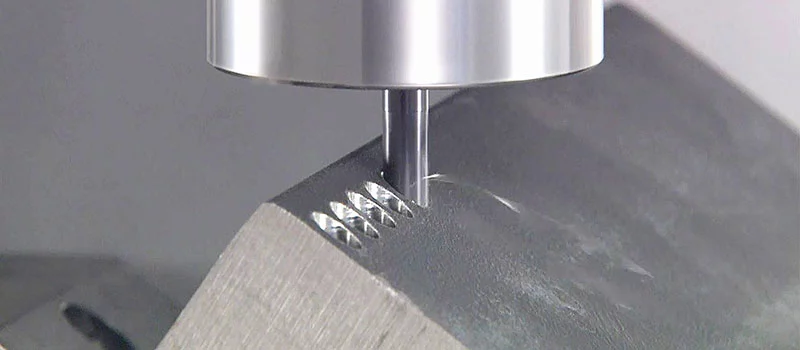
の世界では、 high-performance CNC machining, there is a silent, invisible boundary that separates “standard manufacturing” from “elite precision engineering.” That boundary is defined by the ±0.005mm tolerance—often simply called the “5-micron zone.” To a casual observer, five microns is merely a string of zeros on a technical drawing. To the experienced procurement manager or R&D engineer, however, it represents a high-stakes battle against the fundamental laws of thermodynamics, material science, and mechanical vibration.
When a project demands this level of precision while utilizing “tough” materials—such as チタン グレード5, Inconel 718, or 316L Stainless Steel—the complexity does not merely double; it transforms entirely. The primary variable that dictates whether a project will result in a high-performance component or a bin full of expensive scrap is a concept known as 加工性. For a client, understanding this concept is the difference between a functional product and a financial disaster.
1. The Real-World Definition: What is the Meaning of Machinability?
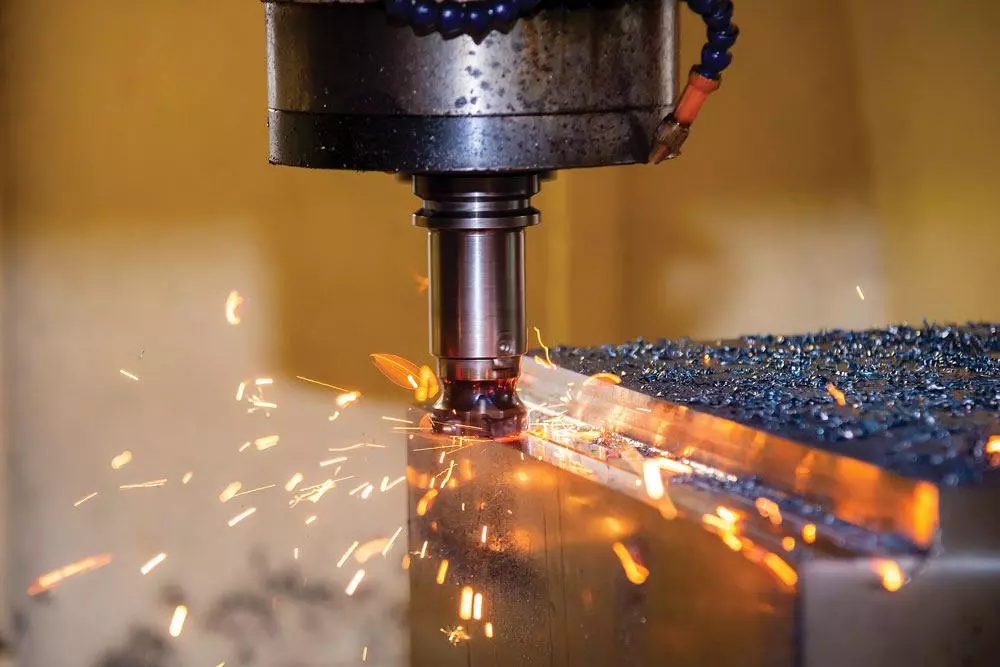
If you consult a textbook, you might find a dry definition involving shear stress and Taylor’s Tool Life Equation. But on the floor of a high-end CNC facility, we define it differently. What is the meaning of machinability? In our world, it is the measure of Process Predictability.
High precision is not an accident; it is the result of a controlled environment where every variable is accounted for. A material with “high machinability,” such as Brass 360 or Aluminum 6061, is cooperative. It allows the cutting tool to shear through its molecular structure with minimal resistance, generating predictable heat and consistent chip formation. In these materials, hitting a 5-micron tolerance is a matter of standard high-quality practice.
However, when we enter the realm of “tough” materials, the meaning of 加工性 shifts into the territory of risk management. In materials like Titanium, the metal “fights back.” It is chemically reactive, thermally stubborn, and physically aggressive toward the cutting tool. In this context, machinability is the narrow window of stability between a perfect cut and a catastrophic tool failure. For a client, recognizing this means understanding that the price of a part is not just based on the weight of the metal, but on the “Machining Tax” imposed by the material’s refusal to cooperate.
2. The Physics of Resistance: Deep-Diving into the Machinability of Materials
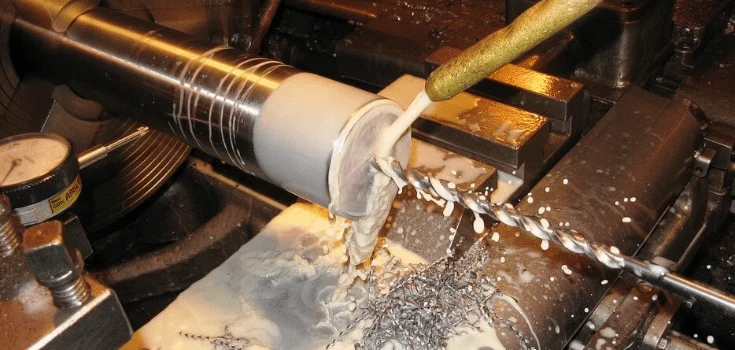
To design effectively, one must understand that the machinability of materials is a spectrum of physical resistance. Every alloy carries a “personality” that dictates how it must be treated during the manufacturing cycle. If you ignore this personality, the 5-micron tolerance becomes an impossible dream.
The Thermodynamic Barrier
One of the greatest enemies of 5-micron precision is heat. Metals like Aluminum are excellent conductors; as the tool cuts the metal, the heat is absorbed by the chip and evacuated. However, Titanium is a thermal insulator. During the cut, the heat stays trapped at the interface where the tool meets the part. This creates a localized “hot zone” that causes the metal to expand.
Imagine a machinist measuring a Titanium part that has just come off the machine. It measures exactly 20.000mm. But as the part cools down to room temperature over the next hour, it physically shrinks. In a 5-micron world, that shrinkage moves the part from “perfect” to “rejected.” Mastering the machinability of materials requires a CNC partner who calculates these thermal offsets before the first spindle rotation. We must cut the part “incorrectly” (oversized) while it is warm so that it is “correct” when it is cold.
The Lattice Distortion and Work-Hardening
Certain materials, particularly the 300-series stainless steels, possess a “defensive mechanism” called work-hardening. If a cutting tool is slightly dull, or if the “feed rate” is too slow, the tool rubs against the metal rather than shearing it. This friction causes the surface of the metal to rearrange its molecular structure, becoming significantly harder than the material underneath.
Once a part has “work-hardened,” trying to achieve a 5-micron finish is nearly impossible. The hardened surface causes the tool to “chatter” or vibrate, leaving microscopic ripples on the part that ruin the surface integrity. This is why “standard” shops often fail at high-precision stainless steel—they lack the aggressive, high-rigidity strategies required to “stay ahead” of the work-hardening curve.
3. The Strategic Execution: The Sophisticated Machinability Process
Achieving a ±0.005mm tolerance is never a “single-pass” operation. It is a multi-stage marathon known as the Machinability Process. This process is designed to strip away the material’s defenses through a series of calculated, stress-relieving steps. Most shops skip these steps to save time, which is why they cannot guarantee the 5-micron promise.
Material Stabilization and Stress Relief
Raw metal is rarely “at rest.” It contains internal stresses from the rolling or forging process at the mill. As a CNC machine removes the outer layers of the metal, these internal stresses are released, causing the part to “move” or warp. In a standard job, this movement is invisible. In a 5-micron job, it is a disaster.
その machinability process cURL Too many subrequests by single Worker invocation. To configure this limit, refer to https://developers.cloudflare.com/workers/wrangler/configuration/#limits“cURL Too many subrequests by single Worker invocation. To configure this limit, refer to https://developers.cloudflare.com/workers/wrangler/configuration/#limits”cURL Too many subrequests by single Worker invocation. To configure this limit, refer to https://developers.cloudflare.com/workers/wrangler/configuration/#limits.
cURL Too many subrequests by single Worker invocation. To configure this limit, refer to https://developers.cloudflare.com/workers/wrangler/configuration/#limits
cURL Too many subrequests by single Worker invocation. To configure this limit, refer to https://developers.cloudflare.com/workers/wrangler/configuration/#limits machinability process cURL Too many subrequests by single Worker invocation. To configure this limit, refer to https://developers.cloudflare.com/workers/wrangler/configuration/#limits 工具のたわみcURL Too many subrequests by single Worker invocation. To configure this limit, refer to https://developers.cloudflare.com/workers/wrangler/configuration/#limits.
cURL Too many subrequests by single Worker invocation. To configure this limit, refer to https://developers.cloudflare.com/workers/wrangler/configuration/#limits
cURL Too many subrequests by single Worker invocation. To configure this limit, refer to https://developers.cloudflare.com/workers/wrangler/configuration/#limits machinability process cURL Too many subrequests by single Worker invocation. To configure this limit, refer to https://developers.cloudflare.com/workers/wrangler/configuration/#limits.
cURL Too many subrequests by single Worker invocation. To configure this limit, refer to https://developers.cloudflare.com/workers/wrangler/configuration/#limits
cURL Too many subrequests by single Worker invocation. To configure this limit, refer to https://developers.cloudflare.com/workers/wrangler/configuration/#limits.
- cURL Too many subrequests by single Worker invocation. To configure this limit, refer to https://developers.cloudflare.com/workers/wrangler/configuration/#limits cURL Too many subrequests by single Worker invocation. To configure this limit, refer to https://developers.cloudflare.com/workers/wrangler/configuration/#limits.
- cURL Too many subrequests by single Worker invocation. To configure this limit, refer to https://developers.cloudflare.com/workers/wrangler/configuration/#limits cURL Too many subrequests by single Worker invocation. To configure this limit, refer to https://developers.cloudflare.com/workers/wrangler/configuration/#limits.
cURL Too many subrequests by single Worker invocation. To configure this limit, refer to https://developers.cloudflare.com/workers/wrangler/configuration/#limits
cURL Too many subrequests by single Worker invocation. To configure this limit, refer to https://developers.cloudflare.com/workers/wrangler/configuration/#limits 加工性 cURL Too many subrequests by single Worker invocation. To configure this limit, refer to https://developers.cloudflare.com/workers/wrangler/configuration/#limits.
- cURL Too many subrequests by single Worker invocation. To configure this limit, refer to https://developers.cloudflare.com/workers/wrangler/configuration/#limits cURL Too many subrequests by single Worker invocation. To configure this limit, refer to https://developers.cloudflare.com/workers/wrangler/configuration/#limits.
- cURL Too many subrequests by single Worker invocation. To configure this limit, refer to https://developers.cloudflare.com/workers/wrangler/configuration/#limits cURL Too many subrequests by single Worker invocation. To configure this limit, refer to https://developers.cloudflare.com/workers/wrangler/configuration/#limits.
- cURL Too many subrequests by single Worker invocation. To configure this limit, refer to https://developers.cloudflare.com/workers/wrangler/configuration/#limits cURL Too many subrequests by single Worker invocation. To configure this limit, refer to https://developers.cloudflare.com/workers/wrangler/configuration/#limits cURL Too many subrequests by single Worker invocation. To configure this limit, refer to https://developers.cloudflare.com/workers/wrangler/configuration/#limits cURL Too many subrequests by single Worker invocation. To configure this limit, refer to https://developers.cloudflare.com/workers/wrangler/configuration/#limits cURL Too many subrequests by single Worker invocation. To configure this limit, refer to https://developers.cloudflare.com/workers/wrangler/configuration/#limits cURL Too many subrequests by single Worker invocation. To configure this limit, refer to https://developers.cloudflare.com/workers/wrangler/configuration/#limits.
cURL Too many subrequests by single Worker invocation. To configure this limit, refer to https://developers.cloudflare.com/workers/wrangler/configuration/#limits
cURL Too many subrequests by single Worker invocation. To configure this limit, refer to https://developers.cloudflare.com/workers/wrangler/configuration/#limits
cURL Too many subrequests by single Worker invocation. To configure this limit, refer to https://developers.cloudflare.com/workers/wrangler/configuration/#limits cURL Too many subrequests by single Worker invocation. To configure this limit, refer to https://developers.cloudflare.com/workers/wrangler/configuration/#limits. cURL Too many subrequests by single Worker invocation. To configure this limit, refer to https://developers.cloudflare.com/workers/wrangler/configuration/#limits.
cURL Too many subrequests by single Worker invocation. To configure this limit, refer to https://developers.cloudflare.com/workers/wrangler/configuration/#limits
cURL Too many subrequests by single Worker invocation. To configure this limit, refer to https://developers.cloudflare.com/workers/wrangler/configuration/#limits.
cURL Too many subrequests by single Worker invocation. To configure this limit, refer to https://developers.cloudflare.com/workers/wrangler/configuration/#limits
cURL Too many subrequests by single Worker invocation. To configure this limit, refer to https://developers.cloudflare.com/workers/wrangler/configuration/#limits 加工性 cURL Too many subrequests by single Worker invocation. To configure this limit, refer to https://developers.cloudflare.com/workers/wrangler/configuration/#limits.
cURL Too many subrequests by single Worker invocation. To configure this limit, refer to https://developers.cloudflare.com/workers/wrangler/configuration/#limits
cURL Too many subrequests by single Worker invocation. To configure this limit, refer to https://developers.cloudflare.com/workers/wrangler/configuration/#limits cURL Too many subrequests by single Worker invocation. To configure this limit, refer to https://developers.cloudflare.com/workers/wrangler/configuration/#limits cURL Too many subrequests by single Worker invocation. To configure this limit, refer to https://developers.cloudflare.com/workers/wrangler/configuration/#limits Machinability Process.
At cURL Too many subrequests by single Worker invocation. To configure this limit, refer to https://developers.cloudflare.com/workers/wrangler/configuration/#limits, we specialize in this “Danger Zone” of precision. We provide the stability, the metrology, and the DFM (Design for Manufacturing) insight to ensure that your most ambitious designs become functional realities. When the success of your UAV, medical device, or robotic system depends on five microns, you don’t need a vendor—you need a partner who speaks the language of the metal.
Ready to Optimize Your High-Precision Project?
The 5-micron challenge is won or lost at the design stage. Would you like me to perform a detailed “Tolerance-to-Material Audit” on your current project? I can identify specific features where the material’s machinability creates a high risk for your budget and suggest optimizations to ensure a perfect, cost-effective result.