You might already know that Custom CNC Machining is about more than just uploading a CAD file and pressing a button…
But do you know exactly why some production runs bleed money while others scale effortlessly?
It’s rarely about the machine. It’s about the strategy.
In this guide, we are moving past the basics to analyze Real Manufacturing Scenarios that make or break a project.
You’ll learn how to bridge the gap from Prototype to Low-Volume Manufacturing, determine when 5-Axis is actually cheaper than 3+2 Positioning, and how specific DFM Feedback regarding Internal Corner Radii can save your budget.
Whether you are machining Titanium or mitigating risks in Overseas Custom CNC Projects, this is the practical insight you need.
Let’s dive right in.
1. Why “Custom” CNC Machining is More Than Just Running a Program
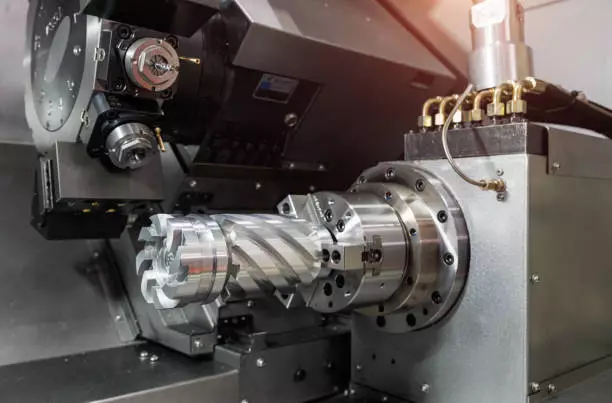
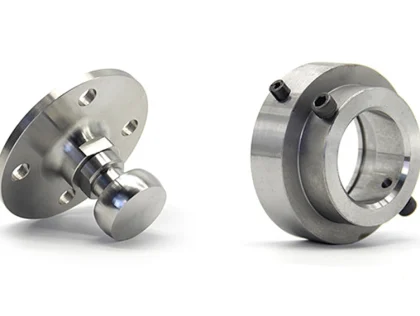
True custom CNC machining is not simply a matter of loading a digital file and pressing a button. It is a sophisticated subtractive manufacturing process where raw stock—ranging from Aluminum 6061 to complex plastics like PEEK—is sculpted into high-performance cnc precision parts. At MS Machining, we treat every project as an engineering challenge, utilizing advanced 3, 4, and 5-axis equipment to achieve tolerances as tight as ±0.005mm.
The distinction lies in the technical execution rather than just the automated cutting:
- Design for Manufacturing (DFM): We do not just machine what is drawn; we provide critical feedback to optimize tool paths, minimize waste, and reduce production costs.
- Material Mastery: Handling diverse materials requires specific speeds, feeds, and tooling strategies to prevent deformation and ensure surface integrity.
- ISO 9001:2015 Quality: Our process ensures that precision cnc parts meet strict regulatory standards, whether for a single prototype or a 100,000-unit run.
This approach transforms a digital design into a physical reality that functions exactly as intended, bridging the gap between a concept and a flight-ready or medical-grade component.
2. Scenario A: Moving from Prototype to Low-Volume Manufacturing (LVM)
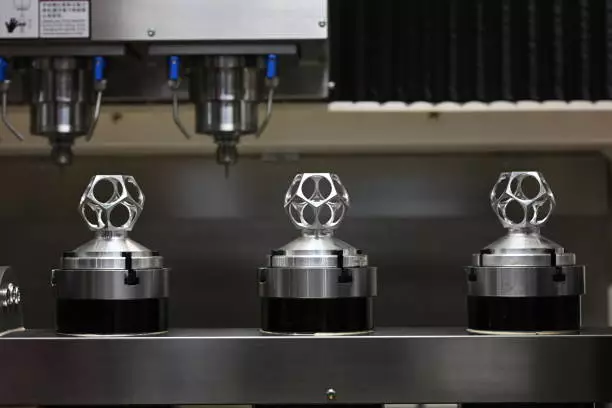
Transitioning from a single “proof of concept” unit to a batch of 50 or 100 units is one of the most critical phases in product development. At MS Machining, we see this daily. You have a design that works, but now you need to scale it without blowing the budget or sacrificing the tight tolerances achieved in the prototype phase. This is where Custom CNC Machining Explained Through Real Manufacturing Scenarios truly highlights the difference between a standard job shop and a strategic manufacturing partner.
2.1 The “Setup Cost” Hurdle: Why Small Batches Feel Expensive
A common friction point for engineers is the price per unit on low-volume orders. If one part costs $100, why does ordering five parts not simply cost $500? The answer lies in the Non-Recurring Engineering (NRE) costs, specifically machine setup.
Before we cut a single chip, our team must:
- Program the Toolpaths: CAD/CAM engineers generate the G-code that drives the machine.
- Fixture Setup: We design and install custom jigs to hold your raw material securely.
- Tool Loading: Selecting and calibrating specific drills and end mills for your material.
This process takes the same amount of time whether we are making one unit or one thousand. When we handle best custom CNC machining parts manufacturing, these fixed costs are amortized over the total quantity. On a 5-part order, that setup fee is split five ways, keeping the unit price higher. On a 100-part order, the setup cost becomes negligible per part. We work to minimize these costs through smart CAM programming, but the math of machining remains a constant reality.
2.2 Maintaining Consistency Across 100+ Precision Parts
Scaling up isn’t just about economics; it is about repeatability. Producing one perfect component is a matter of skill; producing 100 identical precision cnc parts is a matter of process control.
In a low-volume manufacturing scenario, manual adjustments that might be acceptable for a single prototype become liabilities. To ensure every part meets the same ±0.005mm tolerance, we rely on:
- ISO 9001:2015 Protocols: Strict adherence to standardized quality management systems.
- Automated Tool Monitoring: Detecting tool wear before it affects the part dimensions.
- In-Process Inspection: Checking critical features during the run, not just at the end.
Whether we are cutting aluminum housings or complex CNC metal machining projects involving stainless steel, our focus shifts from “making it work” to “making it consistent.” This ensures that the 100th part off the machine fits just as perfectly as the first.
3. Scenario B: Navigating Complexity with 5-Axis vs. 3+2 Positioning
When we tackle complex precision cnc parts, the debate often lands on whether to use simultaneous 5-axis machining or stick to standard 3+2 positional machining. It isn’t just about showing off fancy equipment; it is about risk management and geometry. Choosing the right method determines whether a part comes out perfect or ends up in the scrap bin due to tolerance stack-up.
3.1 Reducing Setup Errors Through Single-Setup Machining
The biggest enemy of accuracy in manufacturing is moving the part. Every time a machinist has to unclamp a workpiece, flip it, and re-clamp it for the next operation, we introduce a margin of error. Even with the best edge finders, those tiny deviations add up.
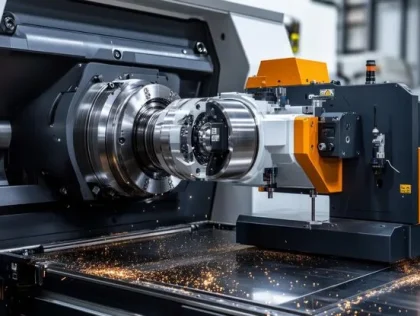
In a 3-axis workflow, a complex housing might need six different setups. In contrast, using advanced 5-axis CNC machine technology allows us to machine five sides of the part in a single setup. By keeping the part stationary and moving the tool around it, we maintain a single datum point (zero reference).
Benefits of Single-Setup Machining:
- Tighter Tolerances: Eliminates “stack-up” errors caused by multiple fixture changes.
- Better Surface Blending: Surfaces flow into each other smoothly without mismatch lines.
- Reduced Human Error: Less handling means fewer chances for loading mistakes or debris affecting the fixture.
3.2 When is 5-Axis Actually Cheaper? The Total Cost Perspective
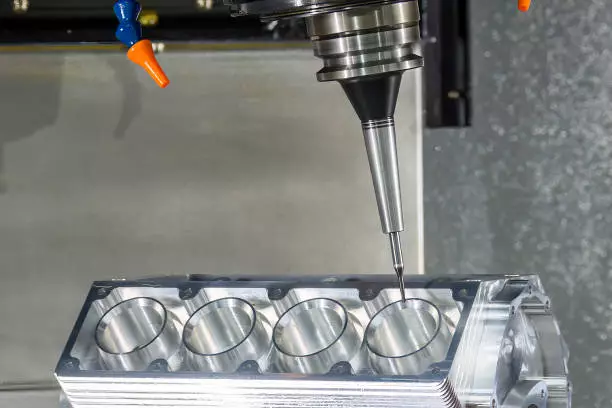
There is a misconception that 5-axis is always the expensive option. While the hourly machine rate is higher than a standard 3-axis mill, the total cost can actually be lower for specific geometries. We have to look at the entire picture, not just the machine run time.
If I produce cnc precision parts using a 3-axis approach that requires five custom fixtures and three hours of operator time just for changeovers, the costs skyrocket. The 5-axis machine might cost more per hour, but if it finishes the part in one hour with zero fixture costs and no operator intervention, it wins on the bottom line.
Cost Drivers to Consider:
- Fixture Costs: 5-axis often uses simple dovetail workholding, saving thousands on custom jigs.
- Labor Time: You aren’t paying a machinist to stand there and flip parts all day.
- Throughput: Faster turnaround times mean the parts get to your assembly line sooner.
For complex aerospace or automotive components, specifically those like intricate parts for aerospace and automotive applications, the efficiency of 5-axis machining frequently offsets the higher hourly rate, making it the smarter economic choice.
4. Decoding Cost Drivers: DFM Feedback That Saves Budgets
In our experience, Custom CNC Machining Explained Through Real Manufacturing Scenarios often comes down to one thing: manufacturability. We don’t just quote; we analyze your CAD files to find cost-saving opportunities. Many engineers are surprised to learn that minor design tweaks can reduce machining time by 30% or more. Our Design for Manufacturing (DFM) process focuses on identifying features that fight the machine, allowing us to deliver high-quality precision cnc parts without unnecessary expense.
4.1 Internal Corner Radii: The Secret to Faster Cycle Times
One of the most common cost drivers we see is the request for perfectly sharp 90-degree internal corners. Since CNC milling tools are round and spin, they physically cannot cut a square inside corner in a single pass. If a sharp corner is non-negotiable, we have to switch processes and utilize what is sinker EDM to burn the material away with an electrode, which significantly adds to the lead time and cost.
To keep production efficient, we recommend adding a radius to all internal vertical edges.
- The Rule of Thumb: Make the corner radius slightly larger than the radius of the tool likely to be used.
- The Benefit: This prevents the tool from stopping and turning 90 degrees abruptly, which causes stress. Instead, the cutter can maintain a continuous path, resulting in faster material removal and a better surface finish.
4.2 Deep Pockets and Thin Walls: Managing Vibration and Deflection
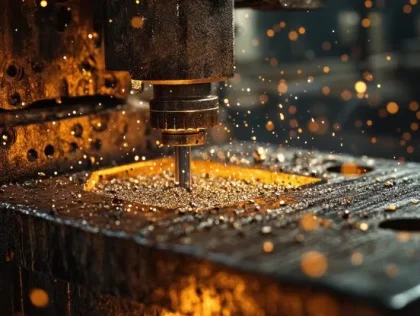
Deep cavities and thin walls are the enemies of speed. When machining deep pockets, we have to use long tools. The longer the tool sticks out from the holder, the more it wants to vibrate or “chatter.” This vibration ruins the surface finish and forces us to slow the machine down to a crawl to maintain tolerances on cnc precision parts. We generally advise keeping the depth-to-width ratio under 3:1.
Thin walls present a similar challenge regarding deflection. As the cutter pushes against the material, a thin wall will flex away from the tool, leading to dimensional inaccuracies. When we manufacture complex CNC milling parts, we often suggest thickening walls or adding temporary support structures to ensure the component remains rigid throughout the high-speed machining process.
5. Precision Machining for Critical Industries: Material & Surface Logic
When we discuss Custom CNC Machining Explained Through Real Manufacturing Scenarios, material selection is usually the first variable that dictates the manufacturing strategy. In critical industries like medical and aerospace, you cannot simply swap materials without completely overhauling the machining approach. We don’t just cut metal; we engineer the process to match the material’s specific behavior under stress and heat.
5.1 Beyond Aluminum 6061: Machining Titanium, Inconel, and PEEK
While we are a widely trusted aluminum machining parts manufacturer, many high-performance applications demand materials that are significantly harder to machine. Standard 6061 aluminum is forgiving, but stepping up to engineering plastics or superalloys requires strict process control to maintain cnc precision parts quality.
- PEEK (Polyether Ether Ketone): This is a staple in medical and aerospace applications due to its high thermal resistance. However, plastics like PEEK are prone to stress-relieving and warping during machining. We use specialized sharp tooling and specific coolant strategies to prevent heat buildup that could deform the part.
- Stainless Steel (304/316): Unlike aluminum, stainless steel work-hardens if the cutter dwells in one spot too long. We optimize our tool paths to maintain constant engagement, ensuring the material doesn’t harden before the cut is finished.
- Hard Metals: When dealing with tougher alloys, rigidity is key. Any vibration in the setup leads to poor surface finishes and broken tools. We utilize our rigid 4-axis and 5-axis setups to handle these high-stress cutting environments efficiently.
5.2 Critical Surface Finishes: When Aesthetics Meet Functional Tolerance
A common misconception in precision cnc parts production is that surface finishing is purely cosmetic. In reality, finishes like anodizing and powder coating alter the final dimensions of the part. If a bearing bore has a tolerance of ±0.005mm, adding a 0.01mm layer of anodizing without prior planning will cause the part to fail inspection.
We integrate surface finishing logic directly into the CAM programming stage:
- Anodizing (Type II & III): We account for the chemical build-up by machining features slightly undersized or oversized, depending on the geometry, so the final coated part lands right in the middle of the tolerance zone.
- Passivation: Essential for stainless steel medical parts to prevent corrosion. This process removes free iron from the surface without altering dimensions, ensuring biocompatibility.
- Bead Blasting: Used to create a uniform matte texture. We carefully control blast pressure to avoid rounding off sharp edges that need to remain crisp for assembly.
6. Risk Mitigation in Overseas Custom CNC Projects
When analyzing Custom CNC Machining Explained Through Real Manufacturing Scenarios, the biggest hesitation for US buyers often isn’t the machining capability itself, but the perceived risk of outsourcing. We bridge that gap by treating every order—whether it’s a single prototype or 10,000 units—with the same rigorous accountability you would expect from a shop down the street.
6.1 Quality Documentation: From MTR to FAI Reports
Trust is good, but documentation is better. We don’t expect you to take our word for it when it comes to material integrity or dimensional accuracy. Our ISO 9001:2015 certified process ensures that every batch of cnc precision parts comes with a complete paper trail. This eliminates the “mystery metal” fear common in overseas manufacturing.
Standard documentation packages include:
- Material Test Reports (MTR): These certify the chemical composition and mechanical properties of the raw stock. For instance, when we manufacture components of stainless steel, the MTR proves the material meets specific grades like 304 or 316L, ensuring the required corrosion resistance is present.
- First Article Inspection (FAI): Before running the full batch, we verify the first part against your GD&T requirements. This confirms that our setup produces parts that match your drawing exactly.
- CMM Reports: For tight tolerances (down to ±0.005mm), we provide coordinate measuring machine data to validate critical dimensions.
6.2 Lead Time Transparency and Logistics Packaging
A perfectly machined part is worthless if it arrives damaged or three weeks late. We treat logistics as an extension of the manufacturing process. Since we offer turnaround times as fast as 1–3 days for prototypes, we ensure that speed isn’t lost in transit.
We mitigate shipping risks through:
- Custom Packaging: We don’t just throw parts in a box. Delicate precision cnc parts are individually wrapped, placed in custom foam trays, or vacuum-sealed to prevent scratches and corrosion during air or sea freight.
- Honest Lead Times: We provide realistic delivery dates upfront. If a complex finish like anodizing or powder coating adds two days to the schedule, we factor that in immediately rather than over-promising.
- No MOQ Flexibility: Our ability to handle orders from 1 to 100,000+ units means you can test our logistics with a small run before committing to full-scale production.