
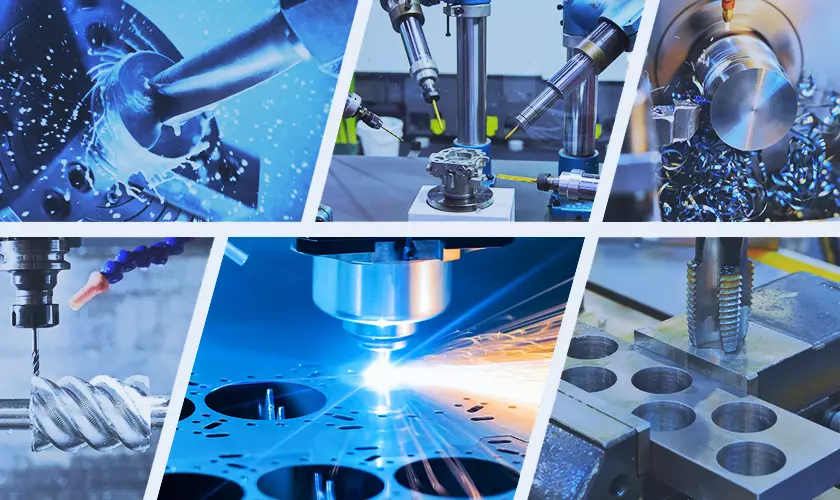
You might already know that CNC Machine Metal Cutting is the backbone of modern manufacturing precision…
But do you know exactly how to optimize your setup for maximum efficiency and accuracy?
Well, you’re in the right place because I’ve put together the ultimate resource.
In this complete guide, you’re going to learn the essential key principles behind CNC technology, from high precision milling to complex turning operations.
We cover the critical advantages, the most common mistakes to avoid, and the future trends that are reshaping the industry.
If you are looking to master the art of machining and boost your productivity, this guide is for you.
Let’s dive right in.
1. What is CNC Machine Metal Cutting?
CNC Machine Metal Cutting is the cornerstone of modern industrial manufacturing. It utilizes computerized controls to drive machine tools, removing layers from a metal workpiece to create a custom shape. Unlike traditional methods, this process relies on digital files to dictate every movement, ensuring that the final output matches the design specifications down to the micrometer.
1.1 Definition of CNC
CNC stands for Computer Numerical Control. It is a manufacturing process where pre-programmed computer software dictates the movement of factory tools and machinery.
- Automation: The process is fully automated, reducing human intervention.
- G-Code: The machine reads code (G-code) to control speed, feed rate, and coordination.
- Subtractive Manufacturing: It shapes material by cutting away layers from a solid block.
We utilize this technology to transform raw metal stock into functional, high-performance components with speed and reliability that manual machining simply cannot match.
1.2 Differences Between CNC and Manual Cutting
The shift from manual to CNC machining represents a massive leap in productivity and quality. While manual machining relies heavily on the operator’s skill and steady hand, CNC machining relies on rigid programming and machine stability.
| Feature | Manual Machining | CNC Machine Metal Cutting |
|---|---|---|
| Control | Hand wheels and levers | Computer program (G-Code) |
| Precision | Dependent on operator skill | Consistent, high-tolerance accuracy |
| Speed | Slow, labor-intensive | High-speed, continuous operation |
| Repetition | Difficult to replicate perfectly | Identical production for thousands of parts |
| Complexity | Limited to simple geometries | Capable of complex 3D contours |
1.3 Key Industry Terminology
Understanding the vocabulary is essential when sourcing precision CNC parts. Here are the core terms defining high-quality production:
- CNC Precision Parts: Components manufactured with extremely tight tolerances, often used in aerospace and medical industries where error is not an option.
- Tolerance: The allowable limit of variation in a physical dimension. In precision CNC parts, this is often measured in microns.
- CAD (Computer-Aided Design): The software used to create the 2D or 3D digital model of the part.
- CAM (Computer-Aided Manufacturing): The software that translates the CAD design into instructions (G-code) for the CNC machine.
2. Advantages of CNC Metal Cutting
When we look at modern manufacturing, CNC machine metal cutting stands out as the industry standard for a reason. It isn’t just about replacing manual labor; it’s about unlocking capabilities that were previously impossible or too expensive to achieve. Here is why we rely on this technology for everything from prototypes to mass production.
2.1 High Precision and Accuracy
The most significant benefit we get from CNC machining is the ability to hold incredibly tight tolerances. Unlike manual machining, where human error is a constant variable, computer numerical control ensures that every cut is executed exactly as programmed. This is non-negotiable for industries like aerospace and medical, where precision CNC parts must fit perfectly every single time.
If you are dealing with strict geometric requirements, understanding how accurate CNC milling is becomes crucial. We can consistently achieve tolerances within microns, ensuring the final component matches the digital design without deviation.
2.2 Efficiency and Productivity
Time is money in our line of work. CNC machines can run 24/7 with minimal supervision, stopping only for maintenance or setup changes. This continuous operation drastically reduces lead times compared to manual processes.
- Automated Tool Changes: The machine swaps tools automatically, reducing downtime.
- High-Speed Machining: Modern CNCs cut faster and cleaner than any manual operator could.
- Reduced Waste: Precise toolpaths mean we use raw materials more efficiently, saving costs on expensive metals.
2.3 Complex Geometries
Creating complex 3D shapes with manual equipment is often a nightmare, if not impossible. With CNC machine metal cutting, specifically using multi-axis machines (like 5-axis centers), we can approach the workpiece from almost any angle. This allows us to machine complex contours, undercuts, and organic shapes in a single setup. It opens the door for engineers to design parts based on function rather than manufacturing limitations.
2.4 Repetition and Consistency
For production runs, consistency is king. Whether we are making ten parts or ten thousand, the first part must be identical to the last. CNC technology excels here. Once the program is verified, the machine reproduces the same CNC precision parts over and over again. This reliability eliminates the “Monday morning” variations you might see with manual labor, ensuring that assembly lines don’t stall due to ill-fitting components.
2.5 Versatility
CNC machines aren’t one-trick ponies. A single machine can perform various operations—drilling, boring, facing, and turning—often in the same cycle. Furthermore, the flexibility to switch between different materials is a massive advantage. We can go from cutting soft aluminum to hardened steel just by changing the cutting tools and adjusting the speeds and feeds. If you are new to the process, learning the basics of what CNC milling is can help you understand just how adaptable these setups are for different project needs.
3. Key Principles of CNC Machine Metal Cutting
To get the most out of CNC Machine Metal Cutting, you have to master the fundamentals. It’s not just about pushing a button; it’s about balancing physics, software, and mechanics. Here is how we break down the core principles to ensure every job runs smoothly.
3.1 Material Considerations
The material dictates the entire process. You cannot treat aluminum the same way you treat hardened steel. When we handle metal parts fabrication, checking the machinability rating is the first step. Soft metals are forgiving and allow for high speeds, while harder alloys require patience and rigid setups.
For example, aluminum CNC machining parts are a staple in US manufacturing because the material dissipates heat well and cuts cleanly.
Common Material Properties:
| Material | Machinability | Heat Resistance | Typical Application |
|---|---|---|---|
| Aluminum | High | Low | Aerospace, Automotive, Prototyping |
| Stainless Steel | Low | High | Medical Devices, Food Processing |
| Brass | Very High | Low | Fittings, Valves, Decor |
| Titanium | Low | Very High | Aerospace, High-Performance Parts |
3.2 CAD/CAM Software
The hardware is useless without the software. The process starts with CAD (Computer-Aided Design) to create the 3D model, followed by CAM (Computer-Aided Manufacturing) to generate the G-code.
This code tells the machine exactly where to move. Modern CAM software helps us visualize the operation before a single chip is cut, preventing costly collisions and optimizing the workflow for complex geometries.
3.3 Cutting Tools
Selecting the right tool is critical for producing cnc precision parts. Using the wrong end mill can lead to chatter, poor surface finish, or broken tools. We generally choose between High-Speed Steel (HSS) and Carbide based on the budget and performance needs.
- End Mills: The workhorse for cutting slots and profiles.
- Face Mills: Used for flattening large surface areas quickly.
- Drill Bits: Specifically for making holes.
- Taps: Used to cut threads inside a hole.
3.4 Tool Paths & Cutting Parameters
This is the science of CNC Machine Metal Cutting. You need to dial in the “Feeds and Speeds” correctly. If the spindle spins too fast (RPM) without moving the tool fast enough (Feed Rate), you will burn the material.
- Spindle Speed (RPM): How fast the tool rotates.
- Feed Rate (IPM): How fast the tool moves through the material.
- Depth of Cut: How much material is removed in one pass.
- Stepover: The distance between parallel tool paths.
3.5 Workholding & Fixturing
If the workpiece moves, the part is ruined. Rigid workholding is non-negotiable for achieving tight tolerances on precision cnc parts. We use various methods to ensure the metal block stays rock-solid against the cutting forces.
- Vises: Standard for square or rectangular blocks.
- Soft Jaws: Custom-machined jaws to hold complex shapes.
- Clamps & T-Slots: Used for larger plates or irregular objects.
- Vacuum Tables: Best for holding down thin sheets without clamps getting in the way.
4. Types of CNC Metal Cutting Operations
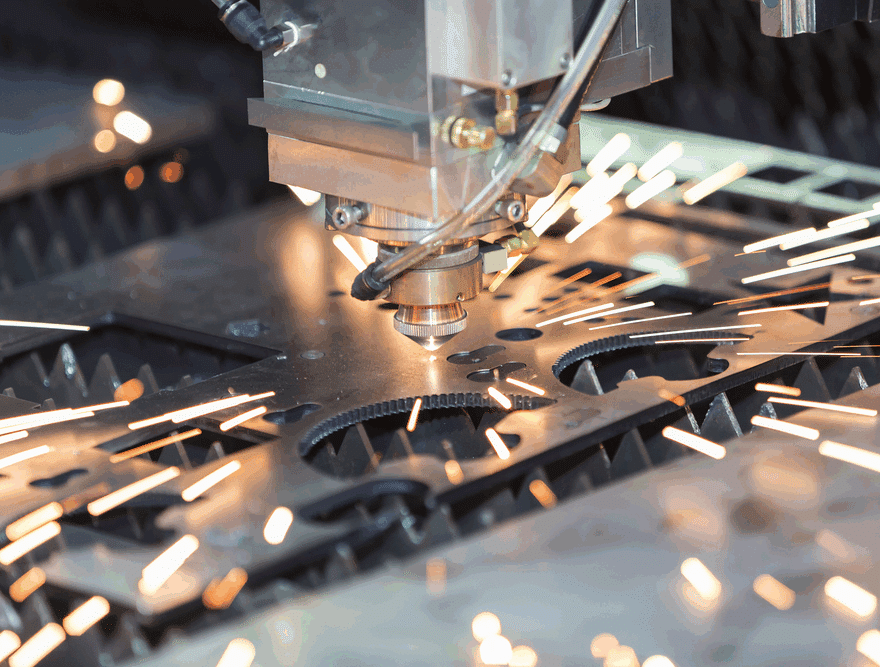
At MS Machining, we utilize a diverse range of cutting strategies to transform raw metal stock into precision cnc parts. Understanding the specific mechanics of these operations helps in designing components that are both functional and cost-effective to manufacture.
4.1 Milling
Milling is the backbone of most custom machining projects. In this process, the workpiece remains stationary while a high-speed rotating cutting tool removes material to shape the part. We employ advanced 3-axis, 4-axis, and 5-axis equipment to handle everything from simple flat surfaces to complex, non-symmetrical geometries. Our setup typically uses a CNC milling machine to achieve tight tolerances and superior surface finishes on metals like aluminum, stainless steel, and titanium.
4.2 Drilling
While milling can create holes, dedicated drilling operations are often more efficient for creating deep or standard cylindrical holes. This process uses a multi-point drill bit to penetrate the metal surface. For CNC machine metal cutting, drilling is often just the first step, setting the stage for subsequent operations like tapping or reaming to ensure the hole meets precise assembly requirements.
4.3 Turning
Turning is the inverse of milling. Here, the metal workpiece rotates at high speed on a lathe while a stationary cutting tool moves linearly to remove material. This is the primary method for creating cylindrical parts with external and internal features. Our capabilities include standard CNC turning as well as Swiss machining, which is ideal for producing small, high-precision components with complex details in a single setup.
4.4 Tapping
Tapping is a critical operation for parts that require assembly. This process cuts internal threads into a drilled hole, allowing screws or bolts to be fastened securely. We perform rigid tapping cycles to ensure thread depth and pitch are perfectly consistent, preventing issues like cross-threading during final assembly.
4.5 Boring & Reaming
When standard drilling doesn’t meet the required tolerance or surface finish, we turn to boring and reaming.
- Boring: Uses a single-point cutting tool to enlarge an existing hole, correcting its position and ensuring perfect roundness.
- Reaming: Removes a very small amount of material to bring a hole to its exact final diameter with a smooth finish.
These finishing operations are essential when we are targeting our standard tolerances of ±0.005mm for critical cnc precision parts.
5. How to Optimize CNC Metal Cutting
Optimizing the machining process is the difference between an average component and high-quality precision CNC parts. At MS Machining, we focus on five critical areas to ensure every cut meets our strict ISO 9001:2015 standards and achieves tolerances as tight as ±0.005mm.
5.1 Choose a Rigid CNC Machine
The foundation of accuracy is machine rigidity. You cannot hold tight tolerances on a flimsy machine. We utilize advanced 3-axis, 4-axis, and 5-axis CNC milling machines alongside robust turning centers. A rigid machine structure absorbs vibration during heavy cutting loads, which is essential when working with tough materials like Stainless Steel 316 or Titanium. Using the right machine architecture ensures that the final geometry matches the CAD design perfectly without chatter marks.
5.2 Secure Workpiece Clamping
Even the best machine fails if the workpiece moves. Proper workholding is non-negotiable. We employ specialized fixturing techniques to ensure the metal stock remains immobile against cutting forces.
- Vises and Jaws: For standard rectangular parts.
- Soft Jaws: Custom-machined to match complex part geometries.
- Vacuum Fixtures: For thin, flat plates to prevent bowing.
Solid clamping prevents part rejection and ensures safety. For complex projects, our CNC engineering services team designs custom fixtures to maintain stability throughout high-speed operations.
5.3 Select the Right Cutting Tools
Tool selection dictates surface finish and cycle time. You must match the cutter material and geometry to the workpiece.
- Aluminum (6061/7075): Use polished carbide tools with high helix angles to prevent material buildup (galling).
- Steel & Titanium: Require coated carbide tools capable of withstanding high heat and abrasion.
Tool Selection Guide:
| Material Type | Recommended Tool Material | Key Feature |
|---|---|---|
| Aluminum | Uncoated Carbide | Sharp edge for shearing |
| Stainless Steel | TiAlN Coated Carbide | Heat resistance |
| Hardened Steel | CBN or Ceramic | Extreme hardness |
| Brass/Copper | HSS or Carbide | General purpose geometry |
5.4 Adaptive Toolpaths
Modern CAM software allows us to use adaptive clearing (trochoidal milling). Instead of burying the tool in a corner, the cutter follows a smooth, spiraling path that maintains a constant chip load. This strategy allows us to run machines faster while extending tool life and reducing heat generation. It is particularly effective for CNC machine metal cutting in deep pockets or hard metals.
5.5 Use Cutting Fluids
Heat is the enemy of precision. Thermal expansion can push a part out of tolerance within minutes. We use high-pressure coolant systems to:
- Evacuate Chips: Prevents re-cutting chips, which damages the surface finish.
- Lubricate: Reduces friction at the cutting edge.
- Cool: Keeps the workpiece and tool at a stable temperature.
Proper coolant application is vital for achieving the mirror-like finishes often required on cnc precision parts for medical and aerospace applications.
cURL error: transfer closed with outstanding read data remaining
7. Applications of CNC Metal Cutting
CNC technology has completely reshaped how we manufacture metal products across the United States. From the cars we drive to the planes we fly, CNC machine metal cutting is the backbone of modern industry. It allows us to turn raw metal blocks into functional, high-performance components with incredible speed.
7.1 Automotive Parts Manufacturing
In the automotive industry, consistency is king. We use CNC machining to produce complex engine components, suspension parts, and custom modifications that require tight tolerances. Whether it’s a massive production run for a major manufacturer or a custom job for a performance shop, the ability to repeat the exact same cut thousands of times is essential.
- Engine Components: Cylinder heads, pistons, and connecting rods.
- Transmission Parts: Gears and shafts that demand high durability.
- Customization: Aftermarket brackets and aesthetic trims.
7.2 Aerospace Components Machining
Aerospace manufacturing tolerates zero errors. When we are cutting metal for aircraft or spacecraft, safety is the absolute priority. CNC machine metal cutting is used here to process lightweight but tough materials like titanium and aluminum alloys.
The focus here is on achieving complex geometries while maintaining structural integrity. Every gram counts, and CNC machines allow us to remove excess weight without compromising strength.
7.3 Industrial Molds and Precision Parts
This is one of the most demanding sectors we work in. Creating molds for injection molding or die casting requires mirror-like finishes and exact dimensions. If the mold is off by a fraction of a millimeter, the final plastic or metal part will fail.
We also produce cnc precision parts for medical devices and electronics. When creating high-stakes components, selecting the right materials for CNC precision parts is just as critical as the cutting process itself to ensure longevity and performance.
7.4 DIY Projects and Small Batch Production
CNC isn’t just for massive factories anymore. We see a huge demand for small batch production and prototyping for startups and inventors. It allows for rapid iteration—you can design a part, cut it, test it, and refine the design in a matter of days.
- Prototyping: Testing fit and function before mass production.
- Spare Parts: Recreating obsolete parts for repair.
- Custom Enclosures: Housing for specialized electronics.
If you are looking to scale up from a prototype to a larger run, understanding why to choose custom metal fabrication can help streamline your production line and reduce overall costs. Precision cnc parts are now accessible to businesses of all sizes, not just the giants.
8. Future Trends in CNC Metal Cutting
The manufacturing landscape is evolving rapidly. To stay competitive in the US market, we are constantly adopting new technologies that make CNC machine metal cutting faster, smarter, and more reliable. Here is where the industry is heading.
8.1 Smart Manufacturing and Industrial IoT
The shop floor is becoming fully connected. We are integrating the Industrial Internet of Things (IIoT) to gather real-time data from our machines. This isn’t just about collecting numbers; it’s about actionable insights.
- Predictive Maintenance: Sensors monitor vibration and temperature to predict spindle failure before it stops production.
- Remote Monitoring: We can track machine status and job progress from anywhere, ensuring 24/7 productivity.
- Data-Driven Decisions: analyzing cutting data helps us refine processes and reduce waste over time.
8.2 High-Speed Machining and Multi-Functional Machines
Efficiency drives profit. The trend is moving toward machines that can do more in a single setup. Multi-tasking machines, such as 5-axis centers that combine milling and turning, reduce the need to move workpieces between stations. This reduction in handling significantly lowers the margin for error, which is essential when manufacturing precision cnc parts.
Additionally, advancements in spindle speeds and rigidity allow for faster material removal rates without sacrificing quality. These capabilities enable us to deliver complex high precision CNC machining parts with superior surface finishes and tighter tolerances than ever before.
8.3 AI-Assisted Toolpath Optimization
Artificial Intelligence is revolutionizing how we program our cuts. AI-driven CAM software analyzes the geometry of the part and automatically determines the most efficient tool paths.
- Reduced Cycle Times: AI eliminates unnecessary “air cutting” movements.
- Extended Tool Life: Algorithms adjust feed rates in real-time to maintain constant chip load, preventing tool breakage.
- Automated Programming: This speeds up the transition from design to finished part, making small-batch runs more economical.