
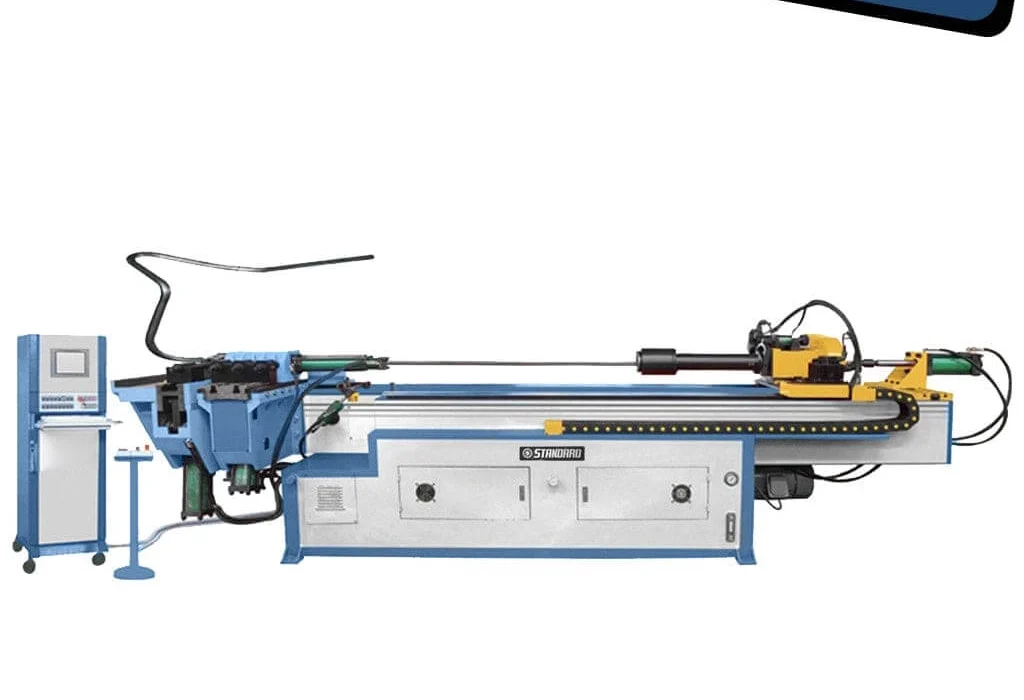
How a CNC Tubing Bender Actually Works
A CNC tubing bender shapes metal tubes or pipes by using precise mechanical forces controlled by a computer. Here’s a simple breakdown of its main components and how they work together:
| Component | Function |
|---|---|
| Bend Head | The main part that physically bends the tube. |
| Pressure Die | Holds the tube firmly and helps guide the bend. |
| Clamp Die | Clamps the tube to prevent slipping during bending. |
| Mandrel | Inserted inside the tube to prevent collapsing or wrinkling (used in mandrel bending). |
| Booster | Provides additional force for bending thicker or tougher tubes. |
| Carriage | Moves the tube into position for bending. |
Draw Bending vs Compression Bending
-
Draw Bending: The tube is pulled around the bend die while supported by the mandrel inside. This method offers tight radii and clean bends with minimal deformation, ideal for precise tubing like automotive exhausts or aerospace hydraulic lines.
-
Compression Bending: The tube is pushed against a fixed bend die, compressing the outer wall. This is usually faster but can cause wrinkling or distortion, making it better for larger diameter tubes where perfect shape isn’t critical.
Role of the CNC Controller
The CNC controller is the machine’s brain, managing bending sequences, angles, and speeds. Common controllers include:
- Beckhoff: Highly customizable for complex bending tasks and multi-axis setups.
- Siemens: Known for reliability and integration with Industry 4.0 systems.
- Proprietary Systems: Tailored specifically to the machine’s hardware, often with user-friendly interfaces for simpler operation.
The controller ensures repeatable accuracy, adapts to different tubing profiles, and can store complex bending programs — essential for efficient, precision manufacturing.
By combining these components and control systems, a CNC tubing bender delivers consistent, precise bends with minimal manual input, transforming complex tubing shapes into accurate, high-quality parts with ease.
Key Types of CNC Tube Benders Available Today
When choosing a CNC tubing bender, it helps to know the main types available and how they differ.
-
Single-stack vs Multi-stack vs Vector (Rotary Draw)
Single-stack benders handle one bending station at a time, ideal for simple or shorter runs. Multi-stack machines have several bending heads working together, boosting production speed for complex parts. Vector or rotary draw benders rotate the tube during the bend, giving maximum flexibility and enabling intricate 3D bends.
-
Mandrel vs Non-mandrel Benders
Mandrel tube benders use a flexible mandrel inside the tube to prevent collapse or wrinkles, essential when bending thin-wall stainless steel or exotic alloys. Non-mandrel machines are faster and less expensive but are better suited for thicker walls or less critical bends.
-
Fully Electric vs Hybrid vs Hydraulic
Fully electric CNC tube benders offer high precision, low maintenance, and energy efficiency, perfect for tight tolerances and frequent use. Hybrid models combine electric drives with hydraulic boosts to balance power and efficiency. Hydraulic machines still dominate heavy-duty jobs needing massive bending force but come with higher maintenance and energy costs.
-
Right-Hand vs Left-Hand vs Twin-Head Machines
Right-hand and left-hand distinguish bending direction, so choose based on your shop layout and tube shapes. Twin-head benders have two bending arms, effectively doubling throughput for symmetrical or complex jobs.
Each type has its place depending on your production needs, materials, and budget. For those looking to expand capabilities, some CNC tube benders also integrate laser cutting or other processes, creating all-in-one solutions like a CNC tube bender with lasercutter.
For more on the versatility and precision available, check out MS Machining’s advanced 5-axis CNC machining services that complement tube bending abilities seamlessly.
Critical Specs to Compare Before Buying a CNC Tubing Bender
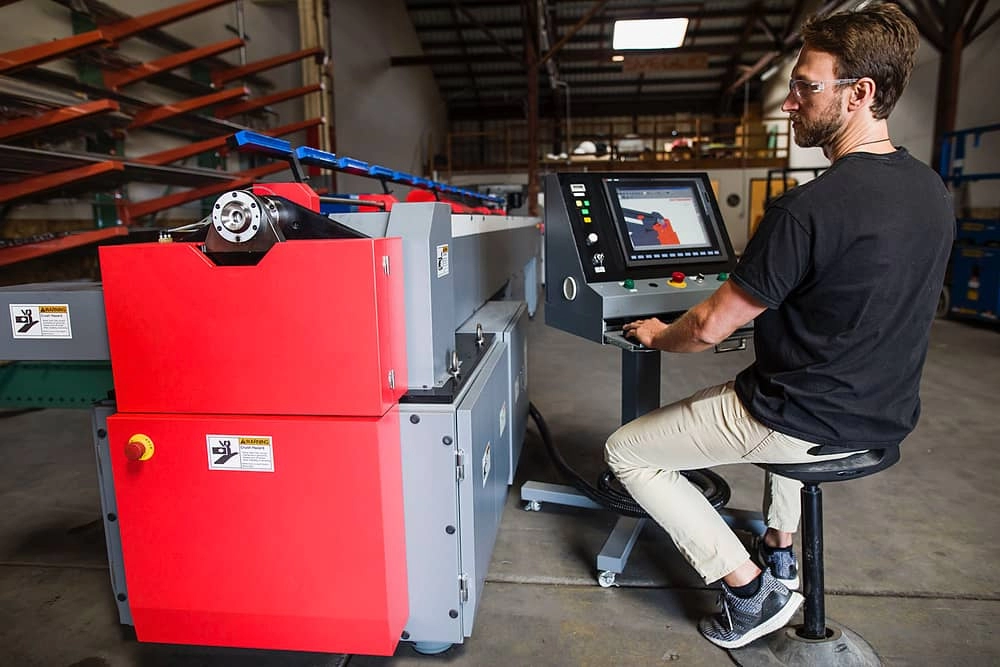
When choosing a CNC tubing bender, it’s key to compare specs that directly affect your production needs and budget. Here’s what to focus on:
| Specification | What to Look For | Why It Matters |
|---|---|---|
| Maximum Tube OD & Wall Thickness | Check max outer diameter and tube thickness machine can handle | Ensure compatibility with your pipes, including thick-wall or large tubes |
| Minimum Centerline Radius (CLR) & Max Bend Angle | How tight the bend can be and how far it can rotate (up to 360° or more) | Needed for complex part designs and tight bends without kinks |
| Number of Axes (3–12+) | More axes allow multi-plane bends and rotation control | Extra axes = greater flexibility for intricate bends, reduces manual repositioning |
| Bending Speed & Booster Force (Tons) | Speed of the cycle, plus hydraulic/electric booster power | Faster production and ability to bend stronger materials with thick walls |
| Accuracy & Repeatability | Look for ±0.1° or better; consistent precision each run | Critical for high-quality parts, reduces scrap and rework costs |
| Tooling Changeover Time | Time it takes to swap dies and mandrels | Faster changeover = less downtime, especially for mix batch runs |
Why Each Spec Counts
- Tube OD & Wall Thickness: Not all CNC tube benders can handle thick-wall or large-diameter tubes. Know your material specs before choosing.
- CLR & Bend Angle: A tighter centerline radius (like 1D or less) means better complex bends—vital for aerospace or automotive parts.
- Axes Number: Basic 3-axis machines handle simple bends. But if you want multi-axis bends on square or rectangular tubing, look at machines offering up to 12 axes or vector bending.
- Speed and Booster Force: Heavy gauge tubing needs more bending force. Higher booster tons mean the machine won’t stall or lose accuracy.
- Accuracy & Repeatability: This affects your yield. Machines with high repeatability keep parts uniform over long runs.
- Changeover Time: In a flexible shop with lots of job types, fast tooling change can save hours weekly.
Getting these specs right ensures your CNC tube bender fits both your parts and production volume.
For precision metal parts beyond bending, check out our CNC machining metal parts services to complement your tube fabrication setup.
Electric CNC Tube Benders vs Hydraulic – 2026 Comparison Table
Choosing between electric and hydraulic CNC tubing benders comes down to your shop’s needs. Here’s a quick side-by-side look at how they stack up in 2026:
| Feature | Electric CNC Tube Bender | Hydraulic CNC Tube Bender |
|---|---|---|
| Energy Consumption | Low – efficient use of power | High – pumps run continuously |
| Speed | Faster cycle times; quick response | Slightly slower due to fluid flow |
| Maintenance | Lower – fewer moving parts | Higher – pumps, seals, and hoses |
| Precision | High – repeatable with tight tolerances | Good – but can vary with fluid pressure |
| Initial Cost | Higher upfront investment | Lower entry price |
Electric models are popular for their speed, precision, and energy savings but come with a bigger price tag. Hydraulic machines often suit shops on a tighter budget or those bending heavy, thick tubes where extra force is needed.
For U.S. shops aiming to boost accuracy and cut operating costs, electric CNC tube benders are becoming the standard. On the other hand, hydraulic benders remain strong contenders in high-volume, heavy-duty bending applications.
Interested in how electric CNC machines improve job throughput? Check out our post on rapid CNC machining speed and precision for insights on related automation benefits.
Mandrel Bending Explained – When You Need It and When You Don’t
Mandrel bending is essential when you’re working with thin-wall or high-strength materials like stainless steel, titanium, or Inconel. It keeps the tubing wrinkle-free and prevents collapse during tight-radius bends by supporting the tube’s inside with a flexible mandrel. This is especially important for aerospace hydraulic lines, automotive exhaust systems, and roll cages where precision and structural integrity are non-negotiable.
A key part of successful mandrel bending is using the right wiper die materials, typically high-grade bronze or hardened steel, combined with proper lubrication. This reduces wear and tear on tooling and helps maintain a smooth bend without marks or cracks.
However, mandrel bending isn’t always necessary. For thicker wall tubes or larger radii, non-mandrel bending often works just fine and saves you time and tooling costs. But when working with demanding materials—like those used in aerospace or performance automotive components—mandrel bending is your best bet to get consistent, high-quality results.
For more details on working with tough materials such as Inconel, explore our CNC machining Inconel services to see how precision machining complements mandrel bending in advanced applications.
Popular Applications & Real Project Examples
CNC tubing benders are essential in many industries across the U.S., delivering precision and efficiency for complex projects. Here are some common applications where these machines truly shine:
- Automotive & Motorsport: Bending exhaust systems, turbo tubing, and chassis parts requires tight radii and repeatability. High-quality CNC mandrel tube benders ensure wrinkle-free bends on stainless steel and lightweight alloys for performance vehicles.
- Aerospace & Defense: Here, precision is critical. Aerospace hydraulic lines and structural tubing benefit from multi-axis CNC benders that handle exotic materials like Inconel with repeatable accuracy.
- Furniture & Architectural: Curved metal frames, handrails, and design elements need smooth, consistent bends. Electric CNC tube benders help create elegant shapes in steel or aluminum, enabling custom architectural projects.
- HVAC and Boiler Tubing: Reliable tubing for heating and cooling systems often involves long runs with multiple bends. CNC benders with automatic unloading speed up production while maintaining tight tolerances.
- Medical Equipment: Precision tubes used in hospital beds, surgical tools, and mobility devices require clean, accurate bends without damaging delicate materials.
Real Project Examples from MS Machining
- Automotive Exhaust Systems: Using a 5-axis CNC tube bender, MS Machining produced a batch of stainless steel turbo tubing with a minimal centerline radius, reducing exhaust flow restrictions for a race team.
- Aerospace Hydraulic Lines: MS Machining delivered intricate Inconel tubing assemblies with mandrel bending to a defense contractor, ensuring zero wrinkles and precise fitment.
- Architectural Handrails: For a custom office building, CNC electric tube bending created complex aluminum handrails with tight bend angles and flawless surface finish.
- HVAC Tubing Runs: Using hybrid hydraulic CNC benders, MS Machining supplied long sections of copper tubes for a large boiler system, meeting demanding tolerances on bend angle and radius.
These projects highlight how the right CNC tube bending technology adapts flexibly to varied materials, shapes, and production needs. To achieve optimal results, pairing your CNC bender with expert support like MS Machining’s CNC engineering services can make all the difference in managing tooling and process setup smoothly. You can explore their broader capabilities in custom CNC engineering services to streamline your workflow.
Integrations That Save Even More Time
Modern CNC tubing benders don’t just bend—they streamline your entire production process. One popular integration is a CNC tube bender with a laser cutting module. This combo lets you cut and bend tubing in one seamless setup, cutting down handling time and improving accuracy by avoiding multiple machine transfers.
Automatic loading and unloading systems are another game-changer. These systems reduce manual labor, speed up cycle times, and minimize human error, keeping your shop running smoothly and safely.
Many setups also include in-line end forming and cutting functions. This means you can straighten, flare, or bevel tube ends right before or after bending, all in one continuous process. It saves space and boosts productivity, especially if you work with complex tubing assemblies.
Finally, Industry 4.0 connectivity is becoming standard. Connecting your CNC tube bender to your factory network allows real-time monitoring, remote diagnostics, and data-driven maintenance. This smart integration helps prevent downtime and keeps your operation efficient.
For shops working with high-grade materials like titanium or stainless steel, integrating precision modules can link directly with CNC machining and casting processes, similar to how advanced manufacturers handle stainless steel casting CNC machining quality to maintain tight tolerances through all stages.
How to Choose the Right CNC Tube Bender for Your Shop (Decision Checklist)
Picking the right CNC tubing bender can be a game-changer for your shop’s efficiency and quality. Here’s a simple 10-point checklist to help you decide:
| Factor | What to Consider |
|---|---|
| 1. Material Type | What metals or alloys — stainless, aluminum, Inconel? |
| 2. Batch Size | Small runs or large production? |
| 3. Tightest Bend Radius | How sharp are your bends? Check minimum CLR specs. |
| 4. Tube Size | Max outer diameter (OD) and wall thickness needed. |
| 5. Number of Axes | Do you need 3, 5, or more axes for complex shapes? |
| 6. Type of Bender | Mandrel vs non-mandrel, single-stack vs multi-stack. |
| 7. Power Source | Fully electric, hybrid, or hydraulic? |
| 8. Floor Space | Available space in your shop for machine footprint. |
| 9. Budget | Initial cost plus tooling and maintenance expenses. |
| 10. Integration Needs | Need laser cutting, automation, or Industry 4.0? |
By reviewing these points, you’ll match your shop’s production goals with the CNC tube bender that fits your workflow and budget. Keep in mind that some options, like electric CNC tube benders, save floor space and energy, while multi-stack machines offer faster cycle times for bigger batches.
For more info on material handling and machining capabilities, check out our guide on what materials a CNC machine can cut. This will help you align your tubing bender choice with the metals you commonly work with.
Choosing smart upfront leads to less downtime, faster changeovers, and better return on investment.
Cost & ROI Reality Check in 2026
When budgeting for a CNC tubing bender in 2026, prices vary widely based on features and capabilities. Entry-level 3-axis machines typically start around $80,000, while advanced full electric multi-stack CNC tube benders with boosters can exceed $350,000. These high-end models offer faster bending speeds, better accuracy, and greater flexibility but come with a steeper upfront cost.
Payback periods depend on your production volume and application. Some customers see returns within 12-18 months by improving throughput and reducing scrap on projects like automotive exhausts or aerospace tubing. Others might need a longer horizon if batch sizes are smaller or if the machine is part of a larger automation upgrade.
Don’t overlook the hidden costs: tooling expenses for mandrel dies or special clamp sets, operator training to master sophisticated CNC controls, and ongoing maintenance are essential for keeping your equipment running efficiently. Factoring these into your ROI calculation ensures you get a realistic view of total ownership costs.
For shops specializing in precision materials like stainless steel or titanium, pairing your CNC tubing bender with complementary services such as stainless steel polishing can enhance final product quality and customer satisfaction. Planning for these add-ons early can help maximize your investment’s overall value.
Why MS Machining Has Become a Trusted OEM Partner for CNC Tube Benders Worldwide
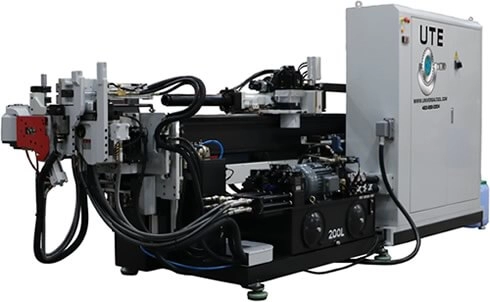
With over 15 years of experience in building both custom and standard CNC tubing benders, MS Machining stands out as a reliable OEM partner for manufacturers across the globe. Our in-house design team ensures every machine meets stringent quality standards, supported by CE and ISO certifications to guarantee safety and compliance.
We pride ourselves on rapid tooling design turnaround times, helping you get your CNC tube bender up and running faster. Plus, our global after-sales support means expert help is never far away, whether you need maintenance advice or quick part replacements.
Customers value our combination of technical expertise and responsive service, making MS Machining a go-to supplier for electric CNC pipe benders, multi-stack CNC benders, and hybrid machines alike. If you want a trusted partner who understands your precision tube bending needs inside and out, MS Machining delivers every time.
For more details on our capabilities, check out how we support industries like aerospace and medical equipment manufacturing with precision CNC machining solutions.
Frequently Asked Questions About CNC Tubing Benders
What is the smallest radius a CNC bender can achieve?
Most CNC tubing benders can handle tight radii down to about 1.0 times the tube’s outer diameter (OD), but this varies by machine and tooling. With advanced mandrel bending and specialized tooling, some machines achieve even smaller centerline radii (CLR), ideal for thin-wall or exotic materials.
Can a CNC tube bender handle square and rectangular tubing?
Yes, many CNC benders are designed for round, square, and rectangular tubing. Machines like the CNC square tube bender use specialized dies to maintain shape integrity during bending, preventing collapse or deformation.
How long does tooling setup take on a modern machine?
Thanks to quick-change tooling systems, setup usually takes between 15 and 30 minutes, depending on the complexity. Some multi-stack and electric CNC benders feature even faster changeover, helping reduce downtime significantly.
Do you offer turnkey solutions with laser cutting?
Yes. Integrating CNC tube benders with laser cutting modules provides a complete, automated workflow from bending to precise cutting — a major time saver for high-volume production. Learn how our combined CNC tube bender and laser cutting solutions optimize your process.
What is the warranty and service response time?
Warranty periods often range from 12 to 24 months, covering parts and labor. Fast service response is a priority, with many OEMs, including MS Machining, providing dedicated support teams for quick troubleshooting and parts replacement to maximize uptime.
If you want to explore more about precision manufacturing, check out our guide on CNC aerospace machining to see how advanced CNC technologies drive quality and reliability.