Sheet metal fabrication is at the heart of countless everyday products—from sturdy automotive panels to sleek electronics enclosures. But what exactly is the sheet metal fabrication process, and why does it matter so much in modern manufacturing? Simply put, it’s the precise transformation of flat metal sheets into custom, functional parts using cutting, forming, joining, and finishing techniques. Whether you’re an engineer, a buyer sourcing custom components, or just curious about how metal parts come to life, understanding this process is essential. In this guide, you’ll get a clear, step-by-step look at key methods like laser cutting sheet metal, sheet metal bending, and precision sheet metal fabrication, plus insights into materials, tools, and applications. Ready to explore how expert fabricators like MS Machining deliver quality and accuracy you can trust? Let’s dive in.
What Is Sheet Metal? Fundamentals Before Fabrication
Sheet metal is a versatile, thin flat piece of metal that serves as the foundation for countless fabrication projects. Common materials include mild steel, stainless steel, aluminum, copper, and brass—each offering distinct properties suited for specific needs.
Mild Steel: Affordable and easy to work with; great for structural parts.
Stainless Steel: Corrosion-resistant and durable; preferred for hygienic and outdoor applications.
Aluminum: Lightweight with good corrosion resistance; ideal for aerospace and automotive components.
Copper: Excellent electrical conductivity; often used in electrical and plumbing applications.
Brass: Attractive finish with good corrosion resistance; common in decorative or mechanical parts.
Before fabrication, raw sheet metals are produced primarily through hot rolling—where metal is heated and shaped—and cold rolling, which involves shaping the metal at room temperature for better surface finish and strength. Understanding these production processes helps in selecting the right material grade and thickness.
Choosing the proper sheet metal material is crucial because it directly impacts fabrication outcomes such as strength, machinability, and final product durability. Material selection affects cutting, forming, joining options, and ultimately the cost and performance of your project.
For reliable, precision sheet metal fabrication, partnering with experienced fabricators like MS Machining ensures your material choices align with your design and application goals.
The Core Sheet Metal Fabrication Process: Step-by-Step
Sheet metal fabrication involves several key steps to transform raw metal into precise, finished parts. Here’s a clear breakdown:
Step 1: Design and Engineering
Everything starts with design—using CAD software to create detailed blueprints. Design for manufacturability (DFM) principles are applied early to ensure the parts can be fabricated efficiently without costly errors. Accurate designs set the foundation for smooth production.
Step 2: Material Preparation and Cutting
Once the design is finalized, the chosen sheet metal material is prepared and cut to size. Common cutting methods include laser cutting sheet metal, CNC punching, waterjet, plasma cutting, and shearing. Each method offers different advantages depending on material type and thickness. Precision sheet metal cutting is crucial here for tight tolerances.
Step 3: Forming and Bending
Next, the metal takes shape through forming processes such as press brake bending, roll forming, stamping, and deep drawing. Controlling springback—the tendency of metal to slightly return to its original shape—is important during bending to maintain accuracy.
Step 4: Punching, Stamping, and Secondary Operations
Additional shaping is done with turret punching, embossing, coining, and flanging to add details and functional features. These secondary operations enhance the part’s usability and prepare it for assembly.
Step 5: Joining and Assembly
To build assemblies, sheet metal parts are joined using welding techniques like TIG, MIG, and spot welding. Riveting, fasteners, and adhesives are alternative joining methods depending on strength and design requirements.
Step 6: Finishing and Surface Treatment
Finished parts go through processes like deburring, grinding, powder coating, anodizing, painting, or plating to improve appearance, protect against corrosion, and meet product specs. For instance, high-quality finishing is essential for stainless steel components often seen in medical or aerospace applications. Learn more about our precision stainless steel polishing services to ensure smooth finishes.
Step 7: Quality Inspection and Delivery
Before shipping, parts undergo thorough quality inspection. This includes measurement with precision tools and tolerance checks to confirm everything matches the design. Proper packaging and logistics ensure that parts arrive safely and on time.
By following each step carefully, sheet metal fabrication delivers custom parts that are reliable, precise, and ready for their end use.
Key Techniques and Tools in Modern Sheet Metal Fabrication
Sheet metal fabrication has evolved from traditional manual methods to highly advanced CNC automation. Here’s a quick comparison:
Aspect
Traditional Methods
Advanced CNC Automation
Cutting
Shearing, manual saws
Laser cutting, CNC punching, waterjet
Forming
Hand brakes, manual rollers
Press brakes, robotic bending arms
Joining
Manual welding, riveting
TIG/MIG robotic welding
Design & Planning
Paper blueprints
CAD/CAM software
Precision
Lower, depends on skill
High, repeatable with tight tolerances
Production Volume
Small to medium
Ideal for high-volume consistent parts
Modern sheet metal fabrication strongly depends on CAD/CAM software. This tech allows precise design and seamless integration with CNC machinery — like high-precision laser cutters and press brakes — to deliver custom sheet metal parts with minimal error. Robotic welders also help boost efficiency and consistency in sheet metal welding and assembly.
Precision is crucial, especially for complex or high-volume parts. Fabricators must carefully manage tolerances to avoid costly mistakes or material waste. Sophisticated measurement tools combined with CNC controls ensure the final components meet strict specifications.
For example, at MS Machining, leveraging advanced laser cutting and welding services optimizes accuracy and speeds up turnaround times, making it a preferred choice for precision sheet metal fabrication projects. You can explore their capabilities in laser welding services and laser cutting services to learn how modern equipment improves the process.
In short, blending advanced software with automated tools defines the future of sheet metal fabrication — balancing speed, accuracy, and flexibility to meet diverse industry needs.
Advantages and Limitations of Sheet Metal Fabrication
Sheet metal fabrication offers a range of benefits but also comes with some constraints. Understanding these can help you decide if it’s the right process for your project or if alternatives like CNC machining or 3D printing are better.
Benefits of Sheet Metal Fabrication
Cost-Effectiveness: Low material waste and fast processing make it affordable, especially for large-volume runs.
Lightweight Strength: Metals like aluminum provide sturdy yet lightweight parts ideal for automotive and aerospace industries.
Versatility: Easily shapes complex parts through bending, forming, and stamping.
Scalability: Works well from rapid prototyping to full-scale manufacturing.
Advantage
Why It Matters
Cost-Effective
Saves money on materials and labor
Lightweight & Durable
Great for transport and structural use
Quick Turnaround
Faster production times compared to casting
Flexible Design Options
Accommodates a variety of sizes and shapes
Limitations to Consider
Material Thickness: Sheet metal is limited by thickness; very thick materials aren’t cost-effective or practical.
Design Restrictions: Certain complex 3D shapes can be difficult or impossible to achieve without additional processes.
Potential Distortion: Bending and welding can cause warping or springback, requiring skilled adjustments.
Surface Finish Needs: Extra finishing steps are usually required to meet appearance or corrosion resistance standards.
Limitation
What to Watch Out For
Thickness Constraints
May not suit very thick or heavy-duty parts
Design Limits
Complex 3D curves may need alternative methods
Distortion Risks
Can affect precision without proper handling
Extra Finishing Required
Adds cost and time for smooth or protective surfaces
When to Choose Sheet Metal Fabrication vs. Other Methods
Choose Sheet Metal Fabrication for:
Lightweight, moderately complex parts.
Applications needing fast turnaround and volume scalability.
Projects where strength-to-weight ratio is key.
Consider CNC Machining or 3D Printing if:
You need parts with tight tolerances and intricate 3D details.
Material thickness or hardness exceeds typical sheet metal limits.
Custom prototypes with quick changes and varied geometries are required.
For a clear understanding of how sheet metal fabrication compares to machining methods, our guide on CNC machining materials explains material choices and manufacturing differences that can help you decide the best fit.
Common Applications and Industries
Sheet metal fabrication plays a crucial role across a wide range of industries thanks to its versatility and strength. In automotive and aerospace manufacturing, precision sheet metal fabrication is essential for producing durable components that meet strict safety and performance standards. Companies like MS Machining specialize in aerospace components that require tight tolerances and advanced material handling, ensuring reliability in demanding environments.
In the electronics sector, fabricated sheet metal is often used for enclosures, brackets, and housings that protect sensitive equipment while allowing heat dissipation and easy assembly. HVAC systems rely heavily on sheet metal ductwork and architectural features, which must be accurately formed and finished to ensure efficiency and aesthetic appeal.
Medical devices and industrial machinery also depend on custom sheet metal parts due to their need for precision and durability. MS Machining’s expertise in manufacturing for the medical field highlights the importance of exacting standards and surface treatments in this area. Their experience with medical device components ensures parts adapt perfectly to complex designs.
Overall, sheet metal fabrication’s adaptability makes it a go-to solution for a variety of custom projects across these industries, with MS Machining standing out as a reliable partner for high-quality, tailored manufacturing.
Tips for Successful Sheet Metal Projects
To get the best results in your sheet metal fabrication projects, here are some key tips for designers and buyers:
Use proper file formats: Always provide clear and precise CAD files, preferably in formats like DXF or DWG, to ensure smooth communication with your fabricator.
Avoid common design errors: Watch out for overly tight bends, unrealistic tolerances, and insufficient material allowances which can cause issues during forming and assembling.
Communicate your requirements clearly: Detail your expectations for finishes, tolerances, and assembly to avoid costly revisions.
Working with an experienced fabricator like MS Machining can make a huge difference. Their expertise in precision sheet metal fabrication and knowledge of processes such as CNC optical machining helps avoid pitfalls and speeds up production. For complex shaping needs, you might explore techniques like their stretch forming process to improve part quality.
Finally, keep in mind that factors influencing cost and lead time include material choice, complexity of cutting and bending, secondary operations, and finishing requirements. Early collaboration on these aspects helps save time and money while delivering high-quality custom sheet metal parts tailored for your project.


 Sheet metal fabrication has evolved from traditional manual methods to highly advanced CNC automation. Here’s a quick comparison:
 Sheet metal fabrication offers a range of benefits but also comes with some constraints. Understanding these can help you decide if it’s the right process for your project or if alternatives like CNC machining or 3D printing are better.
 Sheet metal fabrication plays a crucial role across a wide range of industries thanks to its versatility and strength. In automotive and aerospace manufacturing, precision sheet metal fabrication is essential for producing durable components that meet strict safety and performance standards. Companies like MS Machining specialize in aerospace components that require tight tolerances and advanced material handling, ensuring reliability in demanding environments.
In the electronics sector, fabricated sheet metal is often used for enclosures, brackets, and housings that protect sensitive equipment while allowing heat dissipation and easy assembly. HVAC systems rely heavily on sheet metal ductwork and architectural features, which must be accurately formed and finished to ensure efficiency and aesthetic appeal.
Medical devices and industrial machinery also depend on custom sheet metal parts due to their need for precision and durability. MS Machining’s expertise in manufacturing for the medical field highlights the importance of exacting standards and surface treatments in this area. Their experience with medical device components ensures parts adapt perfectly to complex designs.
Overall, sheet metal fabrication’s adaptability makes it a go-to solution for a variety of custom projects across these industries, with MS Machining standing out as a reliable partner for high-quality, tailored manufacturing.
Sheet metal fabrication plays a crucial role across a wide range of industries thanks to its versatility and strength. In automotive and aerospace manufacturing, precision sheet metal fabrication is essential for producing durable components that meet strict safety and performance standards. Companies like MS Machining specialize in aerospace components that require tight tolerances and advanced material handling, ensuring reliability in demanding environments.
In the electronics sector, fabricated sheet metal is often used for enclosures, brackets, and housings that protect sensitive equipment while allowing heat dissipation and easy assembly. HVAC systems rely heavily on sheet metal ductwork and architectural features, which must be accurately formed and finished to ensure efficiency and aesthetic appeal.
Medical devices and industrial machinery also depend on custom sheet metal parts due to their need for precision and durability. MS Machining’s expertise in manufacturing for the medical field highlights the importance of exacting standards and surface treatments in this area. Their experience with medical device components ensures parts adapt perfectly to complex designs.
Overall, sheet metal fabrication’s adaptability makes it a go-to solution for a variety of custom projects across these industries, with MS Machining standing out as a reliable partner for high-quality, tailored manufacturing.
 Sheet metal fabrication has evolved from traditional manual methods to highly advanced CNC automation. Here’s a quick comparison:
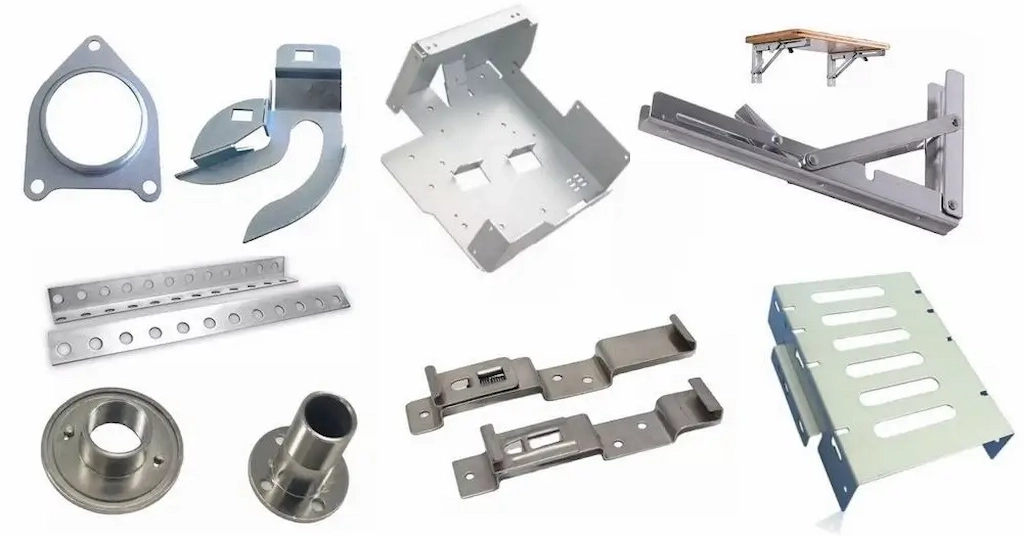 Sheet metal fabrication offers a range of benefits but also comes with some constraints. Understanding these can help you decide if it’s the right process for your project or if alternatives like CNC machining or 3D printing are better.
 Sheet metal fabrication plays a crucial role across a wide range of industries thanks to its versatility and strength. In automotive and aerospace manufacturing, precision sheet metal fabrication is essential for producing durable components that meet strict safety and performance standards. Companies like MS Machining specialize in aerospace components that require tight tolerances and advanced material handling, ensuring reliability in demanding environments.
In the electronics sector, fabricated sheet metal is often used for enclosures, brackets, and housings that protect sensitive equipment while allowing heat dissipation and easy assembly. HVAC systems rely heavily on sheet metal ductwork and architectural features, which must be accurately formed and finished to ensure efficiency and aesthetic appeal.
Medical devices and industrial machinery also depend on custom sheet metal parts due to their need for precision and durability. MS Machining’s expertise in manufacturing for the medical field highlights the importance of exacting standards and surface treatments in this area. Their experience with medical device components ensures parts adapt perfectly to complex designs.
Overall, sheet metal fabrication’s adaptability makes it a go-to solution for a variety of custom projects across these industries, with MS Machining standing out as a reliable partner for high-quality, tailored manufacturing.
Sheet metal fabrication plays a crucial role across a wide range of industries thanks to its versatility and strength. In automotive and aerospace manufacturing, precision sheet metal fabrication is essential for producing durable components that meet strict safety and performance standards. Companies like MS Machining specialize in aerospace components that require tight tolerances and advanced material handling, ensuring reliability in demanding environments.
In the electronics sector, fabricated sheet metal is often used for enclosures, brackets, and housings that protect sensitive equipment while allowing heat dissipation and easy assembly. HVAC systems rely heavily on sheet metal ductwork and architectural features, which must be accurately formed and finished to ensure efficiency and aesthetic appeal.
Medical devices and industrial machinery also depend on custom sheet metal parts due to their need for precision and durability. MS Machining’s expertise in manufacturing for the medical field highlights the importance of exacting standards and surface treatments in this area. Their experience with medical device components ensures parts adapt perfectly to complex designs.
Overall, sheet metal fabrication’s adaptability makes it a go-to solution for a variety of custom projects across these industries, with MS Machining standing out as a reliable partner for high-quality, tailored manufacturing.