
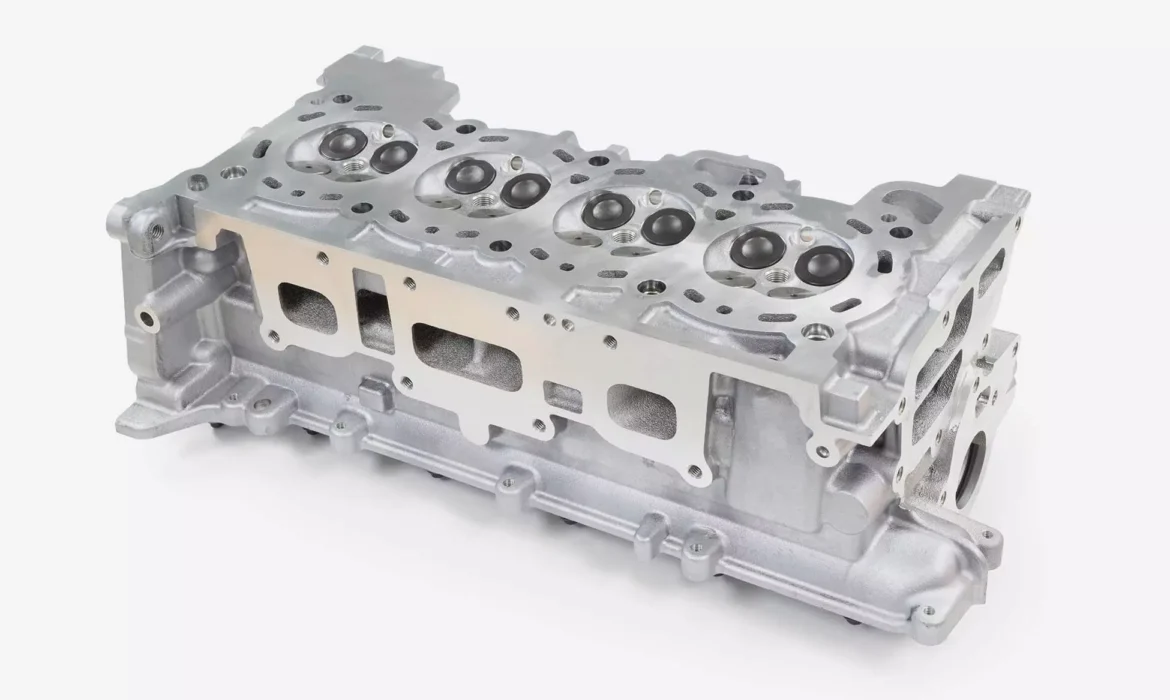
Achieving Near-Net Shapes: How lost-wax casting minimizes secondary CNC machining operations and material waste.
In modern precision engineering, Steel Investment Casting is the primary method for achieving “near-net shape” geometry. When working with expensive stainless alloys like 316L or 17-4 PH, subtractive manufacturing from a solid bar often results in a material scrap rate exceeding 70%. By utilizing the processo de cera perdida, we can produce a component that is 95% complete upon cooling. This drastically reduces the number of CNC machining operations and machining hours required. For example, a complex fluid manifold with internal chambers can be cast as a single piece, whereas machining it would require multiple blocks to be bored, milled, and then welded. This reduction in “chips on the floor” not only lowers raw material costs but also shortens the production cycle, allowing for a faster transition from prototype to market-ready product without the typical lead times of high-complexity milling.
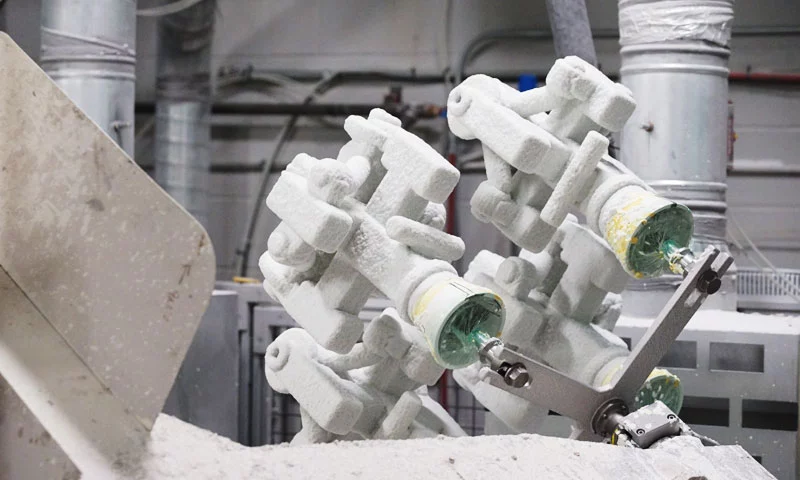
Surface Integrity and Dimensional Accuracy: What realistic linear tolerances (e.g., CT4-CT6) can you expect from a stainless pour?
Predictability is the foundation of high-level engineering. Most professional foundries operate within the ISO 8062-3 (CT4 to CT6) tolerance range for stainless steel. For a 25mm linear dimension, this equates to a standard tolerance of ±0.13mm to ±0.15mm. Beyond mere numbers, investment casting offers superior surface integrity, achieving a roughness (Ra) of 3.2 to 6.3 microns. To visualize this quality, an Ra 3.2 finish feels like a smooth, matte satin surface (comparable to fine-grit sandpaper or a high-end cast aluminum chassis). This finish is significantly smoother than sand casting because the primary zircon slurry used in the shell building phase creates a glass-like interface with the molten metal. This surface quality prevents bacterial entrapment in food/medical applications and ensures that if secondary polishing is required, the “depth of cut” is minimal.
Design Freedom: Consolidating multiple assemblies into a single complex casting to reduce failure points and weight.
One of the most powerful applications of investment casting is “Part Consolidation.” Traditionally, complex assemblies—such as a drone structural bracket or a robotic joint—are fabricated by welding or bolting several CNC-machined plates together. Each joint represents a potential failure point and a site for localized corrosion. Investment casting allows an engineer to consolidate these multiple pieces into a single, monolithic stainless steel part. By eliminating welds, you also eliminate the need for costly X-ray or Dye Penetrant inspections of those seams. This design freedom allows for optimized weight distribution and improved fluid dynamics in pump housings, as internal curves can be cast that are physically impossible to reach with a traditional CNC cutting tool.
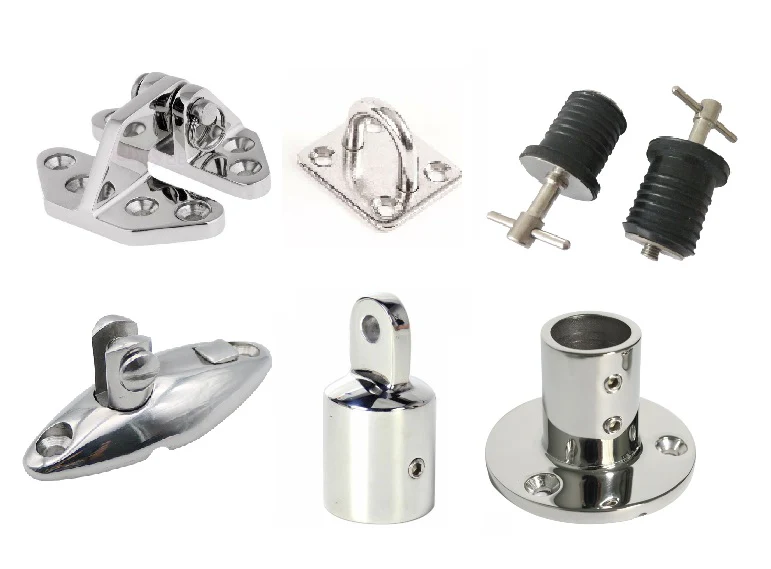
Selecting the Right Stainless Steel Grade: More Than Just Corrosion Resistance
| Classe da Liga | Resistência à Tração (MPa) | Hardness (HB) | Resistência à Corrosão | Melhor Usado Para |
|---|---|---|---|---|
| AISI 304L | 485 | 170 | Alto | General-purpose industrial hardware |
| AISI 316L | 515 | 200 | Excelente | Marine, medical, and chemical exposure |
| 17-4 PH | 1000 – 1300 | 280 – 400 | Alto | Aerospace, UAV, and high-load robotics |
| Duplex 2205 | 620 | 290 | Extremo | Oil & Gas, desalination, and salt-spray |
| AISI 410 | 550 | 250 | Moderado | Wear-resistant valve and pump internals |
The Workhorses: 304L and 316L: When to prioritize weldability vs. chloride pitting resistance in marine or food environments.
Austenitic stainless steels like 304L and 316L are the industry standards. The “L” suffix (Low Carbon, < 0.03%) is a technical requirement in the casting process to prevent intergranular corrosion caused by chromium carbide precipitation during cooling. 304L is excellent for food machinery and decorative hardware due to its cost-efficiency. However, for any component exposed to marine salt spray or harsh pharmaceuticals, 316L is non-negotiable. The 2-3% Molybdenum content in 316L provides a critical defense against localized pitting, which can compromise the structural integrity of thin-walled castings. Our team provides chemical composition certifications for every melt, ensuring your material meets the exact metallurgical requirements for your operating environment.
High-Strength Options: 17-4 PH and 15-5 PH: Solving the “Hardness vs. Corrosion” dilemma for aerospace and robotics actuators.
For applications in the UAV, robotics, and aeroespacial sectors where the strength-to-weight ratio is a key metric, 17-4 PH is the optimal choice. Unlike 300-series alloys, 17-4 PH can be heat-treated (Aged) to reach tensile strengths exceeding 1000 MPa. This allows your team to design smaller, lighter components that withstand significantly higher mechanical stresses. Because 17-4 PH exhibits exceptional dimensional stability during the aging process, it is ideal for complex structural brackets that must maintain tight tolerances after hardening. We offer full heat-treatment services, including H900 and H1150 conditions, to tailor the hardness and ductility to your application’s exact needs.
Duplex and Martensitic Grades: Handling extreme wear and mechanical stress in pump impellers and valve bodies.
In extreme industrial environments like oil and gas, standard grades may fall short. Duplex stainless steels (like 2205) provide double the strength of 316L and exceptional resistance to stress corrosion cracking. For applications where abrasion is the primary threat—such as pump impellers or valve internals—Martensitic grades like 410 are selected for their high hardness. These alloys are essential for components that must endure “metal-on-metal” contact or the high-velocity flow of abrasive slurries. Managing the thermal gradients for these grades is critical to prevent “hot tearing” during solidification, a process we control through advanced gating and riser design.
The Technical Process: Managing Thermal Contraction and Porosity
Tooling and Wax Injection: Why the quality of the “Master Pattern” determines your long-term repeatability and part cost.
The integrity of every casting begins with the “Master Pattern”—the aluminum or steel die used for wax injection. These dies are precision-engineered to produce thousands of identical wax replicas. High-quality tooling incorporates calculated “shrinkage factors” (typically 1.5% to 2.5% for stainless steel) to ensure the part reaches correct dimensions after cooling. Investing in high-grade tooling in manufacturing is a “one-time” cost that pays for itself by minimizing scrap and ensuring every batch fits your assembly perfectly. Poorly designed tooling leads to warped wax patterns and inconsistent wall thicknesses, which eventually drive up the per-unit cost due to high rejection rates.
Controlled Shell Building: The role of ceramic slurry layers in preventing “scab” defects and ensuring a smooth Ra 3.2 – 6.3 finish.
After wax injection, patterns are “invested” into a ceramic shell. This involves multiple dipping cycles in refractory slurry. The first “face coat” is critical; it determines the final surface finish. Subsequent layers provide the structural strength needed to withstand the pressure of molten stainless steel poured at 1450°C. If the shell layers are not dried under controlled humidity, the shell can delaminate or “spall,” leading to “scab” defects. By maintaining a clean-room environment for shell building, we ensure the internal and external surfaces are free of inclusions, which is vital for parts destined for high-pressure or sanitary applications.
Vacuum vs. Atmospheric Pouring: How the melt environment affects gas porosity and internal density of the final part.
The environment in which steel is melted impacts the part’s internal density. Atmospheric pouring is common for general industrial parts, but carries the risk of “gas porosity” if air is trapped in the melt. For “mission-critical” components—such as medical implants or aerospace valves—Vacuum Investment Casting is preferred. In a vacuum, oxygen is removed, preventing the formation of oxides and ensuring molten metal fills the thinnest cross-sections without gas entrapment. This leads to a much higher internal integrity, which is essential if the part will be subjected to high-stress loads or rigorous X-ray inspection.
Investment Casting vs. CNC Machining: When to Switch?
The Break-even Point: Analyzing volume (EAU) and geometry complexity to justify the upfront tooling investment.
The transition to casting vs. CNC machining is usually a calculation of Estimated Annual Usage (EAU). For low-complexity parts, CNC machining from a solid bar might be cost-effective for the first 10–20 pieces. However, as volume increases to 100 or 1,000 units per year, the “per-part” labor and material waste of CNC becomes unsustainable. The “break-even point” is where unit price savings offset the initial tooling cost (typically $2,500 to $5,000). For complex geometries with internal curves, casting becomes the cheaper option almost immediately. If your CNC machines spend 80% of their time simply removing bulk material, it is time to switch to a cast-blank strategy.
Hybrid Manufacturing: Using investment casting for the bulk shape and CNC for critical +/- 0.005mm tolerances.
We advocate for a Hybrid Manufacturing strategy in high-precision sectors. No casting process can consistently hold a ±0.005mm tolerance, but CNC machining is inefficient for bulk shaping. We use investment casting to produce a “near-net shape” blank and leave a 0.5mm machining allowance only on critical mating faces or bearing seats. These surfaces are then precision-finished on our 4-axis or 5-axis CNC centers. This strategy provides the best of both worlds: the low cost and design freedom of casting, combined with the micron-level accuracy of high-end machining, ensuring high concentricity and parallelism across finished features.
Quality Assurance and Post-Processing for High-Requirement Industries
Non-Destructive Testing (NDT): Implementing X-ray, Dye Penetrant (FPI), and Magnetic Particle inspection for “Mission Critical” components.
Quality assurance involves Non-Destructive Testing (NDT) to ensure internal integrity. For aerospace and medical components, X-ray inspection is used to detect internal shrinkage or porosity. Liquid Dye Penetrant (FPI) reveals microscopic surface cracks invisible to the naked eye. Since 300-series stainless steels are non-magnetic, Magnetic Particle inspection is reserved for martensitic grades like 17-4 PH. By integrating these methods, we provide a “Certificate of Compliance” that guarantees the part meets rigorous safety standards, providing peace of mind for high-risk applications where failure is not an option.
Passivation and Electropolishing: Maximizing the chromium-oxide layer for medical implants and pharmaceutical-grade surfaces.
Post-casting treatments like Passivação are non-negotiable. During machining, microscopic iron particles can become embedded in the surface. If not removed, they will rust. Passivation removes free iron and enhances the natural chromium-oxide protective layer. For medical applications, Eletropolimento is used to go a step further. This electrochemical process removes a microscopic layer of the metal surface, resulting in a mirror-like, ultra-smooth finish that is exceptionally resistant to bacteria and chemical corrosion. These steps ensure your stainless steel casting remains durable and maintenance-free throughout its service life.
Common Challenges & Troubleshooting in Stainless Casting
Why are my parts warping? Addressing uneven cooling rates in thin-walled sections through proper gating design.
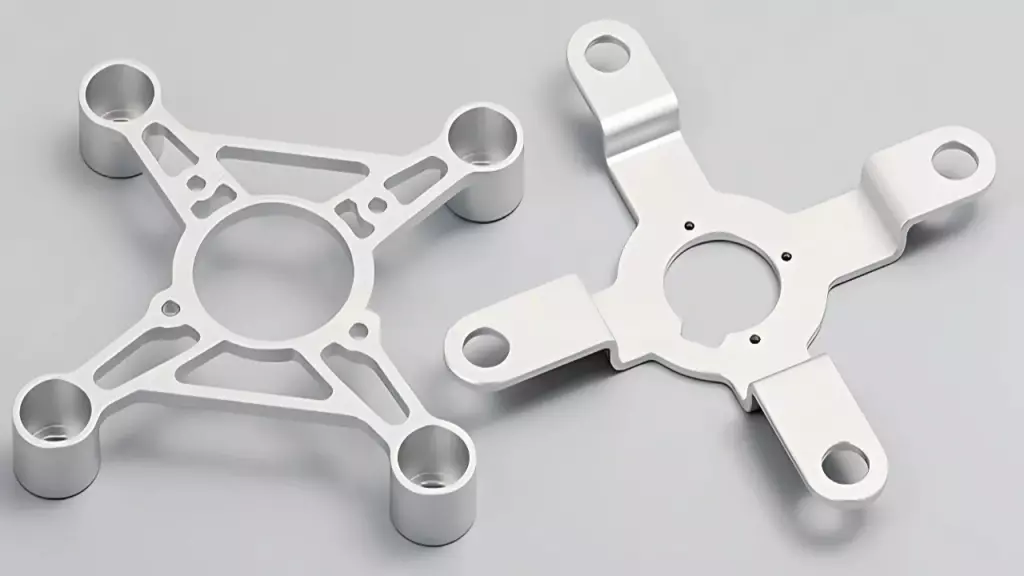
Warpage is a common challenge in thin-walled stainless steel components. This usually occurs due to uneven cooling rates; as metal solidifies, thicker sections pull on thinner sections, causing the part to twist. To solve this, we utilize advanced Gating Design and thermal simulation software. By strategically placing “gates” (the channels where metal enters the part), we ensure the metal flows and cools in a balanced manner. In some cases, we use “chills” to speed up the cooling of thick sections or ceramic cores to maintain the shape of internal cavities, preventing costly warping issues before the first part is ever poured.
Avoiding “Carbon Pick-up”: How to maintain low-carbon properties during the de-waxing and pouring stages to prevent intergranular corrosion.
One of the “silent killers” of stainless quality is “Carbon Pick-up.” If the ceramic shell is not completely fired before pouring, molten stainless steel can absorb residual wax carbon. This raises the carbon content of the surface, causing Sensitization and making the part susceptible to intergranular corrosion. To prevent this, we utilize high-temperature shell-firing cycles and oxygen-rich environments during de-waxing to ensure every trace of wax is incinerated. This metallurgical control ensures your parts retain their full corrosion-resistant properties, especially in 316L and 304L grades used in chemical processing.
Conclusion: Maximizing the Value of Your Stainless Steel Investment
The Strategic Choice: Summarizing why investment casting is the optimal route for complex, high-performance stainless components.
Escolhendo Steel Investment Casting is a strategic decision to bridge the gap between high-level design and scalable production. For components that require the unique properties of stainless steel—such as corrosion resistance, high tensile strength, and aesthetic satin finishes—the lost-wax process is the most versatile manufacturing route. By focusing on near-net shapes and part consolidation, we help engineers push the boundaries of what is possible in robotics, drone technology, and chemical processing, all while maintaining a competitive cost structure.
Partnering for Success: The importance of DFM (Design for Manufacturing) collaboration between the engineer and the foundry.
The true success of a casting project is determined in the Design for Manufacturing (DFM) phase. When an engineering team and a foundry collaborate on wall thickness, alloy selection, and machining allowances before the tooling is cut, the result is a defect-free, reliable part. We invite you to share your STEP files with our technical team. Whether you need to reduce the weight of a UAV chassis or extend the lifespan of a chemical valve, our expertise in high-integrity stainless steel casting ensures that your investment yields a high-precision, cost-effective solution for years to come.