Quer você esteja adquirindo peças metálicas personalizadas, criando um protótipo de um novo produto ou gerenciando a produção para robótica, aeroespacial, automotivo ou eletrônicos, a usinagem CNC continua sendo um dos métodos de fabricação mais confiáveis e precisos disponíveis hoje. Ela oferece precisão, consistência e produção escalável — tudo essencial na fabricação moderna. Se você é novo em CNC ou simplesmente...
Se você é novo em CNC ou simplesmente deseja uma compreensão mais clara, este guia explica o que CNC significa, como as máquinas CNC funcionam e por que os serviços de usinagem CNC se tornaram a espinha dorsal da fabricação de precisão.
O que significa CNC? Explorando a importância da tecnologia CNC na fabricação moderna
CNC significa Controle Numérico Computadorizado.
Em termos simples, a tecnologia CNC permite que máquinas—como fresadoras, tornos, routers ou retificadoras—operem por meio de código gerado por computador, em vez de depender de entrada manual. Essa mudança de usinagem manual para automatizada melhorou dramaticamente a eficiência, precisão e repetibilidade na fabricação.
Por que a tecnologia CNC é importante hoje
- Repetibilidade consistente — cada peça é produzida sob condições idênticas
- Alta precisão — tolerâncias tão apertadas quanto ±0,0004″ (±0,01mm)
- Capacidade de cortar geometrias complexas — contornos 3D, cavidades, roscas e detalhes finos
- Escalabilidade — adequado para protótipos, pequenas séries e produção em massa
- Flexibilidade de material — metais, plásticos de engenharia, compósitos e mais
Essas vantagens tornaram a usinagem CNC essencial para indústrias onde segurança, confiabilidade e qualidade são inegociáveis—como aeroespacial, dispositivos médicos, robótica, equipamentos semicondutores e fabricação automotiva.
O que é uma máquina CNC e como ela funciona na fabricação de precisão?
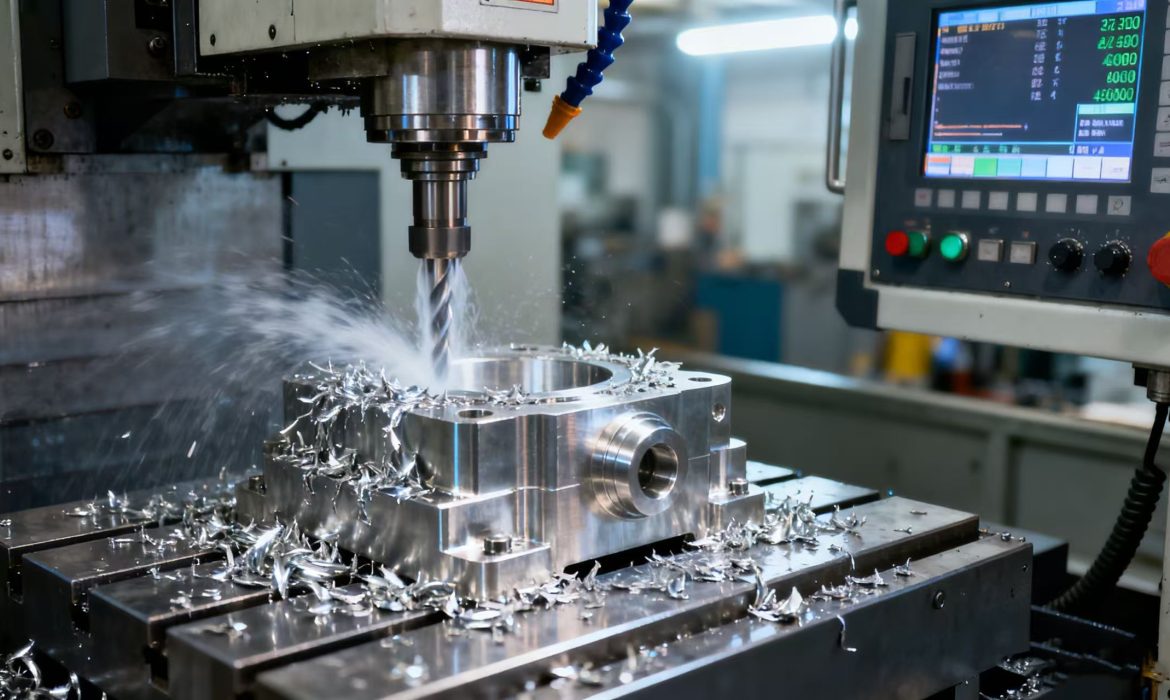
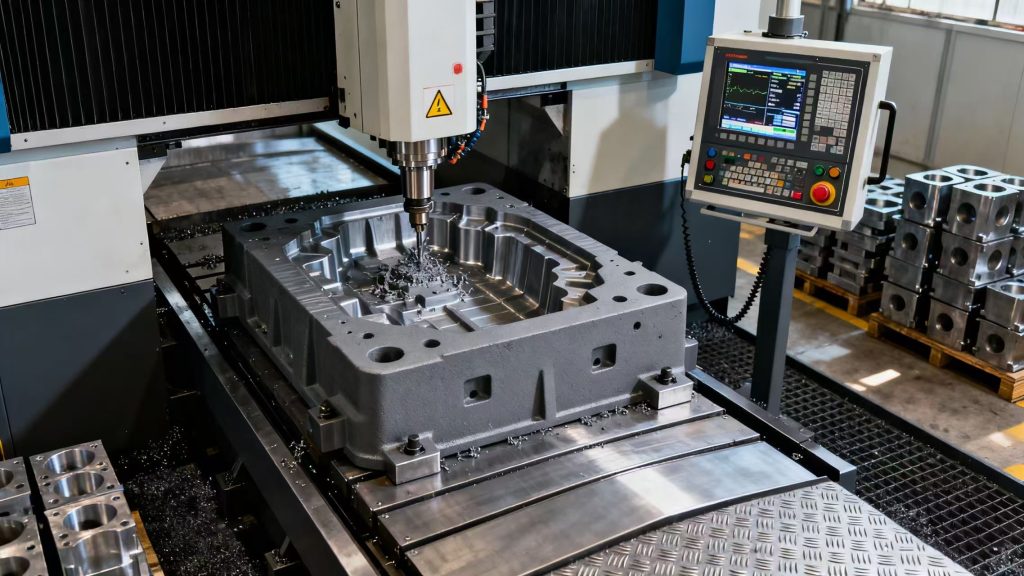
Uma máquina CNC é um dispositivo controlado por computador que remove material de uma peça de trabalho usando ferramentas de corte. Ela segue um percurso de ferramenta programado para criar peças que atendem a requisitos rigorosos de dimensões e acabamento superficial.
Componentes principais de uma máquina CNC
Para entender melhor como a máquina opera, é útil conhecer seus principais componentes:
- Controlador CNC — interpreta G-code e envia comandos de movimento
- Eixo — gira ferramentas de corte em velocidades controladas
- Sistema de ferramentas — inclui fresas, brocas, inserts, machos e cortadores especiais
- Fixação / suporte de trabalho — vises, grampos, mandris macios e dispositivos personalizados seguram a peça
- Motores e acionamentos servo — move a máquina ao longo de múltiplos eixos com precisão
Como funciona o usinagem CNC passo a passo
Para criar uma peça de precisão, o processo de usinagem CNC geralmente segue estes passos:
- Design CAD
O cliente fornece arquivos 3D (STEP, IGES ou SolidWorks) e desenhos técnicos. - Programação CAM
Engenheiros geram trajetórias de ferramenta usando softwares CAM como Mastercam, Fusion 360 ou HyperMill. - Geração de G-Code
O sistema CAM converte as trajetórias de ferramenta em G-code que define cada movimento da máquina. - Configuração da Máquina
Os operadores montam a peça, instalam as ferramentas de corte, verificam os offsets e configuram os dispositivos de fixação. - Operação de Usinagem
A máquina realiza passagens de desbaste, semi-acabamento e acabamento para atingir a geometria final. - Inspeção de Qualidade
As peças são inspecionadas usando paquímetros, micrômetros, relógios de altura, CMMs ou testadores de superfície.
Essa combinação de automação, expertise em engenharia e usinagem controlada garante precisão e consistência em cada ciclo de produção.
O que os usinadores CNC fazem e como eles garantem precisão no trabalho com metais e manufatura
Embora a usinagem CNC seja automatizada, usinadores qualificados continuam essenciais. Sua experiência garante que a máquina, o programa e a peça trabalhem juntos como planejado.
Principais responsabilidades de um usinador CNC
Um usinador profissional normalmente:
- Lê e interpreta desenhos técnicos, incluindo símbolos GD&T
- Seleciona e instala ferramentas e dispositivos de fixação com base no material e na geometria
- Verifica e ajusta finamente o G-code antes da produção para garantir operação segura
- Monitora condições de corte como taxa de avanço, carga do spindle e fluxo de refrigerante
- Realiza inspeções em processo para manter as tolerâncias durante toda a produção
- Colabora com engenheiros em DFM (Design for Manufacturability) para otimizar a qualidade das peças
Usinadores experientes ajudam a prevenir desgaste das ferramentas, reduzir desperdício e encurtar ciclos de produção—contribuindo significativamente para a eficiência da manufatura.
Otimizando a Programação de Máquinas CNC para uma Produção Mais Rápida
A otimização de programação é uma das formas mais eficazes de melhorar a velocidade de usinagem, a qualidade das peças e a eficiência de custos.
Como os programadores aprimoram o desempenho de CNC
1. Estratégias inteligentes de trajeto de ferramenta
Usar técnicas como desbaste adaptativo, HEM (Fresamento de Alta Eficiência) e usinagem de descanso ajuda a reduzir os tempos de ciclo enquanto melhora a vida útil da ferramenta.
2. Parâmetros de corte corretos
Os programadores avaliam:
- Velocidade do spindle (RPM)
- Velocidade de corte (SFM)
- Taxa de avanço (IPM)
- Valores de profundidade de passo e avanço lateral
Esses parâmetros afetam diretamente o acabamento superficial e a produtividade.
3. Redução do tempo sem corte
Minimizar trocas de ferramenta, otimizar movimentos de abordagem e consolidar operações de usinagem ajudam a reduzir o tempo de ciclo em 20–40%.
4. Realização de simulações e verificações de colisão
A simulação garante uma usinagem segura, evita colisões e verifica se as ferramentas podem alcançar todas as superfícies sem interferências.
A programação otimizada pode aumentar significativamente a produtividade, mantendo uma saída estável e de alta qualidade.
Tipos diferentes de máquinas CNC usadas na fabricação e suas aplicações
Os fabricantes dependem de vários tipos de máquinas CNC, dependendo da complexidade, tamanho e geometria das peças necessárias.
1. Máquinas de Fresagem CNC
Melhor para usinagem:
- Carcaças e invólucros
- Suportes e molduras
- Componentes estruturais
- Superfícies 3D complexas
Usinagem CNC destaca-se na produção de cavidades, contornos, ranhuras, furos e recursos multi-eixos.
2. Torneamento CNC (Tornos)
Ideal para:
- Eixos
- Pinos
- Buchas
- Componentes roscados
O torneamento é eficiente para peças cilíndricas e oferece ciclos curtos.
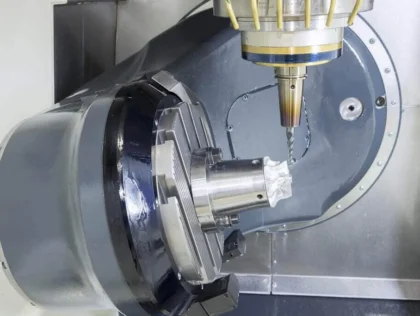
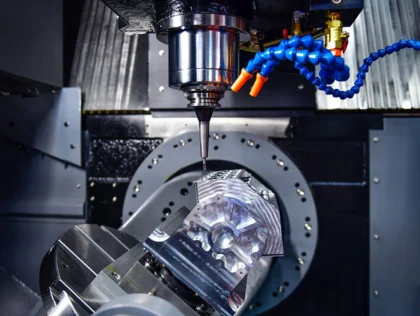
3. Usinagem CNC de 5 Eixos

Perfeito para:
- Componentes aeroespaciais
- Implantes médicos
- Superfícies curvas
- Peças complexas com múltiplos lados
A usinagem de 5 eixos reduz configurações, suporta tolerâncias mais apertadas e alcança acabamentos de superfície mais suaves.
4. Usinagem por Abrasão CNC
Utilizada quando são necessárias tolerâncias extremamente precisas e alta qualidade de superfície.
5. Eletroerosão por Descarga (EDM) & Eletroerosão por Fio (Wire EDM)
Útil para:
- Aço endurecido
- Componentes de molde
- Recursos internos intricados
Este processo remove material que não pode ser usinado com ferramentas de corte tradicionais.
Conclusão
Usinagem CNC continua sendo um dos métodos de fabricação mais confiáveis, precisos e versáteis para produzir componentes de metal e plástico. Sua capacidade de manter tolerâncias apertadas, lidar com designs complexos e escalar de forma eficiente o torna indispensável em muitas indústrias.
Para empresas no Brasil, fazer parceria com uma fábrica de usinagem CNC experiente na China oferece preços competitivos, máquinas avançadas, forte suporte de engenharia e prazos de entrega rápidos.
Se você precisa de peças usinadas personalizadas de alta qualidade ou deseja uma cotação rápida, nossa equipe de engenharia pode revisar seus arquivos e fornecer feedback de DFM em poucas horas.