If you’re designing complex, corrosion‑resistant parts, choosing the right manufacturing process can make or break your project. That’s where the stainless steel investment casting process comes in.
Also called the lost wax casting stainless steel method, this ceramic shell investment casting technique lets you turn precise wax patterns into near net shape casting parts with tight investment casting tolerances and excellent stainless steel casting surface finish—often with far less machining than CNC or forging.
In this guide, you’ll see exactly how the investment casting process steps work from wax to finished part, why alloys like 316 stainless steel investment casting are so popular, and how smart investment casting design guidelines help you hit your cost, quality, and performance targets.
If you need reliable, precision stainless steel castings for demanding applications—and want to know when investment casting actually beats sand casting or machining—you’re in the right place.
O que é Fundição de Investimento em Aço Inoxidável?
When I talk about the stainless steel investment casting process, I’m really talking about a highly precise way to make complex, near net shape metal parts using the lost wax casting stainless steel method. In simple terms, we create a detailed wax pattern, build a ceramic shell around it, melt the wax out, and then pour molten stainless steel into that cavity. Once the shell is removed, we’re left with a precision stainless steel casting that’s very close to the final shape.
A Short Historical Background
Investment casting (or lost wax process) has roots going back thousands of years in jewelry and art. What changed in the last century was:
- Development of reliable ceramic shell investment casting systems
- Availability of high-performance stainless steel alloys
- Tight process control demanded by aerospace, medical, and industrial users
As US industries demanded tighter tolerances and better surface finish, fundição de aço inoxidável evolved from a niche method into a mainstream precision process.
Basic Lost Wax Principle for Stainless Steel Parts
O stainless steel lost wax process follows a consistent flow:
- Inject wax into a metal die to form the wax pattern investment casting stainless steel part.
- Assemble wax patterns onto a central runner to build a “tree.”
- Dip the tree in ceramic slurry and coat with sand (stucco) to build a ceramic shell.
- Perform the dewaxing process in investment casting (autoclave or flash fire) to remove wax.
- Preheat the shell and pour molten stainless steel into the cavity.
- Break the shell, cut off parts, and finish to achieve the required investment casting tolerances for stainless steel.
This principle is the same for many alloys, but stainless steel brings its own advantages.
Why Stainless Steel Fits Investment Casting So Well
Stainless steel is an ideal match for investment casting when I need:
- para garantir uma produção eficiente e econômica – 304 and 316 stainless resist water, mild chemicals, and many industrial environments.
- High strength – grades like 17-4 PH stainless steel casting deliver high strength and hardness with proper heat treatment.
- Good machinability – near net shape reduces machining time; remaining operations are predictable and controlled.
- High temperature and wear performance – critical for aerospace, energy, and process industries.
Ao combinar near net shape stainless steel casting with the right alloy, I can hit performance, cost, and reliability targets at the same time.
Common Stainless Steel Grades Used
In my stainless steel foundry process, I typically work with:
- 304 / 304L – general-purpose austenitic stainless, good corrosion resistance, widely used.
- 316 / 316L stainless steel investment casting – improved corrosion resistance, especially in marine and chemical environments.
- 17-4 PH – precipitation hardening stainless for high strength and good toughness.
- Duplex stainless steel investment castings – mixed austenitic/ferritic structure, excellent strength and chloride stress corrosion cracking resistance.
- Other PH alloys – tailored mechanical properties through controlled heat treatment.
The chosen grade directly affects heat treatment for stainless steel castings, machinability, and final performance.
How Stainless Steel Investment Casting Differs
Compared with general investment casting, the stainless steel investment casting process steps demand:
- Tighter control of melting and temperature to prevent oxidation and inclusions
- Otimizado ceramic shell materials compatible with stainless steel chemistry
- Specific heat treatment cycles to achieve required microstructure and properties
- Stricter inspection, including non destructive testing for stainless steel castings when critical
In short, it’s still the lost wax casting stainless steel process, but executed with more control and discipline to meet the expectations that come with high-value precision stainless steel castings.
Stainless steel investment casting process step by step
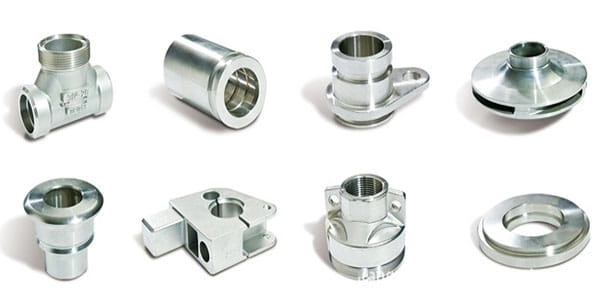
The stainless steel investment casting process is all about repeatable precision. Here’s how we run it, step by step, to get tight tolerances and clean surfaces on complex stainless parts.
Pattern and mold design for stainless steel casting
We start with part and tooling design. For stainless steel investment casting, we:
- Add shrinkage allowance and machining stock in critical areas
- Design gates, runners, and vents to avoid porosity and misruns
- Plan parting lines and fixturing so the casting is repeatable and easy to inspect
Good front-end design is what keeps later machining, including follow-up work like high-precision usinagem de parafusos CNC, fast and cost-effective.
Wax injection and pattern creation
Next is the wax pattern:
- Heated wax is injected into steel or aluminum dies
- The wax pattern matches the final stainless part geometry (plus allowances)
- We check wax dimensions and surface quality, because any defect here will copy into the ceramic shell
This “wax pattern investment casting stainless steel” step sets the baseline for dimensional accuracy.
Wax pattern assembly and tree building
Individual wax patterns are assembled onto a central runner to form a “tree”:
- Patterns are welded in wax to the main sprue
- Position and angle are optimized for flow and feeding
- Multiple parts per tree improve efficiency and reduce cost per piece
Good tree design helps balance metal flow and minimizes stainless steel casting defects.
Ceramic shell building with slurry and stucco
The wax tree is repeatedly dipped in a ceramic slurry and coated with sand (stucco):
- Fine slurry for the first coats to capture detail and surface finish
- Coarser stucco layers to build shell thickness and strength
- Controlled drying between dips to avoid shell cracks
This ceramic shell becomes the mold for the stainless steel lost wax process.
Dewaxing process in stainless steel lost wax casting
Once the shell is built, we remove the wax:
- Autoclave (steam pressure) dewaxing to quickly melt out wax with minimal shell stress
- Flash fire or furnace dewaxing to fully clear residual wax
Proper dewaxing prevents shell damage and keeps the internal surface clean for a high-quality stainless steel casting surface finish.
Shell preheating and burnout
The empty ceramic shells are fired:
- Preheating removes moisture and burns off any remaining wax or organics
- Burnout at high temperature sinters the shell for strength and improves mold reactivity control
A clean, hot shell helps reduce gas defects and improves metal flow into thin sections and complex stainless shapes.
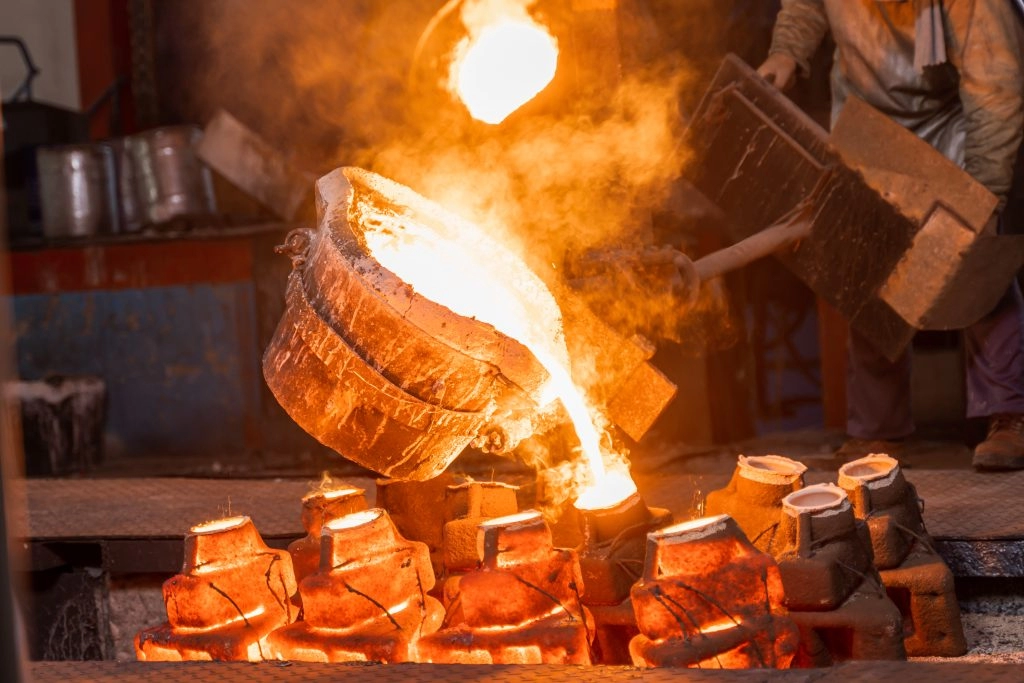
Pouring molten stainless steel
We melt and pour the stainless alloy under tight control:
- Induction or electric furnaces for 304, 316, 316L, 17-4 PH, duplex, and other stainless grades
- Controlled superheat and pour temperature matched to section thickness
- Bottom-pour or teapot ladles to minimize turbulence and inclusions
Correct temperature and pouring method are critical for precision stainless steel castings with minimal porosity.
Cooling, shell removal, and cut-off
After pouring:
- Cast trees cool under controlled conditions to manage internal stresses
- Ceramic shell is removed by mechanical knockout or vibration
- Individual castings are cut off from the tree with saws or torches
At this point, we have near net shape stainless steel castings ready for finishing.
Finishing operations for stainless steel castings
We clean up and finish the cast parts:
- Gate and runner removal by grinding or cutting
- Surface finishing via shot blasting, bead blasting, or tumbling
- Local blending and deburring for sharp edges or small blemishes
These steps drive the final stainless steel casting surface finish and prep the part for machining or assembly.
Heat treatment and post-processing
Most stainless steel investment castings receive heat treatment to hit specified properties:
- Solution annealing for austenitic grades (304, 316, 316L)
- Aging and hardening for 17-4 PH and other PH stainless steels
- Optional straightening, machining, passivation, and polishing
Heat treatment is where we lock in strength, hardness, and corrosion resistance.
Inspection, testing, and quality assurance
Finally, we validate every lot:
- Dimensional inspection against the investment casting tolerances for stainless steel
- Visual inspection for surface defects and gate/grind quality
- NDT options like X-ray, dye penetrant, and ultrasonic for critical parts
- Mechanical and chemical tests with full material certs and traceability
This is how we ensure every stainless steel investment cast part meets spec before it ever goes to downstream operations or assembly.
Key Advantages of the Stainless Steel Investment Casting Process
Stainless steel investment casting gives me a lot of flexibility when you need complex, high-precision stainless parts without blowing up your machining budget.
Cast complex shapes and thin walls
With the lost wax process, I can cast:
- Thin walls down to ~0.06–0.08 in (1.5–2 mm), depending on size
- Internal channels, slots, logos, threads, and undercuts that would be impossible or very expensive to machine
- Integrated features (bosses, lugs, flanges) in one stainless steel investment casting instead of multiple welded pieces
This is where the stainless steel investment casting process steps really pay off: you get true 3D freedom in design.
High dimensional accuracy and tight tolerances
Precision stainless steel castings can typically hit:
- ±0.003–0.005 in/in (±0.08–0.13 mm/in) as a general rule
- Even tighter in critical areas with good tooling and process control
Compared with sand casting, the investment casting tolerances for stainless steel are much tighter, which means fewer setups and less time on CNC machines.
Superior surface finish and near net shape
O stainless steel lost wax process produces:
- Surface finish around Ra 125–250 µin (3.2–6.3 µm) right out of the shell
- Smooth, clean surfaces that often only need light blasting or polishing
Because the part comes out near net shape stainless steel casting, you’re not paying to remove a ton of material later.
Material savings and less machining
For many U.S. customers switching from machined bar or plate, we routinely:
- Cut raw material usage by 20–50%
- Reduce CNC cycle time, tooling wear, and programming complexity
If you want to understand how this ties into tooling strategy, it pairs well with a solid grasp of what tooling means in manufacturing, especially when you’re planning long-term cost per part.
Flexible for low–medium volumes and multiple grades
The stainless steel investment casting process makes sense when you:
- Executar low to medium volumes (from a few dozen to a few thousand parts/year)
- Need multiple stainless grades like 304, 316, 316L, 17-4 PH, duplex, or other PH alloys from the same foundry
- Want production flexibility without committing to die-casting-level tooling costs
This balance of complex geometry, tight tolerances, good surface finish, and material savings is why I push stainless steel investment casting so hard for U.S. customers looking to scale smart without overspending on machining.
Limitations and Challenges in the Stainless Steel Investment Casting Process
Even though the stainless steel investment casting process is powerful, it isn’t perfect. If you’re deciding between lost wax casting stainless steel and other processes, you need to know where the pain points are.
Tooling Cost and Lead Time
For new stainless parts, tooling is the first hurdle:
- High upfront tooling cost for wax injection dies, especially on complex parts.
- Lead times of 4–8+ weeks to design, machine, and prove out tooling.
- Design changes after tooling is built usually mean extra cost and delay.
If you only need a handful of parts, CNC machining from bar stock or plate may be more economical than full stainless steel investment casting tooling.
Size, Weight, and Geometry Limits
The stainless steel foundry process has physical limits:
- Best suited for small to medium parts, typically a few ounces up to ~75 lbs.
- Very thick sections can cause shrinkage and internal defects.
- Extremely long, thin features or deep blind pockets are high risk for misruns or distortion.
- Complex undercuts often require soluble wax or assemblies, which raise cost and risk.
For very large or very heavy parts, sand casting is usually a better option.
Common Stainless Steel Casting Defects
Stainless steel lost wax process defects you’ll see if the process isn’t controlled:
- Porosidade (gas and shrink): weak spots, leaks, poor pressure performance.
- Inclusões: slag, ceramic shell, or oxide trapped in the metal.
- Misruns and cold shuts: thin walls or long flow paths that don’t fully fill.
- Hot tears and cracks: from poor gating or uneven section thickness.
- Warping/distortion: especially in thin-wall, high-precision stainless steel castings.
Process Controls and Defect Prevention
Good foundries live and die by process control. To keep defects down, we:
- Controle wax pattern dimensions and assembly to tighten investment casting tolerances for stainless steel.
- Use consistent ceramic shell building, slurry viscosity, and shell thickness.
- Ajuste preciso melting and pouring temperature control to avoid misruns and porosity.
- Apply proper gating and riser design for each stainless grade (304, 316, 17-4 PH, duplex, etc.).
- Usar NDT (X-ray, dye penetrant, ultrasonic) and robust dimensional inspection to catch issues early.
If a design truly demands CNC machining-level accuracy, we often combine near net shape stainless steel casting with finish machining. For example, we frequently machine stainless motion and linkage components and integrate them with cast parts, similar to the way we handle precision hardware de ligação de movimento in our shop.
Cost Comparison vs Other Processes
Here’s the simplified cost picture in the U.S. market:
-
Vs sand casting
- Investment casting: higher tooling and piece price, but better surface finish and tighter tolerances.
- Sand casting: cheaper for large, simple, low-precision shapes.
-
Vs die casting
- Die casting works mainly with aluminum, zinc, and magnesium.
- Stainless steel investment casting wins when you need stainless alloys, corrosion resistance, and medium volumes without six-figure tooling.
-
Vs forging
- Forging gives excellent strength but limited geometry and higher machining time.
- Investment casting delivers complex shapes, internal features, and near net shape with less material waste.
-
Vs CNC machining from bar stock
- For very low quantities or frequent design changes, CNC machining wins.
- Once volumes climb and the design stabilizes, the stainless steel investment casting process usually drops total cost by cutting material removal and cycle time. You can see this tradeoff in how we approach CNC-machined components from carbon steel; the same logic applies when we choose between machining and casting stainless.
If you’re unsure where your part lands, the smart move is to send the 3D model and expected annual volume and have us quote both investment casting and machining paths side by side.
Design Guidelines for Stainless Steel Investment Casting
Dialing in the design up front is the fastest way to get clean stainless steel investment castings, hit tolerance, and keep cost under control.
Recommended Wall Thickness & Transitions
For most stainless steel investment casting process projects, I stick to:
- Typical wall thickness: 0.08″–0.15″ (2–4 mm)
- Minimum wall thickness: 0.06″ (1.5 mm) in short, well-fed areas
- Heavy sections: Avoid anything over 0.75″–1.0″ (19–25 mm) unless we redesign for feeding
Keep transitions smooth:
- Usar gradual tapers instead of sudden jumps
- Step from thin to thick over at least 3–5x the wall thickness
- Avoid isolated “mass islands” that invite shrinkage and porosity
Fillet Radii, Undercuts & Draft
Stainless steel lost wax designs like smooth flow:
- Fillets:
- Internal corners: ≥ 0.06″ (1.5 mm) radius
- External corners: ≥ 0.03″ (0.8 mm) quando possível
- Rebaixos:
- Fine for investment casting, but raise custo de ferramentaria and complexity
- Only keep undercuts that truly save machining or assembly
- Draft:
- Wax tooling: ~1° is usually enough
- Complex features: 1–3° makes demolding and shell building more reliable
Realistic Tolerances for Stainless Investment Casting
You can get tight, but every extra 0.001″ costs money:
- General linear tolerance: around ±0.005″–0.010″ (±0.13–0.25 mm) depending on size
- Tight critical features: often cast to ±0.003″–0.005″, então finish-machined
- Holes & threads: usually cast near net, then drilled, reamed, or tapped by secondary machining
If you’re expecting pure machining-level tolerance, consider combining casting with técnicas de usinagem CNC rápidas on a few key surfaces instead of tightening the entire casting spec.
Surface Finish (Ra) & Post-Processing
Stainless steel investment casting naturally delivers a smooth surface:
- As-cast surface finish: typically Ra 125–250 µin (3.2–6.3 µm)
- For cosmetic or sealing surfaces, specify:
- Shot or sand blasting
- Vibratory finishing
- Machined Ra (e.g., Ra 63 µin or better) where required
Indicar which surfaces need machining vs. acceptable as-cast finish. “Machine everything” is the fastest way to burn budget.
Design para Fabricabilidade (DFM)
To reduce cost and defects in precision stainless steel castings:
- Minimize parting line complexity
- Group recursos críticos on the same side when possible
- Avoid deep, blind pockets that are hard to feed and hard to clean
- Combine weldments or multi-part assemblies into one near net shape stainless steel casting where it truly cuts cost and labor
I always recommend an early DFM review between your designer and the foundry before you lock the 3D model.
Optimizing a Machined Design for Investment Casting
When converting a CNC-machined stainless part to investment casting:
- Replace sharp corners with fillets (internally and externally)
- Thin down overkill walls that were originally chosen for bar stock strength
- Integrate bosses, logos, and features that would otherwise need secondary ops
- Keep critical machined faces, bores, and threads as “cast + finish machine” zones
If you already have a machined design, we’ll usually mark up your model, flag high-cost features, and then backfill with casting-friendly geometry before combining the process with targeted Usinagem CNC on just the few surfaces that really demand it.
Applications of Stainless Steel Investment Casting
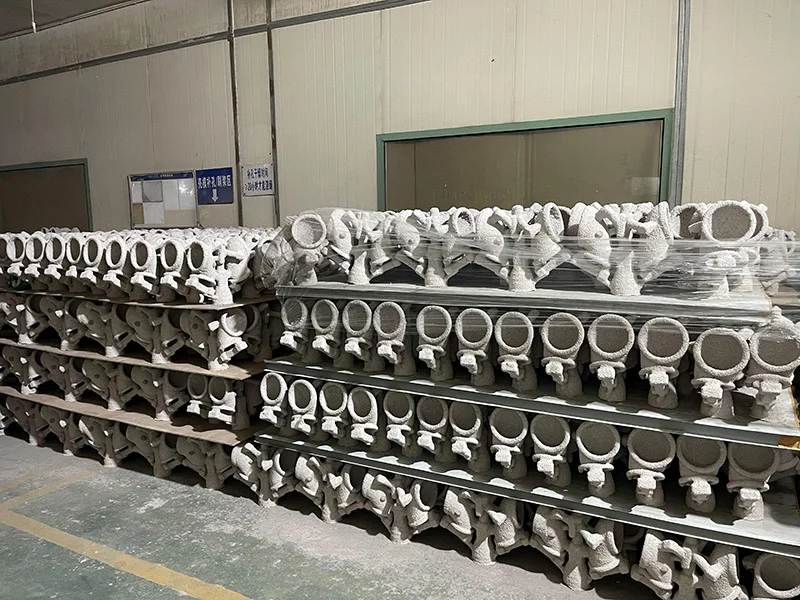
Stainless steel investment casting is my go‑to when customers need tight tolerances, complex shapes, and serious durability. Here’s where it really shines in the U.S. market:
Componentes Aeroespaciais e de Defesa
For aerospace and defense, we use precision stainless steel castings para:
- Engine and turbine components
- Brackets, hinges, and structural fittings
- Weapon system parts and UAV hardware
Grades like 17-4 PH e 15-5 PH give high strength, fatigue resistance, and reliable performance at temperature—ideal for flight‑critical and mission‑critical parts. These are often finished with high‑precision Serviços de usinagem CNC to hit the final tolerances.
Medical and Pharmaceutical Parts
In medical and pharma, 316L stainless steel investment casting is common for:
- Componentes de instrumentos cirúrgicos
- Orthopedic hardware and implant-adjacent devices
- Pump, valve, and housing parts for cleanroom equipment
Corrosion resistance, cleanability, and stable mechanical properties are key. We design for smooth surfaces and minimal crevices to support sterilization and hygiene requirements.
Oil, Gas, Marine, and Chemical Processing
For tough environments, duplex stainless steel investment castings e super austenitic grades deliver:
- Valve bodies, pump housings, and impellers
- Manifold and subsea hardware
- Marine fittings and deck hardware
These alloys handle chlorides, sour service, and aggressive chemicals while resisting pitting and stress corrosion cracking.
Food Processing, Automotive, and Industrial
In these sectors, 304 and 316 stainless steel investment casting works well for:
- Food-grade fittings, nozzles, and spray heads
- Exhaust components, brackets, and housings in automotive
- Industrial clamps, couplings, and machine parts
O near net shape stainless steel casting approach cuts machining time and reduces waste, especially when paired with secondary processes like usinagem CNC for critical surfaces.
Custom Hardware and Complex Shapes
Stainless steel investment casting is perfect when you need:
- Custom architectural and marine hardware
- High-end consumer product components (handles, levers, locks)
- Intricate gears, levers, and linkage components
O lost wax casting stainless steel process lets us combine logos, textures, thin walls, and internal features in a single casting—often replacing multiple machined or welded parts with one near net shape stainless steel casting that’s cheaper and easier to assemble.
Quality control and standards in stainless steel investment casting
When I supply stainless steel investment castings, quality control is non‑negotiable. The entire stainless steel investment casting process is built around repeatability, traceability, and documented standards.
ASTM and ISO standards for stainless steel castings
For U.S. customers, I always work to recognized specs so you know exactly what you’re getting. Typical standards for stainless steel investment castings include:
- ASTM A351 / A743 / A744 – Austenitic stainless and corrosion‑resistant castings
- ASTM A890 / A995 – Duplex stainless steel castings
- ASTM A747, A564, A703 – High‑strength and precipitation hardening (PH) stainless castings
- ISO 4990, ISO 8062 – General casting tolerances and dimensional requirements
Your part drawing should call out the ASTM/ISO material spec, grade, and required tests so we lock the process and avoid surprises.
Material certification and traceability
Every heat of stainless steel we pour for investment casting is fully traceable:
- Mill certs (MTRs) for all incoming stainless alloys
- Heat numbers stamped or tagged on each casting lot
- 3.1 or 3.2 material certificates available when required
- Completo chemical analysis and mechanical property reports stored with the job
This level of material certification and traceability is critical for aerospace, medical, oil & gas, and other safety‑critical stainless steel castings.
Non destructive testing (NDT) for stainless cast parts
To verify internal and surface quality without damaging the part, I rely on standard non destructive testing for stainless steel castings:
- X‑ray (radiographic testing) – Finds internal shrinkage, porosity, and inclusions
- Liquid / dye penetrant testing (PT) – Excellent for detecting surface cracks in stainless investment castings
- Teste ultrassônico (UT) – Checks for internal defects and thickness changes on critical sections
The NDT method and acceptance level are usually tied directly to the ASTM spec, drawing notes, and customer QC plan.
Dimensional inspection and gauge control
Precision stainless steel investment castings live or die on dimensional control. Typical checks include:
- CMM (coordinate measuring machine) inspection of critical features
- Custom gauges, fixtures, and go/no‑go gauges for high‑volume parts
- Periodic SPC and capability studies on key dimensions
For thin‑wall or complex parts that tend to distort (similar to how thin machined parts deform, as explained in this guide on why thin‑wall complex machined parts deform), we build fixturing and process windows around your tolerance stack‑up.
Controlling microstructure and properties with heat treatment
The stainless steel investment casting microstructure is just as important as chemistry. I control it through:
- Anelamento de solução for austenitic and duplex stainless
- Aging / precipitation hardening for 17‑4 PH and other PH stainless grades
- Strict furnace temperature uniformity, soak times, and controlled cooling
- Hardness testing, microstructure checks, and sometimes corrosion testing to verify results
Done right, heat treatment locks in the required strength, ductility, toughness, and corrosion resistance, so your stainless steel investment castings perform reliably in the field.
Stainless steel investment casting vs other processes
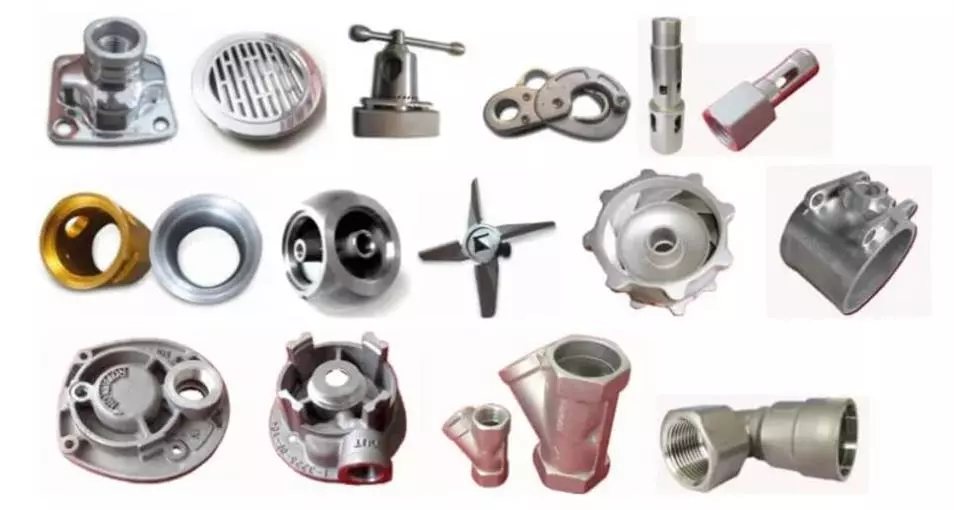
Stainless steel investment casting vs sand casting
For stainless parts that need detail and a clean finish, stainless steel investment casting beats sand casting almost every time.
Investment casting stainless steel – pros vs sand casting:
- Much better surface finish (Ra ~3.2–6.3 µm vs ~12.5–25 µm for sand)
- Tighter investment casting tolerances for stainless steel, less machining
- Thinner walls and more complex geometry are realistic
- Less material waste, more near net shape stainless steel castings
Sand casting is still useful when you need:
- Very large stainless parts
- Lowest tooling cost and rougher, heavy-duty components
If your part is under a few hundred pounds and you care about precision and appearance, stainless steel investment casting is usually the smarter move. For a deeper breakdown of these tradeoffs, I’d look at a direct comparison like an investment casting vs sand casting guide from a precision shop such as MS Machining’s sand vs investment casting overview.
Stainless steel investment casting vs die casting
Die casting is great for high-volume, non-ferrous alloys (aluminum, zinc, magnesium). For stainless steel, it’s a different story:
- Die casting stainless steel is rarely practical – mold wear, extreme temps, and cost
- Die casting wins only when:
- You’re using non-stainless alloys
- Volumes are very high (tens or hundreds of thousands)
- You want ultra-fast cycle times
Stainless steel investment casting is better when:
- Você precisa real stainless alloys like 304, 316, 17-4 PH
- Volumes são low to medium
- Part shape is complex and you want precision stainless steel castings
Stainless steel investment casting vs forging
Forging stainless gives excelentes propriedades mecânicas, but it struggles with complex shapes:
-
Forging pros:
- Higher strength and fatigue resistance
- Great for simple, high-load parts (shafts, rings, flanges)
-
Investment casting pros:
- Complex geometry, internal passages, and near net shape
- Less machining and waste
- Easier to integrate logos, text, custom features
If your stainless part is basically a simple shape under heavy load, forging might win. If it’s a complex bracket, housing, or custom hardware, stainless steel investment casting usually delivers more value.
Stainless steel investment casting vs CNC machining from bar stock
CNC machining from bar or plate shines for prototypes and simple shapes, but costs climb fast as geometry gets complicated or volumes grow.
-
Machining pros:
- Fast for prototypes / small batches
- Great dimensional accuracy
- No casting tooling up front
-
Investment casting pros:
- Massive material savings for complex 3D shapes
- Lower part cost at medium to higher volumes
- Can combine multiple machined pieces into one stainless casting
- Minimal machining after casting (near net shape stainless castings)
When we support U.S. customers on both casting and machining, we often combine processes: cast the complex stainless shape, then use fixações CNC and post-machining to hit tight critical dimensions. If you’re curious how fixturing ties into that, you can look at how CNC fixtures are used for precision machining setups.
How to choose the right process for a stainless steel component
Use this quick filter to choose:
-
Priority: Lowest cost for a rough, large part
→ Stainless sand casting -
Priority: Complex geometry + good surface finish + medium volume
→ Stainless steel investment casting process -
Priority: Very high volume, non-stainless alloys
→ Die casting (not stainless) -
Priority: Highest strength and simple shape
→ Stainless forging -
Priority: Prototyping or ultra-tight tolerance on simple geometry
→ CNC machining from bar stock
If you’re unsure, start from:
- Annual volume
- Part size and complexity
- Tolerance and surface finish needs
- Mechanical performance requirements
Then we map that against process cost, risk, and lead time. In many U.S. applications where you want a stainless part that looks good, holds tight dimensions, and avoids overpaying for machining, stainless steel investment casting hits the sweet spot.
FAQs About the Stainless Steel Investment Casting Process
Typical stainless steel investment casting tolerances
For precision stainless steel investment castings, I usually work with:
- General tolerance: ±0.005 in/in (±0.13 mm per 25 mm)
- Minimum on small features: down to ±0.003–0.004 in (0.08–0.10 mm) with good tooling and process control
If you need tighter tolerances, I’ll often combine casting with light Usinagem CNC on critical fits, using partners specialized in high-precision work similar to our turned CNC components.
Minimum wall thickness in stainless steel investment casting
With a well-designed ceramic shell investment casting process for stainless:
- Paredes padrão: 0.08–0.12 in (2–3 mm)
- Aggressive thin walls: down to 0.04–0.06 in (1–1.5 mm) on short, well-fed sections
Uniform wall thickness is key. If you push below 0.06 in (1.5 mm), expect higher risk of misruns and higher cost.
Is stainless steel investment casting good for prototypes?
Yes, but with caveats:
- Best fit: functional prototypes that mimic production parts, not one-off visual samples
- Cost factor: tooling is the big hit; for 1–5 pieces, CNC machining from bar stock is often cheaper
- When it makes sense:
- You plan to go to production and want to validate the casting design
- You need real casting microstructure and properties, not just a machined block
For very low quantities or quick iterations, I often recommend Prototipagem CNC first, like the approach described in this overview of Benefícios do protótipo CNC, then locking in the investment casting design.
Lead times and typical order quantities
Typical stainless steel investment casting process steps run on this timeline:
- New tooling + first samples: 4–8 semanas
- Repeat orders: 3–5 weeks, depending on complexity and load
Typical order patterns I see in the U.S. market:
- Low to medium volumes: 50–10,000 pcs per year
- Below ~20 pcs/year, you should carefully compare total cost vs. machining.
How pattern changes affect tooling and cost
Any change to the wax pattern geometry affects the tooling:
- Minor change (small radius, logo, minor reliefs):
- Tool rework, usually lower cost and shorter lead time
- Major change (wall moves, hole size/location, new features):
- Partial cavity rebuild or full new die
- Cost can approach or equal a new tool and reset lead time
That’s why I push for design freeze after a CNC- or 3D-printed prototype stage whenever possible.
How to estimate cost for stainless steel investment casting projects
For a quick first-pass estimate, I look at:
- Part weight in stainless steel (biggest driver)
- Annual volume and batch size
- Complexidade (cores, thin walls, tight tolerances, surface finish)
- Pós-processamento (machining, heat treatment, polishing, NDT)
Your cost will have two main buckets:
- Non-recurring cost (NRE): tooling, fixtures, initial PPAP/qualification
- Piece price: metal, process, finishing, quality control
Send a 3D model (STEP/IGES), annual volume, and required specs (tolerances, Ra, testing). With that, I can usually give a realistic stainless steel investment casting cost range and let you compare it against sand casting, forging, or straight CNC machining.