O que é uma máquina de fresagem CNC de 5 eixos?
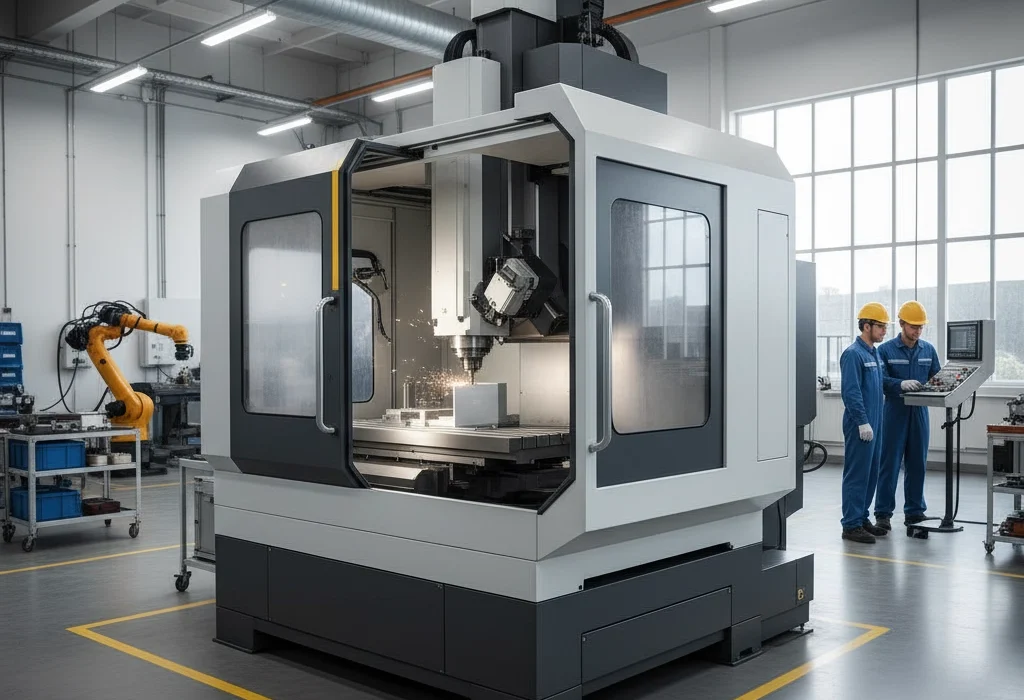
A máquina de fresagem CNC de 5 eixos move ferramentas de corte ou a peça de trabalho ao longo de cinco eixos diferentes simultaneamente. Diferente das máquinas tradicionais de 3 eixos que se movem apenas nos eixos X, Y e Z (movimentos lineares), as máquinas de 5 eixos adicionam dois eixos rotacionais (A e C), permitindo formas e ângulos complexos em uma única configuração.
3+2 (Indexado) vs. 5 Eixos Simultâneos
-
Eixos 3+2 (Indexado):
- Eixos rotacionais permanecem fixos na posição durante o corte.
- Permite usinagem em múltiplos lados sem precisar reposicionar a peça, mas apenas 3 eixos lineares se movem durante o corte.
- Ideal para peças mais simples com características angulares.
-
5 Eixos Simultâneos:
- Todos os cinco eixos se movem ao mesmo tempo, permitindo cortar curvas e formas complexas.
- Permite acabamentos de superfície superiores em peças esculturais, como pás de turbinas ou implantes médicos.
- Requer sistemas avançados de programação e controle.
Mesa de trunnion vs Cabeça giratória vs Design de nutação
| Recurso | Mesa de trunnion | Cabeça giratória / Rotativa | Mesa de nutação |
|---|---|---|---|
| Design | Mesa gira em dois eixos (A & B) | Cabeça do spindle gira | Mesa inclina e gira |
| Tamanho da peça de trabalho | Melhor para peças mais pesadas e maiores | Manipula peças menores | Peças de trabalho compactas |
| Rigidez | Alto, devido ao eixo fixo | Moderado | Menor rigidez |
| Acessibilidade | Limita o acesso à ferramenta em algumas orientações | Excelente acesso à ferramenta | Bom para espaços apertados |
| Complexidade de programação | Moderado | Maior | Moderado |
| Ideal para | Peças estruturais aeroespaciais, automotivas | Fresamento de superfícies complexas | Peças pequenas e intricadas |
Conclusão: Mesas de trunnion oferecem a melhor estabilidade para trabalhos pesados e de alta precisão; cabeças giratórias proporcionam versatilidade e acesso para formas complexas; mesas nutantes são adequadas para trabalhos compactos e de pequenas peças.
Compreender essas diferenças ajuda a escolher a máquina de 5 eixos certa, adaptada ao tamanho, material e necessidades de precisão das peças da sua oficina.
Por que escolher 5 eixos em vez de 3 ou 4?
A mudança para uma fresadora CNC de 5 eixos traz vantagens claras em relação às configurações tradicionais de 3 ou 4 eixos. Veja por que muitas oficinas no Brasil fazem essa transição:
-
Fabricação em uma única configuração:
Máquinas de 5 eixos permitem alcançar vários lados de uma peça sem precisar reapertar, reduzindo drasticamente o tempo de configuração. Isso frequentemente leva a redução de 60-80% no tempo de ciclo, acelerando a produção e reduzindo a mão de obra.
-
Acabamento de Superfície Superior & Geometria Complexa:
Com a capacidade de inclinar e girar a ferramenta simultaneamente, a fresagem de 5 eixos lida com formas complicadas e raios apertados muito melhor — importante para peças aeroespaciais ou implantes médicos intricados. Isso significa acabamentos mais suaves direto da máquina, menos acabamento manual necessário.
-
Custos de Fixação Reduzidos & Acúmulo de Erros:
Porque você não precisa reposicionar as peças com tanta frequência, a fixação fica mais simples e barata. Além disso, menos configurações significam menos chances de erros acumulados entre etapas, melhorando a precisão geral.
Estudos de Caso Reais
| Aplicação | Benefícios da Fresagem CNC de 5 Eixos |
|---|---|
| Lâmina de Turbina | Usinada em uma única configuração com ângulos intricados da lâmina |
| Implante Ortopédico | Contornos precisos e complexos para ajuste anatômico perfeito |
| Núcleo de Molde | Recursos de alta precisão e superfícies suaves em menos etapas |
Para insights práticos sobre precisão de peças e formas complexas, confira nossa análise detalhada de fabricação de metal personalizada que frequentemente requer capacidades de 5 eixos para atender a padrões rigorosos.
Escolher 5 eixos economiza tempo, reduz custos e abre novas possibilidades para peças complexas que apenas máquinas de 3 ou 4 eixos não conseguem lidar de forma eficiente.
Especificações Técnicas Chave que Você Deve Comparar

Ao escolher uma fresadora CNC de 5 eixos, algumas especificações realmente fazem diferença na eficiência da sua oficina e na qualidade das peças. Veja no que focar:
| Especificação | Pontos-Chave a Considerar |
|---|---|
| Tamanho da Mesa & Capacidade de Carga | Mesas maiores suportam peças grandes; maior carga significa estabilidade durante cortes pesados. Geralmente variam de 12″×12″ a 40″×40″ com capacidades de 500 lbs a mais de 2.000 lbs. |
| Aparelho de Fixação & Potência | Fixações comuns: BT40 (padrão, potência média), HSK-A63 (alta velocidade, alta precisão). Potência varia de 10 a 30 kW, RPM de 12.000 até 24.000 para alumínio e ligas aeroespaciais. |
| Faixas de Deslocamento (X/Y/Z/A/C) | X/Y/Z geralmente de 20″ a 40″. Eixos A (inclinação) e C (rotação) permitem movimento completo de 5 eixos. Verifique se o deslocamento corresponde às dimensões e formas da sua peça. |
| Taxas de Movimentação Rápida & Avanço de Corte | Movimentos rápidos de 1.000 a 3.000 in/min reduzem o tempo de ciclo. As taxas de avanço de corte dependem do material e do aparelho de fixação—usinagem de alta velocidade requer controle de avanço de alta qualidade. |
| Capacidade de Troca de Ferramentas | Os magazines de ferramentas variam de 20 a mais de 60 ferramentas. Maior capacidade significa menos paradas para troca de ferramentas, mas atenção à complexidade na gestão das ferramentas. |
| Gestão de Cavacos | Transportadores de cavacos eficientes e sistemas de refrigeração são essenciais, especialmente para alumínio ou produção em grande volume. Procure máquinas com evacuação de cavacos integrada. |
| Opções de Sistema de Controle | As principais marcas incluem Fanuc, Siemens e Heidenhain. A qualidade da interface do usuário é importante — algumas oferecem tela sensível ao toque e macros personalizáveis. Os controles possibilitam usinagem simultânea de 5 eixos e programações eficientes. |
Aqui está uma comparação rápida dos fixadores de eixo e suas características:
| Fixador de Eixo | Faixa de RPM | Potência | Pros | Contras |
|---|---|---|---|---|
| BT40 | 12k–18k | 7,5–15 kW | Ferramentas versáteis e padrão | Menos rígido em altas velocidades |
| HSK-A63 | 15k–24k | 10–25 kW | Alta rigidez, troca rápida de ferramenta | Ferramentas mais caras |
| BT50 / HSK-A80 | 8k–15k | 20–30 kW | Ferramentas pesadas, grandes | Máquinas mais pesadas, rotação mais lenta |
Ao fazer compras, não olhe apenas as especificações no papel. A combinação certa de tamanho da mesa, potência do eixo e faixa de deslocamento depende do seu tipo de trabalho — desde lâminas de aeronaves até núcleos de moldes de precisão. Por exemplo, usinagem de cobre ou peças médicas intricadas exige alta velocidade do eixo e excelente gerenciamento de cavacos, sobre o que você pode aprender mais em nosso guia detalhado Serviços de usinagem CNC de cobre.
Interfaces de controle também são importantes. A Fanuc é conhecida por confiabilidade e familiaridade do cliente, a Siemens oferece multitarefa robusta, e a Heidenhain se destaca em contorno preciso — cada uma suportando recursos avançados de usinagem simultânea de 5 eixos capacidades essenciais para geometrias complexas.
Mantenha essas especificações em mente para escolher uma fresadora CNC de 5 eixos que atenda exatamente às suas necessidades de produção e opções de material.
Aplicações que Exigem Tecnologia de 5 Eixos
Fresadoras CNC de 5 eixos são essenciais em indústrias onde precisão e geometrias complexas são inegociáveis. Na aviação, elas se destacam na produção de peças estruturais e lâminas de turbinas — componentes integrais que requerem tolerâncias apertadas e acabamentos suaves para desempenho ótimo. O setor médico depende da usinagem de 5 eixos para fabricar implantes de titânio e cobalto-cromo (CoCr), onde cada curva e contorno impacta os resultados do paciente.
A fabricação de moldes e matrizes de alta precisão também se beneficia muito da tecnologia de 5 eixos, permitindo cavidades intricadas e detalhes em uma única configuração. Prototipagem automotiva e refletores de iluminação frequentemente exigem a agilidade e precisão que somente a usinagem simultânea de 5 eixos pode oferecer, acelerando drasticamente os ciclos de desenvolvimento. Por fim, componentes de defesa e energia, que frequentemente são complexos e feitos de materiais resistentes, utilizam CNC de 5 eixos para atender a padrões rigorosos de qualidade e durabilidade.
Para aqueles interessados em peças metálicas de alta precisão usadas em aplicações militares ou de defesa, explorar componentes de usinagem militar e defesa pode fornecer insights adicionais sobre como a tecnologia de 5 eixos atende às demandas críticas.
Faixas de preço para 2025 e o que você realmente recebe

Ao comprar uma fresadora CNC de 5 eixos em 2025, espere uma ampla faixa de preços dependendo da marca, recursos e qualidade de construção.
-
Níveis de entrada (marcas chinesas/taiwanesas): $120k–$220k
Essas máquinas oferecem usinagem básica de 5 eixos com precisão decente para oficinas menores ou startups. Geralmente têm bom custo-benefício, mas podem exigir mais tempo de configuração e ter menos recursos avançados. Melhor para trabalhos de usinagem de 5 eixos menos complexos ou com orçamento apertado.
-
Profissional de gama média (Haas, DMG MORI, GF, Hurco): $250k–$450k
Esse segmento equilibra desempenho, confiabilidade e tecnologia. Espere rapidos mais rápidos, melhores sistemas de controle e opções de eixo spindle aprimoradas para precisão consistente. São comuns em oficinas que lidam com peças aeroespaciais, dispositivos médicos e moldes avançados.
-
Europeias/Japonesas premium (Hermle, Mazak, Makino): $500k–$1.2M+
Máquinas de alto nível vêm com estruturas ultra-rígidas, motores lineares de alta velocidade, controle térmico avançado e trocadores de ferramentas grandes. Ideais para lâminas de aeronaves, implantes ortopédicos de alta precisão e peças complexas de energia. Oferecem usinagem simultânea de 5 eixos superior com repetibilidade de primeira linha.
Cuidado com Custos Ocultos
Comprar a máquina não é o fim. Prepare-se para despesas extras como:
- Licenças de software e atualizações (especialmente para sistemas avançados de CAM de 5 eixos)
- Ferramentas especiais e cortadores adequados para operações complexas de 5 eixos
- Treinamento de operadores e cursos avançados de programação
- Custos de instalação, configuração e possíveis retrofit
Entender seu investimento total antecipadamente evita surpresas posteriores e garante que você maximize as capacidades da sua fresadora CNC de 5 eixos.
Para iniciantes, ajuda comparar especificações junto com preços. Se você quer uma visão geral do que uma fresadora CNC faz antes de aprofundar, confira o básico de máquinas de fresamento CNC.
Como Escolher a Máquina de 5 Eixos Certo para Sua Oficina
Escolher a fresadora CNC de 5 eixos certa não é apenas sobre especificações — é sobre combinar a ferramenta às necessidades reais da sua oficina. Aqui está uma lista de verificação rápida de 9 pontos para ajudar você a encontrar a opção perfeita:
| Item da Lista de Verificação | O que Considerar |
|---|---|
| 1. Tamanho da Peça | Garanta que a mesa e o percurso acomodem suas maiores peças. |
| Material | Metais duros como titânio requerem mandris mais rígidos. |
| 3. Tolerância | Trabalhos de alta precisão exigem maior exatidão e repetibilidade. |
| 4. Tamanho do Lote | Produções em grande escala se beneficiam de trocadores de ferramentas maiores e automação. |
| 5. Complexidade | Capacidade de 5 eixos simultâneos é melhor para formas intricadas. |
| 6. Preparação para o Futuro | Procure máquinas com possibilidades de upgrade e controles mais recentes. |
| Vertical vs Horizontal | Vertical é ótimo para peças altas; horizontal destaca-se em fixações pesadas e fluxo de cavacos. |
| 8. Serviço Local | Suporte técnico rápido e manutenção mantêm o tempo de inatividade baixo. |
| 9. Rede de Recondicionamento de Mandris | Opções fáceis de recondicionamento de mandris reduzem custos e complicações a longo prazo. |
Vertical vs Horizontal 5 Eixos: Quando Escolher Qual
-
Fresadoras de 5 Eixos Verticais
- Melhor para peças complexas e altas.
- Carregamento/descarregamento de peças mais fácil para tamanhos pequenos a médios.
- Pegada menor em oficinas com espaço limitado.
-
Fresadoras Horizontais de 5 Eixos
- Lida melhor com peças pesadas e grandes devido à evacuação de cavacos assistida pela gravidade.
- Melhor para operações de alto volume com pallets e automação.
- Frequentemente mais caras e requerem mais espaço no chão.
Por que Serviço Local e Rede de Spindles Importam
Possuir uma máquina de 5 eixos é um compromisso de longo prazo. Ter suporte local significa reparos mais rápidos e menos tempo de inatividade. Da mesma forma, os spindles se desgastam e precisam de reconstrução; uma rede forte de reconstrução de spindles pode economizar milhares e acelerar seu retorno à produção.
Antes de investir, considere o custo total de propriedade, incluindo treinamento, fixações e atualizações de software. Para usinagem de peças complexas ou materiais especiais, verifique opções de fornecedores confiáveis como os serviços de usinagem CNC de 5 eixos da MS Machining para garantir que sua máquina atenda às necessidades de precisão e confiabilidade.
Destaque: Série de 5 Eixos da MS Machining (Linha 2025)
A linha de 5 eixos de 2025 da MS Machining oferece uma capacidade séria para oficinas que desejam aumentar a produção. Seus modelos cobrem uma variedade de tamanhos de deslocamento, atendendo peças desde componentes de precisão pequenos até peças maiores para aeroespacial e automotivo. As opções de spindle incluem variantes de alta velocidade com até 24.000 RPM, além de spindles robustos de potência para metais difíceis como titânio e Hastelloy para trabalhos exigentes.
O que diferencia a MS Machining? Eles usam fundições rígidas de uma peça só para máxima estabilidade e precisão da máquina. Seu pacote de estabilidade térmica minimiza distorções durante ciclos longos, mantendo a precisão apertada. Além disso, oferecem tecnologia de motor linear interna que aumenta a responsividade para cortes mais suaves e rápidos. Todas as máquinas vêm com garantia padrão de 2 anos, uma promessa sólida de confiabilidade e suporte.
Os clientes frequentemente destacam como esses recursos se traduzem em ganhos no mundo real: tempos de ciclo mais rápidos, acabamentos perfeitos e menos tempo de inatividade. Você pode ver exemplos do trabalho deles e depoimentos detalhados na galeria de peças de amostra, exibindo desde componentes estruturais aeroespaciais até implantes médicos complexos.
Para oficinas que trabalham com ligas difíceis ou precisam de usinagem de precisão de peças de metal, a expertise da MS Machining se destaca—especialmente para projetos que exigem alta precisão e repetibilidade. Saiba mais sobre suas capacidades e veja como eles lidam com materiais especializados como peças de Hastelloy or componentes metálicos personalizados para obter uma visão mais completa de sua vantagem técnica.
Programação e Software para Sucesso em Eixos 5
Programar uma fresadora CNC de 5 eixos exige um software CAM de alta qualidade que possa lidar com trajetórias de ferramenta complexas e movimentos multi-eixos de forma suave. Os melhores sistemas CAM para usinagem de 5 eixos incluem PowerMill, Mastercam, hyperMILL, e Siemens NX. Essas plataformas oferecem recursos poderosos de programação simultânea de 5 eixos, permitindo otimizar ângulos de ferramenta e reduzir significativamente os tempos de ciclo.
Um grande obstáculo na fresagem CNC de 5 eixos é lidar com a pós-processador— o software que traduz seu programa CAM em código legível pela máquina. Usar o pós-processador errado ou um que não esteja perfeitamente ajustado para sua máquina específica pode causar travamentos, erros ou movimentos ineficientes. Certifique-se de trabalhar de perto com seu fornecedor de CAM ou fabricante da máquina para evitar armadilhas comuns do pós-processador.
Software de simulação e verificação são essenciais antes de executar qualquer novo programa de 5 eixos. Eles ajudam a detectar colisões, danos na ferramenta e problemas com dispositivos de fixação cedo, economizando tempo e evitando erros caros. Muitos pacotes de CAM possuem simulação integrada; usar essas ferramentas melhora a confiabilidade e aumenta a confiança em configurações complexas.
Para oficinas que desejam maximizar suas capacidades de fresagem CNC de 5 eixos, investir em software de CAM comprovado e priorizar simulações detalhadas compensará em programação mais rápida e operação mais suave da máquina.
Para uma perspectiva adicional sobre estratégias de usinagem complexas, consulte nosso guia sobre fresamento por eletroerosão a fio vs usinagem tradicional.
Manutenção, Treinamento & Propriedade a Longo Prazo
Manter sua máquina de fresagem CNC de 5 eixos funcionando sem problemas significa estar atento à manutenção regular. Aqui está uma lista de verificação simples para seguir:
- Diariamente: Limpe cavacos e resíduos de fluido de refrigeração, verifique os níveis de lubrificação, inspecione filtros de ar e assegure-se de que as ferramentas estejam bem fixadas.
- Semanalmente: Verifique a folga do spindle, examine correias e mangueiras quanto ao desgaste e limpe ou substitua filtros de fluido de refrigeração.
- Mensalmente: Verifique o folga de folga e jogo nos eixos, inspecione o trunnion ou juntas rotativas quanto ao desgaste e teste o alinhamento e precisão da máquina.
Peças de desgaste comuns incluem rolamentos do spindle, parafusos de esferas, guias lineares e rolamentos rotativos — a substituição dessas pode variar de algumas centenas a vários milhares de dólares, dependendo da marca e modelo da máquina.
Quanto ao treinamento, investir em programadores e operadores qualificados compensa. Muitas oficinas optam por uma combinação de treinamento prático presencial com técnicos certificados pelo fabricante e cursos online cobrindo usinagem simultânea de 5 eixos e conceitos básicos de programação CAM. O treinamento online oferece flexibilidade, mas combiná-lo com sessões presenciais aumenta a confiança operacional e as habilidades de resolução de problemas.
Para uma posse de longo prazo, manter um bom relacionamento com seu provedor de serviços local é crucial. Uma rede sólida de reconstrução de mandril e disponibilidade de peças aprovadas pela fábrica minimizam o tempo de inatividade e ajudam a proteger seu investimento.
Manter uma postura proativa com manutenção e treinamento mantém sua máquina CNC de 5 eixos operando com máxima precisão e confiabilidade ano após ano.