
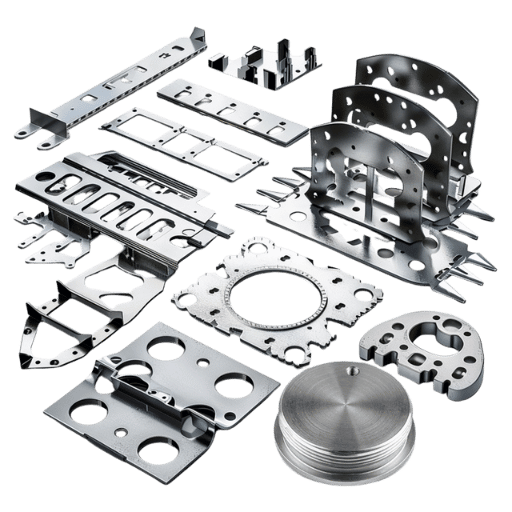
In today’s fast-evolving manufacturing world, standard CNC sheet metal fabrication methods just don’t cut it anymore—especially when your projects demand ultra-tight tolerances (±0.05 mm) och superior surface finishes (Ra 0.8 or better). If you’re a manufacturing engineer, shop owner, or product developer aiming for high-quality results with faster turnaround and lower costs, it’s time to explore the innovative CNC sheet metal fabrication methods redefining precision and efficiency in 2025.
Från fiber laser cutting and automated bending to hybrid machining and AI-driven workflows, forward-thinking companies like MS Machining are leveraging these breakthroughs to deliver flawless parts consistently. Keep reading to discover the latest technologies shaping the future of sheet metal production—and how you can put them to work in your next project.
Next-Generation Cutting Technologies for CNC Sheet Metal Fabrication
When it comes to cutting sheet metal, fiber lasers have rapidly overtaken traditional CO2 lasers, and for good reason. Fiber laser cutting offers faster processing speeds, superior edge quality, and greater versatility across different materials—especially stainless steel and aluminum. Unlike CO2 lasers, fiber lasers deliver higher energy efficiency and can handle a wider range of thicknesses with precision.
Fiber Laser vs. CO2: Speed and Edge Quality
- Hastighet: Fiber lasers typically cut 20–40% faster than CO2 lasers on thin to medium-thickness metals.
- Kantkvalitet: Fiber lasers produce clean, dross-free edges with minimal heat-affected zones, reducing the need for secondary finishing.
- Materialmångsidighet: Fiber lasers excel on reflective materials (aluminum, copper) where CO2 lasers struggle.
Ultra-High-Power Fiber Lasers (20–30 kW)
For thick stainless steel and aluminum sheets, ultra-high-power fiber lasers in the 20,000 to 30,000-watt range enable clean, burr-free cuts. These lasers effectively replace mechanical processes, like plasma cutting, offering a smooth finish that improves downstream fabrication steps.
Laser Blanking Lines Replacing Turret Punches
Modern fabrication shops are increasingly adopting laser blanking lines that outperform traditional turret punches by:
- Reducing setup times
- Eliminating tooling wear and costs
- Allowing quick changes for complex geometries
At MS Machining, we implemented a 20 kW fiber laser blanking line that boosts throughput by 30% while consistently delivering mirror-finish edges on stainless steel parts. The photo below shows a precision-cut edge with minimal surface roughness, ready for immediate forming or assembly without additional finishing.
Key Takeaways:
| Funktion | Fiber Laser Cutting | CO2 Laser Cutting |
|---|---|---|
| Hastighet | Faster cuts, up to 40% more | cURL Too many subrequests by single Worker invocation. To configure this limit, refer to https://developers.cloudflare.com/workers/wrangler/configuration/#limits |
| Kantkvalitet | cURL Too many subrequests by single Worker invocation. To configure this limit, refer to https://developers.cloudflare.com/workers/wrangler/configuration/#limits | cURL Too many subrequests by single Worker invocation. To configure this limit, refer to https://developers.cloudflare.com/workers/wrangler/configuration/#limits |
| Materialmångsidighet | cURL Too many subrequests by single Worker invocation. To configure this limit, refer to https://developers.cloudflare.com/workers/wrangler/configuration/#limits | cURL Too many subrequests by single Worker invocation. To configure this limit, refer to https://developers.cloudflare.com/workers/wrangler/configuration/#limits |
| cURL Too many subrequests by single Worker invocation. To configure this limit, refer to https://developers.cloudflare.com/workers/wrangler/configuration/#limits | cURL Too many subrequests by single Worker invocation. To configure this limit, refer to https://developers.cloudflare.com/workers/wrangler/configuration/#limits | cURL Too many subrequests by single Worker invocation. To configure this limit, refer to https://developers.cloudflare.com/workers/wrangler/configuration/#limits |
cURL Too many subrequests by single Worker invocation. To configure this limit, refer to https://developers.cloudflare.com/workers/wrangler/configuration/#limits.
cURL Too many subrequests by single Worker invocation. To configure this limit, refer to https://developers.cloudflare.com/workers/wrangler/configuration/#limits
cURL Too many subrequests by single Worker invocation. To configure this limit, refer to https://developers.cloudflare.com/workers/wrangler/configuration/#limits.
cURL Too many subrequests by single Worker invocation. To configure this limit, refer to https://developers.cloudflare.com/workers/wrangler/configuration/#limits.
cURL Too many subrequests by single Worker invocation. To configure this limit, refer to https://developers.cloudflare.com/workers/wrangler/configuration/#limits precisions CNC-bearbetningstjänster cURL Too many subrequests by single Worker invocation. To configure this limit, refer to https://developers.cloudflare.com/workers/wrangler/configuration/#limits.
cURL Too many subrequests by single Worker invocation. To configure this limit, refer to https://developers.cloudflare.com/workers/wrangler/configuration/#limits
cURL Too many subrequests by single Worker invocation. To configure this limit, refer to https://developers.cloudflare.com/workers/wrangler/configuration/#limits.
cURL Too many subrequests by single Worker invocation. To configure this limit, refer to https://developers.cloudflare.com/workers/wrangler/configuration/#limits.
cURL Too many subrequests by single Worker invocation. To configure this limit, refer to https://developers.cloudflare.com/workers/wrangler/configuration/#limits CNC-bearbetning av metalldelar cURL Too many subrequests by single Worker invocation. To configure this limit, refer to https://developers.cloudflare.com/workers/wrangler/configuration/#limits.
cURL Too many subrequests by single Worker invocation. To configure this limit, refer to https://developers.cloudflare.com/workers/wrangler/configuration/#limits
cURL Too many subrequests by single Worker invocation. To configure this limit, refer to https://developers.cloudflare.com/workers/wrangler/configuration/#limits.
cURL Too many subrequests by single Worker invocation. To configure this limit, refer to https://developers.cloudflare.com/workers/wrangler/configuration/#limits.
cURL Too many subrequests by single Worker invocation. To configure this limit, refer to https://developers.cloudflare.com/workers/wrangler/configuration/#limits cURL Too many subrequests by single Worker invocation. To configure this limit, refer to https://developers.cloudflare.com/workers/wrangler/configuration/#limits cURL Too many subrequests by single Worker invocation. To configure this limit, refer to https://developers.cloudflare.com/workers/wrangler/configuration/#limits.
cURL Too many subrequests by single Worker invocation. To configure this limit, refer to https://developers.cloudflare.com/workers/wrangler/configuration/#limits
cURL Too many subrequests by single Worker invocation. To configure this limit, refer to https://developers.cloudflare.com/workers/wrangler/configuration/#limits.
cURL Too many subrequests by single Worker invocation. To configure this limit, refer to https://developers.cloudflare.com/workers/wrangler/configuration/#limits.
cURL Too many subrequests by single Worker invocation. To configure this limit, refer to https://developers.cloudflare.com/workers/wrangler/configuration/#limits.
cURL Too many subrequests by single Worker invocation. To configure this limit, refer to https://developers.cloudflare.com/workers/wrangler/configuration/#limits.
cURL Too many subrequests by single Worker invocation. To configure this limit, refer to https://developers.cloudflare.com/workers/wrangler/configuration/#limits
cURL Too many subrequests by single Worker invocation. To configure this limit, refer to https://developers.cloudflare.com/workers/wrangler/configuration/#limits.
cURL Too many subrequests by single Worker invocation. To configure this limit, refer to https://developers.cloudflare.com/workers/wrangler/configuration/#limits.
cURL Too many subrequests by single Worker invocation. To configure this limit, refer to https://developers.cloudflare.com/workers/wrangler/configuration/#limits.
cURL Too many subrequests by single Worker invocation. To configure this limit, refer to https://developers.cloudflare.com/workers/wrangler/configuration/#limits
cURL Too many subrequests by single Worker invocation. To configure this limit, refer to https://developers.cloudflare.com/workers/wrangler/configuration/#limits.
cURL Too many subrequests by single Worker invocation. To configure this limit, refer to https://developers.cloudflare.com/workers/wrangler/configuration/#limits.
cURL Too many subrequests by single Worker invocation. To configure this limit, refer to https://developers.cloudflare.com/workers/wrangler/configuration/#limits.
cURL Too many subrequests by single Worker invocation. To configure this limit, refer to https://developers.cloudflare.com/workers/wrangler/configuration/#limits medicinsk tillverkning av enheter och utrustning.
cURL Too many subrequests by single Worker invocation. To configure this limit, refer to https://developers.cloudflare.com/workers/wrangler/configuration/#limits
cURL Too many subrequests by single Worker invocation. To configure this limit, refer to https://developers.cloudflare.com/workers/wrangler/configuration/#limits cURL Too many subrequests by single Worker invocation. To configure this limit, refer to https://developers.cloudflare.com/workers/wrangler/configuration/#limits, cURL Too many subrequests by single Worker invocation. To configure this limit, refer to https://developers.cloudflare.com/workers/wrangler/configuration/#limits.
cURL Too many subrequests by single Worker invocation. To configure this limit, refer to https://developers.cloudflare.com/workers/wrangler/configuration/#limits
- Medicinska enheter: cURL Too many subrequests by single Worker invocation. To configure this limit, refer to https://developers.cloudflare.com/workers/wrangler/configuration/#limits.
- Flygindustri: Lightweight metals and complex geometries demand hybrid machining and digital twin validation for consistent, high-quality parts.
- EV battery trays: High-volume runs benefit from cost-effective automation, such as AI nesting software for sheet metal and lights-out production to meet strict delivery schedules.
Deciding when to adopt these innovations comes down to your production volume, complexity, and quality needs. For many manufacturers, the upfront investment pays off by streamlining operations and boosting precision—making these methods key to staying competitive in the US market.
For those curious about the evolution of precision metal machining, exploring the history of CNC machining offers valuable insight into how these advancements continue to reshape the industry.
Case Studies – Real Projects by MS Machining
At MS Machining, our innovative CNC sheet metal fabrication methods deliver real results that meet tight tolerances and reduce costs. For example, we produced a 0.8 mm stainless steel enclosure achieving ±0.02 mm precision, showcasing our expertise in high-tolerance CNC bending and precision sheet metal fabrication. You can learn more about our stainless steel machining quality to see how we maintain such exacting standards.
In another project, we automated a 50,000-piece aluminum bracket run, cutting production costs by 15% without sacrificing quality. This success highlights how advanced automation and lights-out sheet metal production can significantly boost efficiency for large-volume jobs.
We also completed a mirror-finish copper busbar for power electronics, utilizing next-generation fiber laser cutting sheet metal techniques to achieve an exceptional surface finish directly after fabrication. This project demonstrates our capability to handle specialty metals and complex finishes with advanced sheet metal processing methods.
These case studies reflect our commitment to combining innovative CNC sheet metal methods with real-world applications to serve industries like aerospace, medical devices, and power electronics effectively.