
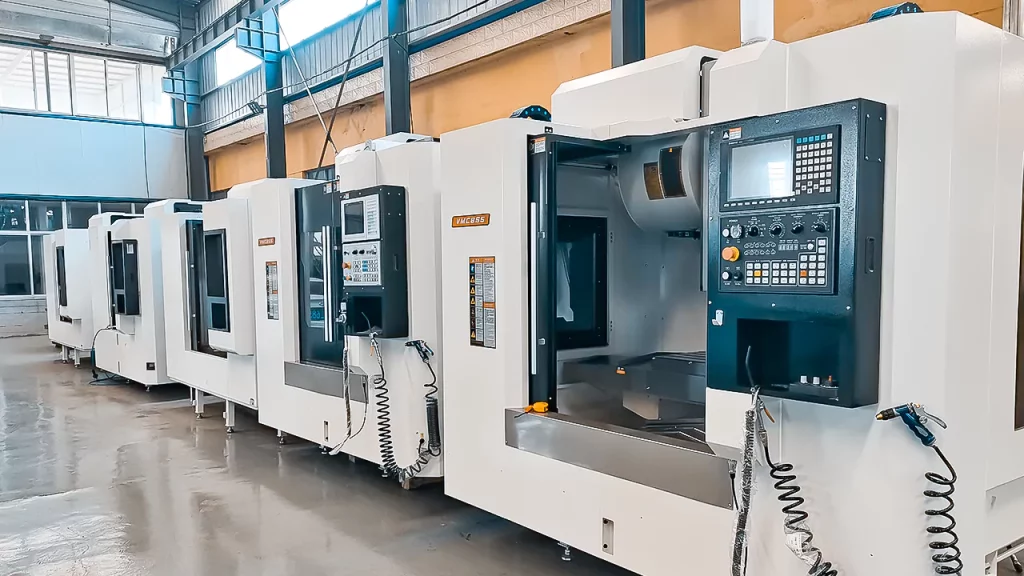
The global market for CNC (Computer Numerical Control) machining is entering a decade of sustained growth and strategic transformation driven by technological innovation, expanding demand for precision manufacturing, and the ongoing integration of digital and automated systems into industrial production lines. CNC-bearbetning — encompassing milling, turning, drilling, and multi‑axis operations used to manufacture high‑precision components — has become essential across sectors including automotive, aerospace, electronics, medical devices, and renewable energy systems.
Market data indicates that CNC machining services and equipment will continue to expand steadily between 2026 and 2035, reflecting broader trends in automation adoption, Industry 4.0 implementation, and the global redistribution of manufacturing capacity.
Market Size & Growth Trends
CNC Machining Services Segment
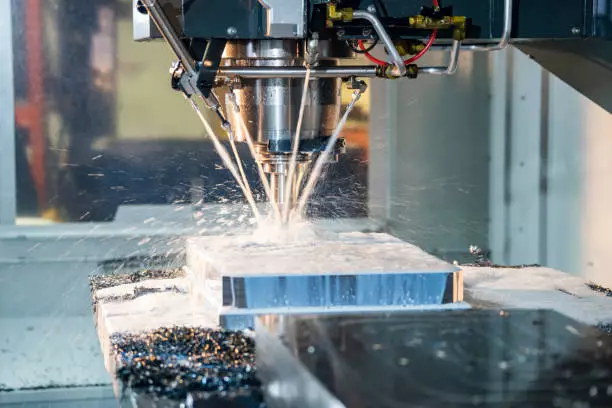
The global CNC machining services market — which includes outsourced precision machining for components used in a wide range of industries — was valued at approximately USD 54.02 billion in 2025 and is expected to grow to about USD 108.3 billion by 2035, representing an 8.04% compound annual growth rate (CAGR) over that period. This reflects the ongoing demand for accurate, complex parts made with tight tolerances for high‑value applications.
Manufacturers are increasingly turning to third‑party machining services to meet demand for customization, rapid delivery, and small batch production, especially where in‑house capacity or expertise is constrained. Automated machining systems and robotics integration also enable service providers to scale operations and improve delivery times, making contract machining a strategic option for OEMs (Original Equipment Manufacturers).
CNC Milling Machines Market
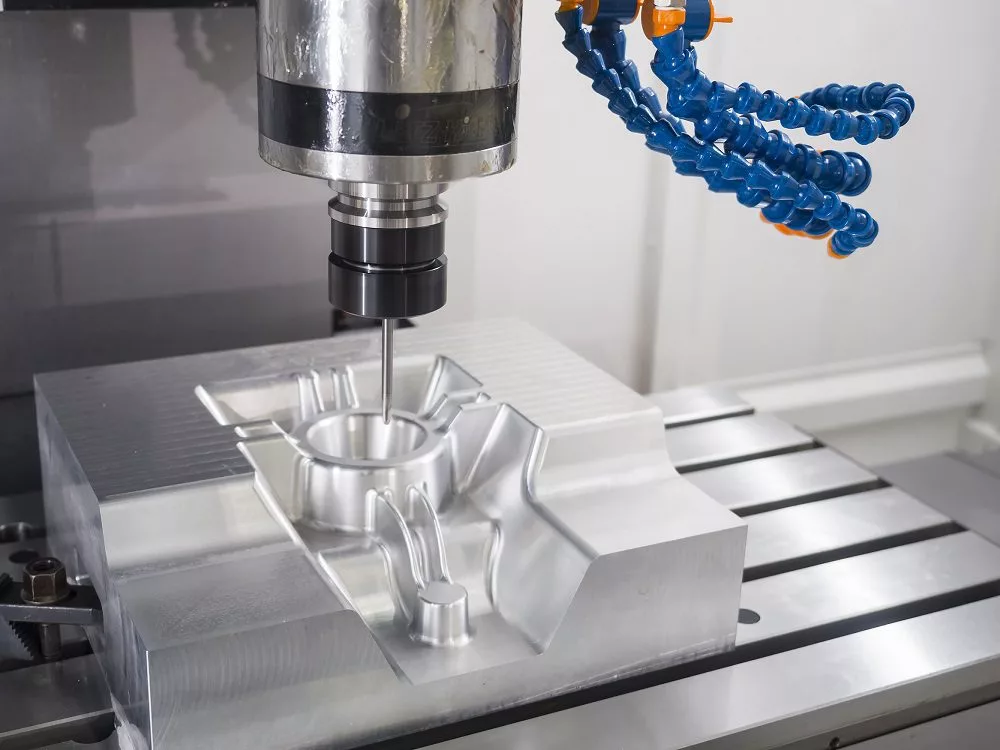
CNC-fräsning machines — a core subset of machining tools — are projected to increase in global market value from about USD 87.96 billion in 2026 to USD 120.82 billion by 2035, with a CAGR of 3.60% over the forecast period. Growth is supported by expanding industrialization, growth in automotive production, and continued need for high‑precision machined components.
Overall CNC Machine Market
Comprehensive market forecasts show the broader CNC machine market performing steadily, with projected global growth supported by automation, precision manufacturing, and digital integration. For example, one analysis estimated that total CNC machine market value may expand at a CAGR of ~6.1% through 2035, reaching tens of billions globally as demand rises for systems that enhance machining accuracy and productivity.
Key Drivers Behind Market Expansion
Automation & Smart Manufacturing Integration
A major driver of CNC market growth is the global push toward automation and “smart manufacturing” strategies. Manufacturers are integrating CNC machines with real‑time monitoring, sensors, and data analytics to achieve higher productivity, better quality control, and predictive maintenance capabilities.
More than 55% of new 5‑axis CNC installations globally now include IoT‑enabled sensors that monitor spindle health, vibration, and thermal conditions. These systems help reduce downtime and improve overall equipment effectiveness by providing actionable insights into machine performance.
Automated workflows, robotic loading/unloading, and digital twin technologies are enabling CNC systems to operate as part of broader Industry 4.0 ecosystems. In many facilities, CNC machines no longer function as standalone assets but as interconnected nodes in a larger data‑driven manufacturing environment.
Multi‑Axis Machining and Precision Demand
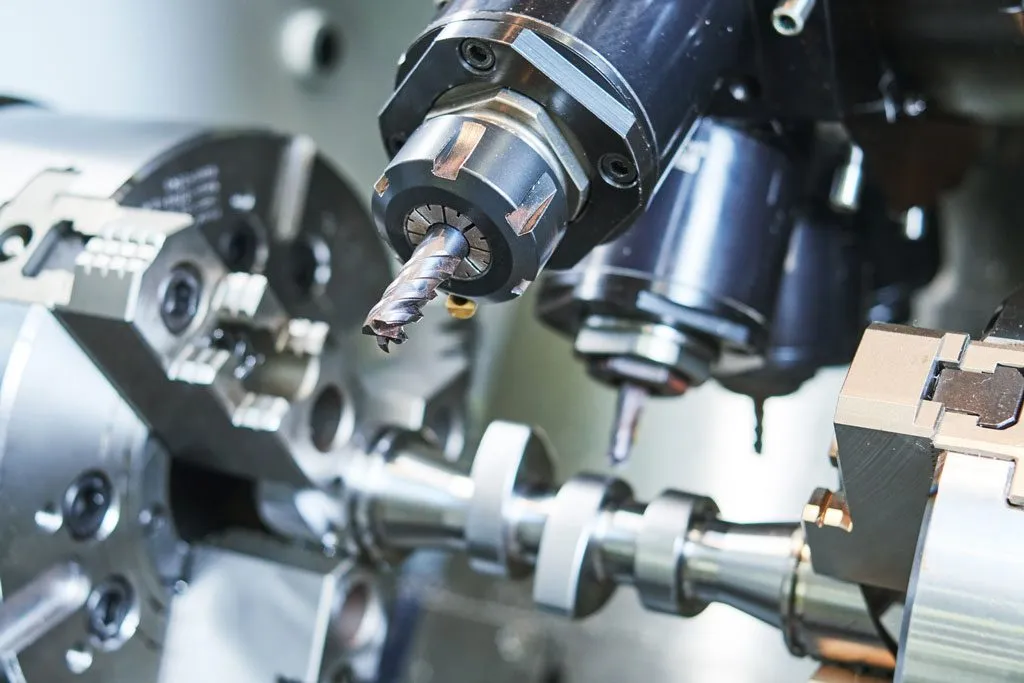
Multi‑axis CNC machines — especially 5‑axis configurations — are becoming increasingly prevalent in high‑precision industries like aerospace and medical devices. These systems can approach workpieces from multiple orientations without repositioning, reducing setup times and ensuring tighter accuracy.
The 5‑axis CNC machining centers market alone is expected to grow at a CAGR of about 6.2% until 2035, reflecting strong demand in high‑performance sectors that require complex machined geometries.
Industry‑Specific Demand Patterns
Several end‑use sectors are notably impactful on CNC market growth:
- Automotive & Electric Vehicles (EVs): Lightweight structural components (such as battery housings, motor mounts, and chassis parts) often require precision machining. As EV production accelerates globally, the CNC sector benefits from increased manufacturing volumes.
- Flyg- och försvarsindustri: Components like turbine blades, airframe parts, and propulsion systems rely on multi‑axis machining and tight tolerances more than many other industries. High precision and reliability drive adoption of advanced CNC platforms in this space.
- Medicinska enheter: Custom medical implants, surgical instruments, and orthopaedic components increasingly depend on CNC machining to meet stringent specifications and individualized design requirements.
- Industrial Equipment & Electronics: Precision parts for factory automation systems, robotics, and electronics housings also support the ongoing demand for CNC machining capacity.
These vertical trends contribute to sustained investment in CNC technology across global production networks.
Regional Market Dynamics
Asia‑Pacific: Largest Share & Fastest Expansion
The Asia‑Pacific region leads the global CNC market in terms of production and consumption, accounting for a dominant share of machining centers and precision services. Countries like China, Japan, South Korea, and India remain major hubs due to strong industrial bases and export manufacturing ecosystems.
China, for example, continues to hold significant influence in CNC machine production and usage, although it still relies heavily on imported high‑end control systems from global suppliers such as Siemens and FANUC in Japan and Germany.
North America: Innovation & Reshoring Influence
North America — particularly the United States — is embracing reshoring initiatives and investment in smart manufacturing infrastructure. Robust demand for aerospace, automotive, defense, and high‑value industrial components continues to support CNC adoption, while automation and predictive maintenance systems help domestic factories compete globally.
Europe: Precision Engineering & High Standards
Europe remains a strong market for CNC technology, driven by high precision engineering sectors such as automotive, aerospace, and industrial machinery manufacturing. Countries like Germany, Italy, and France often lead in adopting advanced CNC systems and integrating digital manufacturing solutions into traditional production environments.
Emerging Market Trends & Technology Innovations
Digital Twin & Simulation Tools
Digital twin technology — creating virtual models of a physical machining process — is transforming CNC production planning. Manufacturers simulate setups and test machine paths virtually, reducing trial‑and‑error on the shop floor, cutting cycle times, and eliminating costly material waste.
AI‑Assisted CNC Optimization
Artificial intelligence (AI) integration allows machines to optimize tool paths, predict wear patterns, and make adjustments in real time. AI‑driven strategies can improve machining efficiency, reduce scrap, and extend tool life by learning from operational data over time.
While precise adoption rates vary across facilities, intelligent machining solutions are increasingly seen as part of “next‑gen” CNC ecosystems that combine hardware and software in unified production management platforms.
Hybrid Machining & Flexibility
In addition to purely subtractive processes, hybrid machining concepts — combining additive and subtractive capabilities — are gaining traction. These systems offer flexibility in prototyping, repair work, and complex part production, effectively bridging the gap between traditional CNC and additive manufacturing.
Challenges & Market Barriers
High Investment Costs
Advanced CNC systems, particularly those equipped with multi‑axis capabilities, automation hardware, and advanced control systems, require significant capital investment. This upfront cost can be a barrier for small and medium enterprises (SMEs), slowing adoption in some markets.
Skills Gap & Workforce Needs
Operating advanced CNC systems and associated automation software demands skilled workforce capabilities. There is ongoing demand for trained operators, CNC programmers, and maintenance technicians — a constraint that many manufacturers seek to address through training programs and partnerships with technical institutes.
Supply Chain & Geopolitical Risks
Global supply chain disruptions, trade policy changes, and geopolitical tensions can impact the availability and cost of CNC machine components — especially high‑precision controllers and imported parts. As regions emphasize localized production and supply resilience, supply chain strategy is becoming an important factor in long‑term CNC market planning.
Future Outlook: 2026–2035
Looking toward 2035, the global CNC machining market demonstrates long‑term resilience and strategic importance. Increased digital integration, expanding automation, and demand from high‑growth sectors such as EVs, aerospace, and medical devices are poised to sustain investment cycles.
Steady CAGR forecasts across segments indicate that CNC machining will remain a fundamental component of the manufacturing value chain, with smart, connected systems redefining production efficiency and precision standards.
Slutsats
The global CNC-bearbetning market is well‑positioned for sustained growth from 2026 through 2035. Continued investment in automation, multi‑axis machining, and Industry 4.0 technologies — combined with strong demand from automotive, aerospace, industrial equipment, and medical industries — is driving market expansion across regions. Manufacturers that adopt intelligent CNC systems and integrate digital production strategies will be better equipped to meet rising demand for high‑precision, efficient, and customizable manufacturing solutions in the decade ahead.