
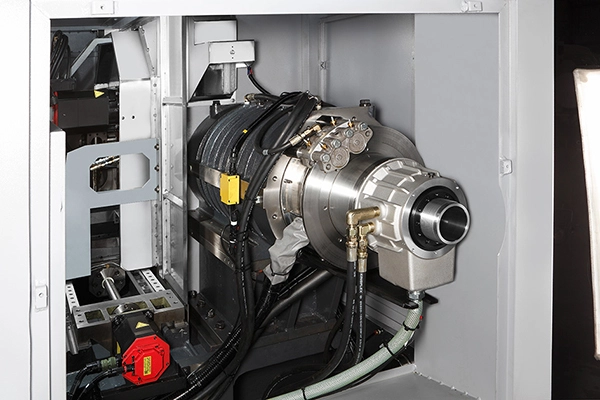
If you need precision parts that fit perfectly, last longer, and perform reliably, CNC multi‑axis turning can make it happen. It’s the method behind many of the complex components you see in cars, medical devices, and industrial equipment.
You might be wondering: what makes multi‑axis turning different from regular machining, and why should you consider it for your projects? Let’s break it down in a way that’s easy to follow.
What Is CNC Multi‑Axis Turning?
Think of a regular lathe — it spins a part while a cutting tool shapes it. Most standard lathes move in two directions (X and Z axes) to cut the length and diameter of the piece. Multi‑axis turning adds more directions (Y, C, sometimes B), so the cutting tools can reach tricky angles without having to move the part manually.
Why does that matter for you? Because it means:
- More complex shapes can be made in one setup
- Parts are more accurate and consistent
- Lead times are shorter, so you get your parts faster
- Less handling means fewer chances for errors
In other words, parts that used to require multiple machines and setups can now be finished on a single multi‑axis machine, saving time and cost.
Why Multi‑Axis Turning Benefits Your Projects
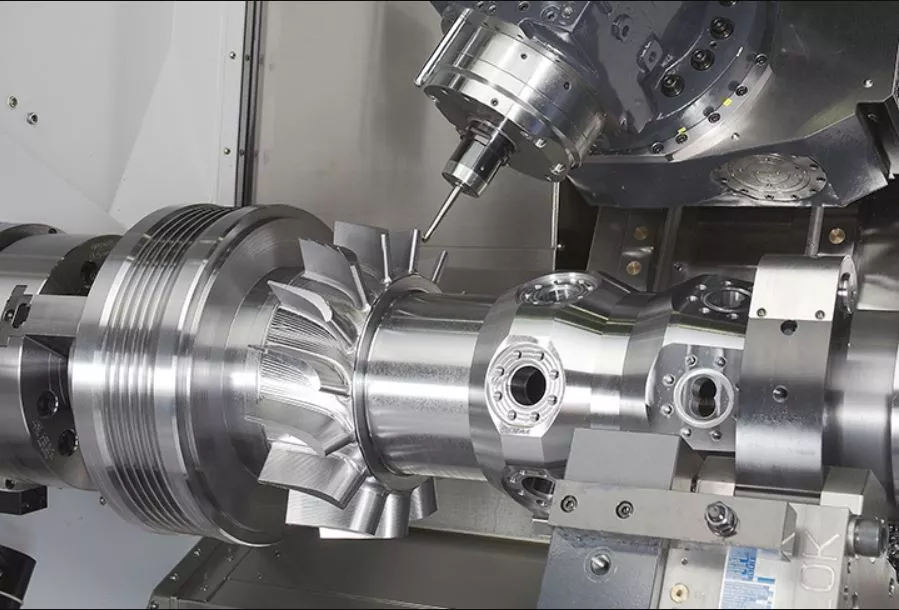
If your product relies on precise components, even a small error can cause problems down the line. Multi‑axis turning helps make sure your parts meet your requirements consistently.
Here’s what you gain:
Better Shapes
Complex features like angled holes, curves, or off-center cuts can be done without extra setups.
Tighter Tolerances
Fewer setups mean fewer opportunities for mistakes. Parts come out right the first time.
Faster Delivery
With multiple processes done in one machine, production moves quicker — you get your parts sooner.
Reliable Quality
Less handling and fewer transitions mean parts stay accurate and consistent.
How Multi‑Axis Turning Compares to Turning and Milling Machines
You might also hear about cnc turning and milling machines. They are similar but not exactly the same.
- Multi‑Axis CNC Turning: Focuses on rotating parts, but can do some milling. Best for shafts, rods, and other cylindrical components.
- CNC Turning and Milling Machines: Hybrid machines that handle both turning and full milling. Great for parts that need flat surfaces, pockets, or complex features alongside turned features.
For many customers, the choice depends on what your part needs: purely rotational features or a combination of turned and milled shapes.
Handling Complex Parts for Your Products
If your parts have off-center holes, internal threads, tapered profiles, or other intricate features, multi‑axis turning makes production simpler and more reliable.
cURL Too many subrequests by single Worker invocation. To configure this limit, refer to https://developers.cloudflare.com/workers/wrangler/configuration/#limits
cURL Too many subrequests by single Worker invocation. To configure this limit, refer to https://developers.cloudflare.com/workers/wrangler/configuration/#limits
- cURL Too many subrequests by single Worker invocation. To configure this limit, refer to https://developers.cloudflare.com/workers/wrangler/configuration/#limits
- cURL Too many subrequests by single Worker invocation. To configure this limit, refer to https://developers.cloudflare.com/workers/wrangler/configuration/#limits
- cURL Too many subrequests by single Worker invocation. To configure this limit, refer to https://developers.cloudflare.com/workers/wrangler/configuration/#limits
cURL Too many subrequests by single Worker invocation. To configure this limit, refer to https://developers.cloudflare.com/workers/wrangler/configuration/#limits.
cURL Too many subrequests by single Worker invocation. To configure this limit, refer to https://developers.cloudflare.com/workers/wrangler/configuration/#limits
cURL Too many subrequests by single Worker invocation. To configure this limit, refer to https://developers.cloudflare.com/workers/wrangler/configuration/#limits cURL Too many subrequests by single Worker invocation. To configure this limit, refer to https://developers.cloudflare.com/workers/wrangler/configuration/#limits cURL Too many subrequests by single Worker invocation. To configure this limit, refer to https://developers.cloudflare.com/workers/wrangler/configuration/#limits
- cURL Too many subrequests by single Worker invocation. To configure this limit, refer to https://developers.cloudflare.com/workers/wrangler/configuration/#limits
- cURL Too many subrequests by single Worker invocation. To configure this limit, refer to https://developers.cloudflare.com/workers/wrangler/configuration/#limits
- cURL Too many subrequests by single Worker invocation. To configure this limit, refer to https://developers.cloudflare.com/workers/wrangler/configuration/#limits
- cURL Too many subrequests by single Worker invocation. To configure this limit, refer to https://developers.cloudflare.com/workers/wrangler/configuration/#limits
cURL Too many subrequests by single Worker invocation. To configure this limit, refer to https://developers.cloudflare.com/workers/wrangler/configuration/#limits.
cURL Too many subrequests by single Worker invocation. To configure this limit, refer to https://developers.cloudflare.com/workers/wrangler/configuration/#limits
cURL Too many subrequests by single Worker invocation. To configure this limit, refer to https://developers.cloudflare.com/workers/wrangler/configuration/#limits
Automobil
- cURL Too many subrequests by single Worker invocation. To configure this limit, refer to https://developers.cloudflare.com/workers/wrangler/configuration/#limits
- cURL Too many subrequests by single Worker invocation. To configure this limit, refer to https://developers.cloudflare.com/workers/wrangler/configuration/#limits
Rymdteknik
- cURL Too many subrequests by single Worker invocation. To configure this limit, refer to https://developers.cloudflare.com/workers/wrangler/configuration/#limits
- cURL Too many subrequests by single Worker invocation. To configure this limit, refer to https://developers.cloudflare.com/workers/wrangler/configuration/#limits
Medicinteknik
- cURL Too many subrequests by single Worker invocation. To configure this limit, refer to https://developers.cloudflare.com/workers/wrangler/configuration/#limits
- cURL Too many subrequests by single Worker invocation. To configure this limit, refer to https://developers.cloudflare.com/workers/wrangler/configuration/#limits
cURL Too many subrequests by single Worker invocation. To configure this limit, refer to https://developers.cloudflare.com/workers/wrangler/configuration/#limits
- cURL Too many subrequests by single Worker invocation. To configure this limit, refer to https://developers.cloudflare.com/workers/wrangler/configuration/#limits
- cURL Too many subrequests by single Worker invocation. To configure this limit, refer to https://developers.cloudflare.com/workers/wrangler/configuration/#limits
cURL Too many subrequests by single Worker invocation. To configure this limit, refer to https://developers.cloudflare.com/workers/wrangler/configuration/#limits
cURL Too many subrequests by single Worker invocation. To configure this limit, refer to https://developers.cloudflare.com/workers/wrangler/configuration/#limits
cURL Too many subrequests by single Worker invocation. To configure this limit, refer to https://developers.cloudflare.com/workers/wrangler/configuration/#limits
cURL Too many subrequests by single Worker invocation. To configure this limit, refer to https://developers.cloudflare.com/workers/wrangler/configuration/#limits.
cURL Too many subrequests by single Worker invocation. To configure this limit, refer to https://developers.cloudflare.com/workers/wrangler/configuration/#limits
cURL Too many subrequests by single Worker invocation. To configure this limit, refer to https://developers.cloudflare.com/workers/wrangler/configuration/#limits.
Automation
cURL Too many subrequests by single Worker invocation. To configure this limit, refer to https://developers.cloudflare.com/workers/wrangler/configuration/#limits.
cURL Too many subrequests by single Worker invocation. To configure this limit, refer to https://developers.cloudflare.com/workers/wrangler/configuration/#limits
cURL Too many subrequests by single Worker invocation. To configure this limit, refer to https://developers.cloudflare.com/workers/wrangler/configuration/#limits
- cURL Too many subrequests by single Worker invocation. To configure this limit, refer to https://developers.cloudflare.com/workers/wrangler/configuration/#limits
- cURL Too many subrequests by single Worker invocation. To configure this limit, refer to https://developers.cloudflare.com/workers/wrangler/configuration/#limits
- cURL Too many subrequests by single Worker invocation. To configure this limit, refer to https://developers.cloudflare.com/workers/wrangler/configuration/#limits
- cURL Too many subrequests by single Worker invocation. To configure this limit, refer to https://developers.cloudflare.com/workers/wrangler/configuration/#limits
- cURL Too many subrequests by single Worker invocation. To configure this limit, refer to https://developers.cloudflare.com/workers/wrangler/configuration/#limits
cURL Too many subrequests by single Worker invocation. To configure this limit, refer to https://developers.cloudflare.com/workers/wrangler/configuration/#limits cURL Too many subrequests by single Worker invocation. To configure this limit, refer to https://developers.cloudflare.com/workers/wrangler/configuration/#limits, cURL Too many subrequests by single Worker invocation. To configure this limit, refer to https://developers.cloudflare.com/workers/wrangler/configuration/#limits cURL Too many subrequests by single Worker invocation. To configure this limit, refer to https://developers.cloudflare.com/workers/wrangler/configuration/#limits cURL Too many subrequests by single Worker invocation. To configure this limit, refer to https://developers.cloudflare.com/workers/wrangler/configuration/#limits ensures your parts are produced efficiently and meet your exact needs.
Why It Matters to You
Choosing multi‑axis CNC turning isn’t just about machines — it’s about making your products better, faster, and more reliable. You get parts that fit perfectly, last longer, and can be delivered on time.
Whether it’s for automotive, aerospace, medical, or industrial equipment, multi‑axis turning helps you meet your goals without compromise. It’s a solution that adapts to your needs, reduces risk, and gives you confidence in every part.
FAQ – Multi-Axis CNC Turning & Complex Part Machining
Q1: When should I choose multi-axis CNC turning?
If your parts have complex shapes, angled holes, chamfers, internal or external threads, or require both turning and milling on the same component, multi-axis CNC turning can handle it in a single setup, saving time and cost.
Q2: How is multi-axis CNC turning different from regular CNC turning?
Regular CNC turning mainly handles basic rotational shapes. Multi-axis CNC turning adds extra axes, allowing complex geometries and higher precision in one setup, with fewer setups and less risk of errors.
Q3: What materials can be machined with multi-axis CNC turning?
Common materials include stainless steel, aluminum, titanium, copper, brass, and engineering plastics. Special materials can be accommodated by adjusting tooling and cutting parameters.
Q4: Can turning and milling be done in one setup?
Yes. Modern multi-axis turn-mill machines combine turning and milling capabilities, allowing complex parts to be completed in one setup, reducing handling and secondary operations.
Q5: What level of precision and surface finish can I expect?
Multi-axis CNC turning delivers excellent tolerance control and surface quality, typically achieving ±0.01 mm or higher precision, with surface finishes as low as Ra0.4 μm, meeting most precision component requirements.
Q6: How long does production usually take?
Lead time depends on part complexity and batch size. Multi-axis machining reduces multiple setups and handling, significantly shortening production time. We can provide a detailed schedule based on your specific design.
Q7: Is it suitable for both small and large production runs?
Yes. Multi-axis CNC turning is highly flexible, making it efficient for single prototypes, small batches, or large-volume production while maintaining accuracy and consistency.
Q8: How can I verify the quality of the parts?
After machining, inspection reports, 3D coordinate measurements, and surface finish data can be provided to ensure every part meets your specifications.