
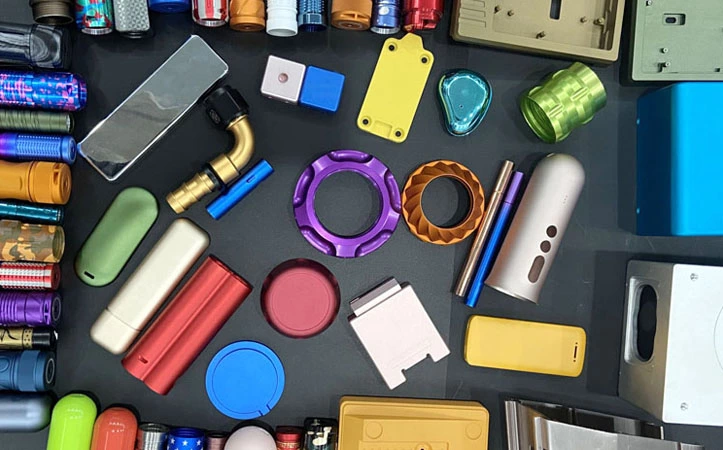
O que é Pintura em Pó e Como Funciona?
A pintura em pó é um processo de acabamento moderno amplamente utilizado para proteger e melhorar peças de metal, especialmente aquelas feitas por usinagem CNC. Diferente da tinta líquida tradicional, a pintura em pó envolve a aplicação de um pó seco que derrete e se liga à superfície, criando um acabamento resistente e durável.
Processo Passo a Passo
- Preparação da Superfície: As peças de metal usinadas por CNC são cuidadosamente limpas e pré-tratadas. Isso geralmente envolve a remoção de óleos, sujeira e ferrugem, seguido de pré-tratamentos químicos como fosfatização para melhorar a aderência do pó e a resistência à corrosão.
- Aplicação Eletrostática: O pó, normalmente feito de poliéster, epóxi ou uma mistura, é pulverizado na peça usando uma pistola eletrostática. As partículas de pó carregadas são atraídas para a superfície de metal aterrada, garantindo uma camada uniforme e consistente sem desperdício de excesso.
- Cura em Alta Temperatura: Após a aplicação, as peças entram em um forno onde o calor (geralmente entre 180°C e 200°C) derrete o pó, permitindo que ele flua e se ligue quimicamente ao metal. Essa etapa de cura produz um acabamento contínuo, resistente e mais espesso do que a tinta convencional.
Principais Diferenças em Relação à Tinta Líquida
- Camada Mais Espessa: As pinturas em pó são aplicadas em camadas mais espessas do que a maioria das tintas líquidas, frequentemente resultando em uma cobertura e proteção superiores.
- Acabamento Uniforme: O método eletrostático garante uma camada uniforme sem gotejamentos, escorrimentos ou áreas finas.
- Sem Solventes: As pinturas em pó são livres de solventes, tornando-as mais ecológicas e seguras ao eliminar emissões de VOCs prejudiciais.
Por que é Ideal para Componentes de Metal Usinados por CNC
O processo de pintura em pó cria um acabamento duro e bem aderido que resiste ao desgaste e ao uso. Para peças usinadas por CNC, que frequentemente requerem proteção de superfície precisa e durabilidade, a pintura em pó oferece:
- Adesão Forte devido à preparação meticulosa da superfície e aplicação eletrostática.
- Resistência a lascamentos e impactos, crucial para peças expostas a esforços mecânicos.
- Excelente resistência à corrosão, prolongando a vida útil de componentes metálicos em ambientes adversos.
No geral, a pintura em pó oferece um acabamento durável para peças metálicas que atende aos altos padrões exigidos pela usinagem CNC, combinando apelo estético com desempenho a longo prazo.
Fatores-chave que Influenciam a Durabilidade da Pintura em Pó
A durabilidade da pintura em pó depende fortemente de vários fatores importantes. Primeiro, a qualidade da aplicação e pré-tratamento é fundamental. Uma preparação adequada da superfície—como limpeza minuciosa e fosfatização—garante uma adesão forte ao metal. Sem essa etapa, a camada pode descascar ou falhar precocemente, especialmente em peças usinadas por CNC onde a precisão é essencial.
Em seguida, o tipo de pó utilizado faz uma grande diferença. Pó de poliéster é popular para uso externo porque resiste bem aos raios UV e às intempéries. Variantes super duráveis prolongam ainda mais a vida útil, resistindo ao desbotamento e à corrosão por anos. Pó de epóxi, por outro lado, é mais adequado para componentes internos, pois não é tão resistente aos UV.
Exposição ambiental é outro fator importante. Raios UV, umidade, produtos químicos e variações de temperatura podem degradar as camadas ao longo do tempo. Para peças expostas a condições adversas, selecionar pós projetados para esses desafios específicos pode melhorar a longevidade.
Por fim, o material do substrato e design da peça— especialmente na usinagem CNC — afetam o desempenho da pintura em pó. Superfícies lisas e bem usinadas proporcionam uma base melhor para a camada, enquanto geometrias complexas podem exigir atenção extra durante a aplicação.
Para quem se interessa pelo lado da usinagem CNC, entender o processo CNC em si ajuda a otimizar os resultados da camada. Confira insights detalhados sobre máquinas de fresamento CNC para ver como as técnicas de usinagem se relacionam com a preparação da superfície e a durabilidade da camada.
Quão Durável é a Pintura em Pó em Testes do Mundo Real?
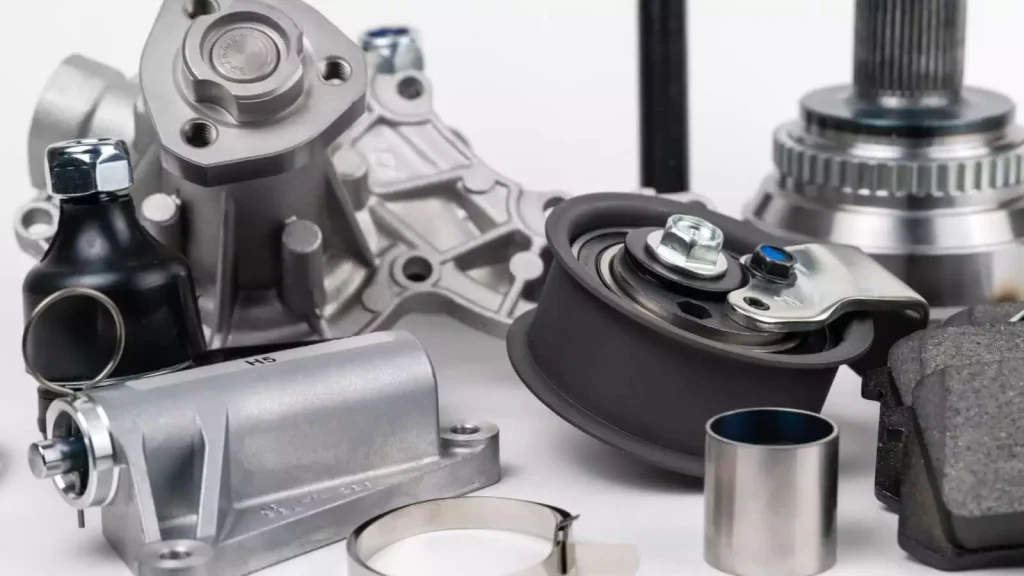
A pintura a pó destaca-se por sua forte resistência a lascas, riscos e impactos. Na maioria dos testes do mundo real, ela apresenta desempenho superior ao da tinta tradicional, criando um acabamento resistente e durável que se mantém bem sob uso intenso. Isso a torna uma escolha popular para proteger peças de metal que enfrentam desgaste regular.
Quando se trata de proteção contra corrosão e ferrugem, a pintura a pó fornece uma barreira excelente em superfícies metálicas, especialmente para peças usinadas por CNC que precisam de proteção confiável a longo prazo. Seu acabamento firmemente ligado ajuda a bloquear a umidade e contaminantes, retardando significativamente a formação de ferrugem.
Para uso externo, a pintura a pó também se destaca com boa resistência aos raios UV e às condições climáticas. Pós de poliéster padrão normalmente duram de 15 a 20 anos ao ar livre, mantendo a cor e a qualidade do acabamento sem desbotar ou rachar. Se você optar por revestimentos a pó super duráveis, esses períodos podem se estender até 40 anos com manutenção adequada, tornando-os ideais para condições climáticas adversas.
No geral, a durabilidade da pintura a pó em aplicações práticas faz dela uma das melhores opções de proteção de superfície disponíveis no mercado—especialmente para componentes de metal usinados por CNC que exigem resistência e longevidade.
Para saber mais sobre como escolher o revestimento adequado após usinagem, confira nossa visão geral detalhada em usinagem CNC de metal.
Pintura a Pó vs. Tinta Tradicional
Ao comparar a durabilidade da pintura a pó com a da tinta tradicional, vários fatores se destacam. A pintura a pó forma uma camada mais espessa e uniforme que adere firmemente à superfície. Essa camada espessa oferece melhor resistência a lascas, riscos e desbotamento—pontos fracos comuns na tinta líquida. Diferentemente da tinta, as pinturas a pó não contêm solventes, o que muitas vezes resulta em melhor adesão a longo prazo e menos descascamento ao longo do tempo.
A resistência ao desbotamento da pintura a pó, especialmente com pós resistentes aos UV, supera significativamente muitos tipos de tinta, tornando-se uma escolha preferida para peças usinadas por CNC expostas ao ar livre e de alto desgaste. Por causa de sua durabilidade, a pintura a pó geralmente requer menos manutenção, reduzindo a necessidade de retoques ou repintura frequentes.
Do ponto de vista de custo-benefício, a pintura a pó pode ter um custo inicial mais alto em comparação com a tinta, mas sua vida útil mais longa em componentes usinados por CNC a torna um investimento mais inteligente ao longo do tempo. Menos tempo de inatividade para reparos, aliado à proteção superior contra corrosão e impacto, economiza dinheiro e mantém as peças com melhor desempenho por anos.
Para peças CNC de alta precisão e duráveis, a aplicação e manutenção corretas são essenciais para maximizar os benefícios da pintura a pó—detalhes que você pode explorar mais ao considerar serviços de usinagem CNC de precisão.
Pintura a Pó vs. Anodização para Peças Usinadas por CNC
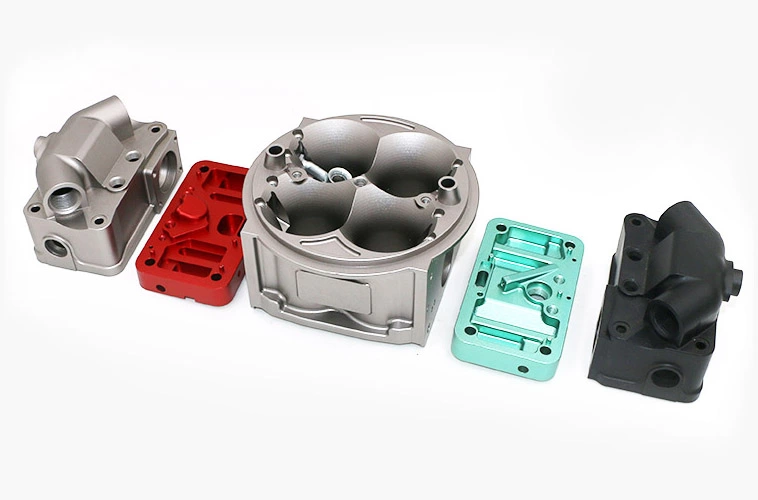
Ao comparar pintura a pó e anodização para peças usinadas por CNC, cada uma possui suas próprias vantagens. A pintura a pó oferece uma camada protetora mais espessa, mais flexível e uma ampla variedade de opções de cores, tornando-se uma escolha superior para peças que precisam de durabilidade e apelo estético. Ela cria um acabamento duro e ligado que resiste bem a impactos, corrosão e condições climáticas—ideal para componentes de metal que enfrentam ambientes variados.
Por outro lado, a anodização é um tratamento de superfície usado principalmente para peças de alumínio. Ela aumenta a dureza e a resistência à corrosão ao transformar a superfície do metal em uma camada protetora de óxido. A anodização oferece excelente resistência ao desgaste e riscos, mas geralmente proporciona menos variedade de cores e proteção mais fina em comparação com a pintura a pó.
Em muitos casos, a pintura a pó oferece melhor durabilidade geral e resistência à corrosão, especialmente para peças de aço ou metal usinado por CNC expostas a condições externas severas. Sua camada mais espessa ajuda a resistir a lascas e danos UV melhor do que a anodização, especialmente para peças cruciais em indústrias como automotiva ou equipamentos industriais.
Para componentes de metal CNC que requerem proteção de superfície robusta e acabamento duradouro, a pintura a pó frequentemente supera a anodização, combinando resistência, versatilidade e personalização de cores. Se você deseja aprender mais sobre como proteger peças de metal CNC com tratamento de superfície, confira este guia detalhado em Usinagem CNC de peças metálicas.
Aprimorando a Durabilidade da Pintura a Pó em Componentes CNC
Para obter o máximo de durabilidade na pintura a pó em peças usinadas por CNC, a preparação adequada da superfície é fundamental. Isso significa limpar e desengraxar completamente a superfície de metal para remover óleos ou contaminantes, seguido de tratamentos como fosfatização ou jateamento. Essas etapas garantem melhor aderência do pó e reduzem o risco de descascamento ou lascas durante o uso.
Escolher a pintura a pó certa é crucial, especialmente para peças expostas a ambientes difíceis. Pós super duráveis, como formulações avançadas de poliéster, oferecem resistência aprimorada aos UV e proteção contra corrosão, tornando-os ideais para componentes CNC ao ar livre ou industriais. Pós epóxi ou híbridos podem ser excelentes para aplicações internas que requerem resistência química.
Manter peças pintadas a pó é mais fácil do que você imagina. Limpezas regulares com detergentes suaves e panos macios ajudam a preservar o acabamento, enquanto evitar ferramentas abrasivas ou produtos químicos agressivos previne danos à superfície. A manutenção adequada prolonga a vida útil da pintura a pó e mantém seus componentes de metal usinados por CNC com aparência impecável.
Exemplos do mundo real destacam a força do revestimento em pó em diversos setores. Desde peças automotivas que suportam desgaste constante até trabalhos de metalurgia arquitetônica expostos às intempéries, o revestimento em pó oferece um acabamento durável que resiste ao tempo. Para peças de precisão que requerem proteção confiável da superfície, explorar nossos usinagem CNC de alta precisão serviços também pode garantir que seus componentes estejam prontos para um desempenho superior do revestimento em pó.
Mitos e Limitações Comuns
Existem alguns mitos comuns sobre a durabilidade do revestimento em pó que frequentemente surgem, especialmente em relação à vulnerabilidade a impactos e desafios na retocagem. Embora o revestimento em pó seja conhecido por seu acabamento forte e resistente a lascas, ele não é completamente imune a impactos pesados ou riscos profundos. No entanto, em comparação com a tinta tradicional, geralmente oferece proteção superior contra lascas e desgaste.
Retocar superfícies revestidas em pó pode ser mais complicado do que com tinta líquida, pois o revestimento é assado e forma uma camada mais espessa e uniforme. Reparos pontuais frequentemente requerem equipamentos profissionais para uma mistura adequada, portanto, retoques feitos por conta própria podem não combinar perfeitamente com o acabamento original.
O revestimento em pó pode não ser a escolha ideal em alguns casos específicos, como:
- Necessidades extremas de flexibilidade: É menos tolerante em peças que requerem muita flexão ou flexibilidade sem trincar.
- Pequenas e estreitas cavidades: O pó pode não cobrir detalhes ou formas complexas usinadas por CNC de forma tão completa.
- Revestimentos muito finos: Se você precisa de um acabamento fino ou transparente, anodização ou revestimentos líquidos podem ser melhores.
Compreender essas limitações ajuda a estabelecer expectativas realistas para o revestimento em pó em seus componentes usinados por CNC. Para aplicações exigentes, escolher o tipo de pó adequado e uma preparação de superfície correta maximizará o acabamento durável e a vida útil. Para mais informações sobre usinagem CNC e tratamentos de superfície, confira nosso guia sobre usinagem CNC personalizada.