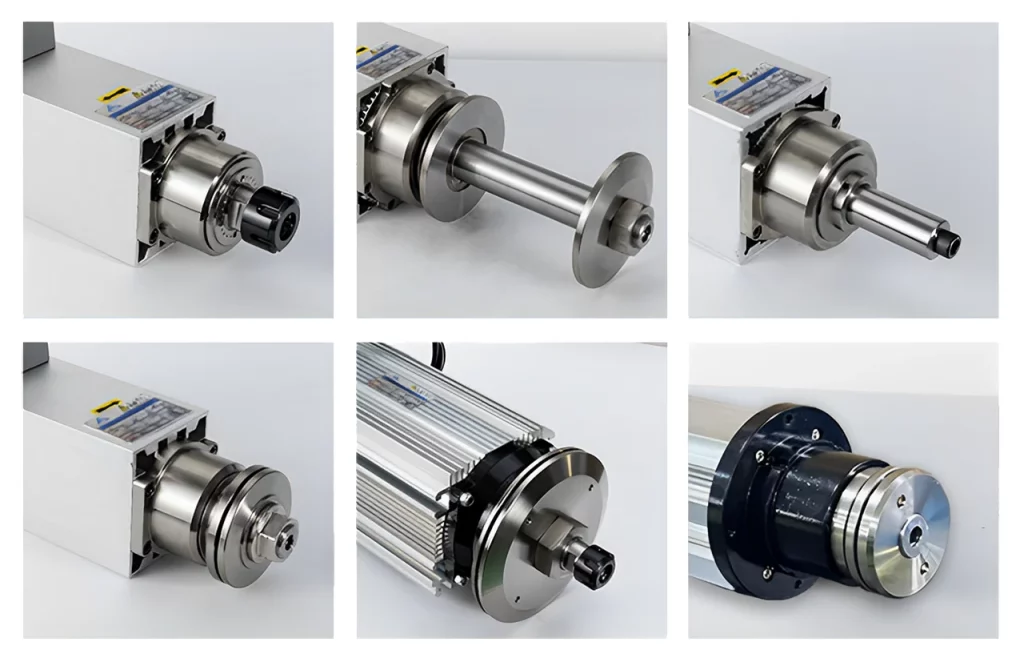
O que é um eixo de CNC?
A eixo de CNC é a peça central de uma máquina de CNC que gira a ferramenta de corte em altas velocidades para moldar materiais como madeira, metal ou plástico. Diferente de uma furadeira ou tupia simples, um eixo de CNC é projetado para precisão, potência e durabilidade.
Componentes principais de um eixo de CNC
| Componente | Descrição |
|---|---|
| Motor | Move o eixo do eixo; pode ser embutido ou separado |
| Eixo | Gira para fazer a ferramenta girar; deve ser equilibrado e resistente |
| Rolamentos | Suporte ao eixo; a qualidade afeta a runout e a suavidade |
| Porta-ferramenta | Mantém a ferramenta de corte firmemente, muitas vezes usando colares |
| Conicidade | A forma cônica dentro do eixo onde a ferramenta encaixa |
Como funciona um eixo CNC
A Motor de eixo CNC gira o eixo através de uma Frequência Variável Drive (VFD). Isso permite aos usuários controlar o eixo de rotação velocidade (RPM) e torque dinamicamente, ajustando para diferentes materiais e cortes. O sistema VFD permite operação de velocidade variável essencial para fresamento e roteamento de precisão.
Roteadores de acabamento vs. Eixos CNC verdadeiros
| Recurso | Roteador de acabamento | Mandril CNC Verdadeiro |
|---|---|---|
| Tipo de Motor | Normalmente escovado, arrefecido a ar | Sem escovas, ar ou água resfriada |
| Controle de Velocidade | Limitado, geralmente fixo ou por degrau | Variável precisa via VFD |
| Precisão de desvio | Maior alcance, menor precisão | Menor alcance, alta precisão |
| Potência e Durabilidade | Menor potência, menos durável | Mais potência, feito para uso intenso |
| Níveis de Ruído | Geralmente mais barulhento | Mais silencioso, especialmente resfriado a água |
Eixos CNC verdadeiros oferecem superioridade precisão, potência, e confiabilidade em comparação com routers de acabamento, tornando-os a melhor escolha para fresagem e gravação CNC profissionais.
Esta introdução cobre o básico e os componentes principais de um eixo CNC, destacando como ele funciona e as principais diferenças entre routers de acabamento e eixos dedicados. Isso ajuda você a entender por que a escolha do eixo importa para o desempenho e a confiabilidade da sua máquina CNC.
Tipos de Eixos CNC
Ao escolher um eixo CNC, entender os principais tipos ajuda você a selecionar o adequado às suas necessidades. As duas opções comuns de resfriamento são resfriado a ar e motores de eixo resfriados a água. Motores de eixo resfriados a ar são mais silenciosos, mais fáceis de manter e geralmente mais baratos, mas podem ficar mais quentes e podem limitar o desempenho durante trabalhos longos. Motores de eixo resfriados a água permanecem mais frios, o que significa melhor desempenho e maior durabilidade — mas eles requerem um sistema de bomba d'água e mais manutenção.
As classificações de potência também importam. Para gravação leve e projetos pequenos, motores na faixa de 800W a 1,5kW são populares. Um motor de 2,2kW é frequentemente considerado o ponto ideal para uso versátil, lidando facilmente com madeira, acrílico e metais mais macios. Para fresamento pesado em materiais mais resistentes, como aço e alumínio espesso, opte por algo de 3kW ou mais para obter o torque e a estabilidade que você precisa.
Trocas de ferramentas impactam a produtividade também. Mandris de troca manual de ferramentas mantém os custos baixos, mas desacelera os fluxos de trabalho. Enquanto isso, Mandris de Troca Automática de Ferramentas (ATC) aumentam a eficiência trocando ferramentas com tempo de inatividade mínimo, perfeito para ambientes profissionais ou de produção.
Por fim, os tipos de acionamento do mandril afetam o equilíbrio entre velocidade e torque. Mandris acionados por correia oferecem controle de velocidade flexível e manutenção mais fácil, mas têm torque ligeiramente menor. Brocas de acionamento direto conecte o motor diretamente ao eixo para maior torque e aceleração mais rápida. E então há brocas de motor embutido, onde o motor é integrado diretamente na carcaça da broca—isso maximiza a precisão e reduz vibrações, mas pode ser mais caro.
Escolher o tipo de broca certo depende do seu fluxo de trabalho, materiais e orçamento. Para qualidade e durabilidade, opções como as brocas CNC da MS Machining oferecem excelente precisão de runout e confiabilidade, tornando-as uma escolha sólida para várias aplicações CNC.
Para uma análise mais aprofundada dos processos de usinagem CNC e como as escolhas de mandril os afetam, confira este guia detalhado sobre usinagem CNC de latão.
Especificações-chave para avaliar em um mandril CNC

Ao escolher um eixo de CNC, há várias especificações principais nas quais focar para obter a combinação certa para seu trabalho.
| Especificação | O que Procurar | Por que isso importa |
|---|---|---|
| Potência (kW) e Torque | Varia de 0,8kW para trabalhos leves até mais de 3kW para fresamento pesado | Determina a força de corte e eficiência |
| Faixa de RPM | Faixas comuns: 5.000–24.000+ RPM | Controla a velocidade para diferentes materiais e acabamentos |
| Tipos de mandril | ER11 (ferramentas pequenas), ER20 (médias), ER32 (grandes) | Precisão e variedade na fixação de ferramentas |
| Precisão na ausência de oscilação | Baixa oscilação (abaixo de 0,01mm) reduz a vibração da ferramenta | Melhora o acabamento da superfície e a vida útil da ferramenta |
| Qualidade dos Rolamentos | Rolamentos de cerâmica vs. aço | Cerâmica oferece maior velocidade e durabilidade; aço é econômico |
| Necessidades de Tensão e VFD | Compatibilidade com sua fonte de energia e controle de eixo VFD | Essencial para operação estável e de velocidade variável |
| Sistema de Resfriamento | Resfriamento a ar ou água | Afeta os níveis de ruído e a vida útil do eixo |
Preciso precisão de runout e componentes de alta qualidade Rolamentos do eixo CNC são críticos para resultados profissionais. Além disso, combinar a compatibilidade de voltagem com o seu controlador VFD garante mudanças de velocidade suaves e operação eficiente.
Selecionar o correto mandril ER20 para eixo ou outros tamanhos depende das suas necessidades de ferramentas e demandas de repetibilidade. Além disso, escolher entre eixo resfriado a ar or eixo resfriado a água impacta o ruído e a manutenção. O resfriamento a água geralmente permite execuções contínuas mais longas e melhor gerenciamento de calor, o que aumenta o desempenho.
Por exemplo, se você estiver atualizando para um eixo de alta resistência para trabalhos em metal, considere consultar serviços especializados de usinagem CNC como os oferecidos em peças de metal usinadas sob medida por CNC, onde as especificações do eixo influenciam diretamente na precisão final e na durabilidade.
Como Escolher o Mandril CNC Certo para Suas Necessidades
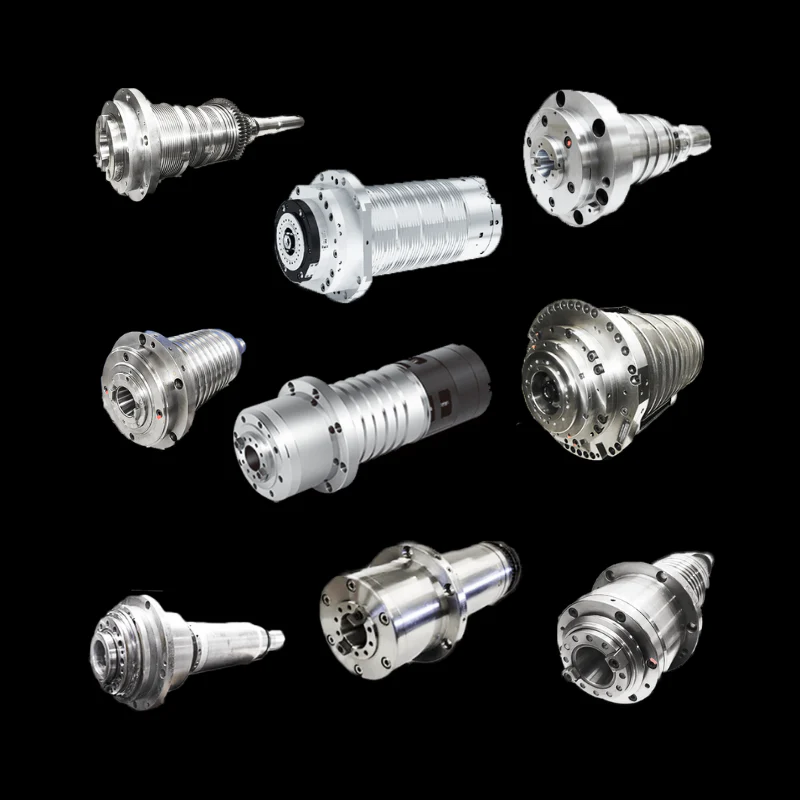
Escolhendo o adequado eixo de CNC depende em grande parte dos materiais com os quais você planeja trabalhar e do seu orçamento. Materiais diferentes como madeira, acrílico, alumínio e aço requerem mandris com capacidades específicas de potência e velocidade.
| Material | Potência Recomendada do Mandril (kW) | Notas |
|---|---|---|
| Madeira | 0,8 – 1,5 | Leve, com menor acúmulo de calor |
| Acrílico | 1,5 – 2,2 | Exige cortes limpos, pouca conversa |
| Alumínio | 2,2 – 3,0 | Necessita de bom torque, uso de líquido de arrefecimento |
| Aço | 3.0+ | De alta resistência, torque elevado necessário |
Hobby vs. Uso Profissional
- Hobbistas geralmente podem usar um eixo de ar de 800W a 1,5kW – econômico e mais fácil de manter.
- Profissionais deve investir em mandris resfriados a água de 2,2 kW ou mais para durabilidade, operação mais silenciosa e potência consistente. Esses mandris suportam uso prolongado sem superaquecimento.
Atualizando de Furadeiras de acabamento
Se você está trocando de uma furadeira de acabamento para um mandril CNC verdadeiro, considere:
- Rigidez da Máquina: Mandris mais potentes exigem uma estrutura CNC estável. Atualizar sua configuração evita vibração e melhora a precisão.
- Precisão de Runout: Baixo runout do mandril (oscilar) é crucial para um melhor acabamento e maior durabilidade da ferramenta.
Principais recomendações de mandris CNC
Para desempenho confiável, baixo runout e durabilidade, a linha de mandris da MS Machining se destaca. Seus designs competitivos combinam bem com as necessidades do mercado brasileiro, tanto para hobbyistas que fazem upgrades de roteadores de acabamento quanto para profissionais que buscam qualidade consistente. Confira suas soluções avançadas de fabricação de usinagem CNC para mandris construídos com foco em precisão e uso a longo prazo.
Escolher o mandril certo significa equilibrar suas necessidades de material, orçamento e capacidade da máquina para obter cortes suaves e maximizar o potencial do seu CNC.
Dicas de instalação e configuração
Configurar corretamente o seu mandril CNC é fundamental para operação suave e longa vida útil. Comece com a montagem: certifique-se de que o mandril esteja fixado com segurança ao eixo Z da sua máquina para evitar vibrações que afetam a precisão. Quando se trata de fiação, verifique todas as conexões e use um controle de eixo de frequência variável (VFD); programar corretamente o inversor de frequência variável (VFD) garante configurações precisas de velocidade e torque.
Não esqueça desses acessórios essenciais para manter seu eixo CNC funcionando bem:
- Mandris (ER11, ER20 ou ER32 dependendo do tamanho da sua ferramenta)
- Prendedores para ferramenta estável de fixação
- Bombas de água para spindles resfriados para manter temperaturas ideais
- Sapatos de poeira para coletar detritos e proteger rolamentos
Tenha cuidado para evitar armadilhas comuns, como aterramento inadequado, que pode causar ruído elétrico ou danos, e fontes de alimentação incompatíveis que podem levar à falha do spindle. Instalação e configuração corretas irão economizar dores de cabeça e melhorar o desempenho geral da sua máquina. Para insights mais avançados, considere explorar práticas profissionais de usinagem CNC de fontes confiáveis como Serviços de usinagem CNC da MS Machining.
Manutenção e Solução de Problemas
Manter seu eixo CNC em ótima forma significa cuidados regulares. Realize verificações diárias ou semanais limpando o corpo do eixo e o suporte de ferramenta para remover poeira e detritos. A lubrificação é fundamental—certifique-se de que os rolamentos do eixo recebam graxa ou óleo adequados, conforme especificado pelo fabricante. Para eixos resfriados a água, monitore os níveis e a qualidade do refrigerante, trocando-o regularmente para evitar superaquecimento e corrosão.
Fique atento a sinais de desgaste do eixo, como aumento de vibração, ruído incomum, superaquecimento ou queda no desempenho de corte. Isso pode indicar problemas nos rolamentos ou no motor, afetando a precisão do runout e a qualidade geral da usinagem.
Para prolongar a vida útil do seu eixo:
- Use velocidades e avanços adequados recomendados para seu material e potência do eixo
- Evite colisões súbitas e garanta que sua máquina CNC tenha boa rigidez
- Mantenha as configurações de controle do eixo VFD otimizadas para evitar sobrecarga
Saber quando reparar ou substituir é fundamental. Se a precisão do runout do eixo ficar além das especificações ou o ruído dos rolamentos persistir após a manutenção, muitas vezes é melhor substituir o eixo do que arriscar uma usinagem de baixa qualidade ou danos adicionais.
Para eixos CNC de alta qualidade, duráveis e com baixa precisão de runout, considere fornecedores confiáveis como a MS Machining. Seus produtos suportam operação suave e desempenho duradouro, adequados tanto para hobbyistas quanto para profissionais. Para necessidades relacionadas, consulte a lista detalhada de materiais de usinagem CNC deles para combinar seu eixo com as peças de trabalho corretas.