
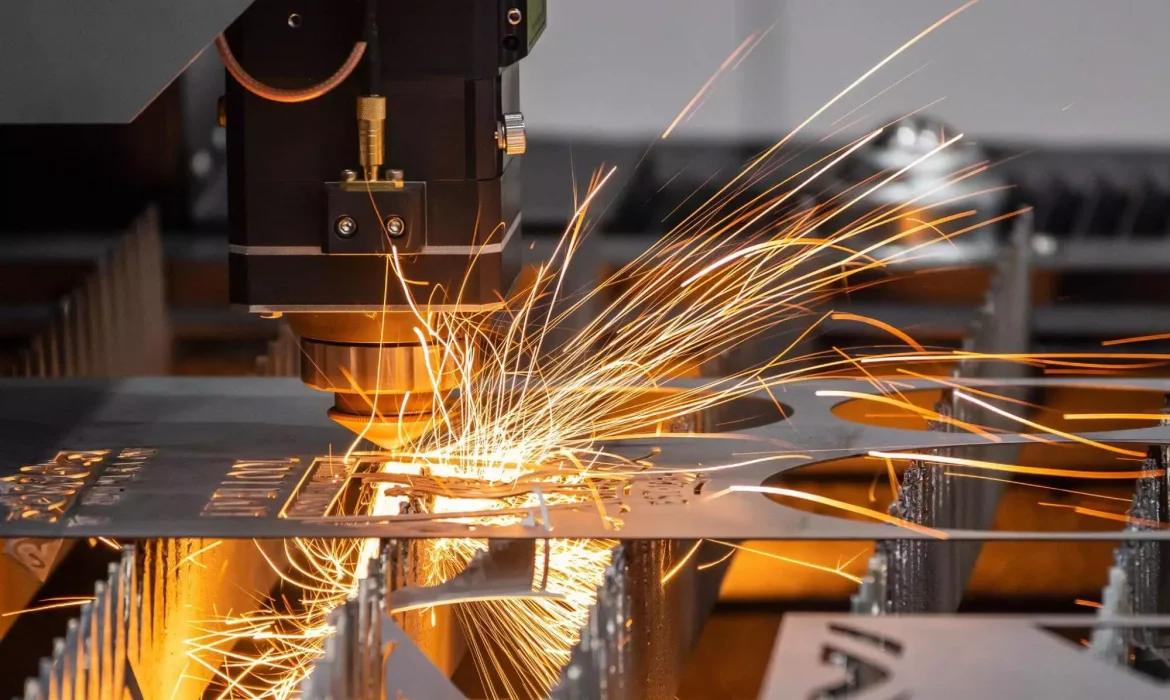
What Is Metal Parts Fabrication?
Metal parts fabrication is the process of transforming raw metal into functional components through a series of core steps: cutting, forming, and assembling. These steps enable the creation of customized metal parts that meet specific design and performance requirements. Unlike standard manufacturing, which often involves mass production with fixed designs, custom metal parts fabrication focuses on unique or low-volume orders tailored to exact specifications.
The core processes include:
- Cutting: Separating raw metal sheets or bars into precise shapes using methods like laser cutting or plasma cutting.
- Forming: Shaping metal parts through bending, stamping, or rolling to achieve the required geometry.
- Assembling: Joining individual metal components via welding, riveting, or fastening to build complete parts or subassemblies.
Metal fabrication has evolved significantly over time. Traditional manual methods like hand forging and mechanical cutting have given way to advanced, precision metal parts manufacturing techniques. Today, CNC metal machining and automated cutting provide unmatched accuracy and repeatability, enabling the production of complex geometries and high-precision metal components critical for industries such as aerospace, automotive, and medical devices.
In short, metal parts fabrication bridges raw material and finished product through carefully controlled processes that combine craftsmanship with cutting-edge technology.
Key Materials Used in Metal Parts Fabrication
When it comes to metal parts fabrication, choosing the right material is crucial. The most common metals used include alumínio, aço inoxidável, carbon steel, cobre, e titânio. Each offers unique advantages depending on the application.
- Alumínio is lightweight, corrosion-resistant, and easy to machine, making it ideal for aerospace and automotive parts.
- Aço inoxidável provides excellent strength and corrosion resistance, perfect for medical devices and industrial equipment.
- Carbon steel is strong and cost-effective, often used where durability is key, such as structural components.
- Cobre excels in electrical conductivity, suitable for electronic enclosures and specialized industrial parts.
- Titânio stands out for its high strength-to-weight ratio and corrosion resistance, commonly found in aerospace and defense applications.
Factors like strength, corrosion resistance, weight, and machinability guide the selection process to ensure the finished metal parts meet performance and durability requirements. For businesses looking to optimize material choice and precision, custom metal fabrication services play a vital role in matching materials to applications. For more on precision metal machining and how the right material impacts quality, check out the detailed overview of fabricação de peças de usinagem CNC personalizadas.
Essential Fabrication Processes
Metal parts fabrication relies on a set of core processes to transform raw metals into precise, functional components. Here’s a quick breakdown:
- Cutting Techniques: Laser cutting, plasma cutting, waterjet, and shearing are common methods used to cut metal sheets or plates into specific shapes and sizes. Laser cutting metal parts is especially popular for its accuracy and clean edges.
- Forming and Bending: Techniques like press brake forming, metal stamping, and rolling shape the metal by deforming it without removing material. These processes create bends, curves, and other structural details necessary for the part’s design.
- Machining and Finishing: CNC milling, turning, and drilling refine parts to tight tolerances, ensuring they meet exact specifications. CNC metal machining plays a key role here, delivering high-precision metal parts with consistent quality.
- Joining Methods: Welding methods such as MIG, TIG, and spot welding are common ways to assemble metal components. Riveting and mechanical fastening are also used when welding isn’t suitable.
- Surface Treatments: To boost durability and achieve a professional look, surface finishing processes like powder coating, anodizing, and plating are applied. These treatments protect parts against corrosion and wear while enhancing their appearance.
For more on selecting the right materials combined with these processes, you can explore our overview of common metals and machining practices on the materiais de peças metálicas usinadas page. These essential fabrication steps are the foundation of creating custom metal fabricated parts that meet both functional and aesthetic demands.
Precision vs. Standard Fabrication
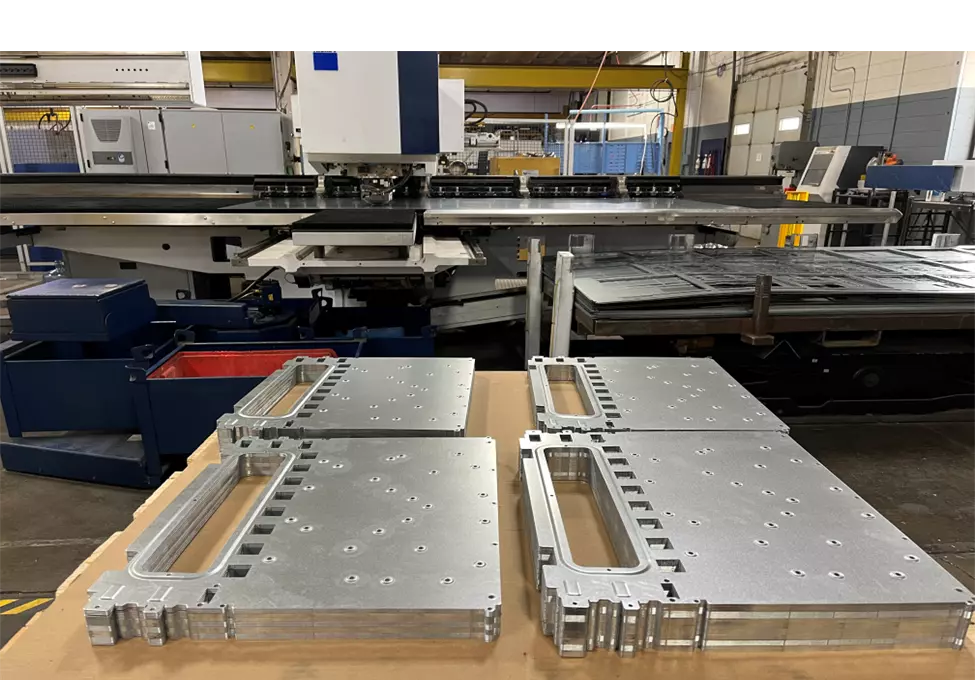
Quando se trata de fabricação de peças metálicas, precision makes all the difference. High-precision metal parts demand extremely tight tolerances—often within thousandths of an inch—to meet performance and safety requirements. This level of accuracy is critical in industries like aerospace, medical devices, and electronics where even tiny errors can cause major issues.
Por que a Precisão Rigorosa é Importante
- Ensure parts fit perfectly together
- Improve product reliability and lifespan
- Reduce the need for rework or adjustments
- Enable smooth assembly and operation
Role of CNC Technology and Automation
Advanced CNC metal machining and automated systems are key to achieving these tight tolerances consistently. Computer-controlled cutting, milling, and drilling eliminate human error, allowing for repeatable precision on complex geometries.
| Fabrication Type | Faixa de tolerância típica | Suitable For |
|---|---|---|
| Standard Fabrication | ±0.01 to ±0.05 inches | General-purpose parts |
| Precision Fabrication | ±0,001 a ±0,005 polegadas | Aerospace, medical, electronics |
Using CNC machines like those described in MS Machining’s técnicas de usinagem CNC rápidas services makes it easier to switch between prototypes and full production runs without sacrificing quality.
Benefits of Precision Fabrication
- Ability to handle intricate part designs
- Consistent quality across large batches
- Reduced material waste and scrap rates
- Faster turnaround times due to fewer errors
Choosing precision metal parts manufacturing means better performance, especially for custom fabricated metals where exact specs matter. It’s not just about making parts; it’s about making them right every time.
Industries and Applications
Metal parts fabrication plays a vital role across many industries, delivering custom fabricated metals tailored to specific needs. In aerospace and defense, lightweight yet high-strength components are essential for performance and safety, making precision metal parts critical. The automotive sector relies on fabricated parts for both structural pieces and prototypes, helping speed up innovation and improve durability.
Medical devices demand biocompatible and intricate designs, which custom metal fabrication easily supports through advanced CNC metal machining. Electronics and industrial equipment use fabricated metals for enclosures, brackets, and frames that protect sensitive components and ensure reliable operation.
You’ll find these fabricated parts in everyday products, from vehicle frames and aircraft components to surgical tools and industrial machinery, highlighting the wide scope and importance of metal parts manufacturing today. For more on precision and custom metal parts manufacturing, see our guides on high-precision CNC machining e como funciona a usinagem CNC.
The Custom Metal Parts Fabrication Process
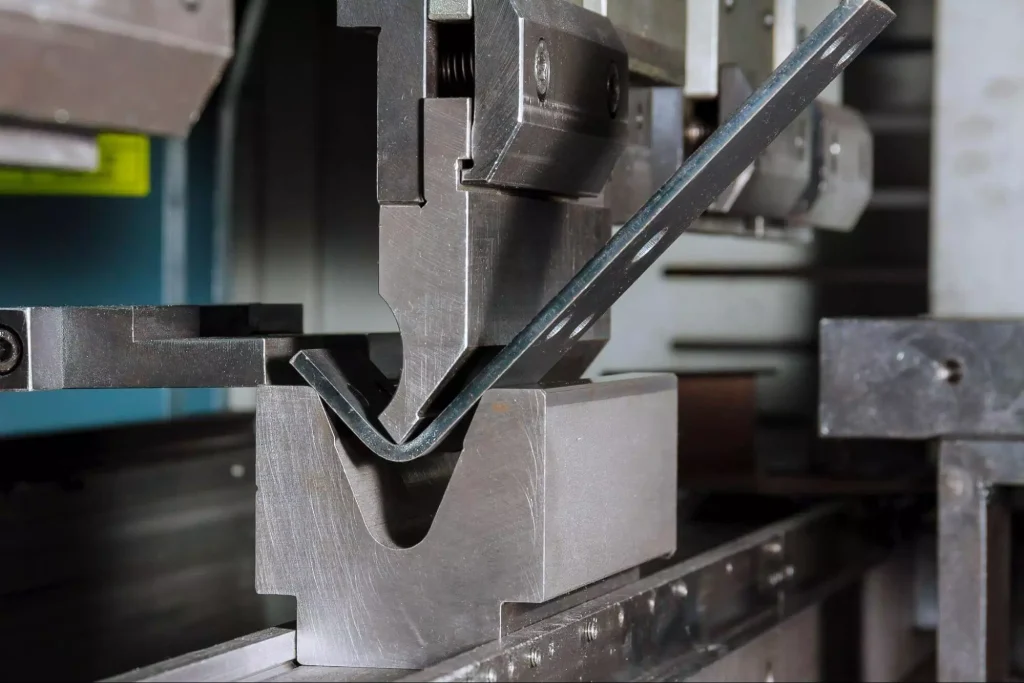
Custom metal parts fabrication follows a clear, step-by-step workflow to ensure your unique needs are met with precision and efficiency. It usually starts with a design consultation where your specifications and goals are discussed in detail. Next comes prototyping, which helps test and refine the design before moving into full production. Once the design is finalized, production begins using advanced metal fabrication techniques like CNC machining and laser cutting. After manufacturing, each part undergoes a thorough quality inspection to guarantee it meets all standards. Finally, the parts are packaged and delivered on schedule.
The integration of CAD/CAM software is crucial in this process. It streamlines custom orders by translating your designs directly into machine instructions, reducing errors and speeding up turnaround times. This technology also makes it easier to handle various order volumes—whether you need low-volume prototype runs or high-volume batch manufacturing.
Choosing a fabrication partner experienced with custom metal parts fabrication means you get flexible options tailored to your project scope, with consistent quality and quick delivery. For more insight on precise machining techniques, check out our Usinagem CNC de metal capabilities that support complex custom jobs.
Benefits of Choosing Professional Fabrication Services
Opting for professional fabricação de peças metálicas services brings several clear advantages that improve both product quality and project efficiency. Here’s how you benefit:
| Benefício | O que isso significa para você |
|---|---|
| Eficiência de Custos | Material optimization reduces waste, saving money. |
| Faster Lead Times | Advanced equipment speeds up production without cutting corners. |
| Quality Assurance | Certifications like ISO ensure consistent, reliable results. |
| Traceability | Complete documentation tracks each part for accountability. |
| Escalabilidade | Easily shift from prototype runs to full production volumes. |
Professional fabricators use skilled techniques and modern tech—including CNC metal machining and laser cutting metal parts—to optimize every phase. This keeps costs down while maintaining tight tolerances and quality standards. Plus, they handle everything from small custom fabricated metals projects to complex industrial metal fabrication jobs.
Choosing a certified pro means you avoid surprises and delays, getting precisely made, durable components when you need them. For more on materials and tech that boost efficiency, you might check out how CNC machines handle various metals in professional production environments.
How to Choose the Right Fabrication Partner
Picking the right partner for fabricação de peças metálicas can make or break your project. Here’s what to focus on:
| Fator-chave | O que Procurar |
|---|---|
| Experiência | Years in custom metal fabrication and proven track record |
| Technology Capabilities | Access to advanced CNC machining, laser cutting, and forming tools |
| Especialização em Materiais | Knowledge of aluminum, stainless steel, titanium, and more |
| Customer Support | Responsive communication and problem-solving |
Questions to Ask Your Fabricator
- How do you maintain precision in high-tolerance parts?
- What is your typical turnaround time for custom and prototype runs?
- Can you handle both low-volume and high-volume production?
- What certifications or quality standards do you follow?
At MS Machining, we emphasize precision in every step with modern CNC technology and tight quality controls. Whether you need high-precision CNC milling parts or custom fabricated metals tailored to specific applications, MS Machining delivers reliable, scalable solutions. Their commitment to precision metal parts manufacturing ensures your project meets exact specs on time.
Explore their expertise in usinagem CNC de metal e peças de usinagem CNC to see why they’re a top choice for fabricators who demand quality and speed.